
-
Airmaster Fan
18-Inch Non-Oscillating Fan Head Assembly, 2,520 CFM
Our Price:$269.94This 18-inch fan head assembly is for commercial users who need directed airflow from a non-oscillating fan head. It provides up to 2,520 CFM and offers five mounting options for placement...
-
Schaefer
24-Inch OSHA-Compliant Circulation Fan Head, 115V
Our Price:$459.94This 24-inch circulation fan head is designed for commercial, industrial, and agricultural users who need to move air for cooling and circulation. Its versatile mounting options support installation...
-
TPI
24-Inch Two-Speed Industrial Circulator Fan Head
Our Price:$514.99This 24-inch industrial circulator fan head is for facilities teams and commercial users who need directed air movement from a mounted fan assembly. It installs on a compatible industrial mount, sold...


Fan Heads for Commercial and Industrial Air Circulation
Fan heads give facility, maintenance, and operations teams a direct way to add or replace air-circulation coverage at workstations, along assembly lines, and throughout general factory spaces. Whether you need a drop-in replacement motor head or a new mounted unit, the right selection depends on airflow output, mounting compatibility, power supply, and the demands of the work environment.
Popular examples in this category
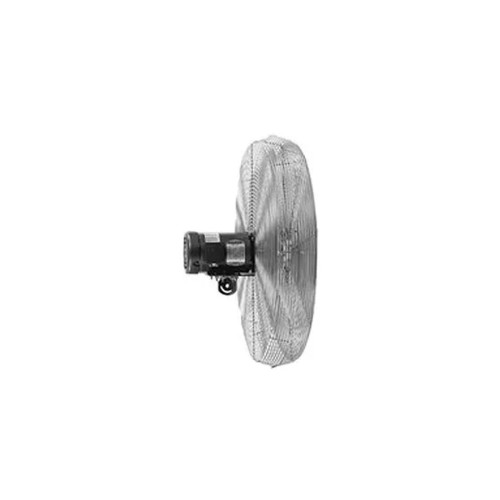 24-Inch Hazardous Location Non-Oscillating Fan HeadWB795910
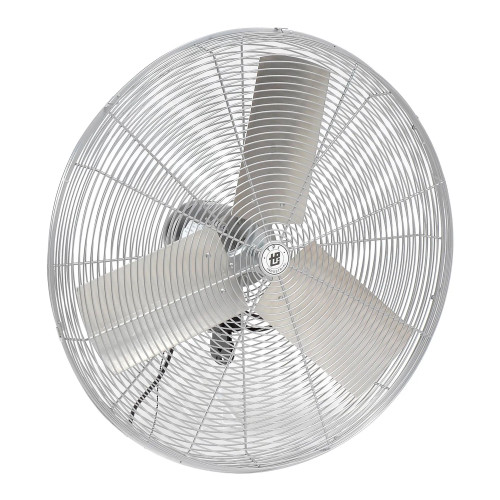 30-Inch Oscillating Fan Head, 1/4 HP, 4,300 CFM, GrayWB2815200
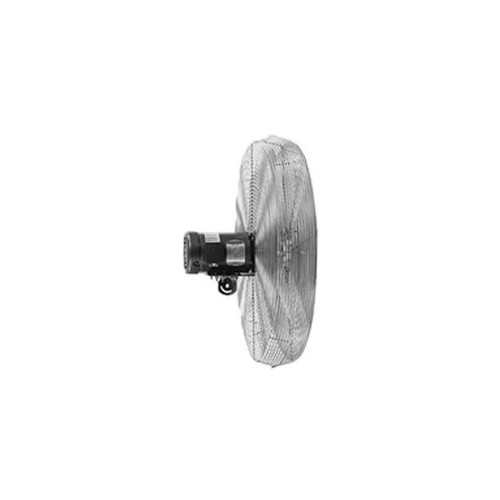 30-Inch Hazardous Location Non-Oscillating Fan Head, 5,400 CFMWB795911
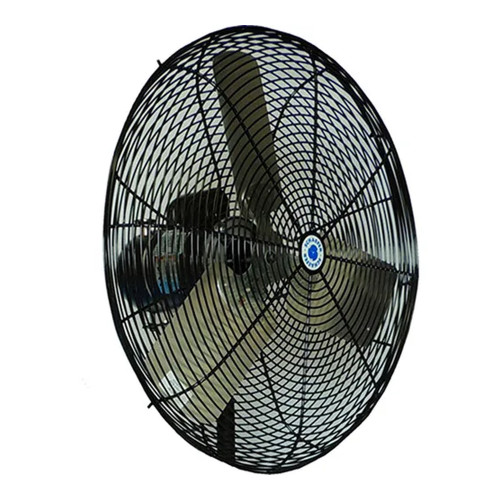 30-Inch Oscillating Circulation Fan Head, Black, 115VWBB2095963
Replacement, Upgrade, and Directed Airflow
Fan heads serve as replacement components for worn-out units, upgrades to higher-output models, or new installations where airflow needs to be directed or distributed. They are built for commercial and industrial settings where consistent air movement at specific locations is a maintenance or operational priority.
Match Output, Mounting, and Power to the Job
Start with the fan diameter and CFM output needed for the space. Then confirm mounting compatibility, voltage requirements, and whether oscillating or fixed airflow suits the area. Factor in speed settings, tilt adjustment range, and cord-and-plug versus hardwire installation before finalizing a selection.
Where Fan Heads Are Typically Used
Common installations include manufacturing floors, assembly areas, warehouses, maintenance bays, and loading docks. Fan heads are also used at individual workstations where targeted airflow is needed, and in hazardous locations where rated protection is required by code or safety policy.
Design Details That Affect Performance and Maintenance
Blade count and guard design influence airflow efficiency and access for cleaning. Hinged guards simplify blade maintenance without full disassembly. Motor design affects noise level and service life. Review these details alongside CFM ratings and speed options to match the head to both performance needs and upkeep expectations.
Fan heads in this category span a wide CFM range, making it possible to match output to spaces from individual workstations up to large open factory floors.
Multiple speed settings let operators adjust airflow intensity based on task, temperature, or occupancy without swapping equipment.
Three voltage configurations cover standard commercial circuits as well as the higher-voltage branch circuits common in industrial facilities.
Oscillating heads sweep airflow across a wider area, while non-oscillating models deliver steady, directed air movement to a specific zone.
Choosing the Right Fan Head for the Application
Use this table to match the primary need to the most suitable fan head configuration.
| Need | Best Fit | Why It Matters |
|---|---|---|
| Cover a wide area with one unit | Oscillating fan head | Sweeping motion distributes airflow across a broader zone without adding more units. |
| Direct steady air at one location | Non-oscillating fan head | Fixed airflow keeps consistent air movement at a specific workstation or task area. |
| High-output airflow for large spaces | Fan head rated 7,000 CFM or above | Larger diameter and higher CFM output is needed to move air effectively across open floor areas. |
| Hardwired permanent installation | Junction box-equipped model | Hardwire-ready heads integrate cleanly into fixed electrical systems and meet code requirements for permanent fixtures. |
| Hazardous or regulated environment | Hazardous location-rated fan head | Rated protection is required where flammable vapors, combustible dust, or similar conditions are present. |
Plan the right fit before choosing
Step 1: Define the Airflow Requirement
Measure or estimate the area the fan head needs to cover and identify whether the goal is spot cooling at a workstation or broader air movement across an open floor. Use CFM output as the primary sizing metric. Fan heads in this category range from 3,800 to 9,600 CFM, so matching output to space size prevents under- or over-specifying.
- Smaller workstation or booth applications typically work well with lower CFM models in the 3,800–5,000 range.
- Open floor, assembly line, and warehouse bays generally benefit from higher-output heads at 7,000 CFM and above.
- Oscillating models extend effective coverage area without requiring additional units.
Step 2: Confirm Mounting and Power Compatibility
Before ordering, verify the mounting configuration of the existing pedestal, column, or wall bracket. Fan heads must be mechanically compatible with the mount. Equally important is matching the voltage supply at the installation point. Available options include 115V, 120V, and 277V. Decide whether a cord-and-plug connection or a hardwire junction box fits the electrical setup and local code requirements.
- Check the existing mount diameter and attachment style against the replacement head specifications.
- 277V models are common in industrial facilities with high-voltage branch circuits.
- Hardwire junction box configurations are typical for permanent installations; cord-and-plug suits portable or semi-permanent setups.
Step 3: Evaluate Environmental and Safety Requirements
For locations where flammable vapors, dust, or other hazardous conditions are present, select fan heads with appropriate hazardous location ratings. In standard environments, focus on guard design, blade material, and motor enclosure type to match the level of dust, moisture, or debris exposure expected in the space.
- Hazardous location ratings are required in many finishing, chemical handling, and fuel storage areas.
- Hinged guards reduce downtime during routine blade cleaning and inspection.
- Motor enclosure type affects resistance to dust and moisture ingress over time.
Common questions before buying
Can I replace just the fan head without replacing the entire pedestal or mount?
In most cases, yes. Fan heads are designed as replaceable components. You need to confirm that the replacement head is mechanically compatible with the existing mount in terms of attachment style and diameter before ordering.
What does CFM mean and how do I use it to choose a fan head?
CFM stands for cubic feet per minute and measures how much air the fan moves. Higher CFM is needed for larger or open spaces. Smaller workstations typically need less output, while warehouse floors and assembly areas benefit from higher-CFM models.
What is the difference between a cord-and-plug and a hardwire junction box fan head?
Cord-and-plug models connect to a standard outlet and are easier to reposition or remove. Hardwire junction box models connect directly to the electrical system and are suited for permanent, fixed installations where a plug connection is not practical or code-compliant.
Do I need a hazardous location-rated fan head for my facility?
If your space involves flammable vapors, combustible dust, or other classified hazardous conditions, a rated fan head is typically required by safety code. Check your facility's area classification and consult applicable electrical and safety codes to confirm the requirement before selecting a model.
Choosing the right file folders
FilingSupplies.com carries end-tab folders for open-shelf systems, top-tab folders for drawer filing, and heavy-duty classification folders with dividers and fasteners for multi-section records. Pick letter or legal size, then choose material (11-pt, 14-pt, or 18-pt manila), optional reinforced tabs, color-coding, and expansion capacity to match your volume.
Folder FAQs
End-tab vs. top-tab — what’s the difference?
When should I choose classification folders?
Letter or legal size — how do I pick?
What tab and material options are available?
Can I add fasteners, pockets, or expansion?
Do you offer volume pricing or custom printing?
Outfitting classrooms that work all day
Build a durable, age-appropriate classroom with furniture, early-learning materials, storage bins, learning centers, and presentation tools. Choose adjustable pieces that grow with grades, label friendly bins for quick clean-up, and tech carts that secure, charge, and move easily.
Education FAQs
What safety labels should I look for on school and early-childhood items?
How do I pick classroom furniture across grade levels?
What’s the best way to organize supplies and centers?
How do I choose learning games and manipulatives by age?
What should I consider in a charging/tech cart?
Do you support school POs, bulk pricing, or custom printing?
Choosing the right labels
From color file labels to printable sheets, select the right size, adhesive, and print method to match your filing system and equipment. Decide on sheet vs. roll format, then pick permanent or removable adhesive and your color set.
Labels FAQs
Sheet vs. roll labels — what’s the difference?
Permanent or removable adhesive?
Will these labels work in my printer?
How do I match the label size to folder tabs or binder spines?
Can I get preprinted sequences or color bars?
Do you have templates?
Choosing the right tab dividers
Organize binders with preprinted or blank tabs. Select the number of tabs per set (5, 8, 10, or 12), choose paper with reinforced tabs or durable poly, and match letter or legal size for a clean fit.
Tab Dividers FAQs
What do 5-, 8-, 10-, or 12-tab sets mean?
Paper vs. poly — which should I choose?
Are the tabs printable?
Will they fit my binder?
Can I mix preprinted and blank tabs?
Do you make custom tab sets?
Choosing the right office supplies
From everyday paper and pens to binders, mailers, and desk organizers, pick durable, compatible options that match your equipment and team size. Start with the right paper and labeling, then add organizers that keep work moving.
Office Supplies FAQs
Which paper weight and brightness should I choose?
Round-ring vs. D-ring binders — what’s the difference?
What does “sheet capacity” mean on staplers and hole punches?
Will labels, envelopes, and mailers work with my printer?
How do I choose mailers and shipping boxes?
Do you offer eco-conscious options or bulk pricing?
Choosing the right sports & PE equipment
Equip classes, teams, and rec programs with durable balls, goals, cones, pinnies, storage, and safety gear. Match sizes and materials to age group and whether you play indoors or outdoors.
Sports & Athletics FAQs
What ball sizes should I choose for different ages?
- Basketball: Size 5 (27.5") youth, Size 6 (28.5") intermediate, Size 7 (29.5") official.
- Soccer: Size 3 up to ~8 years, Size 4 ~8–12, Size 5 ~12+.
- Volleyball: Regulation balls for teens/adults; lighter training balls for younger players.
Indoor vs. outdoor — which materials hold up best?
How many pinnies, cones, or markers do I need?
Tips for storage and care?
Are items latex‑free and school‑safe?
Do you support bulk orders or custom printing (team names)?
Choosing the right FireKing fireproof cabinet
FireKing fireproof file cabinets, safes, and storage cabinets are designed to protect important documents, records, and valuables from fire damage while keeping files organized and accessible. When choosing a FireKing cabinet, compare drawer configuration, storage type, fire rating, and overall capacity based on the records or materials you need to protect.
FireKing FAQs
What is the difference between FireKing vertical and lateral file cabinets?
What can I store in a FireKing fireproof file cabinet?
Are FireKing cabinets only for paper records?
How do I choose between a FireKing safe, file cabinet, or storage cabinet?
What sizes are available in FireKing cabinets?
Are FireKing cabinets used in offices, medical facilities, and government records storage?
Can I buy FireKing cabinets in bulk or get help choosing the right model?
Shipping & Policies
Do you offer free shipping?
What are your shipping rates?
- $6.95 for labels-only orders under $40
- $14.95 flat rate for everything else