
Cabinet Exhaust Fans: Selection Guide for Commercial, Industrial, and Agricultural Ventilation
Cabinet exhaust fans are built for high-volume air movement in enclosed spaces where heat buildup, stale air, or humidity need to be continuously managed. Whether you're ventilating a barn, greenhouse, industrial facility, or commercial building, this guide walks you through how to size, compare, and select the right unit for your installation.
Popular examples in this category
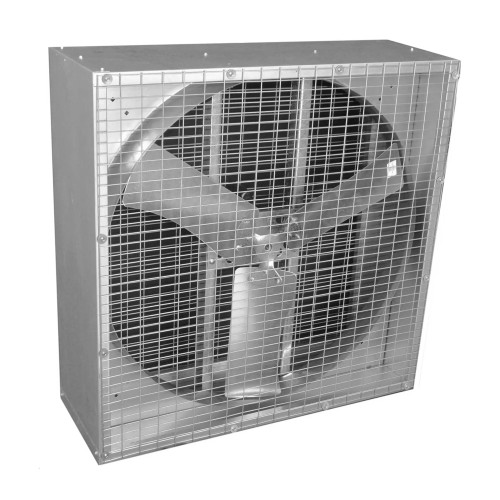 36 in Direct-Drive Cabinet Exhaust Fan, 1/2 HP, 11,250 CFM, 3-PhaseWBB2201935
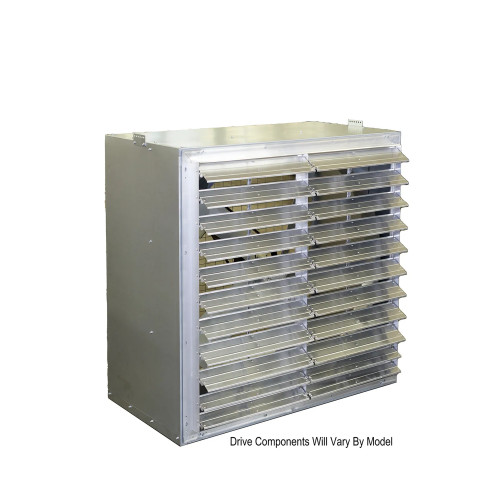 48-Inch Propeller Cabinet Exhaust Fan with Shutters, 1 HP, 19,035 CFMWBB3120556
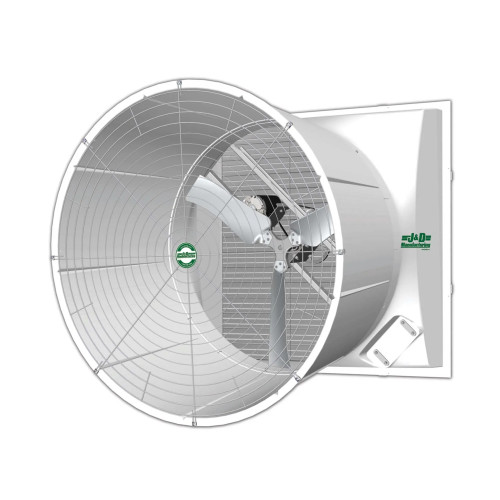 55-Inch Belt-Drive Cabinet Exhaust Fan, 2 HP, 3 PhaseWBB735652
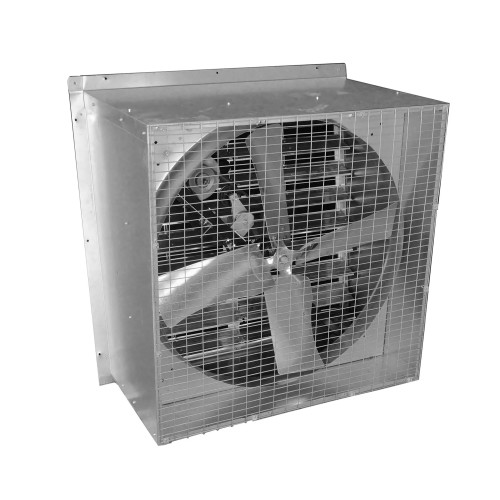 42-Inch Slantwall Cabinet Exhaust Fan, Belt Drive, 3/4 HPWBB2371793
Designed for Enclosed Spaces That Need Continuous Exhaust Airflow
Cabinet exhaust fans are used wherever air must be actively pushed out of a building or enclosure. Common settings include barns, greenhouses, warehouses, commercial kitchens, and industrial facilities where heat, moisture, or airborne particulates accumulate and need to be expelled consistently.
Match the Fan to Your Airflow Requirement, Space, and Power Supply
Start with your required CFM, then confirm the fan size that fits your rough opening. Choose direct-drive for lower maintenance or belt-drive for adjustable speed. Verify whether your service is single-phase, three-phase, or 115/230V, and check shutter and guard options before ordering.
Where Cabinet Exhaust Fans Are Commonly Installed
These fans serve agricultural buildings like barns and poultry houses, commercial greenhouses, manufacturing plants, warehouses, and utility rooms. Any enclosed space with heat buildup, poor air exchange, or high-volume ventilation demands is a strong candidate for a cabinet exhaust fan installation.
Accessories, Materials, and Installation Details Worth Knowing
Consider whether shutters, exhaust cones, blade guards, and hanging provisions are included or sold separately. Cabinet and blade materials affect corrosion resistance in humid or agricultural environments. Always confirm the required rough opening dimensions before purchasing to avoid costly modifications at installation.
This range covers most mid-to-large commercial, agricultural, and industrial ventilation requirements in a single product category.
Larger fan diameters move higher volumes of air at lower rotational speeds, which can reduce noise levels and motor wear over time.
Direct-drive designs minimize maintenance points, while belt-drive designs allow speed adjustment and are easier to adapt when airflow needs change.
Matching the fan's power configuration to your available electrical service is essential before purchasing — mismatches require costly electrical modifications.
Cabinet Exhaust Fan Comparison: Matching the Right Fan to Your Application
Use this table to quickly identify which fan configuration fits your specific ventilation need.
| Need | Best Fit | Why It Matters |
|---|---|---|
| Low maintenance over time | Direct-drive fan | Fewer moving parts means fewer components to inspect, adjust, or replace during routine maintenance. |
| Adjustable airflow speed | Belt-drive fan | Belt-drive designs allow pulley changes to modify fan speed without replacing the motor or fan assembly. |
| Large barn or warehouse ventilation | 60" to 72" fan | Larger diameter fans deliver the high CFM output needed to ventilate big open spaces efficiently. |
| Supplemental or zone ventilation | 36" to 48" fan | Smaller fans are easier to install in tighter openings and work well alongside existing primary ventilation systems. |
| Humid or corrosive environments | Corrosion-resistant cabinet and blade materials | Agricultural and greenhouse environments expose fans to moisture and chemicals that degrade standard materials faster. |
Plan the right fit before choosing
Step 1: Determine Your Required Airflow
Calculate the CFM your space requires before selecting a fan. A general rule for agricultural and industrial spaces is to achieve a full air exchange every one to three minutes. Multiply your building's cubic footage by the desired number of air changes per hour, then divide by 60 to arrive at your minimum CFM target. The available range here runs from approximately 11,070 to 48,016 CFM, covering most mid-to-large commercial and agricultural applications.
- Measure your space in cubic feet (length × width × height).
- Decide how many air changes per hour your application requires — livestock and greenhouse spaces typically need more frequent exchanges than dry storage.
- Select a fan rated at or above your calculated CFM to account for resistance losses from shutters and ductwork.
Step 2: Confirm Fan Size, Drive Type, and Power Configuration
Fan sizes in this category range from 36 inches to 72 inches. Larger fans move more air at lower speeds, which can reduce noise and energy use. Direct-drive fans have fewer moving parts and lower maintenance needs, while belt-drive fans allow speed adjustment and can be more adaptable to changing airflow requirements. Confirm your available electrical service — single-phase, three-phase, or 115/230V — before finalizing your selection.
- 36- to 48-inch fans suit smaller enclosures or supplemental ventilation zones.
- 60- to 72-inch fans are better suited for large barns, warehouses, and high-volume industrial spaces.
- Belt-drive units offer more flexibility; direct-drive units offer simpler long-term maintenance.
Step 3: Plan for Accessories and Rough Opening Requirements
Before ordering, check whether the fan includes shutters, guards, and mounting hardware or whether those components are purchased separately. Counterweighted and counterbalanced louvers affect how the shutter opens and closes under airflow. If an exhaust cone is needed to direct airflow away from the building exterior, confirm compatibility. Always verify the required rough opening dimensions so your wall or panel cutout is sized correctly before the fan arrives.
- Intake shutters and exhaust cones may be sold separately — confirm what is included.
- Counterbalanced louvers open more easily at lower airflow rates; counterweighted louvers close more securely when the fan is off.
- Rough opening dimensions vary by model — measure your available wall space before purchasing.
Common questions before buying
How do I calculate the CFM I need for my building?
Multiply your building's cubic footage by the number of air changes per hour your application requires, then divide by 60. For livestock barns and greenhouses, plan for more frequent air exchanges than you would for dry storage or light commercial spaces. Always size up slightly to account for resistance from shutters and any ductwork.
What is the difference between direct-drive and belt-drive cabinet exhaust fans?
Direct-drive fans connect the motor directly to the fan blade, reducing the number of components that need maintenance. Belt-drive fans use a belt and pulley system that allows you to adjust fan speed by changing pulley sizes, offering more flexibility when airflow requirements change over time.
Are shutters and guards included with cabinet exhaust fans?
It depends on the specific model. Some fans include shutters, exhaust cones, and blade guards, while others require those accessories to be purchased separately. Review each product's included components carefully and confirm what you need before placing your order.
What should I measure before ordering a cabinet exhaust fan?
Measure the rough opening in your wall or panel where the fan will be installed. Fan models specify a required rough opening size, and this dimension varies between units. Ordering without confirming the rough opening can result in a fan that does not fit without additional wall modification.
Choosing the right file folders
FilingSupplies.com carries end-tab folders for open-shelf systems, top-tab folders for drawer filing, and heavy-duty classification folders with dividers and fasteners for multi-section records. Pick letter or legal size, then choose material (11-pt, 14-pt, or 18-pt manila), optional reinforced tabs, color-coding, and expansion capacity to match your volume.
Folder FAQs
End-tab vs. top-tab — what’s the difference?
When should I choose classification folders?
Letter or legal size — how do I pick?
What tab and material options are available?
Can I add fasteners, pockets, or expansion?
Do you offer volume pricing or custom printing?
Outfitting classrooms that work all day
Build a durable, age-appropriate classroom with furniture, early-learning materials, storage bins, learning centers, and presentation tools. Choose adjustable pieces that grow with grades, label friendly bins for quick clean-up, and tech carts that secure, charge, and move easily.
Education FAQs
What safety labels should I look for on school and early-childhood items?
How do I pick classroom furniture across grade levels?
What’s the best way to organize supplies and centers?
How do I choose learning games and manipulatives by age?
What should I consider in a charging/tech cart?
Do you support school POs, bulk pricing, or custom printing?
Choosing the right labels
From color file labels to printable sheets, select the right size, adhesive, and print method to match your filing system and equipment. Decide on sheet vs. roll format, then pick permanent or removable adhesive and your color set.
Labels FAQs
Sheet vs. roll labels — what’s the difference?
Permanent or removable adhesive?
Will these labels work in my printer?
How do I match the label size to folder tabs or binder spines?
Can I get preprinted sequences or color bars?
Do you have templates?
Choosing the right tab dividers
Organize binders with preprinted or blank tabs. Select the number of tabs per set (5, 8, 10, or 12), choose paper with reinforced tabs or durable poly, and match letter or legal size for a clean fit.
Tab Dividers FAQs
What do 5-, 8-, 10-, or 12-tab sets mean?
Paper vs. poly — which should I choose?
Are the tabs printable?
Will they fit my binder?
Can I mix preprinted and blank tabs?
Do you make custom tab sets?
Choosing the right office supplies
From everyday paper and pens to binders, mailers, and desk organizers, pick durable, compatible options that match your equipment and team size. Start with the right paper and labeling, then add organizers that keep work moving.
Office Supplies FAQs
Which paper weight and brightness should I choose?
Round-ring vs. D-ring binders — what’s the difference?
What does “sheet capacity” mean on staplers and hole punches?
Will labels, envelopes, and mailers work with my printer?
How do I choose mailers and shipping boxes?
Do you offer eco-conscious options or bulk pricing?
Choosing the right sports & PE equipment
Equip classes, teams, and rec programs with durable balls, goals, cones, pinnies, storage, and safety gear. Match sizes and materials to age group and whether you play indoors or outdoors.
Sports & Athletics FAQs
What ball sizes should I choose for different ages?
- Basketball: Size 5 (27.5") youth, Size 6 (28.5") intermediate, Size 7 (29.5") official.
- Soccer: Size 3 up to ~8 years, Size 4 ~8–12, Size 5 ~12+.
- Volleyball: Regulation balls for teens/adults; lighter training balls for younger players.
Indoor vs. outdoor — which materials hold up best?
How many pinnies, cones, or markers do I need?
Tips for storage and care?
Are items latex‑free and school‑safe?
Do you support bulk orders or custom printing (team names)?
Choosing the right FireKing fireproof cabinet
FireKing fireproof file cabinets, safes, and storage cabinets are designed to protect important documents, records, and valuables from fire damage while keeping files organized and accessible. When choosing a FireKing cabinet, compare drawer configuration, storage type, fire rating, and overall capacity based on the records or materials you need to protect.
FireKing FAQs
What is the difference between FireKing vertical and lateral file cabinets?
What can I store in a FireKing fireproof file cabinet?
Are FireKing cabinets only for paper records?
How do I choose between a FireKing safe, file cabinet, or storage cabinet?
What sizes are available in FireKing cabinets?
Are FireKing cabinets used in offices, medical facilities, and government records storage?
Can I buy FireKing cabinets in bulk or get help choosing the right model?
Shipping & Policies
Do you offer free shipping?
What are your shipping rates?
- $6.95 for labels-only orders under $40
- $14.95 flat rate for everything else