
-
TPI
Clear Plastic Thermostat Guard
Our Price:$64.94This clear plastic thermostat guard is for customers who need to cover a thermostat while keeping it visible. It provides a dedicated enclosure around thermostats with the specified opening size.The...
-
TPI
Clear Plastic Thermostat Guard
Our Price:$60.94This clear plastic thermostat guard is a thermostat accessory for facility teams and commercial users who need to cover a thermostat while keeping it visible. It provides a dedicated enclosure around...
-
TPI
Clear Plastic Thermostat Guard
Our Price:$76.94This clear plastic thermostat guard is for users who need to cover a thermostat while keeping it visible. It provides a practical guard option for thermostat installations that fit its stated opening...
-
Supco
Clear Plastic Thermostat Guard with 2 Keys
Our Price:$11.74This clear thermostat guard is for facility teams and maintenance staff who need to cover a thermostat and help manage access to its controls. It provides a practical protective enclosure for...
-
Supco
Clear Plastic Thermostat Guard with Key
Our Price:$16.24This clear thermostat guard is for facility teams and building operators who need to enclose a thermostat. It provides a dedicated cover solution for thermostat installations and includes a key.The...
-
Supco
Clear Plastic Thermostat Guard with Key
Our Price:$19.99This clear plastic thermostat guard is designed for HVAC professionals and facility teams that need to cover a thermostat. It provides a protective enclosure for the thermostat while keeping the...
-
White Rodgers
Clear Thermostat Guard Cover with Mounting Plate
Our Price:$31.94This clear thermostat guard cover is for building maintenance teams and other users who need to cover compatible thermostats. It helps keep the thermostat enclosed while preserving visibility through...
-
Honeywell
Large Universal Thermostat Guard with Clear Cover and Opaque Wallplate
Our Price:$78.94This large universal thermostat guard is designed for facilities and building users who need to cover compatible thermostats while keeping the thermostat visible. Its clear cover, base, and opaque...
-
Honeywell
Medium Universal Thermostat Guard with Clear Cover
Our Price:$53.94This medium universal thermostat guard is for facility teams and HVAC personnel who need to cover compatible thermostats. It provides a clear-cover enclosure with a wallplate for thermostat...
-
PSG
Metal Hinged Thermostat Guard with Solid Base
Our Price:$43.94This metal thermostat guard is designed for facility teams and HVAC personnel who need to cover a thermostat. Its hinged design and solid base provide a practical accessory for thermostat...
-
Supco
Metal Thermostat Guard with 2 Keys
Our Price:$30.94This metal thermostat guard is for facility teams and building managers who need to cover a thermostat while retaining keyed access. It provides a practical accessory for thermostat installations in...
-
Honeywell
Outdoor or Supply Temperature Sensor with 42-Inch Lead
Our Price:$78.94This outdoor or supply temperature sensor is for HVAC professionals and facility teams working with compatible AQ controls. It provides an outdoor or supply sensing connection for temperature-control...
-
Single-Pole Thermostat Kit for Horizontal/Downflow Unit Heaters
Our Price:$199.94This single-pole thermostat kit is a field-installed electrical control for facility maintenance teams and installers working with compatible horizontal or downflow unit heaters. It provides an...
-
Honeywell
Small Universal Thermostat Guard with Clear Cover
Our Price:$54.94This small universal thermostat guard is a cover assembly for facility teams and HVAC maintenance personnel who need to enclose compatible thermostats. It provides a practical way to cover the...
-
White Rodgers
Universal Steel Thermostat Guard with Mounting Ring Base
Our Price:$47.94This universal thermostat guard helps facility managers and maintenance teams limit unauthorized temperature changes at room thermostats. It covers the thermostat to support controlled HVAC settings...
-
White Rodgers
Universal Thermostat Guard with Clear Cover and Mounting Plate
Our Price:$32.94This universal thermostat guard is for facility teams and maintenance staff who need to cover compatible room thermostats while keeping the control visible. It provides an enclosed cover arrangement...


Thermostat Accessories: Guards, Sensors, Mounting Components, and Kits
Thermostat accessories help you protect controls, complete installations, and extend temperature-management capabilities across commercial, industrial, and educational facilities. Whether you need a tamper-resistant guard for a public space, a mounting plate for a clean wall finish, or a sensor to expand a compatible control system, this category covers the hardware that makes thermostat installations more secure, functional, and code-appropriate.
Popular examples in this category
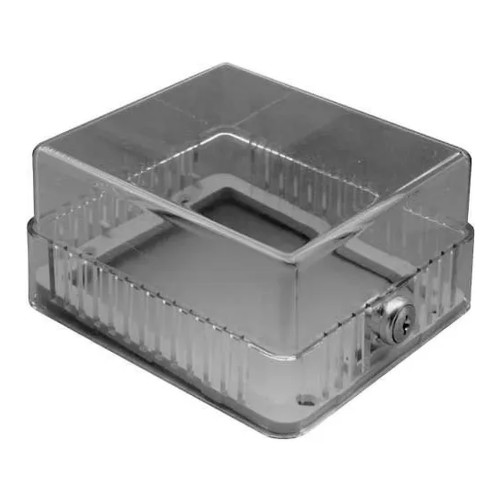 Clear Plastic Thermostat GuardWBB860061
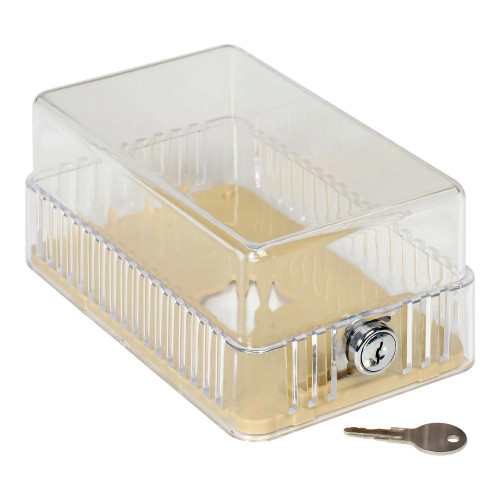 Clear Plastic Thermostat Guard with KeyWBB461532
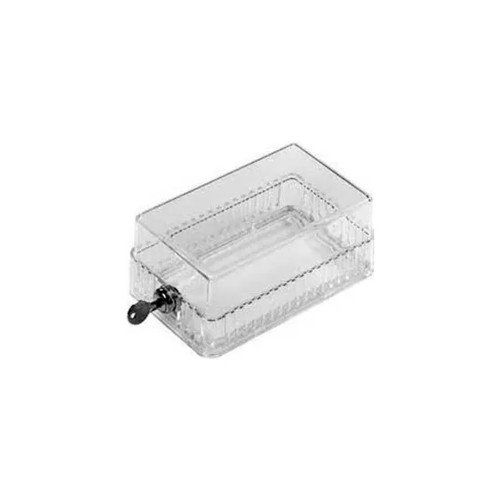 Clear Thermostat Guard Cover with Mounting PlateWBB800244
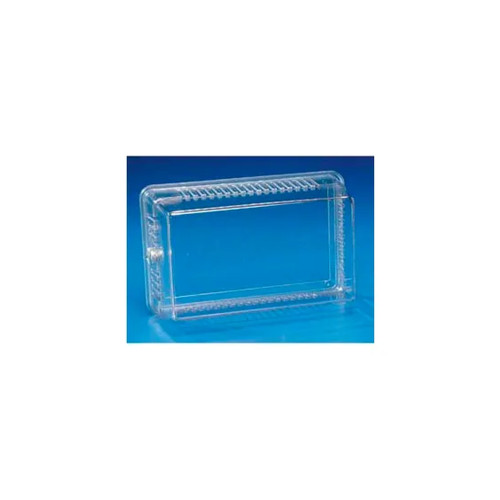 Universal Thermostat Guard with Clear Cover and Mounting PlateWBB800246
Protecting and Supporting Thermostat Installations
These accessories serve facilities where thermostats need physical protection, proper mounting, or expanded sensing capability. Guards prevent unauthorized adjustments, mounting components ensure secure wall attachment, sensors extend control reach to outdoor or supply-air locations, and field-installed kits adapt unit heaters for thermostat-based temperature control.
Matching the Right Accessory to Your Installation
Start by identifying what the installation actually needs: protection, mounting hardware, sensing, or a complete thermostat kit. For guards, compare material, dimensions, visibility requirements, and access method. For sensors and kits, confirm compatibility with your existing controls and verify lead length or configuration requirements before ordering.
Where Thermostat Accessories Are Typically Used
Thermostat guards are common in schools, hotels, offices, and industrial facilities where occupant tampering is a concern. Mounting plates and rings support clean, code-compliant installations in new construction or retrofit projects. Sensors and thermostat kits are used in HVAC and unit heater setups requiring remote or supply-air temperature input.
Details That Affect Compatibility and Performance
Guard fit depends on listed base or opening dimensions, not just general thermostat size. Some guards are model-specific while others are designed for standard room thermostats. Sensors must match the compatible control's input type and lead length. Thermostat kits are intended for specific unit heater configurations, so verify the application before purchasing.
Thermostat guards are available with clear plastic or acrylic covers for display visibility, or solid covers when visibility is not required.
Guards offer multiple access configurations including one or two keys, hinged metal construction, or tamper-resistant covers depending on the security level needed.
Some guards are designed for universal room thermostat sizes while others are built to fit specific thermostat models, making compatibility verification essential.
Temperature sensors in this category are designed for outdoor ambient or supply-air temperature measurement and must be matched to compatible control inputs.
Choosing the Right Thermostat Accessory for Your Situation
Use this table to match your installation need to the most appropriate product type.
| Need | Best Fit | Why It Matters |
|---|---|---|
| Prevent unauthorized thermostat adjustments in a public or shared space | Thermostat guard with tamper-resistant cover or key access | Reduces energy waste and unauthorized changes without removing thermostat access entirely for staff |
| Need to see the thermostat display through the guard | Clear plastic or acrylic-cover guard | Allows occupants or staff to read the current setting without opening or removing the guard |
| Frequent authorized adjustments required | Hinged metal guard or key-access guard | Hinged or keyed designs allow faster access during maintenance without fully disassembling the guard |
| Extending temperature sensing to an outdoor or supply-air location | Compatible outdoor or supply temperature sensor | Provides accurate remote temperature data to the control system without requiring a separate controller |
| Unit heater lacks built-in thermostat capability | Field-installed thermostat kit for compatible unit heaters | Adds thermostat-based temperature control to unit heaters that were not originally configured with it |
Plan the right fit before choosing
Step 1: Identify What the Installation Requires
Before selecting any accessory, determine the specific gap in your installation. A thermostat guard is needed when occupant access must be restricted. A mounting plate or ring is needed when the wall opening or existing hardware does not support a clean finish. A sensor or thermostat kit is needed when the control system requires remote temperature input or the unit heater lacks built-in thermostat capability.
- List the thermostat model or control system already in place before shopping for guards or sensors.
- Confirm whether the installation is new construction or a retrofit, as this affects which mounting components are appropriate.
- Check whether a guard needs to allow visibility of the thermostat display, which determines whether a clear or solid cover is required.
Step 2: Verify Dimensions and Compatibility
Thermostat guards are sized by base dimensions or listed opening size, and a mismatch will result in a guard that does not fit or does not cover the thermostat properly. For sensors, match the lead length to the distance between the sensing point and the control unit, and confirm the sensor type is listed as compatible with your specific control. For thermostat kits, verify the kit is rated for the unit heater's configuration and the required temperature adjustment range.
- Measure the thermostat base or check the manufacturer's listed dimensions before selecting a guard.
- Compare sensor lead length to the actual installation distance to avoid splicing or running short.
- Confirm that a thermostat kit is listed for field installation on the specific unit heater model in use.
Step 3: Confirm Access and Security Requirements
Guards vary significantly in how they allow or restrict access. Some include one or two keys for authorized adjustments, while others use tamper-resistant fasteners that require a special tool. Metal guards may offer hinged construction for easier access during maintenance, while solid-base designs provide more complete enclosure. Choose the access method based on how frequently the thermostat will need to be adjusted by authorized personnel.
- Key-access guards are practical in facilities where staff need to make periodic adjustments without removing the guard entirely.
- Tamper-resistant covers are better suited for spaces where even key access is not needed on a regular basis.
- Hinged metal guards simplify maintenance access compared to guards that must be fully removed for any adjustment.
Common questions before buying
How do I know if a thermostat guard will fit my thermostat?
Check the guard's listed base dimensions or opening size and compare them to your thermostat's physical dimensions. Guards are not universally sized, and some are designed for specific models. When in doubt, measure the thermostat base and match it to the guard's listed specifications before ordering.
Do thermostat guards come with mounting hardware?
Some guards include a mounting plate, mounting ring, or wallplate, while others require separate mounting components. Review the product listing to confirm what is included so you can order any additional hardware needed for a complete installation.
What is the difference between a universal guard and a model-specific guard?
Universal guards are designed to fit a range of standard room thermostat sizes and shapes, while model-specific guards are engineered to fit one particular thermostat. Model-specific guards typically provide a cleaner fit and more complete coverage, but they require you to confirm the exact thermostat model before purchasing.
How do I select the right temperature sensor for my control system?
Match the sensor to the compatible controls listed in the product specifications, and verify that the lead length is sufficient for the distance between the sensing location and the control unit. Using an incompatible sensor can result in inaccurate readings or no signal at all, so compatibility confirmation is essential before installation.
Choosing the right file folders
FilingSupplies.com carries end-tab folders for open-shelf systems, top-tab folders for drawer filing, and heavy-duty classification folders with dividers and fasteners for multi-section records. Pick letter or legal size, then choose material (11-pt, 14-pt, or 18-pt manila), optional reinforced tabs, color-coding, and expansion capacity to match your volume.
Folder FAQs
End-tab vs. top-tab — what’s the difference?
When should I choose classification folders?
Letter or legal size — how do I pick?
What tab and material options are available?
Can I add fasteners, pockets, or expansion?
Do you offer volume pricing or custom printing?
Outfitting classrooms that work all day
Build a durable, age-appropriate classroom with furniture, early-learning materials, storage bins, learning centers, and presentation tools. Choose adjustable pieces that grow with grades, label friendly bins for quick clean-up, and tech carts that secure, charge, and move easily.
Education FAQs
What safety labels should I look for on school and early-childhood items?
How do I pick classroom furniture across grade levels?
What’s the best way to organize supplies and centers?
How do I choose learning games and manipulatives by age?
What should I consider in a charging/tech cart?
Do you support school POs, bulk pricing, or custom printing?
Choosing the right labels
From color file labels to printable sheets, select the right size, adhesive, and print method to match your filing system and equipment. Decide on sheet vs. roll format, then pick permanent or removable adhesive and your color set.
Labels FAQs
Sheet vs. roll labels — what’s the difference?
Permanent or removable adhesive?
Will these labels work in my printer?
How do I match the label size to folder tabs or binder spines?
Can I get preprinted sequences or color bars?
Do you have templates?
Choosing the right tab dividers
Organize binders with preprinted or blank tabs. Select the number of tabs per set (5, 8, 10, or 12), choose paper with reinforced tabs or durable poly, and match letter or legal size for a clean fit.
Tab Dividers FAQs
What do 5-, 8-, 10-, or 12-tab sets mean?
Paper vs. poly — which should I choose?
Are the tabs printable?
Will they fit my binder?
Can I mix preprinted and blank tabs?
Do you make custom tab sets?
Choosing the right office supplies
From everyday paper and pens to binders, mailers, and desk organizers, pick durable, compatible options that match your equipment and team size. Start with the right paper and labeling, then add organizers that keep work moving.
Office Supplies FAQs
Which paper weight and brightness should I choose?
Round-ring vs. D-ring binders — what’s the difference?
What does “sheet capacity” mean on staplers and hole punches?
Will labels, envelopes, and mailers work with my printer?
How do I choose mailers and shipping boxes?
Do you offer eco-conscious options or bulk pricing?
Choosing the right sports & PE equipment
Equip classes, teams, and rec programs with durable balls, goals, cones, pinnies, storage, and safety gear. Match sizes and materials to age group and whether you play indoors or outdoors.
Sports & Athletics FAQs
What ball sizes should I choose for different ages?
- Basketball: Size 5 (27.5") youth, Size 6 (28.5") intermediate, Size 7 (29.5") official.
- Soccer: Size 3 up to ~8 years, Size 4 ~8–12, Size 5 ~12+.
- Volleyball: Regulation balls for teens/adults; lighter training balls for younger players.
Indoor vs. outdoor — which materials hold up best?
How many pinnies, cones, or markers do I need?
Tips for storage and care?
Are items latex‑free and school‑safe?
Do you support bulk orders or custom printing (team names)?
Choosing the right FireKing fireproof cabinet
FireKing fireproof file cabinets, safes, and storage cabinets are designed to protect important documents, records, and valuables from fire damage while keeping files organized and accessible. When choosing a FireKing cabinet, compare drawer configuration, storage type, fire rating, and overall capacity based on the records or materials you need to protect.
FireKing FAQs
What is the difference between FireKing vertical and lateral file cabinets?
What can I store in a FireKing fireproof file cabinet?
Are FireKing cabinets only for paper records?
How do I choose between a FireKing safe, file cabinet, or storage cabinet?
What sizes are available in FireKing cabinets?
Are FireKing cabinets used in offices, medical facilities, and government records storage?
Can I buy FireKing cabinets in bulk or get help choosing the right model?
Shipping & Policies
Do you offer free shipping?
What are your shipping rates?
- $6.95 for labels-only orders under $40
- $14.95 flat rate for everything else