
-
Aquastat Immersion Well, 1/2 in. Pipe Connection
Our Price:$33.94This immersion well is an aquastat accessory for HVAC technicians and maintenance professionals. It provides a mounting point for compatible aquastat controls in systems using a 1/2 in. pipe...
-
Aquastat Immersion Well, 3/4 in. Pipe Connection, 3/8 in. Insertion Diameter, 1-1/2 in. Deep
Our Price:$35.94This immersion well is an aquastat accessory for HVAC technicians and maintenance professionals who need to position an aquastat sensing element in a pipe connection. It provides a defined 1-1/2...
-
Aquastat Relay with High Limit and Adjustable Differential
Our Price:$455.94This aquastat relay is a temperature control for HVAC professionals who need to manage high-limit protection, low-limit operation, and circulation control in compatible heating systems.The relay...
-
Circulator Aquastat Controller, 100° to 240°F
Our Price:$249.94This circulator aquastat controller is for HVAC professionals and facility maintenance teams who need to control circulator operation according to temperature. It supports temperature-based control...
-
Circulator Control Low-Limit Aquastat
Our Price:$365.94This circulator control low-limit aquastat is an HVAC temperature control for technicians and commercial building maintenance teams. It monitors temperature to support circulator control and...
-
Circulator High-Limit and Low-Limit Aquastat Controller
Our Price:$249.94This aquastat controller is for HVAC professionals and maintenance teams who need to manage circulator operation using high- and low-limit temperature settings. It provides temperature-based control...
-
Circulator High/Low Limit Aquastat Controller
Our Price:$219.94This circulator aquastat controller is for HVAC technicians and facility maintenance teams who need to manage a circulator based on temperature. It can be used as either a high-limit or low-limit...
-
Dual High-Limit Circulator Aquastat Controller with 10°F Differential
Our Price:$365.94This dual aquastat controller is for HVAC service professionals who need to manage high-limit and circulator temperature control. It provides a practical control point for equipment requiring...
-
Dual High-Low Limit Aquastat Controller
Our Price:$375.94This dual high-low limit aquastat controller is for HVAC professionals who need to set separate upper and lower temperature limits. It provides high-limit and low-limit control settings in one...
-
High Limit Aquastat Controller with 39-Inch Capillary
Our Price:$439.94This high limit aquastat controller is for HVAC service professionals and commercial maintenance teams that need temperature limit control. It helps support temperature-based control in compatible...
-
High Limit Aquastat Relay with 15°F Fixed Differential - 5.1 W x 5 H x 7 D
Our Price:$439.94This high limit aquastat relay is an HVAC temperature-control component for professionals servicing heating systems. It provides high-limit control with a fixed differential to support...
-
High Limit Aquastat Relay, 180°F to 240°F Range
Our Price:$449.94This high limit aquastat relay is a temperature control for HVAC professionals and facility maintenance teams who need to monitor and manage system temperature. It provides a practical control point...
-
High or Low Limit Aquastat Controller
Our Price:$249.94This high or low limit aquastat controller is for HVAC professionals who need to manage temperature limits in compatible systems. It helps support temperature-based control by opening the circuit as...
-
High-Limit Circulator Aquastat Controller
Our Price:$375.94This high-limit circulator aquastat controller is for HVAC professionals who need to manage a circulator and high-limit temperature control in an HVAC system. It provides a dedicated controller for...
-
High-Limit Manual-Reset Aquastat Controller
Our Price:$299.94This high-limit manual-reset aquastat controller is for HVAC technicians and maintenance teams who need to monitor operating temperature in aquastat applications. Its high-limit control function...
-
High-Limit Manual-Reset Aquastat Controller, 100 to 240°F
Our Price:$355.94This high-limit manual-reset aquastat controller is for HVAC professionals and facility maintenance teams who need to monitor operating temperature in aquastat applications. It provides a...
-
High-Limit Manual-Reset Aquastat Controller, 130°F to 270°F
Our Price:$279.94This high-limit manual-reset aquastat controller is for HVAC technicians and facility maintenance teams who need to monitor temperature in applicable heating-control systems. It provides a high-limit...
-
High-Limit Oil Aquastat Relay, 120V
Our Price:$339.94This high-limit oil aquastat relay is a temperature control for HVAC technicians and maintenance professionals working with oil heating equipment. It helps manage system temperature within its...
-
High/Low Limit Aquastat Controller
Our Price:$279.94This high/low limit aquastat controller is for HVAC professionals and facility maintenance teams who need to manage temperature limits in HVAC control applications. It provides adjustable temperature...
-
High/Low Limit Aquastat Controller, 100°F to 240°F
Our Price:$259.94This aquastat controller is for HVAC technicians and facility maintenance teams that need to manage high- or low-limit temperature control. It provides a practical temperature-control component for...


Aquastats: Temperature Control for Hydronic and Oil Heating Systems
Aquastats are the temperature-sensing switches that keep boilers, circulators, and oil heating systems operating safely within defined limits. Whether you need a high-limit cutoff, a low-limit hold, or a combination control for a full hydronic zone, this guide walks through how to identify the right aquastat for your installation.
Popular examples in this category
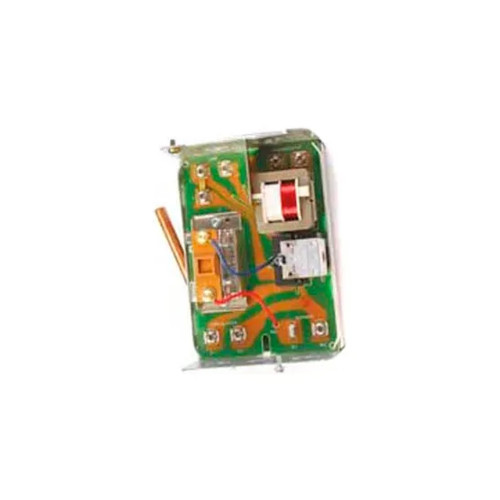 High-Limit Oil Aquastat Relay, 120VWBB394547
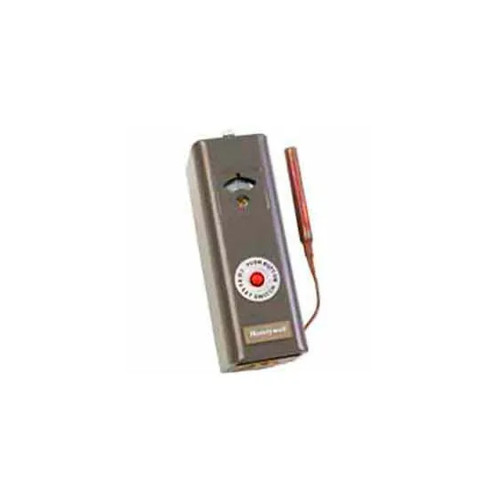 High-Limit Manual-Reset Aquastat ControllerWBB393840
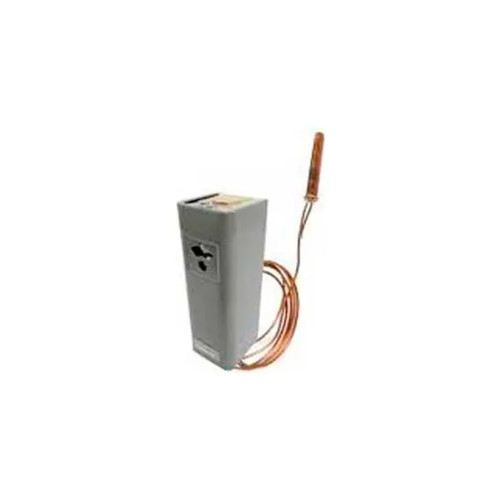 Remote-Bulb High/Low-Limit Aquastat Controller, 100-240°FWBB394055
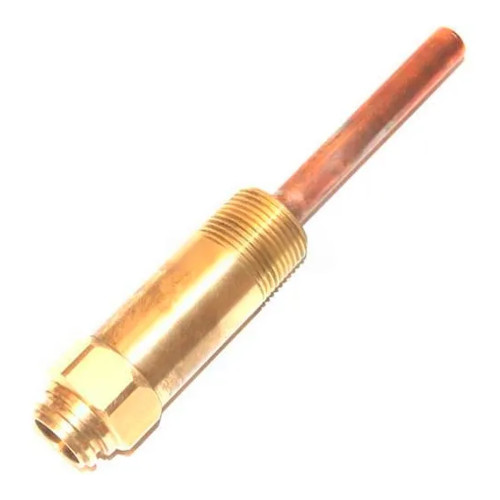 Aquastat Immersion Well, 3/4 in. Pipe Connection, 3/8 in. Insertion Diameter, 1-1/2 in. DeepWBB895407
Where Aquastats Are Used
Aquastats protect and regulate boilers, oil burners, and hydronic heating systems by switching on or off at set temperatures. They prevent overheating, maintain minimum water temperatures, and control circulator pumps—making them essential for safe, efficient operation in residential and commercial heating systems.
Selecting the Right Aquastat
Start with the required control function—high-limit, low-limit, combination, or circulator control. Then confirm the temperature range, differential setting, voltage, and mounting style. For immersion-type units, match the well depth, insertion diameter, and pipe connection to your existing boiler tapping.
Typical Aquastat Applications
HVAC technicians use aquastats for boiler high-limit protection, oil-system relay control, and hydronic circulator switching. Facility maintenance teams rely on them for replacement and service work. Combination models handle both high- and low-limit functions in a single control, simplifying hydronic heating installations.
Installation and Sensing Details
Aquastats mount vertically or strap on to piping depending on the model. Remote-bulb versions use capillary tubes ranging from 39 to 66 inches for flexible sensor placement. Immersion-well models require matching the well depth and pipe connection size to the boiler fitting for accurate, reliable temperature sensing.
Remote-bulb aquastats are available with capillary tube lengths from 39 to 66 inches, giving installers flexibility in sensor placement relative to the control head.
Differentials span from fixed 2°F increments up to adjustable 30°F ranges, letting you match the control's cycling behavior to the system's heating load and efficiency requirements.
Many aquastats designed for oil heating relay applications operate at 120V—always verify voltage before installation to avoid control damage or unsafe wiring.
Aquastats are available in five primary control functions: high-limit, high/low-limit, manual-reset high-limit, circulator control, and combination hydronic heating control.
Aquastat Types at a Glance: Which Control Fits Your Job?
Use this table to match the control function to the application before comparing individual models.
| Control Need | Best Aquastat Type | Why It Matters |
|---|---|---|
| Prevent boiler overheating | High-limit aquastat | Cuts burner power when water temperature exceeds the set point, protecting the heat exchanger and system components |
| Maintain minimum boiler water temperature | Low-limit aquastat | Holds the boiler above a set minimum to prevent condensation, cold starts, and inefficient cycling |
| Manage both high and low limits in one unit | High/low combination aquastat | Reduces wiring complexity and control head count in hydronic systems that need both functions |
| Require manual intervention after a safety trip | Manual-reset high-limit aquastat | Prevents automatic restart after a high-temperature fault—required in some safety-critical or code-specific installations |
| Switch a circulator pump by water temperature | Circulator control aquastat | Turns the pump on or off based on boiler water temperature rather than a thermostat call, improving zone efficiency |
Plan the right fit before choosing
Step 1: Define the Control Function You Need
Before comparing models, identify exactly what the aquastat must do in your system. This determines the product category and narrows your options significantly.
- High-limit only: shuts off the burner when water exceeds the set point—common in oil heating systems
- Low-limit only: holds the boiler at a minimum temperature to prevent cold starts and condensation
- High/low combination: manages both limits in one unit, typical for hydronic heating controls
- Manual-reset high-limit: requires a physical reset after a high-temperature trip, used where safety lockout is required
- Circulator control: switches the pump on and off based on water temperature rather than controlling the burner
Step 2: Confirm Temperature Range, Differential, and Voltage
Once the control function is clear, match the aquastat's operating specifications to your system's requirements. Mismatched differentials or voltage ratings are a common source of installation problems.
- Verify the aquastat's temperature range covers your system's normal operating and limit set points
- Choose a fixed differential (2°F, 5°F, 8°F, or 10°F) or an adjustable differential (typically 5°F to 30°F) based on how tightly the system needs to cycle
- Confirm voltage compatibility—120V is standard for oil-system relay applications; check your control circuit before ordering
- Break-on-rise action means the switch opens as temperature increases—confirm this matches your wiring diagram
Step 3: Match Mounting Style and Sensing Element to the Installation
Physical compatibility with the boiler or piping is just as important as the electrical and temperature specifications. Measure before ordering.
- Strap-on models clamp to the outside of a pipe—verify the pipe diameter is within the clamp's range
- Vertical-mount models attach directly to the boiler body or a tapping
- Remote-bulb models place the sensing element away from the control head—measure the required capillary length (available in 39 to 66 inch options) before selecting
- For immersion-well installations, record the pipe connection size, insertion diameter, and required well depth to ensure the well fits the boiler tapping and the bulb seats correctly
Common questions before buying
What is the difference between a high-limit and a combination aquastat?
A high-limit aquastat performs one function: it shuts off the burner when water temperature exceeds the set point. A combination aquastat handles both high-limit and low-limit control in a single unit, and some models also include circulator switching—making them the standard choice for full hydronic heating system control.
How do I know which differential setting to use?
The differential determines how far the temperature must drop below the set point before the control restarts the burner. Tighter differentials (2°F–5°F) reduce temperature swings but increase cycling frequency. Wider differentials (10°F–30°F) allow more swing but reduce short-cycling. Match the differential to your system's load characteristics and the manufacturer's recommendations for the boiler.
Can I use a strap-on aquastat instead of an immersion-well type?
Strap-on models sense temperature through the pipe wall and are easier to install without draining the system, but they are generally less accurate than immersion types. Immersion-well aquastats place the sensing bulb directly in the water, providing more precise control. Use the type specified for your system or control application.
What capillary length do I need for a remote-bulb aquastat?
Measure the distance from where the sensing bulb will be located on the pipe or boiler to where the control head will be mounted. Remote-bulb aquastats are available with capillary lengths from 39 to 66 inches. Choose a length that reaches comfortably without sharp bends or kinks in the capillary tube, which can affect sensing accuracy.
Choosing the right file folders
FilingSupplies.com carries end-tab folders for open-shelf systems, top-tab folders for drawer filing, and heavy-duty classification folders with dividers and fasteners for multi-section records. Pick letter or legal size, then choose material (11-pt, 14-pt, or 18-pt manila), optional reinforced tabs, color-coding, and expansion capacity to match your volume.
Folder FAQs
End-tab vs. top-tab — what’s the difference?
When should I choose classification folders?
Letter or legal size — how do I pick?
What tab and material options are available?
Can I add fasteners, pockets, or expansion?
Do you offer volume pricing or custom printing?
Outfitting classrooms that work all day
Build a durable, age-appropriate classroom with furniture, early-learning materials, storage bins, learning centers, and presentation tools. Choose adjustable pieces that grow with grades, label friendly bins for quick clean-up, and tech carts that secure, charge, and move easily.
Education FAQs
What safety labels should I look for on school and early-childhood items?
How do I pick classroom furniture across grade levels?
What’s the best way to organize supplies and centers?
How do I choose learning games and manipulatives by age?
What should I consider in a charging/tech cart?
Do you support school POs, bulk pricing, or custom printing?
Choosing the right labels
From color file labels to printable sheets, select the right size, adhesive, and print method to match your filing system and equipment. Decide on sheet vs. roll format, then pick permanent or removable adhesive and your color set.
Labels FAQs
Sheet vs. roll labels — what’s the difference?
Permanent or removable adhesive?
Will these labels work in my printer?
How do I match the label size to folder tabs or binder spines?
Can I get preprinted sequences or color bars?
Do you have templates?
Choosing the right tab dividers
Organize binders with preprinted or blank tabs. Select the number of tabs per set (5, 8, 10, or 12), choose paper with reinforced tabs or durable poly, and match letter or legal size for a clean fit.
Tab Dividers FAQs
What do 5-, 8-, 10-, or 12-tab sets mean?
Paper vs. poly — which should I choose?
Are the tabs printable?
Will they fit my binder?
Can I mix preprinted and blank tabs?
Do you make custom tab sets?
Choosing the right office supplies
From everyday paper and pens to binders, mailers, and desk organizers, pick durable, compatible options that match your equipment and team size. Start with the right paper and labeling, then add organizers that keep work moving.
Office Supplies FAQs
Which paper weight and brightness should I choose?
Round-ring vs. D-ring binders — what’s the difference?
What does “sheet capacity” mean on staplers and hole punches?
Will labels, envelopes, and mailers work with my printer?
How do I choose mailers and shipping boxes?
Do you offer eco-conscious options or bulk pricing?
Choosing the right sports & PE equipment
Equip classes, teams, and rec programs with durable balls, goals, cones, pinnies, storage, and safety gear. Match sizes and materials to age group and whether you play indoors or outdoors.
Sports & Athletics FAQs
What ball sizes should I choose for different ages?
- Basketball: Size 5 (27.5") youth, Size 6 (28.5") intermediate, Size 7 (29.5") official.
- Soccer: Size 3 up to ~8 years, Size 4 ~8–12, Size 5 ~12+.
- Volleyball: Regulation balls for teens/adults; lighter training balls for younger players.
Indoor vs. outdoor — which materials hold up best?
How many pinnies, cones, or markers do I need?
Tips for storage and care?
Are items latex‑free and school‑safe?
Do you support bulk orders or custom printing (team names)?
Choosing the right FireKing fireproof cabinet
FireKing fireproof file cabinets, safes, and storage cabinets are designed to protect important documents, records, and valuables from fire damage while keeping files organized and accessible. When choosing a FireKing cabinet, compare drawer configuration, storage type, fire rating, and overall capacity based on the records or materials you need to protect.
FireKing FAQs
What is the difference between FireKing vertical and lateral file cabinets?
What can I store in a FireKing fireproof file cabinet?
Are FireKing cabinets only for paper records?
How do I choose between a FireKing safe, file cabinet, or storage cabinet?
What sizes are available in FireKing cabinets?
Are FireKing cabinets used in offices, medical facilities, and government records storage?
Can I buy FireKing cabinets in bulk or get help choosing the right model?
Shipping & Policies
Do you offer free shipping?
What are your shipping rates?
- $6.95 for labels-only orders under $40
- $14.95 flat rate for everything else