
-
Interion by Global Industrial
36 in. Round Bar-Height Restaurant Table, Black
Our Price:$475.94This round bar-height table gives restaurant, breakroom, and lunchroom guests a dedicated surface for eating, relaxing, or socializing. Its black finish and pedestal design suit commercial dining and...
-
Interion by Global Industrial
36-Inch Round Counter-Height Table, Charcoal
Our Price:$425.94Create a convenient standing-height dining and gathering surface with this round counter-height table. It is suited to restaurant dining areas, office breakrooms, and school lunchrooms where guests...
-
Interion by Global Industrial
42-Inch Square Counter-Height Restaurant Table, Mahogany
Our Price:$489.94This square counter-height table provides a practical dining and gathering surface for restaurant dining areas, office breakrooms, and school lunchrooms. Its mahogany finish and elevated 36-inch...
-
Interion by Global Industrial
Bar-Height Breakroom Table, 48 in. x 30 in., Mahogany
Our Price:$409.94This bar-height table provides a dedicated surface for meals, breaks, and informal gathering areas. It is suited to commercial breakrooms, lunchrooms, and restaurant spaces where a taller rectangular...
-
Interion by Global Industrial
Black 72 in. x 30 in. Breakroom Table
Our Price:$425.94Provide a practical dining and gathering surface for office breakrooms, school lunchrooms, and restaurant seating areas with this black rectangular breakroom table. Its easy-clean tabletop supports...
-
Interion by Global Industrial
Charcoal Rectangular Breakroom Table, 48 x 30 x 29 in
Our Price:$435.94This charcoal breakroom table provides a clean, modern surface for employees, students, guests, and diners to sit, eat, or socialize. Its rectangular format is suited to shared dining and gathering...
-
Interion by Global Industrial
Gray Breakroom Table, 72 in. x 30 in.
Our Price:$425.94This gray breakroom table gives employees, students, guests, and diners a dedicated surface for meals, conversations, and everyday shared-space use. Its rectangular design is suited to breakrooms,...
-
Interion by Global Industrial
Gray Counter-Height Rectangular Restaurant Table, 72 x 30 in.
Our Price:$499.94This gray counter-height restaurant table provides a dedicated surface for meals, breaks, and casual gathering areas. It is suited to commercial dining spaces, office breakrooms, and school...
-
Interion by Global Industrial
Gray Counter-Height Restaurant Table, 48 x 30 x 36 in.
Our Price:$479.94This gray counter-height restaurant table provides a practical surface for guests and staff in dining areas, breakrooms, and lunchrooms. Its rectangular layout supports eating, socializing, and...


Choose tables for everyday dining and gathering spaces
The right table helps make shared spaces practical for meals, breaks, and casual conversation. Start with the room layout and intended use, then compare table height, tabletop shape, base design, and maintenance features suited to daily commercial use.
Popular examples in this category
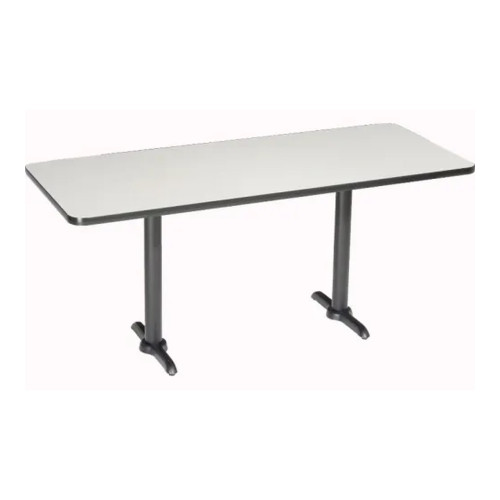 Gray Counter-Height Rectangular Restaurant Table, 72 x 30 in.FS-GLO-695801GY
Create shared dining spaces
Use these tables in restaurant dining areas, office breakrooms, school lunchrooms, and other spaces where guests, employees, or students eat and socialize.
Match height and footprint to the space
Choose a rectangular, square, or round tabletop based on the layout, and select standard, counter, or bar height to suit the intended dining or gathering experience.
Support meals, breaks, and conversation
These tables provide a dedicated surface for everyday meals, tabletop use, breaks, casual gatherings, and informal socializing.
Look for practical daily-use details
Laminate tops can offer easy-clean, low-maintenance surfaces. Protective vinyl T-mold edges, leveling capability, and stable steel bases are useful considerations for commercial settings.
Representative products include rectangular, square, and round tops.
Examples include standard, counter-height, and bar-height tables.
Representative tables list a 300 lb. capacity for everyday tabletop use.
Examples use steel T-leg or pedestal base designs.
Compare table formats
Use this overview to align the table format with the setting and type of gathering you want to support.
| Format | Best suited for | Features to consider |
|---|---|---|
| Rectangular tables | Shared meals, breakrooms, lunchrooms, and restaurant seating areas | Available examples include laminate tops, protective edges, and T-leg or pedestal bases. |
| Square tables | Compact dining and informal group use | A square counter-height example combines a shared surface with a leveling pedestal base. |
| Round tables | Meals and casual conversation in shared spaces | A round bar-height example offers a compact surface with a leveling base. |
Plan the right fit before choosing
Choose a shape that works with your room
Table shape affects how the room feels and how easily people can gather around the surface. Rectangular tables can provide a shared dining surface, while square and round options can support more compact gathering areas.
- Use rectangular tables for shared dining and breakroom layouts.
- Consider square tops for a compact footprint with a spacious shared surface.
- Choose round tops for meals and casual conversation in shared spaces.
Coordinate height with the intended experience
Available examples include standard-height breakroom tables as well as elevated counter-height and bar-height designs. The right choice depends on how the table will be used in the dining, breakroom, or lunchroom area.
- Counter-height tables create an elevated surface for dining and informal gatherings.
- Bar-height tables provide an elevated option for eating, relaxing, or socializing.
- Standard-height tables offer a practical surface for everyday dining and gathering.
Consider surfaces, edges, and base support
For daily commercial use, review tabletop maintenance needs and the details that help support a steady setup. Representative options include laminate tabletops, vinyl T-mold edges, steel T-leg or pedestal bases, and leveling capability for uneven floors.
- Laminate tabletops are described as low-maintenance and easy to clean.
- Vinyl T-mold edges help protect the tabletop core from food and moisture exposure.
- Leveling bases or legs can help stabilize a table on uneven floors.
Common questions before buying
What spaces are cafeteria and restaurant tables used in?
Representative uses include restaurant dining areas, office breakrooms, school lunchrooms, and commercial shared spaces.
What table heights are available in the examples?
The supplied examples include standard-height breakroom tables, counter-height restaurant tables, and a bar-height restaurant table.
Are the tabletops easy to clean?
The representative products describe laminate tabletops as low-maintenance and easy to clean for daily use.
Can these tables be used on uneven floors?
Several representative tables include leveling capability through their base or legs to help provide stability on uneven floors.
Choosing the right file folders
FilingSupplies.com carries end-tab folders for open-shelf systems, top-tab folders for drawer filing, and heavy-duty classification folders with dividers and fasteners for multi-section records. Pick letter or legal size, then choose material (11-pt, 14-pt, or 18-pt manila), optional reinforced tabs, color-coding, and expansion capacity to match your volume.
Folder FAQs
End-tab vs. top-tab — what’s the difference?
When should I choose classification folders?
Letter or legal size — how do I pick?
What tab and material options are available?
Can I add fasteners, pockets, or expansion?
Do you offer volume pricing or custom printing?
Outfitting classrooms that work all day
Build a durable, age-appropriate classroom with furniture, early-learning materials, storage bins, learning centers, and presentation tools. Choose adjustable pieces that grow with grades, label friendly bins for quick clean-up, and tech carts that secure, charge, and move easily.
Education FAQs
What safety labels should I look for on school and early-childhood items?
How do I pick classroom furniture across grade levels?
What’s the best way to organize supplies and centers?
How do I choose learning games and manipulatives by age?
What should I consider in a charging/tech cart?
Do you support school POs, bulk pricing, or custom printing?
Choosing the right labels
From color file labels to printable sheets, select the right size, adhesive, and print method to match your filing system and equipment. Decide on sheet vs. roll format, then pick permanent or removable adhesive and your color set.
Labels FAQs
Sheet vs. roll labels — what’s the difference?
Permanent or removable adhesive?
Will these labels work in my printer?
How do I match the label size to folder tabs or binder spines?
Can I get preprinted sequences or color bars?
Do you have templates?
Choosing the right tab dividers
Organize binders with preprinted or blank tabs. Select the number of tabs per set (5, 8, 10, or 12), choose paper with reinforced tabs or durable poly, and match letter or legal size for a clean fit.
Tab Dividers FAQs
What do 5-, 8-, 10-, or 12-tab sets mean?
Paper vs. poly — which should I choose?
Are the tabs printable?
Will they fit my binder?
Can I mix preprinted and blank tabs?
Do you make custom tab sets?
Choosing the right office supplies
From everyday paper and pens to binders, mailers, and desk organizers, pick durable, compatible options that match your equipment and team size. Start with the right paper and labeling, then add organizers that keep work moving.
Office Supplies FAQs
Which paper weight and brightness should I choose?
Round-ring vs. D-ring binders — what’s the difference?
What does “sheet capacity” mean on staplers and hole punches?
Will labels, envelopes, and mailers work with my printer?
How do I choose mailers and shipping boxes?
Do you offer eco-conscious options or bulk pricing?
Choosing the right sports & PE equipment
Equip classes, teams, and rec programs with durable balls, goals, cones, pinnies, storage, and safety gear. Match sizes and materials to age group and whether you play indoors or outdoors.
Sports & Athletics FAQs
What ball sizes should I choose for different ages?
- Basketball: Size 5 (27.5") youth, Size 6 (28.5") intermediate, Size 7 (29.5") official.
- Soccer: Size 3 up to ~8 years, Size 4 ~8–12, Size 5 ~12+.
- Volleyball: Regulation balls for teens/adults; lighter training balls for younger players.
Indoor vs. outdoor — which materials hold up best?
How many pinnies, cones, or markers do I need?
Tips for storage and care?
Are items latex‑free and school‑safe?
Do you support bulk orders or custom printing (team names)?
Choosing the right FireKing fireproof cabinet
FireKing fireproof file cabinets, safes, and storage cabinets are designed to protect important documents, records, and valuables from fire damage while keeping files organized and accessible. When choosing a FireKing cabinet, compare drawer configuration, storage type, fire rating, and overall capacity based on the records or materials you need to protect.
FireKing FAQs
What is the difference between FireKing vertical and lateral file cabinets?
What can I store in a FireKing fireproof file cabinet?
Are FireKing cabinets only for paper records?
How do I choose between a FireKing safe, file cabinet, or storage cabinet?
What sizes are available in FireKing cabinets?
Are FireKing cabinets used in offices, medical facilities, and government records storage?
Can I buy FireKing cabinets in bulk or get help choosing the right model?
Shipping & Policies
Do you offer free shipping?
What are your shipping rates?
- $6.95 for labels-only orders under $40
- $14.95 flat rate for everything else