
-
Speedi-Boot
10 x 10 x 10 Ceiling Register Vent Boot with Adjustable Hangers
Our Price:$41.94This ceiling register vent boot is designed for HVAC installers, contractors, and remodelers who need to terminate ductwork at a ceiling or wall register location. Its adjustable hangers support...
-
Speedi-Boot
90-Degree Register Vent Boot with Adjustable Hangers, 4 in. x 10 in. x 4 in.
Our Price:$36.94This 90-degree register vent boot is designed for HVAC installers and contractors terminating ductwork at ceiling or wall registers. Its adjustable hangers help position and secure the boot during...
-
Speedi-Boot
Ceiling Register Vent Boot with Adjustable Hangers, 12 x 12 x 10 in.
Our Price:$79.94This ceiling register vent boot is designed for HVAC installers and contractors placing registers in ceiling or wall applications. It provides a supported termination point for a register while...
-
Speedi-Boot
Ceiling Register Vent Boot with Adjustable Hangers, 12 x 12 x 12 in.
Our Price:$84.94This ceiling register vent boot is designed for HVAC installers and contractors who need to position and secure a ceiling or wall register connection. Its adjustable hangers support placement between...
-
Speedi-Boot
Straight Register Vent Boot with Adjustable Hangers, 4 in. x 10 in. x 4 in.
Our Price:$36.94This straight register vent boot is used by HVAC installers and building professionals to terminate ductwork at a wall or ceiling register opening. Its adjustable hanger arms support positioning the...
-
Speedi-Boot
Straight Register Vent Boot with Adjustable Hangers, 6 in. x 8 in. x 6 in.
Our Price:$42.94This straight register vent boot is an HVAC ductwork component for contractors, installers, and maintenance teams routing air to a wall or ceiling register. Its adjustable hangers help position and...
-
Speedi-Boot
Torpedo End Register Vent Boot with Adjustable Hangers, 4 in. x 10 in. x 4 in.
Our Price:$36.94This torpedo end register vent boot is designed for HVAC ductwork installers and contractors who need to position a register opening in wall, ceiling, or drop-ceiling applications. Its adjustable...


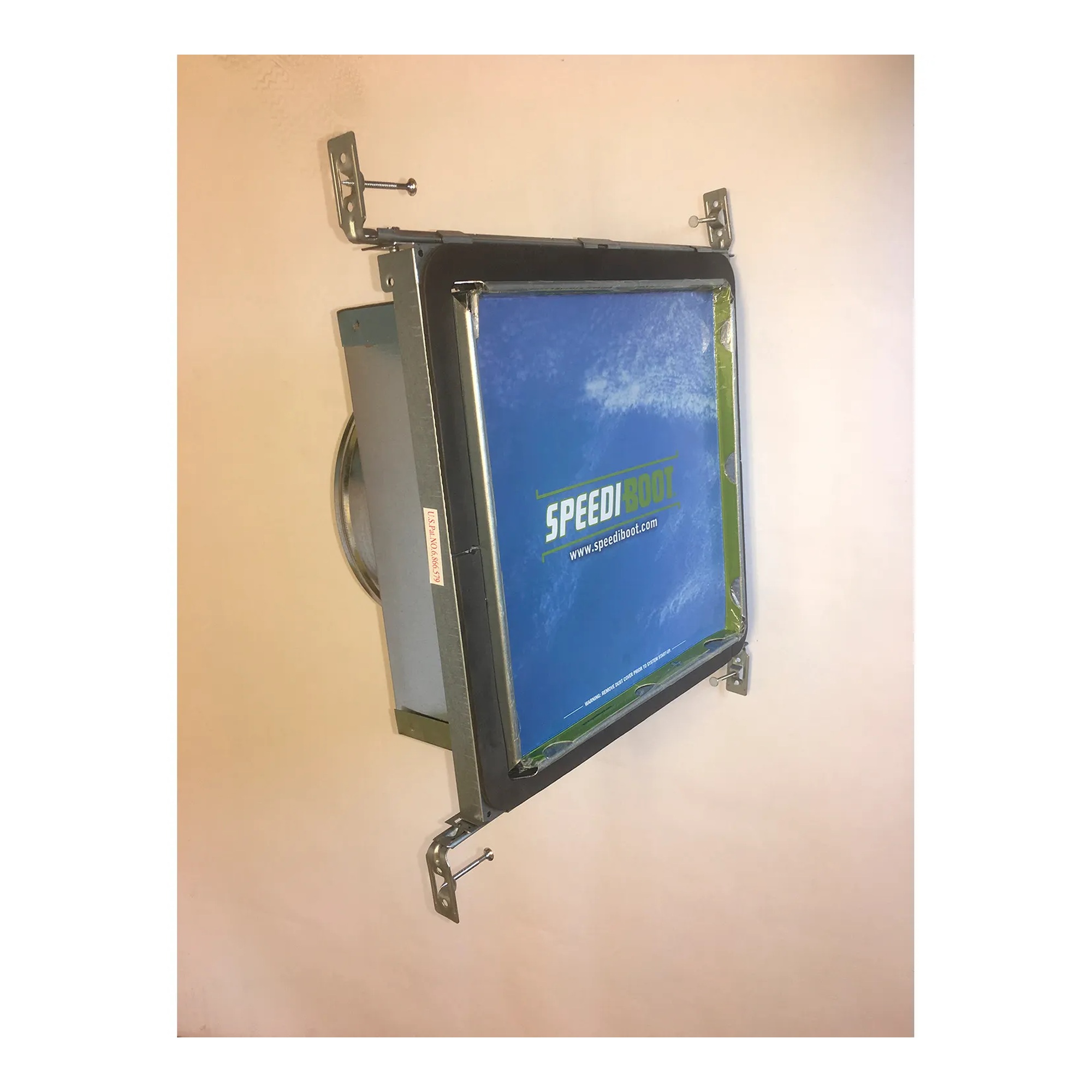


Duct Boots: Selection Guide for HVAC Installers and Contractors
Duct boots connect your HVAC ductwork to wall, ceiling, or drop-ceiling registers and grilles, providing a clean, supported termination point that holds the register opening in position. Whether you're working on new construction, a remodel, or a ductwork replacement, choosing the right boot style and size keeps airflow on track and installation straightforward.
Popular examples in this category
 90-Degree Register Vent Boot with Adjustable Hangers, 4 in. x 10 in. x 4 in.WBB3122008
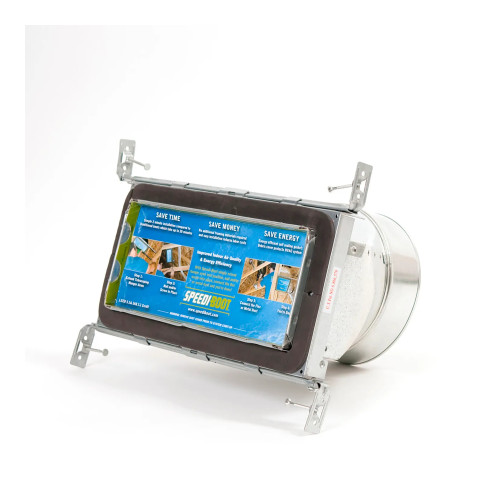 Straight Register Vent Boot with Adjustable Hangers, 4 in. x 10 in. x 4 in.WBB3122009
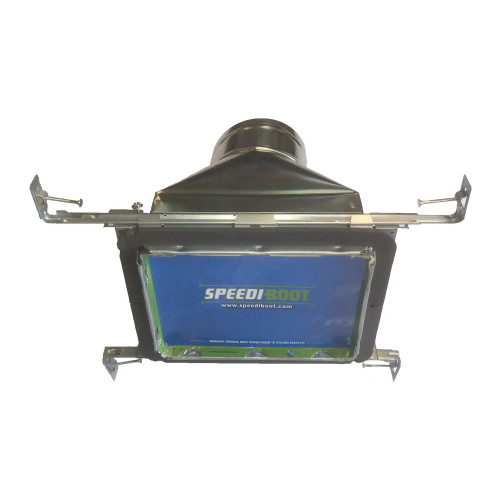 Straight Register Vent Boot with Adjustable Hangers, 6 in. x 8 in. x 6 in.WBB3122015
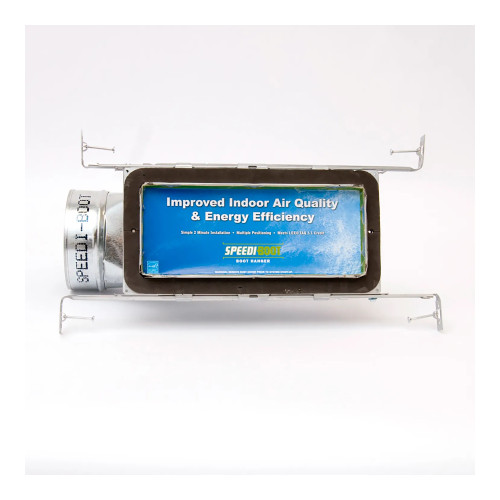 Torpedo End Register Vent Boot with Adjustable Hangers, 4 in. x 10 in. x 4 in.WBB3122045
Where Duct Boots Are Used
Duct boots are used wherever ductwork terminates at a register or grille opening. HVAC installers, contractors, remodelers, and maintenance teams rely on them during new construction, renovation projects, and ductwork replacement to position and secure register openings in walls, ceilings, and drop-ceiling grids.
Choosing the Right Duct Boot
Match the boot style to your duct route and register location. Verify that the listed boot dimensions align with both your duct size and your register opening. Then compare installation features like adjustable hangers, pre-attached fasteners, airtight gaskets, mud rings, and debris covers to fit your project requirements.
Typical Duct Boot Applications
Duct boots are installed in residential and commercial HVAC systems for supply and return air terminations. Common applications include floor-to-wall transitions, ceiling register drops, drop-ceiling grid terminations, and wall register placements in new builds, additions, and remodeling projects.
Features That Improve Installation Results
Airtight gaskets reduce air leakage at the boot-to-register connection. Mud rings help maintain the opening shape and minimize gaps during drywall finishing. Debris covers keep dust and construction material out of the duct during the build phase, reducing cleanup and protecting system components.
Straight, 90-degree, torpedo end, and ceiling register boot styles cover the most common duct routes and register locations in residential and commercial HVAC work.
Every duct boot has a duct collar size and a register face opening size — both must align with your ductwork and register before you order.
Boots with airtight gaskets help reduce air leakage at the connection point between the boot and the register or grille.
Debris covers keep dust and construction material out of open duct boots during the build phase, protecting the duct system until registers are installed.
Duct Boot Style Comparison: Match the Boot to Your Application
Use this table to quickly identify which boot style fits your duct route and register location.
| Need | Best Fit | Why It Matters |
|---|---|---|
| Duct runs straight to the register without a turn | Straight Boot | Provides a direct, unobstructed connection with no airflow-reducing bends |
| Duct must change direction before reaching the register face | 90-Degree Boot | Handles the directional change within the boot, eliminating the need for a separate elbow fitting |
| Wall, ceiling, or drop-ceiling register fed from the duct end | Torpedo End Boot | Designed specifically for end-entry applications common in wall and ceiling register placements |
| Ceiling or wall termination with a flush-mounted register | Ceiling Register Boot | Positions the register opening flush to the surface for a clean, finished appearance |
| Air sealing is a priority at the register connection | Boot with Airtight Gasket | Reduces conditioned air loss at the boot-to-register joint, improving system efficiency |
Plan the right fit before choosing
Step 1: Identify Your Boot Style Based on Duct Route and Register Location
The duct route and where the register will be mounted determine which boot style you need. Selecting the wrong style can create airflow restrictions or make register mounting difficult.
- Straight boots: use when the duct runs directly to the register without a direction change
- 90-degree boots: use where the duct must change direction before reaching the register face
- Torpedo end boots: designed for wall, ceiling, or drop-ceiling register applications where the duct enters from the end
- Ceiling register boots: suited for ceiling or wall terminations where the register mounts flush to the surface
Step 2: Confirm Dimensions for Both the Duct and the Register Opening
Duct boots list two sets of dimensions: the duct collar size and the register face opening size. Both must match your existing ductwork and the register or grille you plan to install. Measure carefully before ordering to avoid gaps, leakage, or misaligned register mounting.
- Measure the duct diameter or width and height at the point of connection
- Confirm the register opening size matches the boot's face dimensions
- Check that the boot depth fits within your wall, ceiling, or floor cavity
Step 3: Select Installation Features That Match Your Project Conditions
Installation features vary by boot model and can significantly affect how quickly and cleanly the boot goes in. Review available options before purchasing to match the boot to your specific job site conditions.
- Adjustable or telescoping hangers help position the boot before the surrounding structure is finished
- Pre-attached nails or fasteners speed up installation and reduce the need for separate hardware
- Predrilled rigid frames simplify register mounting after drywall or ceiling tile is in place
- Airtight gaskets, mud rings, and debris covers are worth adding when air sealing and cleanliness matter
Common questions before buying
How do I know which duct boot size to order?
Check two measurements: the duct collar size (the opening that connects to your ductwork) and the register face opening size (the opening where the register or grille mounts). Both must match your existing duct dimensions and the register you plan to install. Measure the duct at the termination point and the rough opening in the wall or ceiling before selecting a boot.
What is the difference between a straight boot and a 90-degree boot?
A straight boot connects the duct directly to the register without changing direction, making it the right choice when the duct runs straight to the register location. A 90-degree boot is used when the duct needs to change direction before reaching the register face, which is common when transitioning from a horizontal duct run to a wall or floor register.
Do I need a mud ring with my duct boot?
Mud rings are not always required, but they are useful when drywall or other finish material will be applied around the boot opening. They help maintain the shape of the register opening during finishing work and reduce gaps between the boot face and the wall or ceiling surface, resulting in a cleaner register installation.
What does a debris cover do and when should I use one?
A debris cover fits over the open face of the duct boot during construction to prevent dust, drywall compound, insulation, and other materials from entering the duct system. Use one any time the boot is installed before the register is mounted, which is standard practice in new construction and major remodeling projects.
Choosing the right file folders
FilingSupplies.com carries end-tab folders for open-shelf systems, top-tab folders for drawer filing, and heavy-duty classification folders with dividers and fasteners for multi-section records. Pick letter or legal size, then choose material (11-pt, 14-pt, or 18-pt manila), optional reinforced tabs, color-coding, and expansion capacity to match your volume.
Folder FAQs
End-tab vs. top-tab — what’s the difference?
When should I choose classification folders?
Letter or legal size — how do I pick?
What tab and material options are available?
Can I add fasteners, pockets, or expansion?
Do you offer volume pricing or custom printing?
Outfitting classrooms that work all day
Build a durable, age-appropriate classroom with furniture, early-learning materials, storage bins, learning centers, and presentation tools. Choose adjustable pieces that grow with grades, label friendly bins for quick clean-up, and tech carts that secure, charge, and move easily.
Education FAQs
What safety labels should I look for on school and early-childhood items?
How do I pick classroom furniture across grade levels?
What’s the best way to organize supplies and centers?
How do I choose learning games and manipulatives by age?
What should I consider in a charging/tech cart?
Do you support school POs, bulk pricing, or custom printing?
Choosing the right labels
From color file labels to printable sheets, select the right size, adhesive, and print method to match your filing system and equipment. Decide on sheet vs. roll format, then pick permanent or removable adhesive and your color set.
Labels FAQs
Sheet vs. roll labels — what’s the difference?
Permanent or removable adhesive?
Will these labels work in my printer?
How do I match the label size to folder tabs or binder spines?
Can I get preprinted sequences or color bars?
Do you have templates?
Choosing the right tab dividers
Organize binders with preprinted or blank tabs. Select the number of tabs per set (5, 8, 10, or 12), choose paper with reinforced tabs or durable poly, and match letter or legal size for a clean fit.
Tab Dividers FAQs
What do 5-, 8-, 10-, or 12-tab sets mean?
Paper vs. poly — which should I choose?
Are the tabs printable?
Will they fit my binder?
Can I mix preprinted and blank tabs?
Do you make custom tab sets?
Choosing the right office supplies
From everyday paper and pens to binders, mailers, and desk organizers, pick durable, compatible options that match your equipment and team size. Start with the right paper and labeling, then add organizers that keep work moving.
Office Supplies FAQs
Which paper weight and brightness should I choose?
Round-ring vs. D-ring binders — what’s the difference?
What does “sheet capacity” mean on staplers and hole punches?
Will labels, envelopes, and mailers work with my printer?
How do I choose mailers and shipping boxes?
Do you offer eco-conscious options or bulk pricing?
Choosing the right sports & PE equipment
Equip classes, teams, and rec programs with durable balls, goals, cones, pinnies, storage, and safety gear. Match sizes and materials to age group and whether you play indoors or outdoors.
Sports & Athletics FAQs
What ball sizes should I choose for different ages?
- Basketball: Size 5 (27.5") youth, Size 6 (28.5") intermediate, Size 7 (29.5") official.
- Soccer: Size 3 up to ~8 years, Size 4 ~8–12, Size 5 ~12+.
- Volleyball: Regulation balls for teens/adults; lighter training balls for younger players.
Indoor vs. outdoor — which materials hold up best?
How many pinnies, cones, or markers do I need?
Tips for storage and care?
Are items latex‑free and school‑safe?
Do you support bulk orders or custom printing (team names)?
Choosing the right FireKing fireproof cabinet
FireKing fireproof file cabinets, safes, and storage cabinets are designed to protect important documents, records, and valuables from fire damage while keeping files organized and accessible. When choosing a FireKing cabinet, compare drawer configuration, storage type, fire rating, and overall capacity based on the records or materials you need to protect.
FireKing FAQs
What is the difference between FireKing vertical and lateral file cabinets?
What can I store in a FireKing fireproof file cabinet?
Are FireKing cabinets only for paper records?
How do I choose between a FireKing safe, file cabinet, or storage cabinet?
What sizes are available in FireKing cabinets?
Are FireKing cabinets used in offices, medical facilities, and government records storage?
Can I buy FireKing cabinets in bulk or get help choosing the right model?
Shipping & Policies
Do you offer free shipping?
What are your shipping rates?
- $6.95 for labels-only orders under $40
- $14.95 flat rate for everything else