
-
Global Industrial
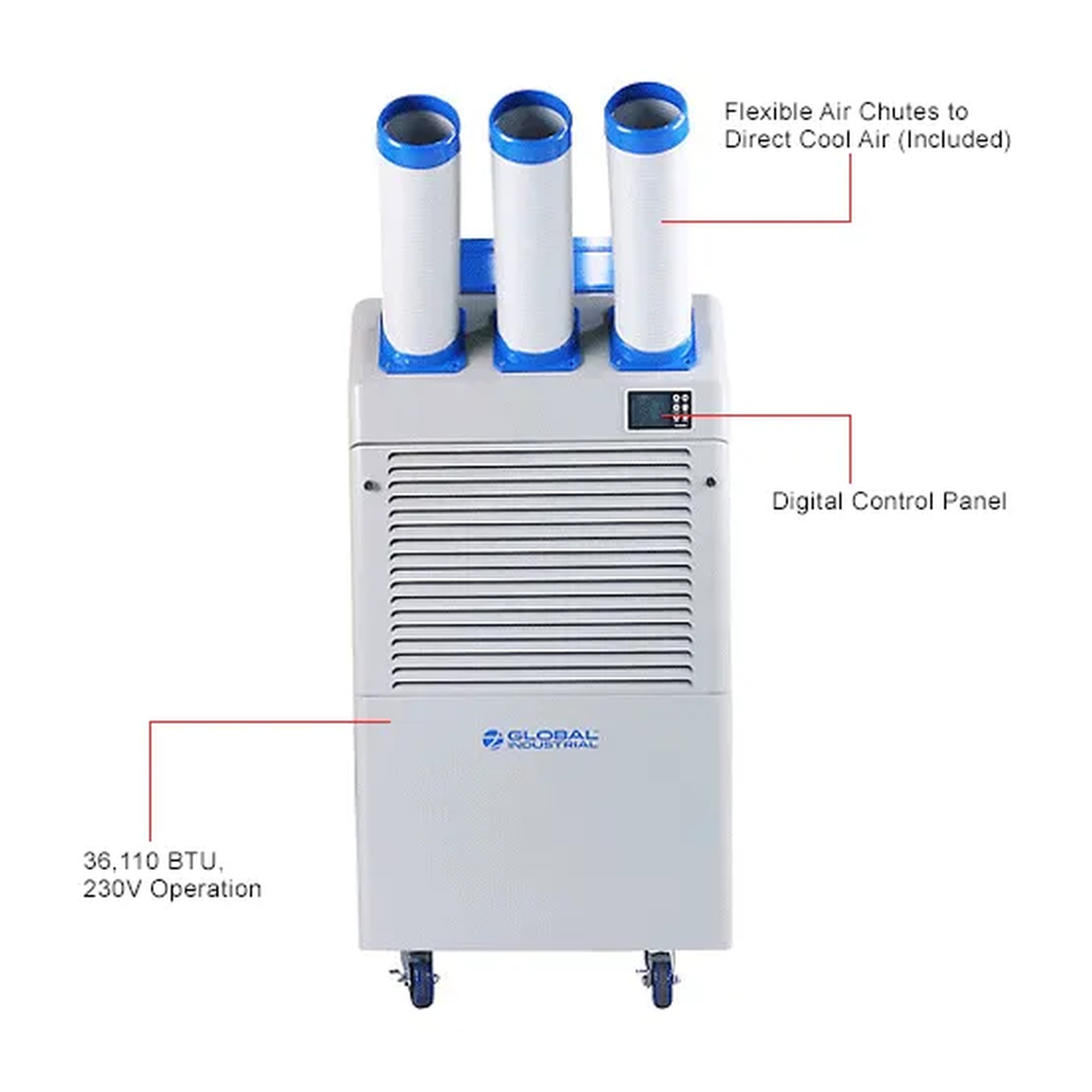
3-Ton Portable Air Conditioner with Cold Air Nozzles, 36,110 BTU, 230V - 28 in. W x 35 in. D x 54 in. H
Our Price:$7,648.99This portable air conditioner provides spot or room cooling for industrial plants, server rooms, hospitals, laboratories, and other spaces where equipment creates heat. Cold air nozzles help direct...
-
Global Industrial
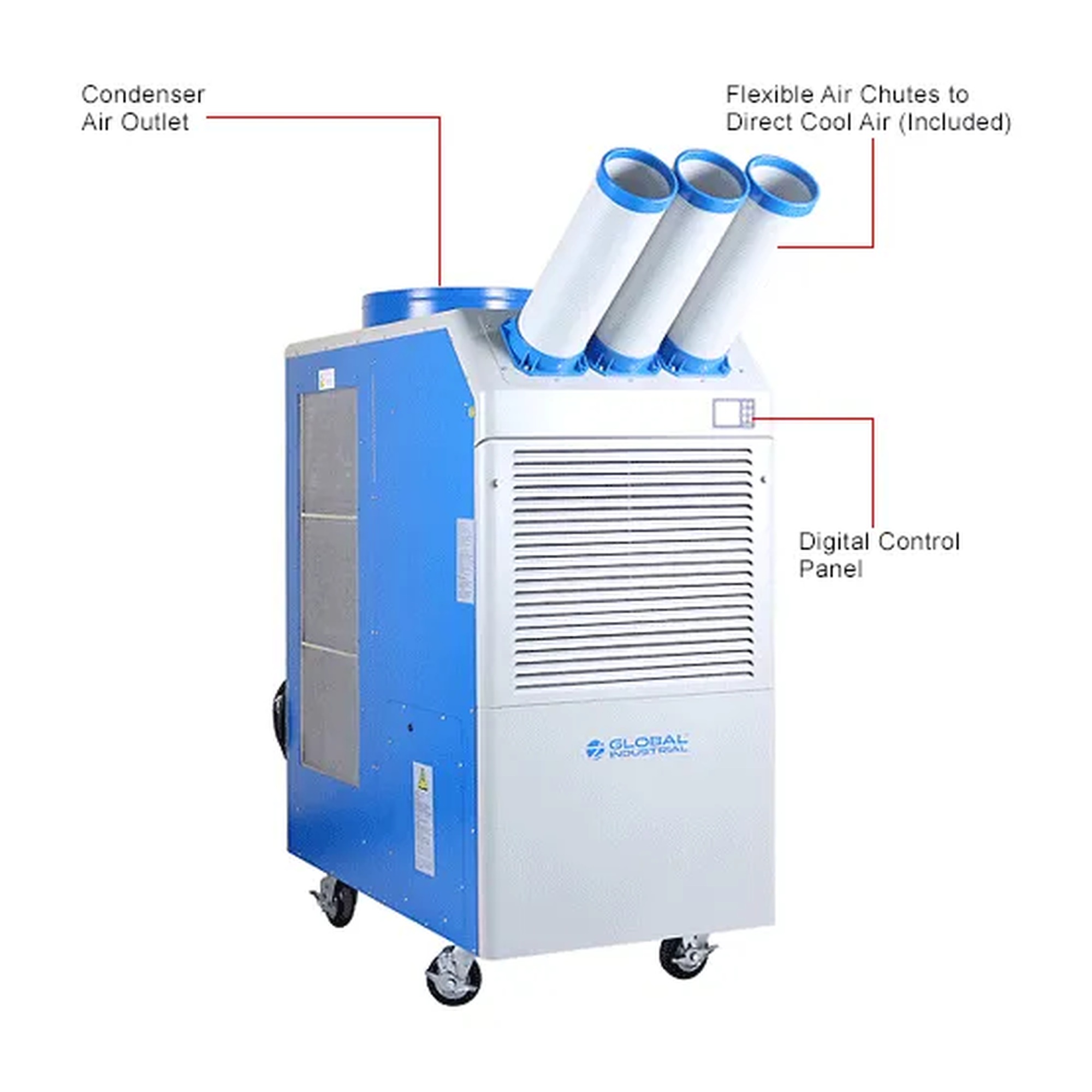
7.5 Ton Portable Air Conditioner with Three Cold Air Nozzles, 92,000 BTU, 460V - 29-1/2 in. W x 51-1/2 in. D x 60 in. H
Our Price:$11,474.99This portable air conditioner is designed for facilities teams that need targeted cooling in large work areas or heat-generating equipment spaces. Its three cold air nozzles help direct cooled air...
-
Global Industrial
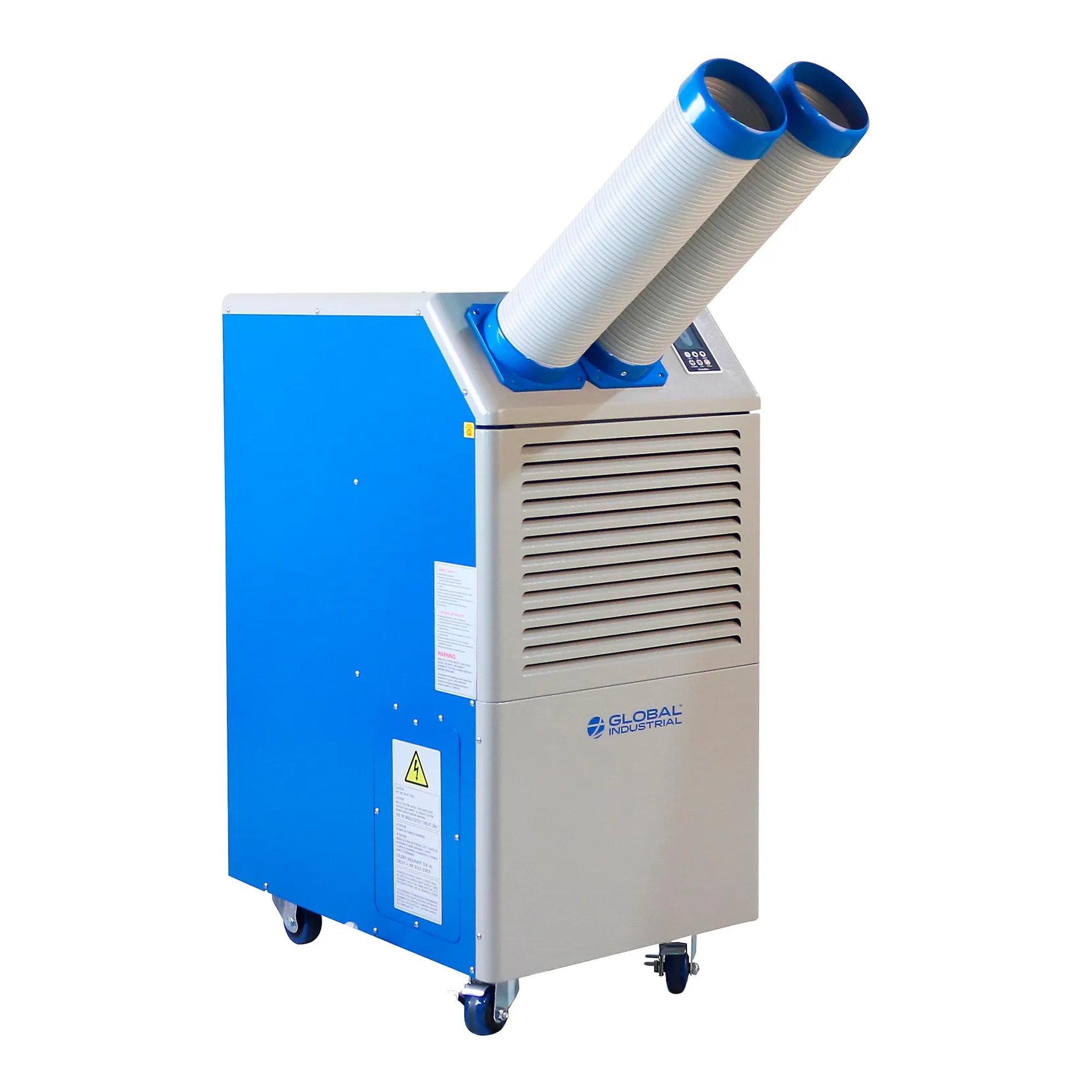
Portable Air Conditioner with Cold Air Nozzles, 2.5 Ton, 28,000 BTU, 230V - 22 in. W x 29-1/2 in. D x 47-1/2 in. H
Our Price:$5,404.99This portable air conditioner is designed for facility and operations teams that need targeted cooling for workspaces or heat-generating equipment. Cold air nozzles help direct cooling where it is...
-
Global Industrial
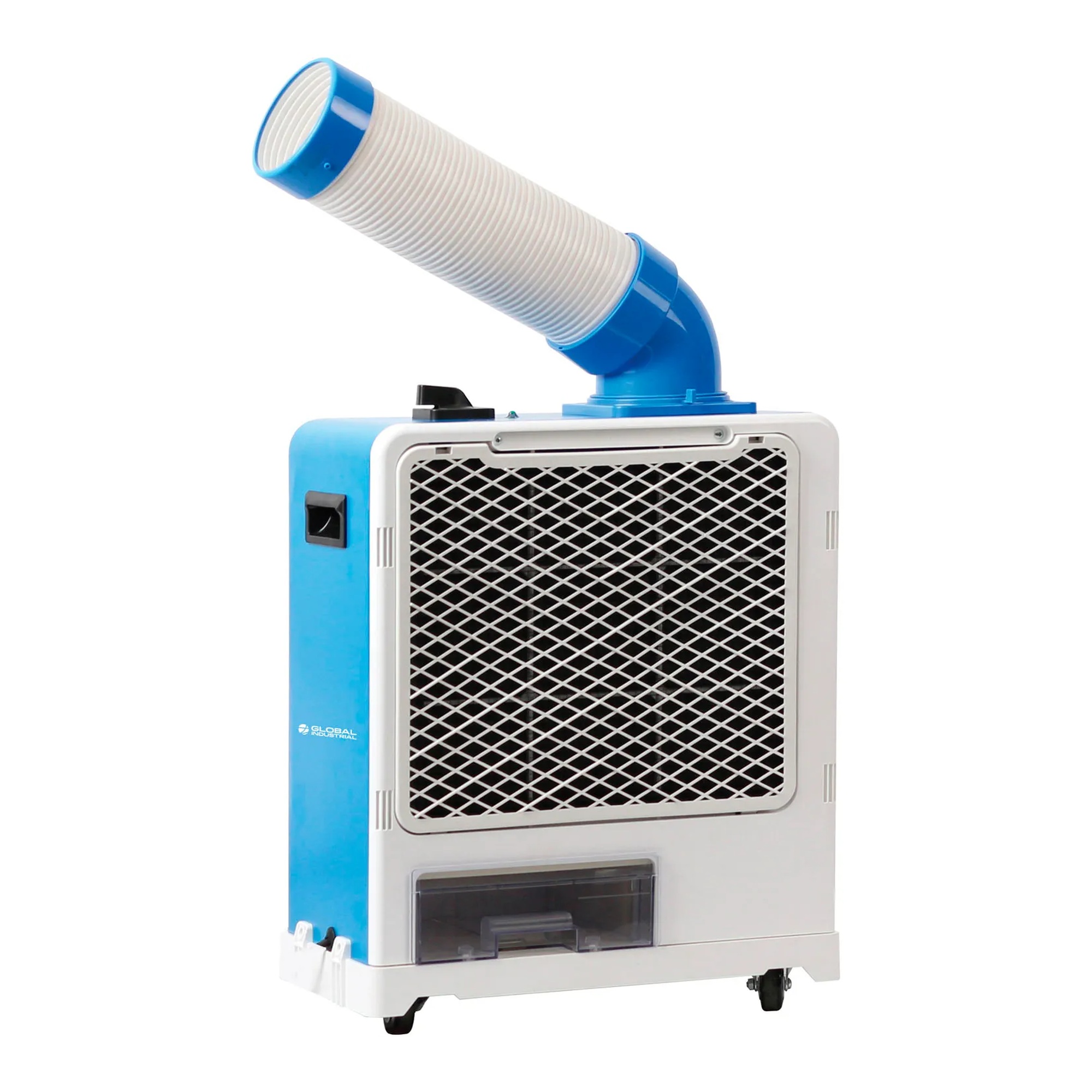
Portable Spot Cooler Air Conditioner, 6,475 BTU, 115V, R-32 - 19 in. W x 10-1/2 in. D x 22-1/4 in. H
Our Price:$668.99This portable spot cooler air conditioner helps facilities teams and commercial users cool offices, workshops, server rooms, and retail spaces. It provides spot-cooling and room-cooling thermostat...
-
Global Industrial
Water-Cooled Portable Air Conditioner, 1.3 Ton, 16,000 BTU, 115V - 20-1/2 in. W x 26-1/2 in. D x 41 in. H
Our Price:$3,718.99This water-cooled portable air conditioner provides spot or room cooling for commercial spaces where hot exhaust venting is not available. It is suited for facilities teams managing enclosed work...

Choose Portable Cooling for the Space and Task
Portable air conditioners can help facilities and operations teams address changing heat loads without permanently placing cooling equipment. Start with the area or equipment that needs cooling, then match the cooling approach, power requirements, installation conditions, and operating controls to the intended use.
Popular examples in this category
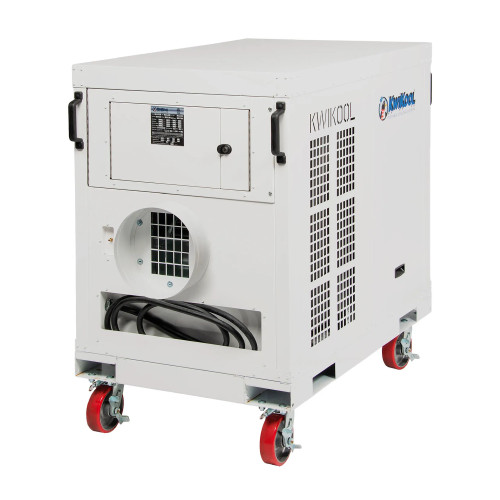 60,000 BTU Indoor/Outdoor Portable Air Conditioner with Heat, 230VFS-GLO-KPO5-21H-3
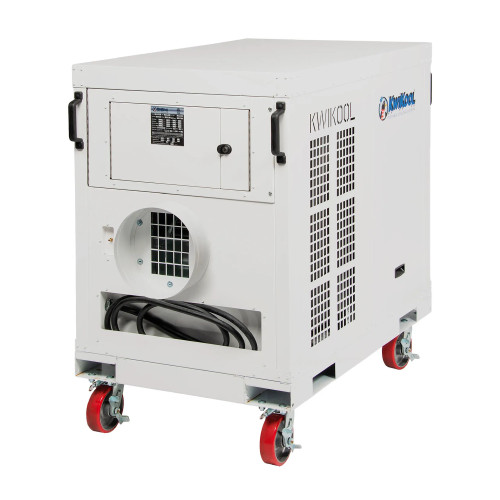 60,000 BTU Indoor/Outdoor Portable Air Conditioner with Heat, 460VFS-GLO-KPO5-43H-3
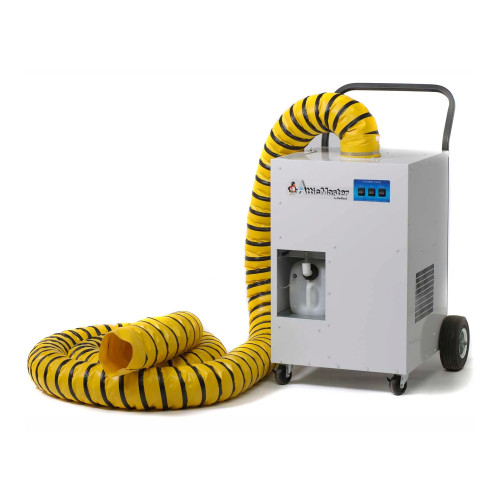 Outdoor-Rated Portable Air Conditioner, 1 Ton, 13,700 BTUFS-GLO-KAM14-3
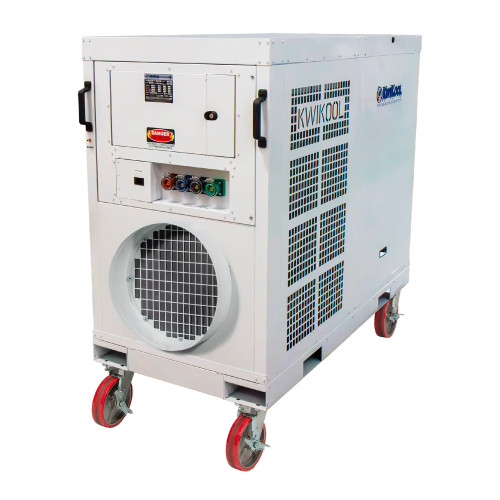 135,000 BTU Portable Air Conditioner with Heat, 230VFS-GLO-KPO12-23H-3
Cool people, work areas, or equipment
Use portable cooling for offices, workshops, retail spaces, server rooms, laboratories, hospitals, restaurants, industrial plants, and areas affected by heat-generating equipment. Spot and room cooling settings can support focused comfort or broader cooling needs.
Match cooling method to the environment
Consider whether cold air nozzles are useful for directing air toward a workstation or equipment. For enclosed areas where hot-exhaust venting is not available, a water-cooled unit may be appropriate when continuous water and drain connections are available.
Plan for installation conditions
Review the available electrical service, such as 115V, 230V, or 460V, before selecting a unit. Also consider whether the application calls for hot-exhaust venting, water and drain connections, or condensate-management features.
Look for practical operating features
Two fan speeds, thermostat settings, timers, locking swivel casters, washable mesh filters, drain pumps, and condensate overflow protection can help teams position, operate, and maintain portable cooling equipment.
Selected models offer settings for focused cooling or room comfort.
Selected units provide two fan speeds for changing cooling needs.
Representative units operate at different listed voltages.
Selected models direct cooled air toward work areas or equipment.
Compare Portable Cooling Approaches
Use the application conditions to determine which general cooling approach best fits the space.
| Cooling approach | Best suited for | Planning considerations |
|---|---|---|
| Cold air nozzle portable units | Targeted cooling for work areas or heat-generating equipment | Review available voltage, positioning needs, and condensate-management features. |
| Spot and room cooling units | Offices, workshops, server rooms, and retail spaces needing focused or broader cooling | Check stated coverage guidance, electrical requirements, and timer or thermostat preferences. |
| Water-cooled portable units | Enclosed areas where hot-exhaust venting is not available | Requires a continuous water supply and drain connection. |
Plan the right fit before choosing
Decide between directed, room, and water-cooled cooling
Cold air nozzles help concentrate cooled air on selected work areas or heat-generating equipment. Units with spot- and room-cooling settings support either focused cooling or broader room comfort. Water-cooled portable air conditioners are designed for enclosed areas where hot exhaust cannot be vented.
- Use nozzles to direct cooling toward a specific area or equipment.
- Choose spot or room settings based on the cooling goal.
- Consider water-cooled operation when hot-exhaust venting is not available.
Confirm power, connections, and condensate needs
Review the electrical requirements listed for the unit and compare them with the available circuit or facility power. Consider how condensate will be managed: some models include a built-in drain pump or overflow protection, while water-cooled models use continuous water and drain connections.
- Verify the required voltage before installation.
- Plan for condensate management during operation.
- For water-cooled equipment, confirm water and drain access.
Choose controls and maintenance features that fit the team
Adjustable fan speeds can help respond to changing cooling needs. Thermostats and on/off timers provide additional operating control, while locking casters support moving a unit into position and securing it. Washable mesh filters can be removed and cleaned for continued use.
- Use locking casters to reposition and secure the unit.
- Select timer and thermostat controls when scheduled operation is useful.
- Clean washable mesh filters as part of routine maintenance.
Common questions before buying
What are commercial portable air conditioners used for?
They provide spot or room cooling in commercial and facility environments, including workspaces, equipment areas, server rooms, laboratories, and retail spaces.
When are cold air nozzles helpful?
They are helpful when cooled air needs to be directed toward selected work areas or heat-generating equipment.
When should I consider a water-cooled portable air conditioner?
Consider one for enclosed areas where hot exhaust cannot be vented, provided continuous water and drain connections are available.
What should I check before choosing a unit?
Review the cooling application, listed electrical requirements, venting or water-connection conditions, condensate management, and desired controls.
Choosing the right file folders
FilingSupplies.com carries end-tab folders for open-shelf systems, top-tab folders for drawer filing, and heavy-duty classification folders with dividers and fasteners for multi-section records. Pick letter or legal size, then choose material (11-pt, 14-pt, or 18-pt manila), optional reinforced tabs, color-coding, and expansion capacity to match your volume.
Folder FAQs
End-tab vs. top-tab — what’s the difference?
When should I choose classification folders?
Letter or legal size — how do I pick?
What tab and material options are available?
Can I add fasteners, pockets, or expansion?
Do you offer volume pricing or custom printing?
Outfitting classrooms that work all day
Build a durable, age-appropriate classroom with furniture, early-learning materials, storage bins, learning centers, and presentation tools. Choose adjustable pieces that grow with grades, label friendly bins for quick clean-up, and tech carts that secure, charge, and move easily.
Education FAQs
What safety labels should I look for on school and early-childhood items?
How do I pick classroom furniture across grade levels?
What’s the best way to organize supplies and centers?
How do I choose learning games and manipulatives by age?
What should I consider in a charging/tech cart?
Do you support school POs, bulk pricing, or custom printing?
Choosing the right labels
From color file labels to printable sheets, select the right size, adhesive, and print method to match your filing system and equipment. Decide on sheet vs. roll format, then pick permanent or removable adhesive and your color set.
Labels FAQs
Sheet vs. roll labels — what’s the difference?
Permanent or removable adhesive?
Will these labels work in my printer?
How do I match the label size to folder tabs or binder spines?
Can I get preprinted sequences or color bars?
Do you have templates?
Choosing the right tab dividers
Organize binders with preprinted or blank tabs. Select the number of tabs per set (5, 8, 10, or 12), choose paper with reinforced tabs or durable poly, and match letter or legal size for a clean fit.
Tab Dividers FAQs
What do 5-, 8-, 10-, or 12-tab sets mean?
Paper vs. poly — which should I choose?
Are the tabs printable?
Will they fit my binder?
Can I mix preprinted and blank tabs?
Do you make custom tab sets?
Choosing the right office supplies
From everyday paper and pens to binders, mailers, and desk organizers, pick durable, compatible options that match your equipment and team size. Start with the right paper and labeling, then add organizers that keep work moving.
Office Supplies FAQs
Which paper weight and brightness should I choose?
Round-ring vs. D-ring binders — what’s the difference?
What does “sheet capacity” mean on staplers and hole punches?
Will labels, envelopes, and mailers work with my printer?
How do I choose mailers and shipping boxes?
Do you offer eco-conscious options or bulk pricing?
Choosing the right sports & PE equipment
Equip classes, teams, and rec programs with durable balls, goals, cones, pinnies, storage, and safety gear. Match sizes and materials to age group and whether you play indoors or outdoors.
Sports & Athletics FAQs
What ball sizes should I choose for different ages?
- Basketball: Size 5 (27.5") youth, Size 6 (28.5") intermediate, Size 7 (29.5") official.
- Soccer: Size 3 up to ~8 years, Size 4 ~8–12, Size 5 ~12+.
- Volleyball: Regulation balls for teens/adults; lighter training balls for younger players.
Indoor vs. outdoor — which materials hold up best?
How many pinnies, cones, or markers do I need?
Tips for storage and care?
Are items latex‑free and school‑safe?
Do you support bulk orders or custom printing (team names)?
Choosing the right FireKing fireproof cabinet
FireKing fireproof file cabinets, safes, and storage cabinets are designed to protect important documents, records, and valuables from fire damage while keeping files organized and accessible. When choosing a FireKing cabinet, compare drawer configuration, storage type, fire rating, and overall capacity based on the records or materials you need to protect.
FireKing FAQs
What is the difference between FireKing vertical and lateral file cabinets?
What can I store in a FireKing fireproof file cabinet?
Are FireKing cabinets only for paper records?
How do I choose between a FireKing safe, file cabinet, or storage cabinet?
What sizes are available in FireKing cabinets?
Are FireKing cabinets used in offices, medical facilities, and government records storage?
Can I buy FireKing cabinets in bulk or get help choosing the right model?
Shipping & Policies
Do you offer free shipping?
What are your shipping rates?
- $6.95 for labels-only orders under $40
- $14.95 flat rate for everything else