

-
Global Industrial
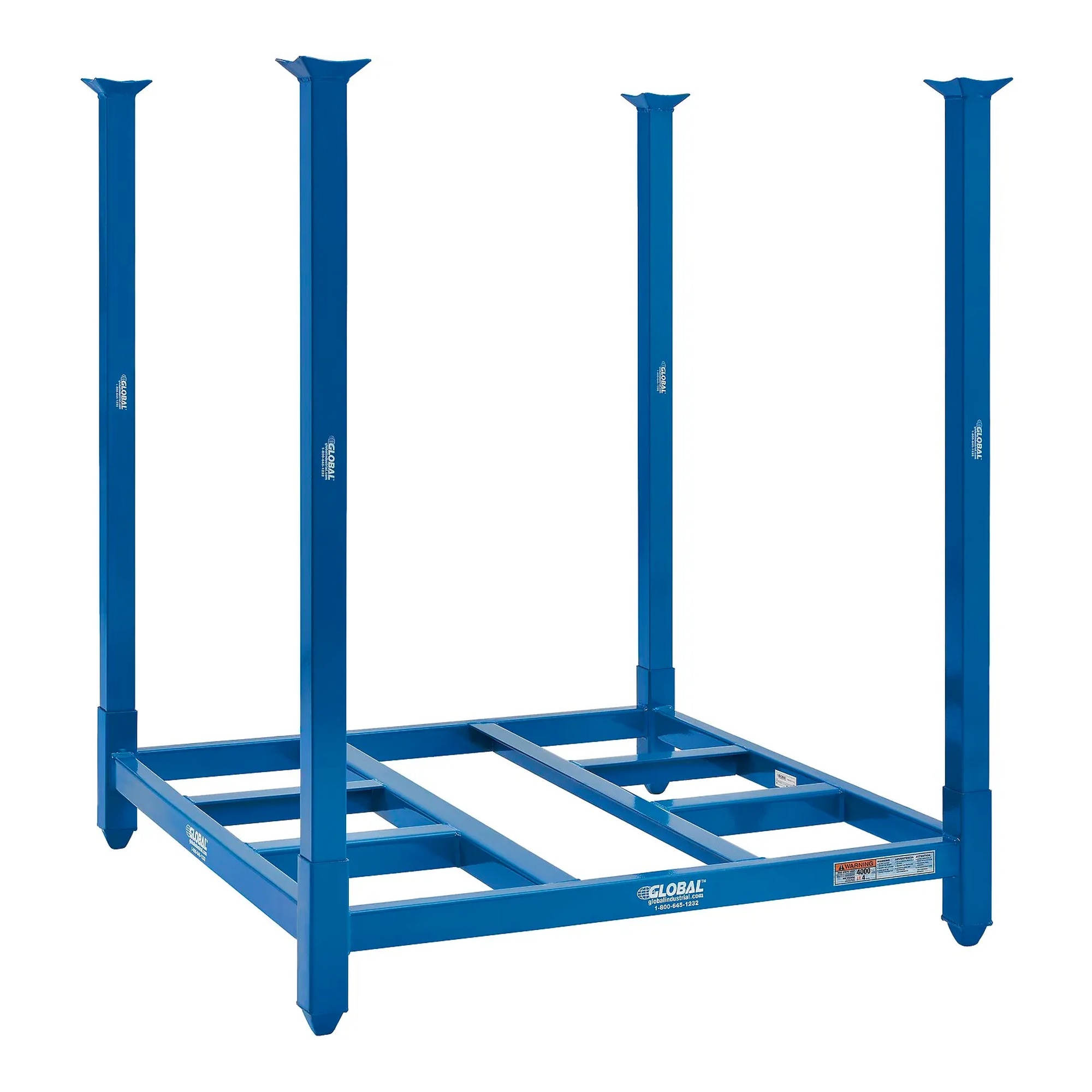
Portable Steel Stack Rack - 48 in. W x 42 in. D x 56-13/16 in. H
Our Price:$409.94This portable stack rack gives warehouse and storage teams a movable platform for organizing palletized goods, boxes, and equipment. It provides a flexible alternative to permanently installed...
Stack Rack Buying Guide
Stack racks can help teams create organized storage for loads that need to be moved, separated, or stacked. Use the load, handling method, and stacking needs of your operation to identify the right configuration.
Popular examples in this category
 Portable Steel Stack Rack - 48 in. W x 42 in. D x 56-13/16 in. HFS-GLO-798925
Organize stored loads
Use stack racks to support palletized goods, boxes, equipment, and other stored materials in warehouse or storage settings.
Match the rack to the work
Review the load to be stored, whether vertical stacking is needed, and how forklifts will approach and reposition the rack.
Flexible warehouse storage
Stack racks offer a movable alternative to permanently installed storage racks and can help keep stored loads separated.
Consider post and base details
Removable stacking posts can support stacked storage, while raised stacking feet can help align one rack with another.
The featured steel stack rack supports heavy stored loads, equipment, and palletized materials.
The featured rack can be moved from multiple sides.
Featured stacking posts snap into base sockets for straightforward installation.
The featured rack's feet elevate the base and fit into posts for stacking alignment.
Compare Stack Rack Selection Factors
Focus on the storage and handling details that affect how a rack will work in your space.
| Selection factor | What to consider | Featured rack detail |
|---|---|---|
| Stored load | Weight and type of goods, boxes, or equipment | 4,000 lb capacity |
| Movement | How the rack will be approached and repositioned | Four-way forklift access |
| Vertical stacking | Need to stabilize and align stacked racks | Removable posts and raised stacking feet |
| Setup | How posts are installed | Posts snap into base sockets without tools |
Plan the right fit before choosing
Start with what needs to be stored
Consider the type and weight of the materials going onto the rack, including palletized goods, cartons, and equipment. Select a rack with capacity appropriate for the intended stored load.
- Identify the materials to be stored.
- Account for the weight of each loaded rack.
- Keep stored loads separated as needed.
Make movement part of the selection
If racks will be repositioned during storage or handling, forklift access can affect placement flexibility. Four-way forklift access allows a rack to be moved from multiple sides.
- Consider where forklifts can approach the rack.
- Plan rack positioning around available access routes.
- Choose a movable storage approach when permanent racking is not required.
Evaluate vertical storage needs
For operations that need stacked storage, look at how posts and feet work together. Removable posts can help stabilize loads for vertical stacking, and raised stacking feet can fit into posts for alignment.
- Determine whether vertical stacking is part of the workflow.
- Review the role of removable stacking posts.
- Consider setup steps, including tool-free post installation.
Common questions before buying
What are stack racks used for?
They are used to organize palletized goods, boxes, equipment, and other stored loads in warehouse and storage areas.
Can stack racks be moved by forklift?
The featured rack has four-way forklift access, allowing movement from multiple sides.
How do stacking posts install on the featured rack?
The posts snap into the base sockets for tool-free installation.
How do stacked racks align?
On the featured rack, raised stacking feet fit into the posts to support secure stacking alignment.
Choosing the right file folders
FilingSupplies.com carries end-tab folders for open-shelf systems, top-tab folders for drawer filing, and heavy-duty classification folders with dividers and fasteners for multi-section records. Pick letter or legal size, then choose material (11-pt, 14-pt, or 18-pt manila), optional reinforced tabs, color-coding, and expansion capacity to match your volume.
Folder FAQs
End-tab vs. top-tab — what’s the difference?
When should I choose classification folders?
Letter or legal size — how do I pick?
What tab and material options are available?
Can I add fasteners, pockets, or expansion?
Do you offer volume pricing or custom printing?
Outfitting classrooms that work all day
Build a durable, age-appropriate classroom with furniture, early-learning materials, storage bins, learning centers, and presentation tools. Choose adjustable pieces that grow with grades, label friendly bins for quick clean-up, and tech carts that secure, charge, and move easily.
Education FAQs
What safety labels should I look for on school and early-childhood items?
How do I pick classroom furniture across grade levels?
What’s the best way to organize supplies and centers?
How do I choose learning games and manipulatives by age?
What should I consider in a charging/tech cart?
Do you support school POs, bulk pricing, or custom printing?
Choosing the right labels
From color file labels to printable sheets, select the right size, adhesive, and print method to match your filing system and equipment. Decide on sheet vs. roll format, then pick permanent or removable adhesive and your color set.
Labels FAQs
Sheet vs. roll labels — what’s the difference?
Permanent or removable adhesive?
Will these labels work in my printer?
How do I match the label size to folder tabs or binder spines?
Can I get preprinted sequences or color bars?
Do you have templates?
Choosing the right tab dividers
Organize binders with preprinted or blank tabs. Select the number of tabs per set (5, 8, 10, or 12), choose paper with reinforced tabs or durable poly, and match letter or legal size for a clean fit.
Tab Dividers FAQs
What do 5-, 8-, 10-, or 12-tab sets mean?
Paper vs. poly — which should I choose?
Are the tabs printable?
Will they fit my binder?
Can I mix preprinted and blank tabs?
Do you make custom tab sets?
Choosing the right office supplies
From everyday paper and pens to binders, mailers, and desk organizers, pick durable, compatible options that match your equipment and team size. Start with the right paper and labeling, then add organizers that keep work moving.
Office Supplies FAQs
Which paper weight and brightness should I choose?
Round-ring vs. D-ring binders — what’s the difference?
What does “sheet capacity” mean on staplers and hole punches?
Will labels, envelopes, and mailers work with my printer?
How do I choose mailers and shipping boxes?
Do you offer eco-conscious options or bulk pricing?
Choosing the right sports & PE equipment
Equip classes, teams, and rec programs with durable balls, goals, cones, pinnies, storage, and safety gear. Match sizes and materials to age group and whether you play indoors or outdoors.
Sports & Athletics FAQs
What ball sizes should I choose for different ages?
- Basketball: Size 5 (27.5") youth, Size 6 (28.5") intermediate, Size 7 (29.5") official.
- Soccer: Size 3 up to ~8 years, Size 4 ~8–12, Size 5 ~12+.
- Volleyball: Regulation balls for teens/adults; lighter training balls for younger players.
Indoor vs. outdoor — which materials hold up best?
How many pinnies, cones, or markers do I need?
Tips for storage and care?
Are items latex‑free and school‑safe?
Do you support bulk orders or custom printing (team names)?
Choosing the right FireKing fireproof cabinet
FireKing fireproof file cabinets, safes, and storage cabinets are designed to protect important documents, records, and valuables from fire damage while keeping files organized and accessible. When choosing a FireKing cabinet, compare drawer configuration, storage type, fire rating, and overall capacity based on the records or materials you need to protect.
FireKing FAQs
What is the difference between FireKing vertical and lateral file cabinets?
What can I store in a FireKing fireproof file cabinet?
Are FireKing cabinets only for paper records?
How do I choose between a FireKing safe, file cabinet, or storage cabinet?
What sizes are available in FireKing cabinets?
Are FireKing cabinets used in offices, medical facilities, and government records storage?
Can I buy FireKing cabinets in bulk or get help choosing the right model?
Shipping & Policies
Do you offer free shipping?
What are your shipping rates?
- $6.95 for labels-only orders under $40
- $14.95 flat rate for everything else