
-
Honeywell
120V 40VA SPDT Fan Center Transformer Relay
Our Price:$95.94This fan center transformer relay is for HVAC and maintenance professionals who need a fan-control component with transformer and relay functions. It provides a 120V, 40VA configuration with SPDT...
-
Honeywell
24V On/Off Valve with Auxiliary Switch
Our Price:$239.94This 24V on/off valve is for HVAC professionals and facility maintenance teams that need a valve for controlled on/off operation. Its 3/4 inch sweat connection and auxiliary switch support...
-
Honeywell
40 VA Fan Center with DPDT Switching
Our Price:$119.94This 40 VA fan center is an HVAC control component for professionals working on systems that combine a blower motor with an electronic air cleaner and humidifier. It provides switching control for...
-
Honeywell
40 VA Fan Center with SPDT Switching Action
Our Price:$99.94This 40 VA fan center is a fan control component for HVAC professionals and maintenance teams. It provides SPDT switching action for fan control work where a fan center is required.The unit is rated...
-
Honeywell
50 VA Fan Center with DPDT Switching
Our Price:$139.94This 50 VA fan center is for HVAC professionals who need a fan-control component with DPDT switching action. It supports fan control installations where an included relay is needed as part of the...
-
Honeywell
50 VA Fan Center with DPST Switching
Our Price:$88.94This 50 VA fan center is a fan control for HVAC professionals and maintenance teams who need to manage fan operation. Its DPST switching action supports applications requiring this switching...
-
Honeywell
Electronic Furnace Fan Timer Control
Our Price:$209.94This electronic fan timer control is for HVAC technicians and facility maintenance teams servicing oil heating systems. It provides a central wiring point for furnace electrical components while...
-
Honeywell
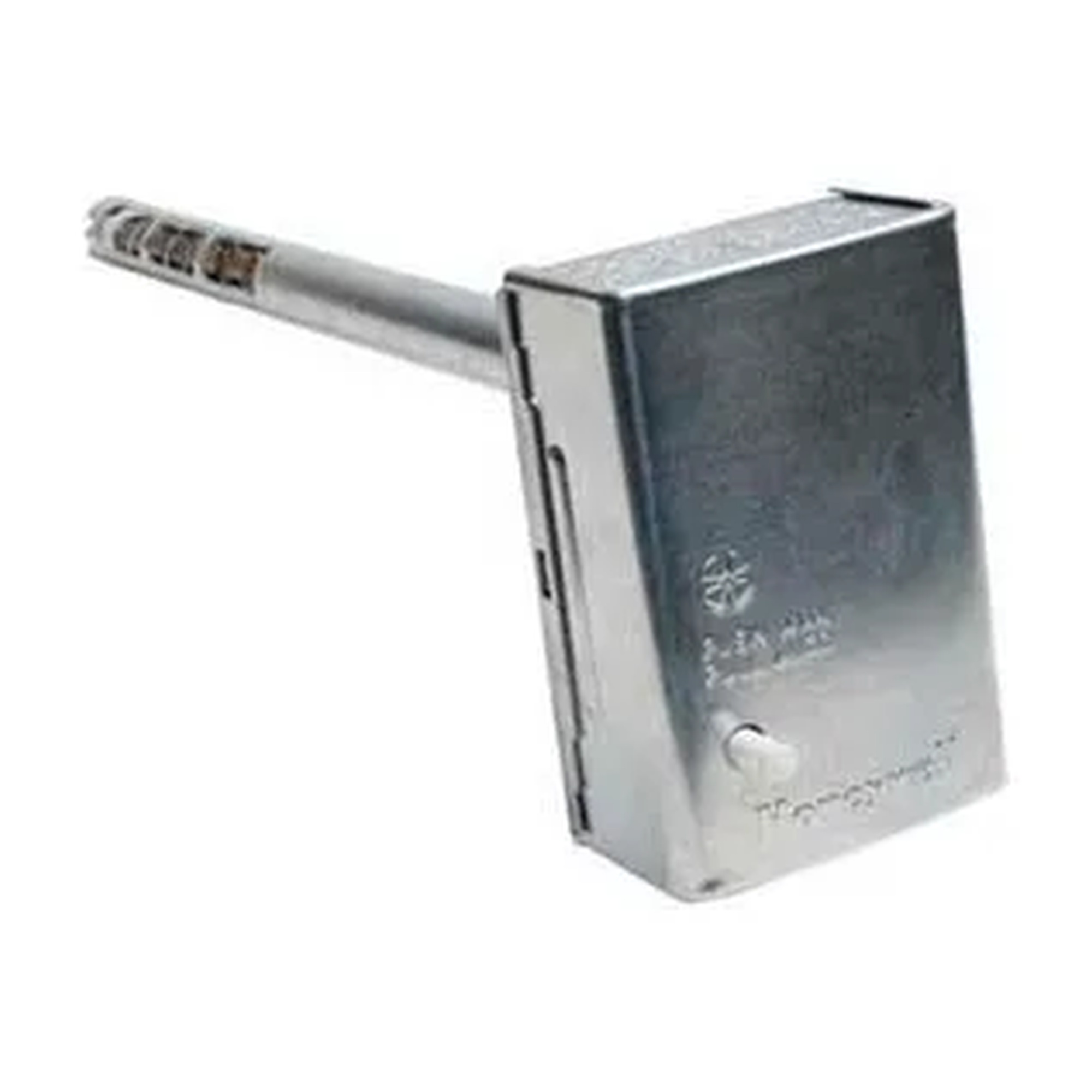
Fan and Limit Controller with Manual Fan Switch
Our Price:$199.94This fan and limit controller is for HVAC service professionals and facilities maintaining forced-air heating systems. It manages the fan motor and high-limit functions to support controlled...
-
Honeywell
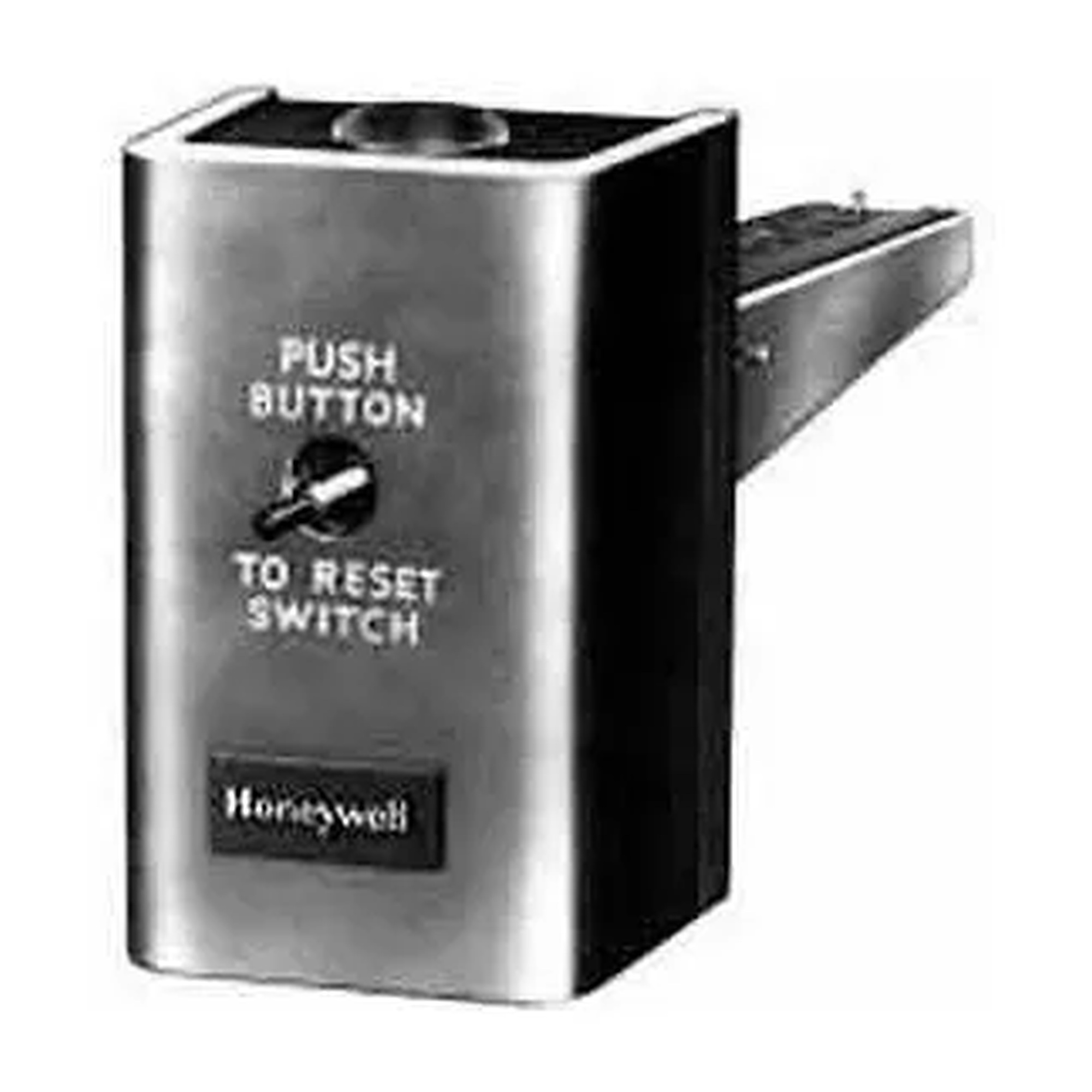
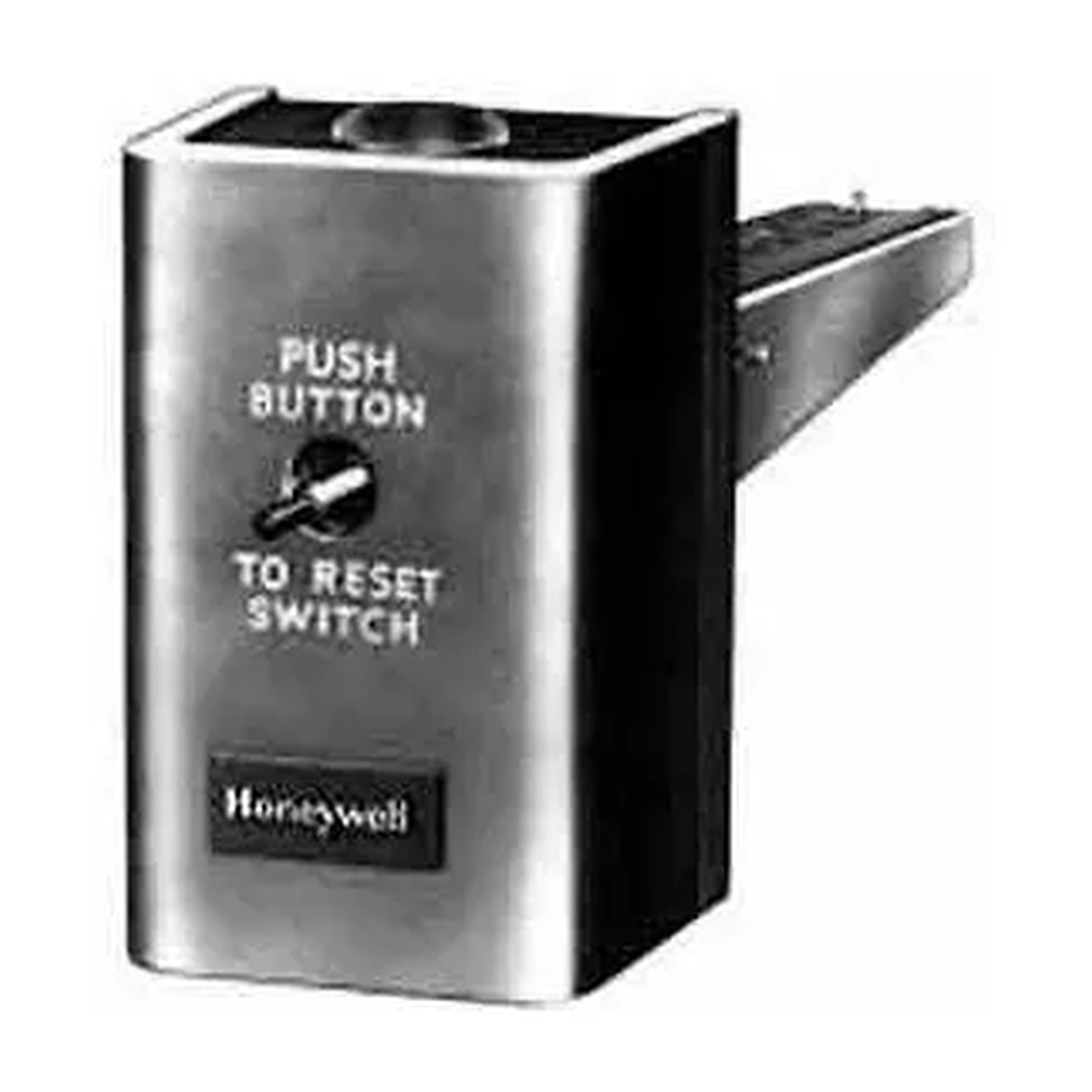
Fixed 125°F Manual-Reset Limit Control with 3-Inch Insertion
Our Price:$235.94This fixed-temperature limit control is for HVAC and ventilation professionals working with fan-control equipment. It helps manage temperature-related shutdown by opening the circuit when temperature...
-
Honeywell
Fixed 135°F Manual Reset Limit Control with 3 in. Insertion
Our Price:$245.94This fixed-temperature limit control is for HVAC control users who need a device that interrupts a circuit when temperature rises to its set limit. Its manual-reset operation supports controlled...
-
Honeywell
Fixed 165°F Limit Control with 3 in. Insertion
Our Price:$245.94This fixed-temperature limit control is for HVAC maintenance teams and other professionals working with fan-control systems. It provides a 165°F temperature limit point and is designed to interrupt...
-
Honeywell
Fixed 200°F Manual-Reset Limit Control with 3-Inch Insertion
Our Price:$245.94This fixed-temperature limit control is for HVAC and ventilation professionals who need a control that responds to rising temperature. It is designed to interrupt operation at a fixed 200°F limit and...
-
Honeywell
Fixed 240°F Manual Reset Limit Control, 3-Inch Insertion
Our Price:$245.94This fixed-temperature limit control is for HVAC technicians and facility maintenance teams that need to interrupt a circuit when temperature rises to its set limit. Its manual reset operation...
-
Honeywell
Surface-Mount Fan Limit Controller with 8-Inch Insertion
Our Price:$199.94This surface-mount fan limit controller is for HVAC professionals who need to control fan operation while incorporating a high-limit stop. Its 8-inch insertion design supports installations requiring...
-
Qwik Products
Universal Constant-Torque ECM Replacement Board
Our Price:$115.94This replacement board is for technicians replacing failed constant-torque ECM blower motors. It supports conversion to a compatible PSC motor and provides one technician-selected motor speed for the...
-
Honeywell
Universal Electronic Fan Timer for Gas Warm-Air Appliances
Our Price:$269.94This universal electronic fan timer is for HVAC technicians and maintenance professionals servicing gas warm-air appliances. It provides a central wiring point and coordinates thermostat calls for...
-
Qwik Products
Universal Variable Airflow ECM Replacement Board
Our Price:$369.94This universal replacement board helps HVAC technicians replace a failed variable-airflow ECM motor with a permanent split capacitor (PSC) motor while retaining variable blower airflow capability.The...






Fan Controls for HVAC and Forced-Air Heating Systems
Fan controls manage blower operation, temperature limits, and switching functions in forced-air heating systems, gas warm-air appliances, and ventilation installations. Whether you need a combined fan-and-limit controller, a standalone limit control, a fan center relay, an ECM replacement board, or an electronic fan timer, this category covers the components used in professional HVAC service and new installations.
Popular examples in this category
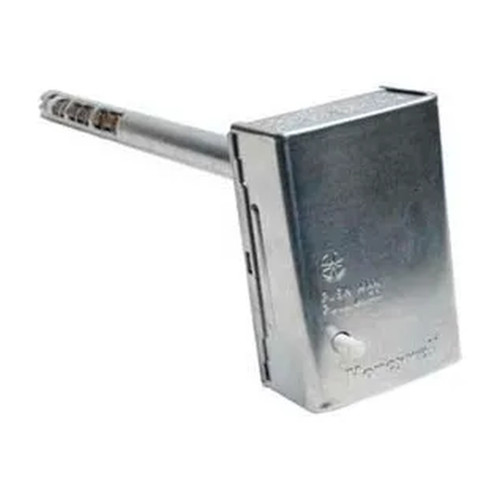 Fan and Limit Controller with Manual Fan SwitchWBB394534
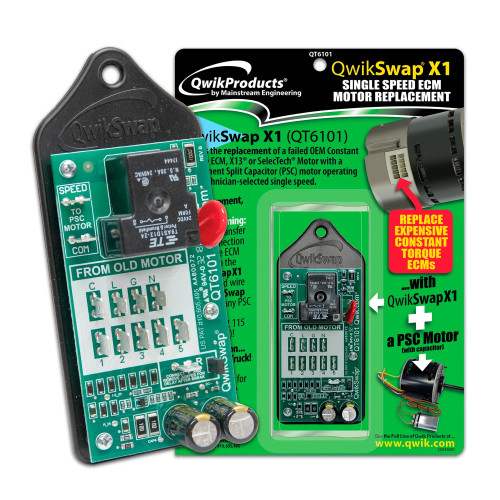 Universal Constant-Torque ECM Replacement BoardWBB2278204
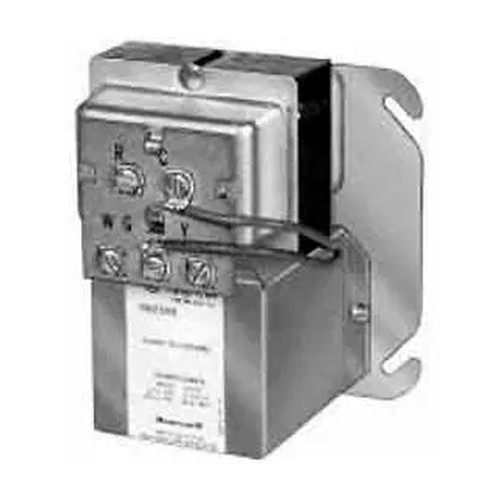 40 VA Fan Center with SPDT Switching ActionWBB394578
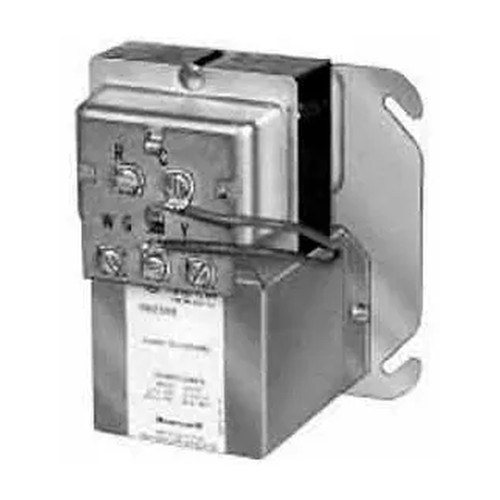 50 VA Fan Center with DPDT SwitchingWBB394579
Core Functions These Controls Handle
Fan controls regulate when blowers start and stop, protect systems from overheating with high-limit shutoff, provide switching for fan centers, and enable ECM-to-PSC motor conversions. They are used in forced-air furnaces, gas warm-air appliances, and ventilation systems requiring reliable, code-appropriate fan management.
Matching the Right Control to Your Installation
Start with the function required: combined fan-and-limit protection, fixed-temperature limit control, fan center switching, ECM motor replacement, or timed fan delays. Then confirm insertion length, temperature rating, VA capacity, voltage, and motor horsepower compatibility before selecting a part.
Where Fan Controls Are Typically Installed
These controls are installed in residential and light-commercial forced-air furnaces, gas warm-air heating appliances, fan center wiring panels, and systems undergoing ECM-to-PSC blower motor upgrades. Electronic fan timers suit applications needing adjustable heating and cooling delays with centralized wiring and built-in diagnostics.
Details Worth Knowing Before You Order
Fan and limit controllers combine two functions in one device, reducing parts count. Fixed manual-reset limit controls are available in multiple temperature settings. ECM replacement boards support single-phase motors up to 1 HP. Always verify insertion depth, surface-mount versus duct-mount style, and relay configuration before purchasing.
Fixed manual-reset limit controls are available in four temperature settings — 125°F, 165°F, 200°F, and 240°F — to match different system design requirements.
Fan centers are available in 40 VA SPDT and 50 VA DPDT configurations, covering a range of single-relay and dual-relay switching applications.
ECM replacement boards support compatible PSC motors rated up to 1 horsepower on 120 or 240 VAC single-phase power.
Standard duct-mount limit controls use a 3-inch insertion length, while the surface-mount fan limit controller uses an 8-inch format with a 200°F high-limit stop.
Choosing the Right Fan Control Type
Use this table to match your installation need to the correct control type.
| Need | Best Fit | Why It Matters |
|---|---|---|
| Combined blower sequencing and high-limit protection | Fan and limit controller | One device handles both functions, reducing component count and wiring complexity |
| Standalone overheat protection with manual reset | Fixed manual-reset limit control (125°F, 165°F, 200°F, or 240°F) | Provides precise high-limit shutoff at a set temperature; requires deliberate reset before restart |
| Thermostat-to-blower relay switching | Fan center — 40 VA SPDT or 50 VA DPDT | Matches switching capacity and relay configuration to the panel and system load |
| Replacing a failed ECM blower motor with a PSC motor | ECM replacement board (single-speed or three-speed variable airflow) | Supports PSC motors up to 1 HP on 120 or 240 VAC; select speed configuration based on airflow needs |
| Adjustable fan delays with diagnostics | Electronic fan timer | Provides configurable heating and cooling delays, centralized wiring, and built-in diagnostic support |
Plan the right fit before choosing
Step 1 — Identify the Control Function You Need
Before comparing products, determine what the installation requires. A fan-and-limit controller handles both blower sequencing and high-limit protection in one unit. A standalone fixed limit control provides manual-reset overheat protection at a specific temperature. A fan center provides the relay switching needed to integrate a thermostat with a blower. An ECM replacement board allows a compatible PSC motor to replace a failed ECM motor. An electronic fan timer adds adjustable on and off delays for heating and cooling cycles.
- Fan and limit combined: one device manages blower start/stop and high-limit shutoff
- Fixed limit controls: choose 125°F, 165°F, 200°F, or 240°F based on system design
- Fan centers: select 40 VA SPDT or 50 VA DPDT based on switching requirements
- ECM replacement boards: confirm motor HP (up to 1 HP), voltage (120 or 240 VAC single-phase), and speed needs
Step 2 — Confirm Physical and Electrical Specifications
Once you know the function, verify the physical and electrical details. For duct-mount limit controls, confirm the insertion length needed — standard options include 3-inch insertion. For surface-mount applications, the 8-inch surface-mount fan limit controller with a 200°F high-limit stop is the appropriate choice. For fan centers, compare relay dimensions and whether a single relay or dual relay configuration fits the panel. For ECM boards, confirm whether a single-speed or variable three-speed airflow setup is required.
- Insertion length: 3-inch for standard duct-mount limit controls
- Surface-mount: 8-inch controller with 200°F high-limit stop
- Fan center VA rating: 40 VA for SPDT, 50 VA for DPDT
- ECM boards: single-speed or three-speed variable airflow, 120 or 240 VAC
Step 3 — Consider Diagnostics and Serviceability
For installations where ongoing serviceability matters, an electronic fan timer with built-in diagnostics and a replaceable design simplifies future service calls. Centralized wiring support reduces troubleshooting time. Manual-reset limit controls require a physical reset after a high-limit event, which can be an advantage in applications where you want a deliberate reset before restart rather than automatic recovery.
- Electronic fan timers offer adjustable heating and cooling delays plus diagnostic capability
- Manual-reset limit controls require intentional reset — useful for safety-critical applications
- Centralized wiring on fan timers reduces field wiring complexity
Common questions before buying
What is the difference between a fan and limit controller and a standalone limit control?
A fan and limit controller combines blower sequencing — turning the fan on and off based on temperature — with high-limit protection in a single device. A standalone fixed limit control only provides high-limit shutoff at a preset temperature and requires a manual reset after a trip event. Use the combined controller when you need both functions; use the standalone when limit protection alone is required.
How do I choose between the 40 VA SPDT and 50 VA DPDT fan center options?
The 40 VA SPDT fan center suits single-relay switching applications with lower load requirements. The 50 VA DPDT option provides higher switching capacity and a dual-pole configuration for applications that require it. Compare the relay configuration and VA rating against your system's wiring diagram and load before selecting.
Can the ECM replacement board work with any PSC motor?
The ECM replacement boards are designed for compatible PSC motors up to 1 horsepower on 120 or 240 VAC single-phase power. Compatibility depends on the specific motor and system. Verify the motor's voltage, horsepower, and speed requirements against the board's specifications before ordering. Choose the single-speed board or the variable three-speed board based on the airflow configuration needed.
When should I use an electronic fan timer instead of a standard fan control?
An electronic fan timer is the right choice when the installation benefits from adjustable heating and cooling delay settings, centralized wiring, or built-in diagnostic capability. It is also a good option when the control may need to be replaced in the field, since it is designed to be serviceable. Standard fan controls are appropriate when fixed switching or limit functions are all that is required.
Choosing the right file folders
FilingSupplies.com carries end-tab folders for open-shelf systems, top-tab folders for drawer filing, and heavy-duty classification folders with dividers and fasteners for multi-section records. Pick letter or legal size, then choose material (11-pt, 14-pt, or 18-pt manila), optional reinforced tabs, color-coding, and expansion capacity to match your volume.
Folder FAQs
End-tab vs. top-tab — what’s the difference?
When should I choose classification folders?
Letter or legal size — how do I pick?
What tab and material options are available?
Can I add fasteners, pockets, or expansion?
Do you offer volume pricing or custom printing?
Outfitting classrooms that work all day
Build a durable, age-appropriate classroom with furniture, early-learning materials, storage bins, learning centers, and presentation tools. Choose adjustable pieces that grow with grades, label friendly bins for quick clean-up, and tech carts that secure, charge, and move easily.
Education FAQs
What safety labels should I look for on school and early-childhood items?
How do I pick classroom furniture across grade levels?
What’s the best way to organize supplies and centers?
How do I choose learning games and manipulatives by age?
What should I consider in a charging/tech cart?
Do you support school POs, bulk pricing, or custom printing?
Choosing the right labels
From color file labels to printable sheets, select the right size, adhesive, and print method to match your filing system and equipment. Decide on sheet vs. roll format, then pick permanent or removable adhesive and your color set.
Labels FAQs
Sheet vs. roll labels — what’s the difference?
Permanent or removable adhesive?
Will these labels work in my printer?
How do I match the label size to folder tabs or binder spines?
Can I get preprinted sequences or color bars?
Do you have templates?
Choosing the right tab dividers
Organize binders with preprinted or blank tabs. Select the number of tabs per set (5, 8, 10, or 12), choose paper with reinforced tabs or durable poly, and match letter or legal size for a clean fit.
Tab Dividers FAQs
What do 5-, 8-, 10-, or 12-tab sets mean?
Paper vs. poly — which should I choose?
Are the tabs printable?
Will they fit my binder?
Can I mix preprinted and blank tabs?
Do you make custom tab sets?
Choosing the right office supplies
From everyday paper and pens to binders, mailers, and desk organizers, pick durable, compatible options that match your equipment and team size. Start with the right paper and labeling, then add organizers that keep work moving.
Office Supplies FAQs
Which paper weight and brightness should I choose?
Round-ring vs. D-ring binders — what’s the difference?
What does “sheet capacity” mean on staplers and hole punches?
Will labels, envelopes, and mailers work with my printer?
How do I choose mailers and shipping boxes?
Do you offer eco-conscious options or bulk pricing?
Choosing the right sports & PE equipment
Equip classes, teams, and rec programs with durable balls, goals, cones, pinnies, storage, and safety gear. Match sizes and materials to age group and whether you play indoors or outdoors.
Sports & Athletics FAQs
What ball sizes should I choose for different ages?
- Basketball: Size 5 (27.5") youth, Size 6 (28.5") intermediate, Size 7 (29.5") official.
- Soccer: Size 3 up to ~8 years, Size 4 ~8–12, Size 5 ~12+.
- Volleyball: Regulation balls for teens/adults; lighter training balls for younger players.
Indoor vs. outdoor — which materials hold up best?
How many pinnies, cones, or markers do I need?
Tips for storage and care?
Are items latex‑free and school‑safe?
Do you support bulk orders or custom printing (team names)?
Choosing the right FireKing fireproof cabinet
FireKing fireproof file cabinets, safes, and storage cabinets are designed to protect important documents, records, and valuables from fire damage while keeping files organized and accessible. When choosing a FireKing cabinet, compare drawer configuration, storage type, fire rating, and overall capacity based on the records or materials you need to protect.
FireKing FAQs
What is the difference between FireKing vertical and lateral file cabinets?
What can I store in a FireKing fireproof file cabinet?
Are FireKing cabinets only for paper records?
How do I choose between a FireKing safe, file cabinet, or storage cabinet?
What sizes are available in FireKing cabinets?
Are FireKing cabinets used in offices, medical facilities, and government records storage?
Can I buy FireKing cabinets in bulk or get help choosing the right model?
Shipping & Policies
Do you offer free shipping?
What are your shipping rates?
- $6.95 for labels-only orders under $40
- $14.95 flat rate for everything else