
-
Global Industrial
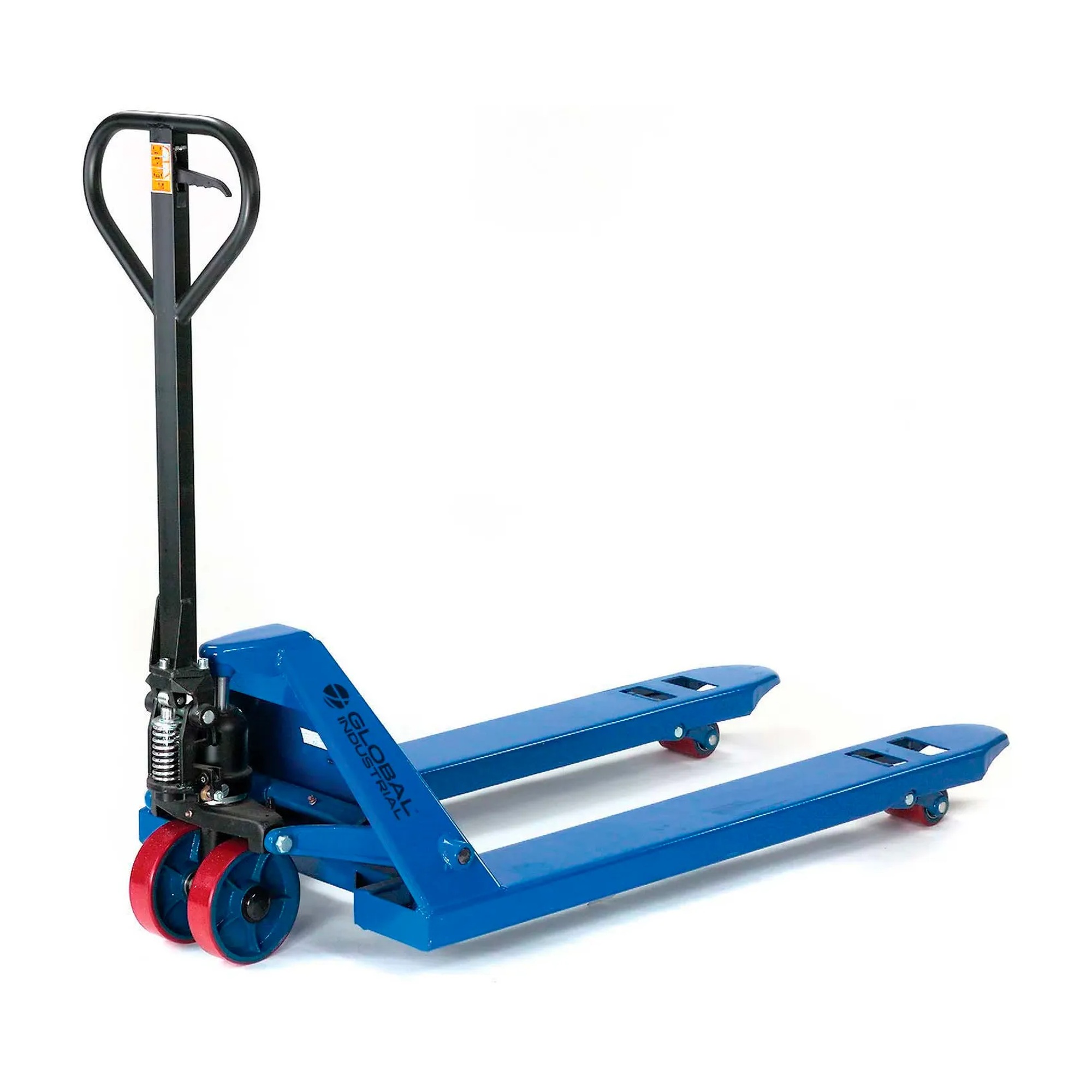
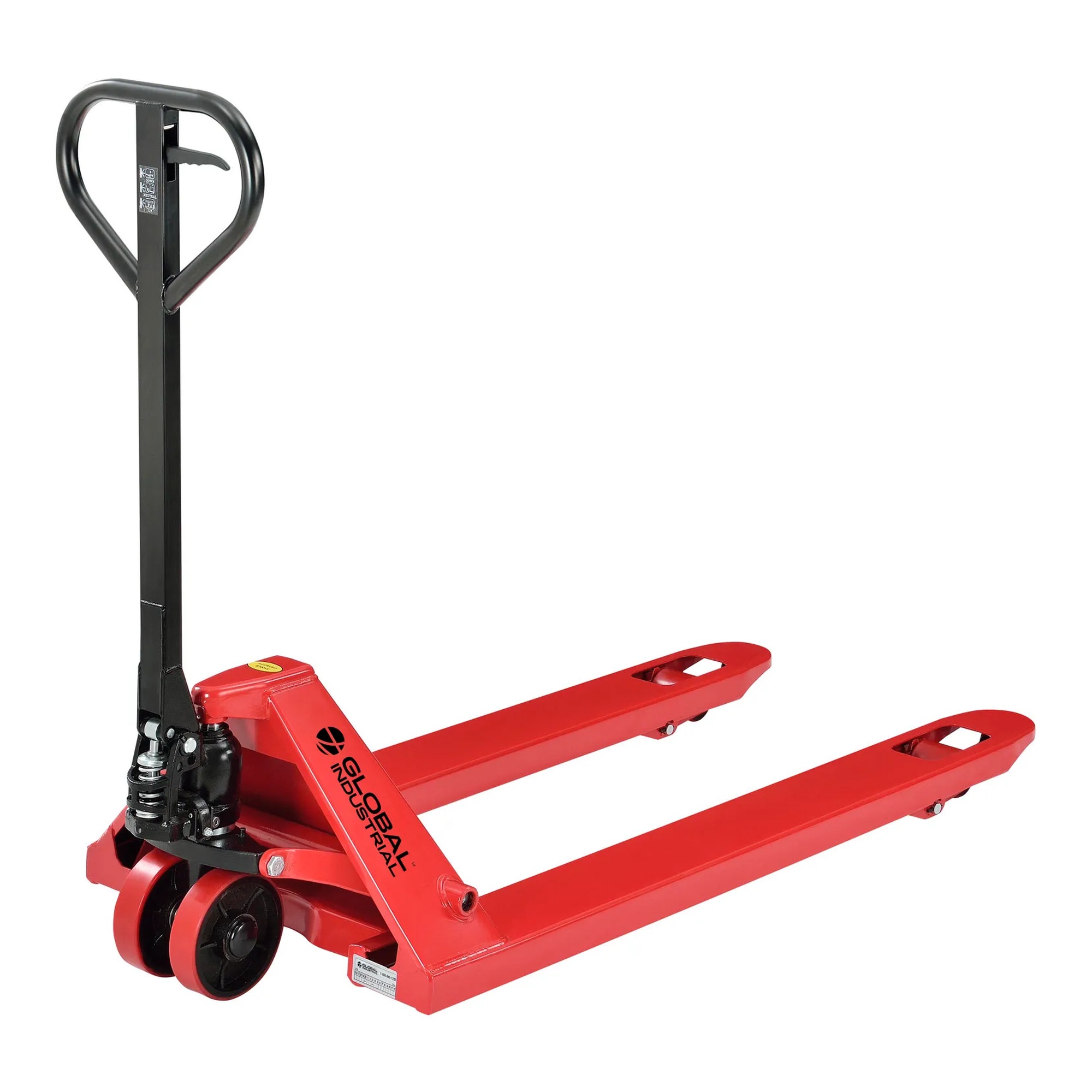
High-Capacity Manual Pallet Jack, 6,600 lb Capacity, 27 in x 42 in Forks
Our Price:$628.99This high-capacity manual pallet jack helps warehouse, shipping, and receiving teams move palletized loads and skids. Its hand-operated lifting and lowering system supports everyday material movement...
-
Global Industrial
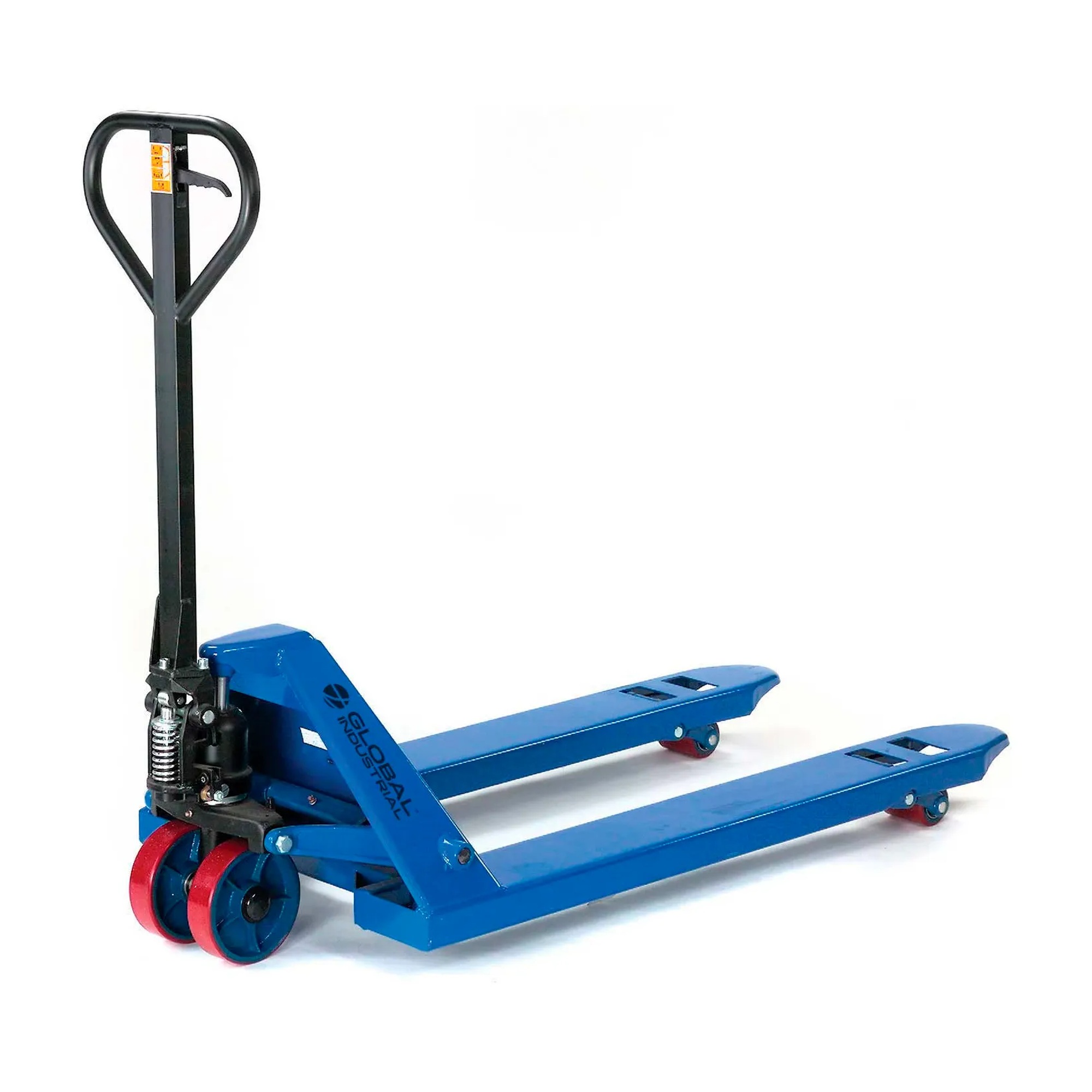
High-Capacity Manual Pallet Jack, 6,600 lb Capacity, 27 in x 48 in Forks
Our Price:$449.94This manual pallet jack helps warehouse, retail, manufacturing, and construction teams move loaded pallets and skids without powered equipment. Its hand-operated hydraulic system raises, transports,...
-
Global Industrial
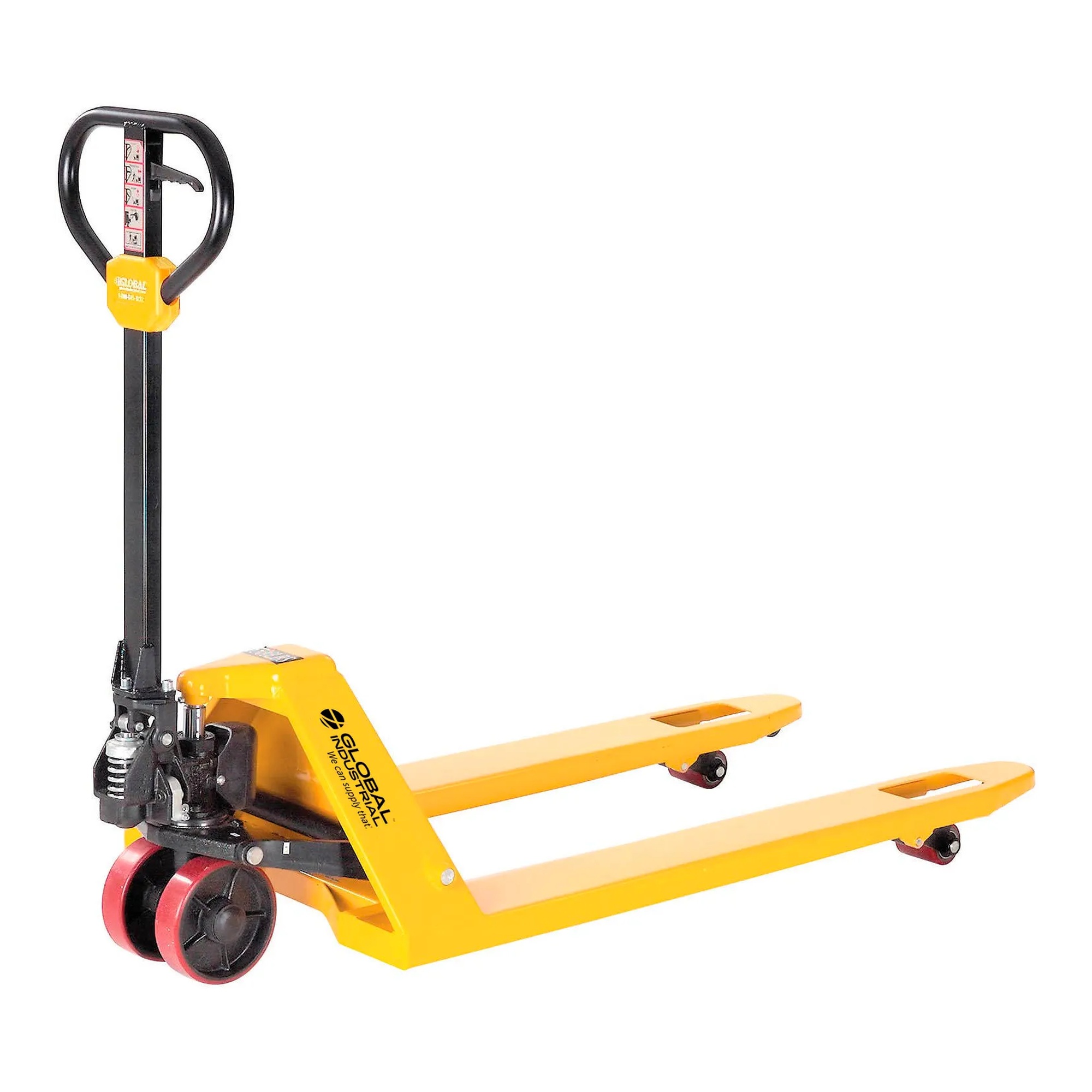
Industrial-Duty Manual Pallet Jack, 5,500 lb Capacity, 21 in W x 48 in L Forks
Our Price:$459.94This industrial-duty manual pallet jack helps material-handling teams move pallets and skids in construction, manufacturing, and retail environments. Its narrow 21-inch overall width supports...
-
Global Industrial
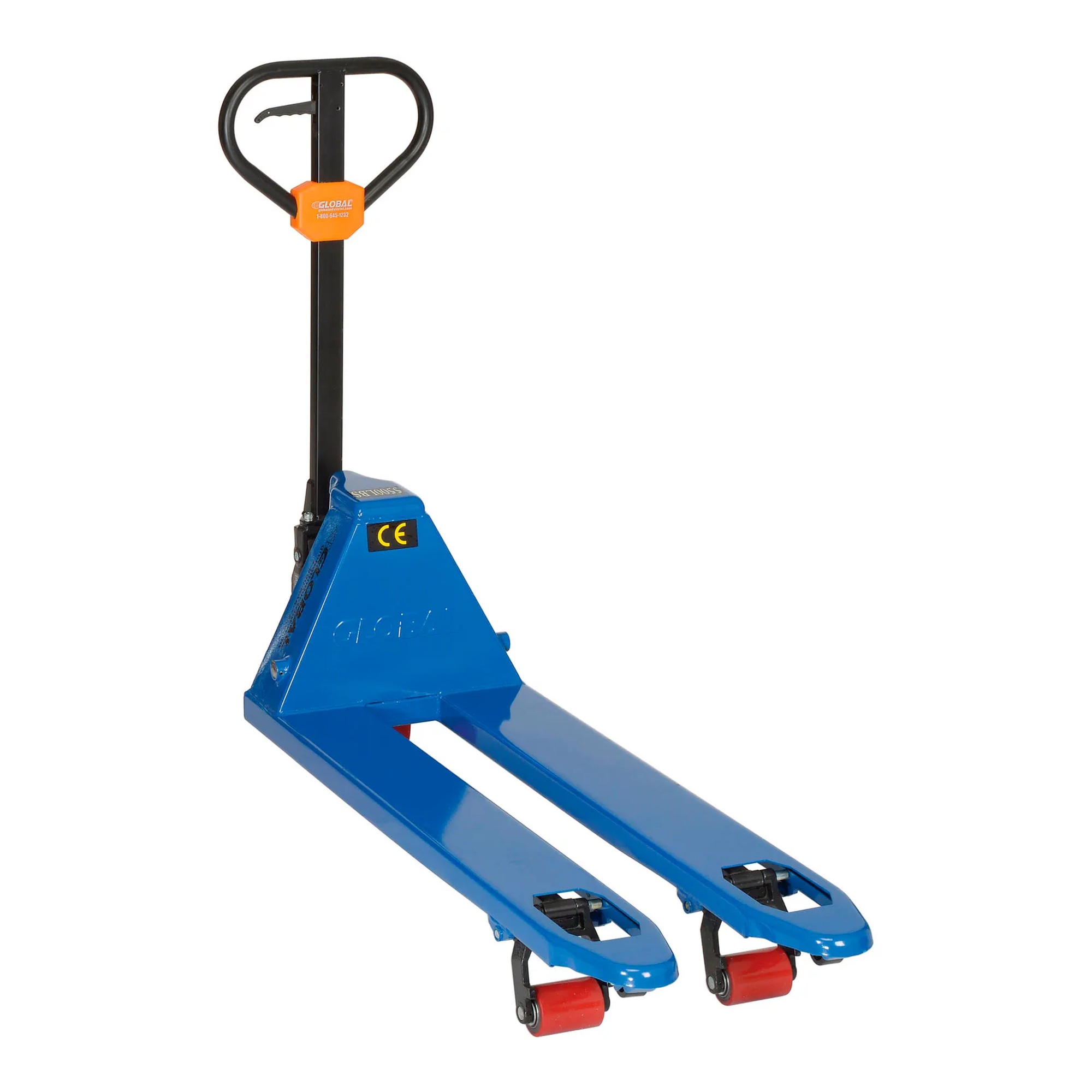
Narrow-Aisle Manual Pallet Jack, 5,500 lb Capacity, 18 in Fork Span
Our Price:$439.94This narrow-aisle manual pallet jack helps warehouse and material-handling teams move pallets and skids through close quarters. Its 5,500 lb capacity and 18 in distance across the forks support...
-
Global Industrial
Standard-Duty Manual Pallet Jack, 5,500 lb Capacity, 27 in W x 48 in L Forks
Our Price:$395.94This standard-duty manual pallet jack helps warehouse, retail, manufacturing, and construction teams move loaded pallets and skids. Its hand-operated hydraulic lift raises and lowers loads for...
Choose a Manual Pallet Jack for Everyday Pallet Movement
Manual pallet jacks and trucks provide a practical way to lift and reposition palletized loads and skids in commercial material-handling areas. Match the jack to the loads being moved, the pallets or skids in use, and the travel surfaces in your operation.
Popular examples in this category
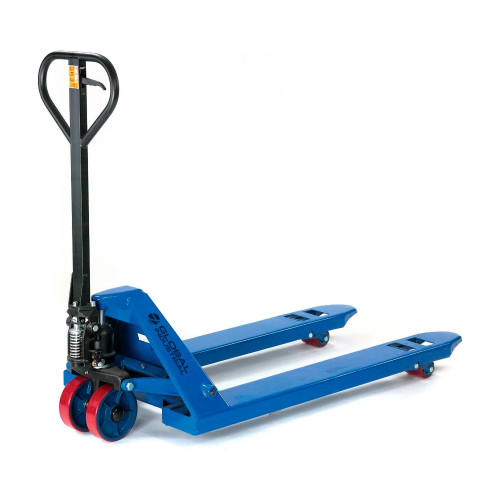 High-Capacity Manual Pallet Jack, 6,600 lb Capacity, 27 in x 42 in ForksFS-GLO-168032
Move palletized loads where they are needed
Use a manual pallet jack to handle palletized loads and skids in warehouse, shipping, and receiving areas. Hand-operated lifting and lowering supports routine material movement without relying on powered travel.
Match capacity, forks, and controls to the job
Start with the weight of the palletized loads you need to move. Then consider fork length and width for compatible pallets or skids, along with handle controls that allow raise, neutral, and lower functions.
Support warehouse and dock workflows
Manual pallet jacks fit everyday material handling tasks involving the movement of loaded pallets and skids through shipping, receiving, and warehouse work areas.
Consider wheels and travel conditions
Wheel material can affect rolling performance, while entry rollers can help guide forks during pallet entry and exit. For uneven surfaces, an articulated axle can help the jack travel more smoothly.
Supports manual movement of palletized loads and skids.
Raise, neutral, and lower functions can be selected from the handle.
Help guide forks during pallet entry and exit.
Can help the jack move more smoothly across uneven surfaces.
Compare Manual Pallet Jack Selection Factors
Use these considerations to identify the features that best suit your pallet-handling routine.
| Selection Factor | What to Review | Why It Matters |
|---|---|---|
| Load capacity | Weight of the palletized loads and skids being moved | Helps align the jack with manual material-handling demands. |
| Fork platform | Fork length and width for compatible pallets or skids | Supports proper entry beneath the load. |
| Controls and mobility | Raise, neutral, and lower control; wheels; travel surface | Affects lifting operation and movement through the work area. |
Plan the right fit before choosing
Select capacity with your palletized materials in mind
A pallet jack should be chosen for the weight of the loads and skids it will handle in normal operation. Review the demands of your material-handling workflow before selecting a capacity.
- Consider the weight of palletized loads and skids.
- Plan for routine warehouse, shipping, or receiving movement.
- Use the jack for compatible manual material-handling tasks.
Confirm fork dimensions and pallet compatibility
Forks provide the platform that enters beneath compatible pallets and skids. Check the fork size against the pallets and loads used in your facility, and consider entry rollers for guidance when entering or exiting a pallet.
- Match fork dimensions to compatible pallets and skids.
- Consider longer forks when the load setup calls for a longer platform.
- Look for entry rollers to help guide the forks.
Choose features that support your work surface and handling routine
Handle controls help operators manage lifting and lowering, while wheel construction affects rolling behavior. If travel includes uneven surfaces, an articulated axle can support smoother movement.
- Three-position fingertip controls can provide raise, neutral, and lower selection.
- Polyurethane load and steer wheels support smooth rolling.
- An articulated axle can help with travel across uneven surfaces.
Common questions before buying
What are manual pallet jacks used for?
They are used to move palletized loads and skids in warehouse, shipping, and receiving areas.
What should I consider when choosing a manual pallet jack?
Consider load capacity, fork size for compatible pallets or skids, handle controls, wheel material, and travel surfaces.
What does a three-position fingertip control do?
It allows the operator to select raise, neutral, or lower functions from the handle.
How can entry rollers and an articulated axle help?
Entry rollers help guide forks during pallet entry and exit, while an articulated axle can help the jack travel more smoothly across uneven surfaces.
Choosing the right file folders
FilingSupplies.com carries end-tab folders for open-shelf systems, top-tab folders for drawer filing, and heavy-duty classification folders with dividers and fasteners for multi-section records. Pick letter or legal size, then choose material (11-pt, 14-pt, or 18-pt manila), optional reinforced tabs, color-coding, and expansion capacity to match your volume.
Folder FAQs
End-tab vs. top-tab — what’s the difference?
When should I choose classification folders?
Letter or legal size — how do I pick?
What tab and material options are available?
Can I add fasteners, pockets, or expansion?
Do you offer volume pricing or custom printing?
Outfitting classrooms that work all day
Build a durable, age-appropriate classroom with furniture, early-learning materials, storage bins, learning centers, and presentation tools. Choose adjustable pieces that grow with grades, label friendly bins for quick clean-up, and tech carts that secure, charge, and move easily.
Education FAQs
What safety labels should I look for on school and early-childhood items?
How do I pick classroom furniture across grade levels?
What’s the best way to organize supplies and centers?
How do I choose learning games and manipulatives by age?
What should I consider in a charging/tech cart?
Do you support school POs, bulk pricing, or custom printing?
Choosing the right labels
From color file labels to printable sheets, select the right size, adhesive, and print method to match your filing system and equipment. Decide on sheet vs. roll format, then pick permanent or removable adhesive and your color set.
Labels FAQs
Sheet vs. roll labels — what’s the difference?
Permanent or removable adhesive?
Will these labels work in my printer?
How do I match the label size to folder tabs or binder spines?
Can I get preprinted sequences or color bars?
Do you have templates?
Choosing the right tab dividers
Organize binders with preprinted or blank tabs. Select the number of tabs per set (5, 8, 10, or 12), choose paper with reinforced tabs or durable poly, and match letter or legal size for a clean fit.
Tab Dividers FAQs
What do 5-, 8-, 10-, or 12-tab sets mean?
Paper vs. poly — which should I choose?
Are the tabs printable?
Will they fit my binder?
Can I mix preprinted and blank tabs?
Do you make custom tab sets?
Choosing the right office supplies
From everyday paper and pens to binders, mailers, and desk organizers, pick durable, compatible options that match your equipment and team size. Start with the right paper and labeling, then add organizers that keep work moving.
Office Supplies FAQs
Which paper weight and brightness should I choose?
Round-ring vs. D-ring binders — what’s the difference?
What does “sheet capacity” mean on staplers and hole punches?
Will labels, envelopes, and mailers work with my printer?
How do I choose mailers and shipping boxes?
Do you offer eco-conscious options or bulk pricing?
Choosing the right sports & PE equipment
Equip classes, teams, and rec programs with durable balls, goals, cones, pinnies, storage, and safety gear. Match sizes and materials to age group and whether you play indoors or outdoors.
Sports & Athletics FAQs
What ball sizes should I choose for different ages?
- Basketball: Size 5 (27.5") youth, Size 6 (28.5") intermediate, Size 7 (29.5") official.
- Soccer: Size 3 up to ~8 years, Size 4 ~8–12, Size 5 ~12+.
- Volleyball: Regulation balls for teens/adults; lighter training balls for younger players.
Indoor vs. outdoor — which materials hold up best?
How many pinnies, cones, or markers do I need?
Tips for storage and care?
Are items latex‑free and school‑safe?
Do you support bulk orders or custom printing (team names)?
Choosing the right FireKing fireproof cabinet
FireKing fireproof file cabinets, safes, and storage cabinets are designed to protect important documents, records, and valuables from fire damage while keeping files organized and accessible. When choosing a FireKing cabinet, compare drawer configuration, storage type, fire rating, and overall capacity based on the records or materials you need to protect.
FireKing FAQs
What is the difference between FireKing vertical and lateral file cabinets?
What can I store in a FireKing fireproof file cabinet?
Are FireKing cabinets only for paper records?
How do I choose between a FireKing safe, file cabinet, or storage cabinet?
What sizes are available in FireKing cabinets?
Are FireKing cabinets used in offices, medical facilities, and government records storage?
Can I buy FireKing cabinets in bulk or get help choosing the right model?
Shipping & Policies
Do you offer free shipping?
What are your shipping rates?
- $6.95 for labels-only orders under $40
- $14.95 flat rate for everything else