
-
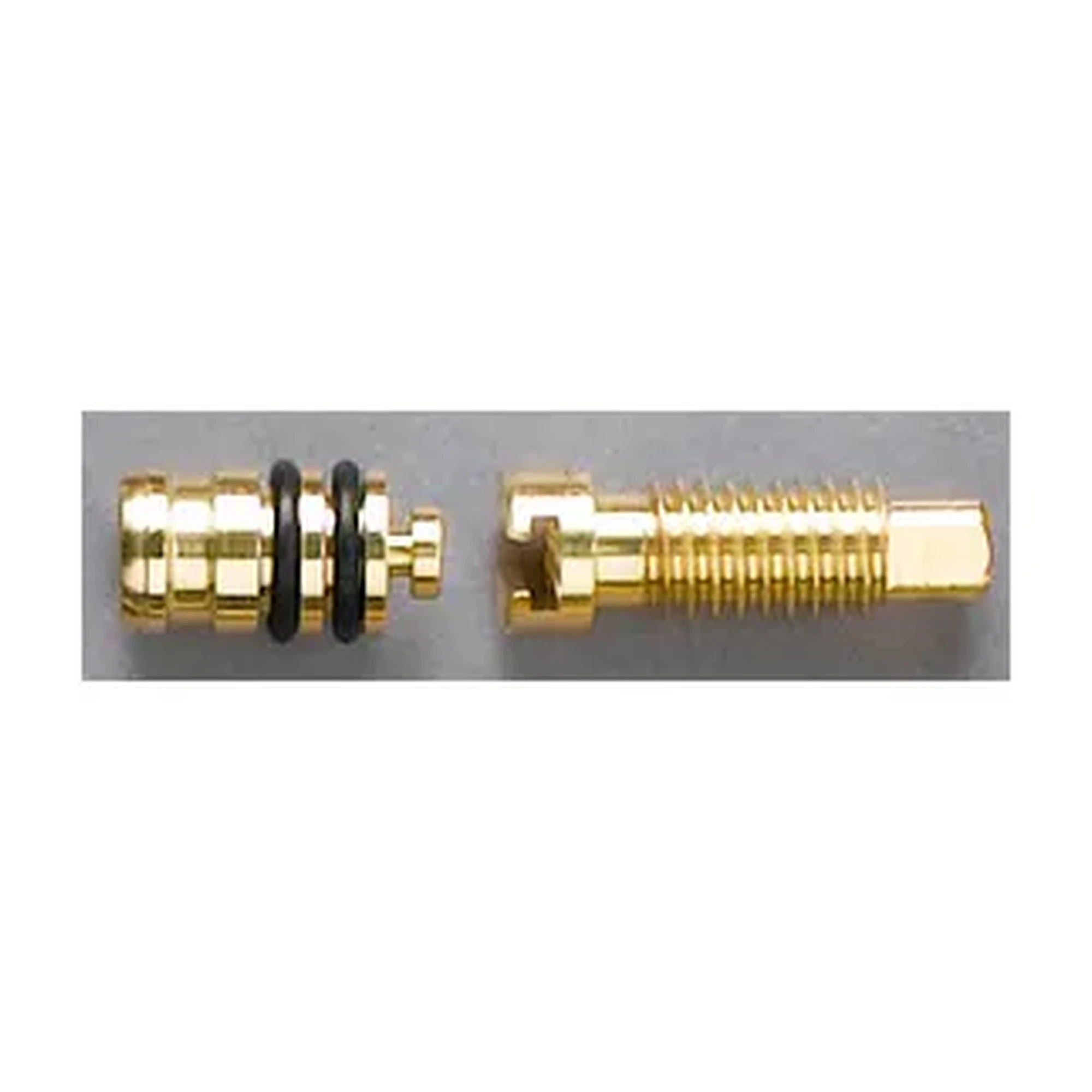
1/4 in. Piston for Series 41 and Titan Manifolds
Our Price:$7.69This 1/4 in. piston is a replacement manifold component for HVAC service professionals using compatible Series 41 and Titan manifolds. It supports maintenance of those manifold assemblies.The piston...
-
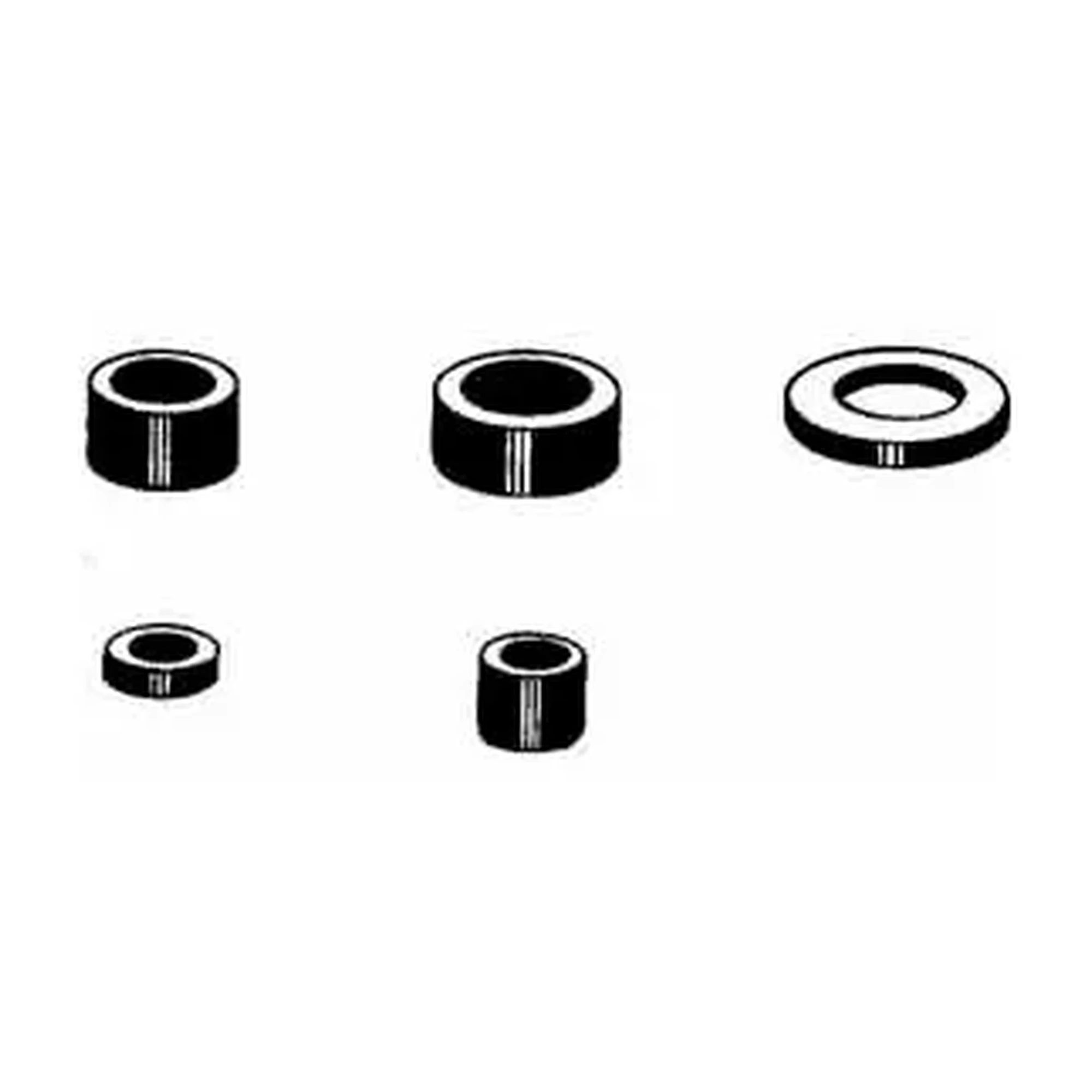
1/4-Inch Replacement Gaskets, Pack of 10
Our Price:$8.79These 1/4-inch replacement gaskets are for HVAC service professionals who need to replace gaskets in compatible charging-hose connections. The 10-pack provides replacement parts for servicing hose...
-
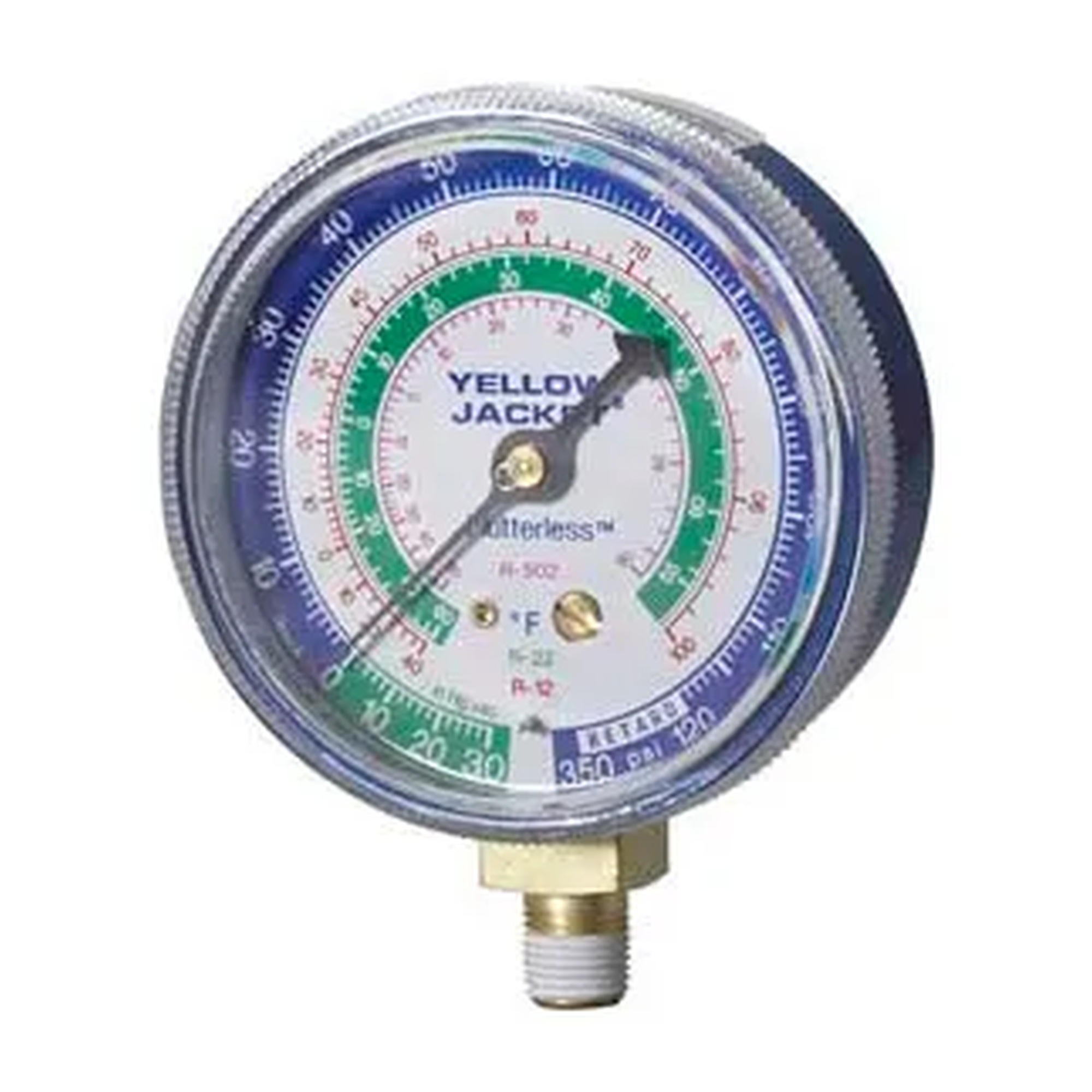
2-1/2 in. Blue Low-Side Gauge
Our Price:$39.94This blue low-side gauge helps HVAC service professionals monitor low-side pressure during system service. It provides a clear dial reading for technicians working with compatible manifold and gauge...
-
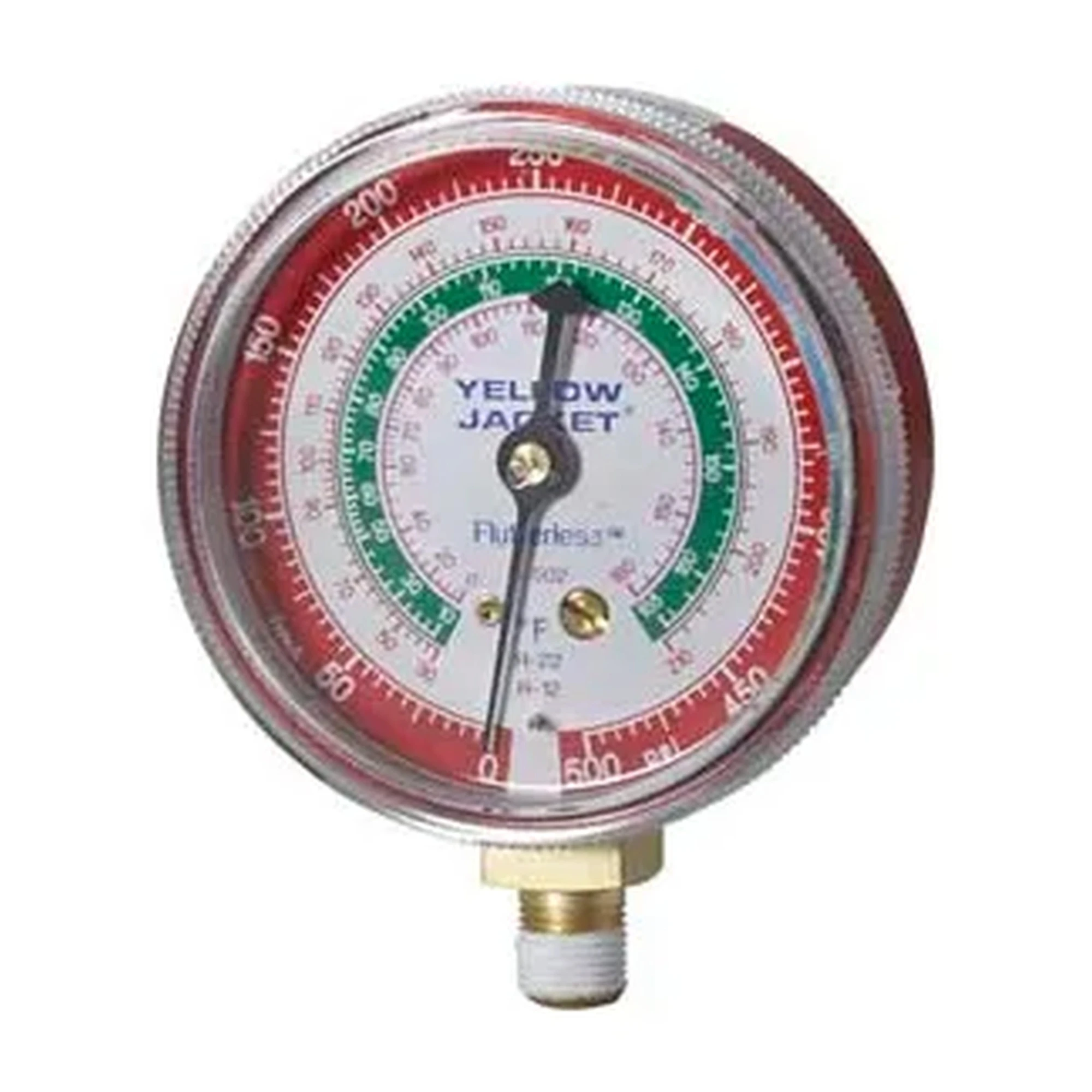
2-1/2 in. Red High-Side HVAC Gauge
Our Price:$39.94This red high-side gauge is for HVAC technicians and service professionals who need to monitor high-side pressure during system service. It provides a clear dial display to support accurate readings...
-
2-1/2-Inch Red Pressure Gauge for R-12, R-22 and R-502
Our Price:$33.94This red pressure gauge is for HVAC technicians servicing systems that use R-12, R-22, or R-502. It provides a pressure-reading component for manifold and gauge service work.The gauge has a...
-
2-Valve Refrigerant Manifold with Gauges
Our Price:$209.94This 2-valve refrigerant manifold is designed for HVAC technicians who need to monitor refrigerant movement and condition during charging and recovery work. Its integrated gauges, sight glass, and...
-
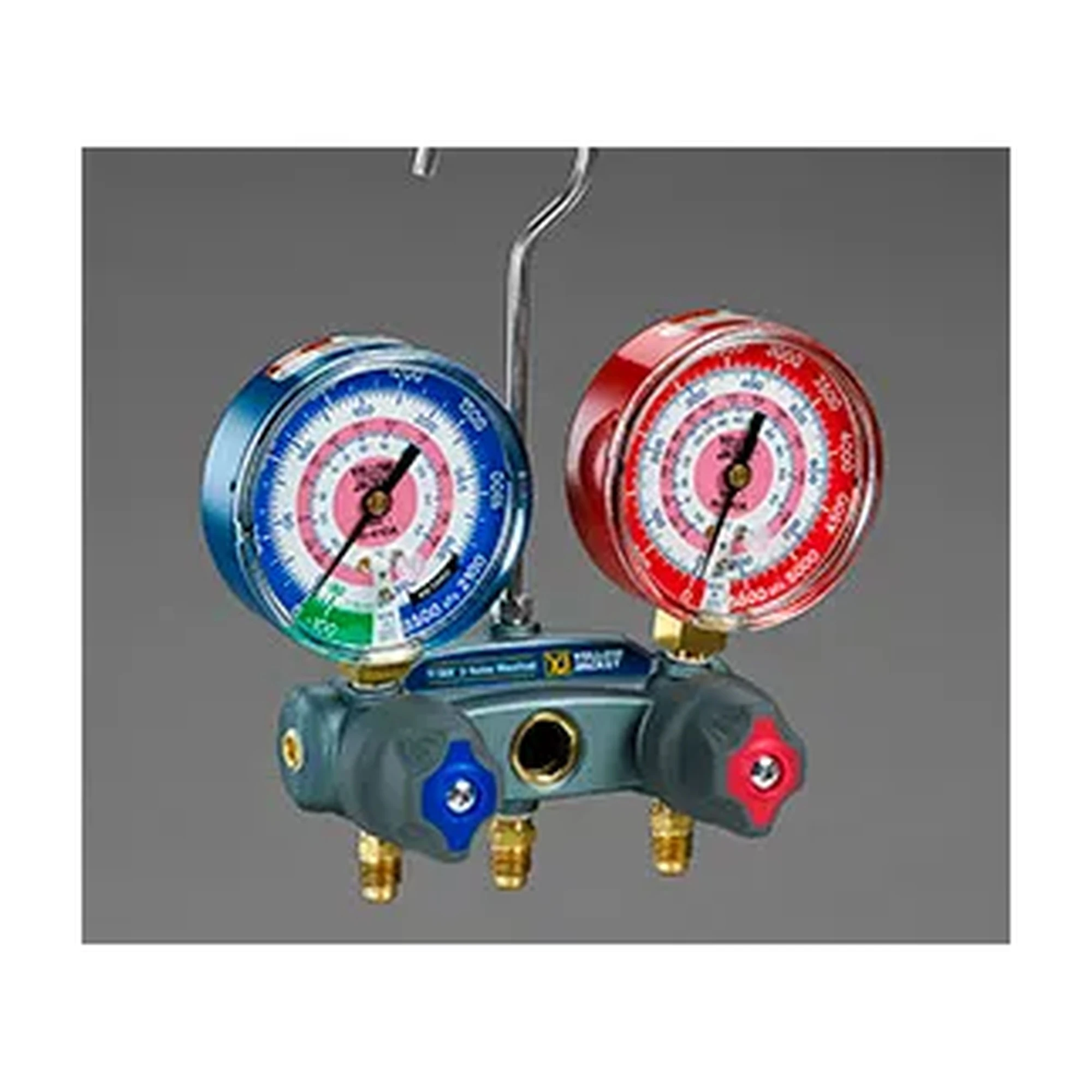
2-Way Aluminum Manifold Gauge Set
Our Price:$139.94This 2-way aluminum manifold gauge set is for HVAC service professionals who need to monitor refrigerant during A/C system work. It provides gauge readings, a sight glass for visual refrigerant...
-
2-Way Aluminum Manifold Gauge Set with Braided Hoses
Our Price:$289.94This 2-way manifold gauge set is for HVAC service professionals who need to view pressure readings during A/C service work. It combines an aluminum manifold, pressure gauges, and braided hoses in a...
-
2-Way Aluminum Manifold Gauge Set with Hoses
Our Price:$179.94This 2-way manifold gauge set is for HVAC service professionals who need to monitor refrigerant during A/C system work. It combines gauges, hoses, valves, and an integrated sight glass to support...
-
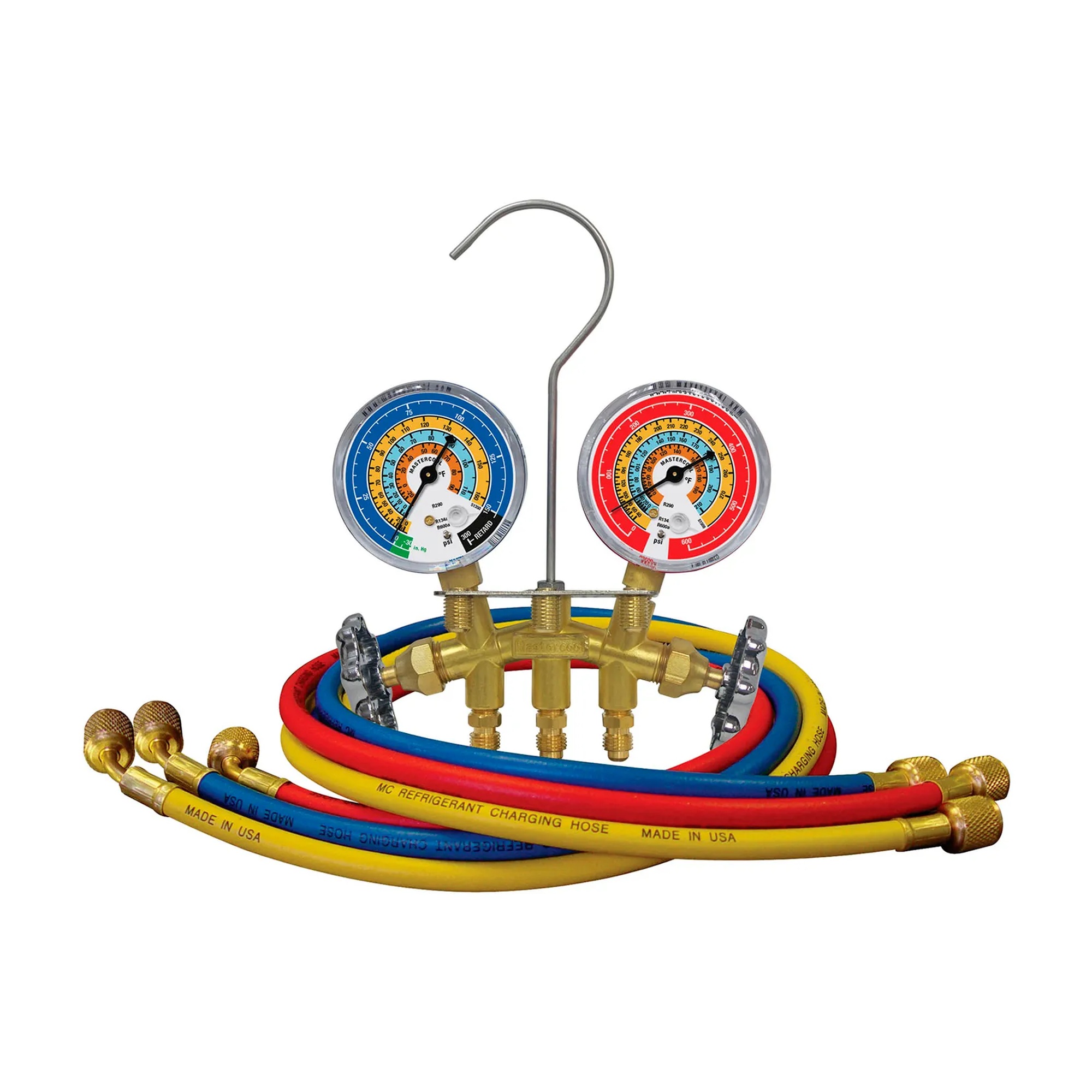
2-Way Brass Manifold Gauge Set
Our Price:$99.94This 2-way brass manifold gauge set is for HVAC service professionals who need to monitor pressure and temperature readings while servicing A/C systems. It provides a convenient control point for...
-
2-Way Smart HVAC Manifold with Clamps
Our Price:$485.94This 2-way smart manifold is for HVAC service technicians diagnosing and servicing A/C systems. It combines system readings, vacuum measurement, and calculated values in one handheld service tool to...
-
3-1/8-Inch Protective Gauge Boot Set
Our Price:$28.94This protective gauge boot set is for HVAC service professionals who use 3-1/8-inch gauges. It slips around a gauge to provide cushioning and protection during service work.The rubber boots fit...
-
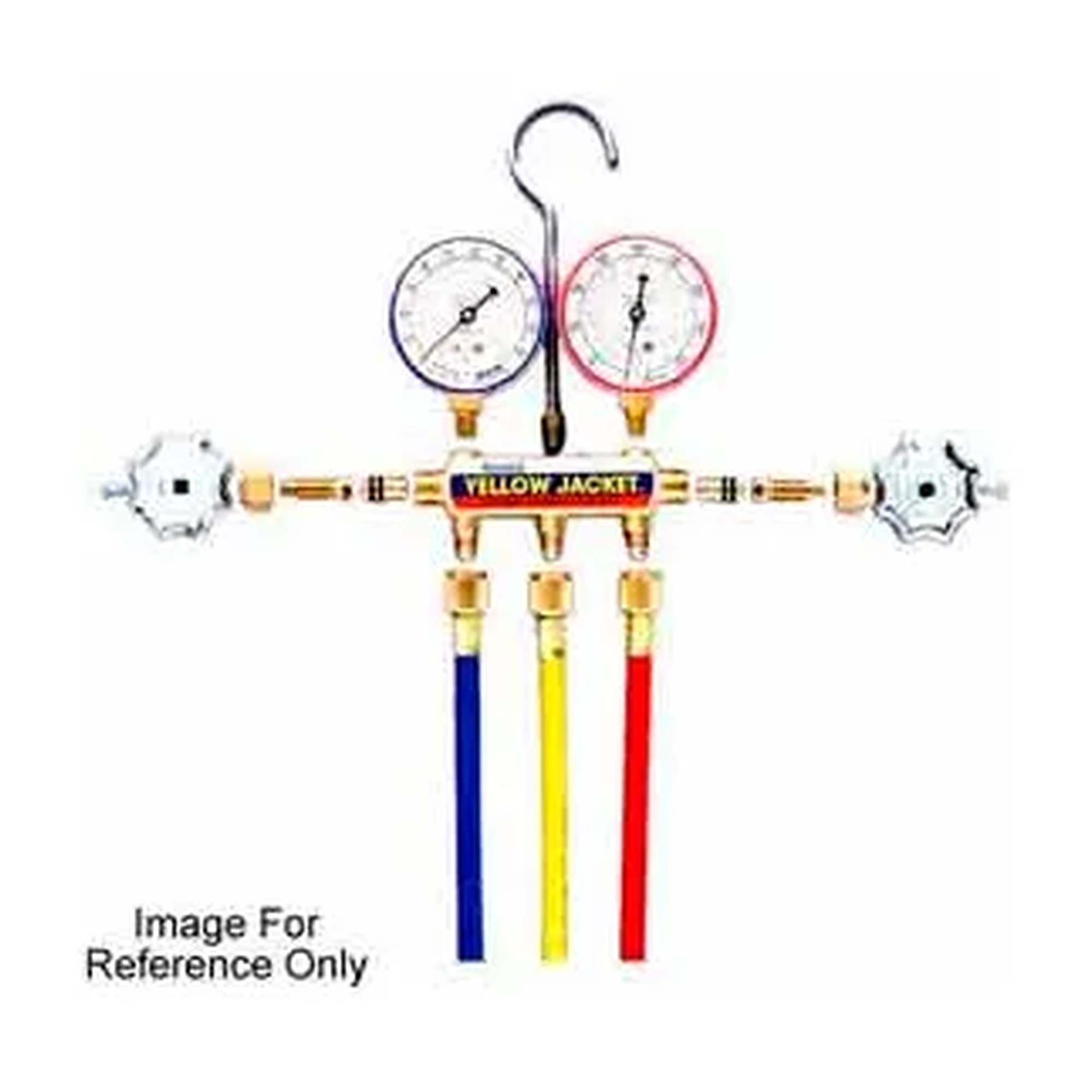
3-Way Refrigerant Manifold Gauge Set with 60-Inch Hoses
Our Price:$299.94This 3-way refrigerant manifold gauge set is for HVAC service professionals who need to check refrigerant visually and monitor system readings. It combines gauges, color-coded hoses, valves, and a...
-
3/8 in. Charging Hose Replacement Gaskets, Pack of 10
Our Price:$25.94These replacement gaskets are for HVAC technicians servicing 3/8 in. charging hoses. They provide a replacement sealing component for charging-hose connections used with refrigerants.The pack...
-
3/8-Inch Manifold Piston
Our Price:$11.24This 3/8-inch piston is a replacement component for HVAC service technicians working with compatible manifold equipment. It helps support maintenance of a manifold assembly.The piston has a 3/8-inch...
-
41 Series HVAC Manifold - Model 42004
Our Price:$209.94This HVAC manifold is a service tool for technicians working on critical charging systems. It provides a central connection point and clearly marked gauge readings to support system charging work.The...
-
41 Series HVAC Manifold with 2-1/2 in. Gauges
Our Price:$125.94This HVAC manifold helps service technicians monitor system readings and operate connected hoses during HVAC service work. It combines accessible valves and clearly sized gauges for practical control...
-
41 Series HVAC Manifold with 60-Inch Ball Valve Hoses
Our Price:$249.94This HVAC manifold is designed for service professionals who need to monitor system readings during maintenance work. It combines a brass manifold body, easy-to-read gauges, and ball valve hoses for...
-
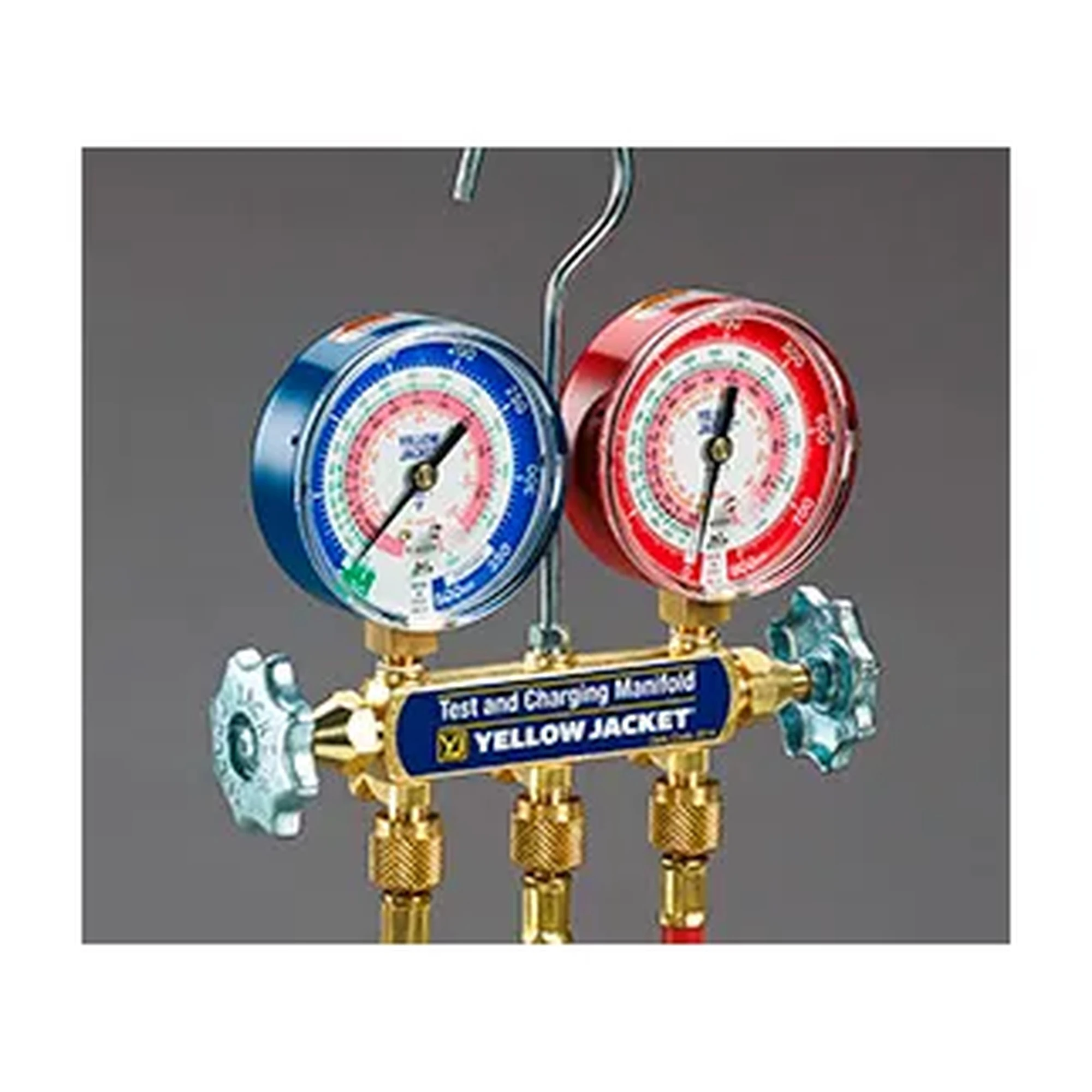
41 Series HVAC Manifold with Color-Coded Gauges
Our Price:$125.94This HVAC manifold is for service professionals who need to monitor system readings during charging work. Its color-coded gauges help users quickly distinguish readings in critical charge systems.The...
-
41 Series Manifold with 60-Inch Ball Valve Hoses
Our Price:$189.94This HVAC manifold is designed for service technicians who need to monitor system readings during HVAC work. It combines a manifold body, gauges, and 60-inch ball valve hoses to support practical...








Choose Manifolds and Gauges for the Service Task
Select service tools and replacement parts based on the type of work, the compatible connection or gauge size, and the features that support the readings or refrigerant handling needs of the job. The available products cover ammonia service, refrigerant charging and recovery, vacuum testing, hose connections, gauge protection, and manifold maintenance.
Popular examples in this category
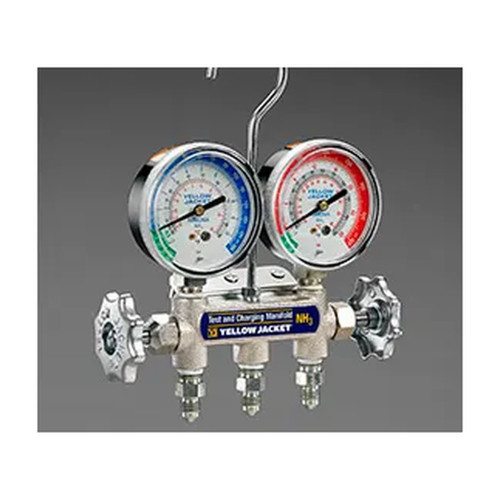 Ammonia Manifold and Gauge SetWBB54418
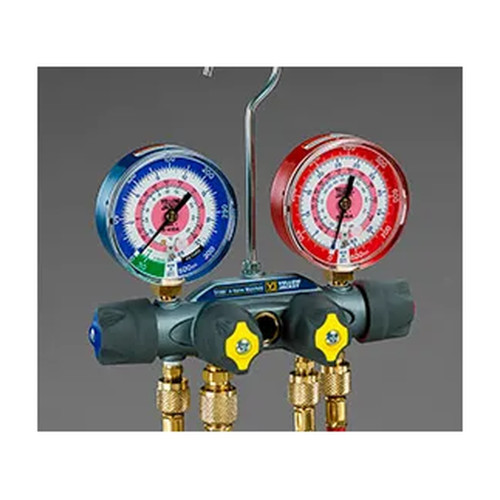 Four-Hose HVAC Manifold with 60 in. RYB HosesWBB735718
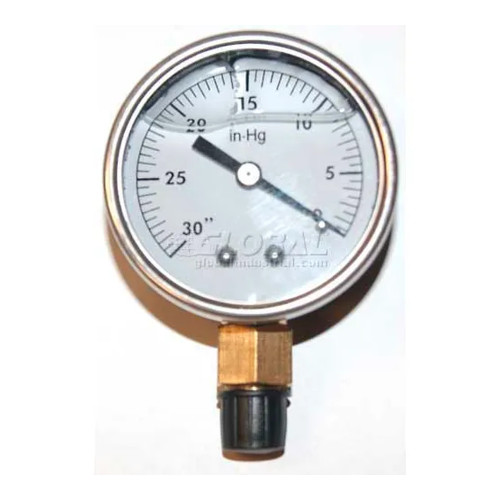 Liquid-Filled Vacuum Pump Test Gauge, 0–30 HgWBB895440
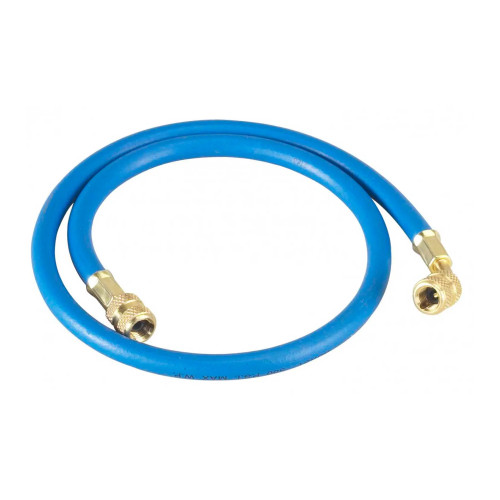 72-Inch Blue 1/4-Inch Refrigerant Hose with Low-Loss FittingWBB735682
Match the tool to the task
Use manifold sets for charging, diagnostics, evacuation, and recovery; choose a vacuum test gauge for oil burner pump testing; and use individual gauges to monitor compatible system readings.
Check compatibility and working setup
Compare refrigerant application, hose diameter and length, fitting style, gauge size, port connection, and whether the work calls for a standard manifold, four-hose arrangement, or replacement part.
Support common service work
Available products support HVAC and refrigeration service, air-conditioning work, critical charging systems, R717 ammonia systems, and oil burner service.
Consider protective and maintenance items
Protective gauge boots cushion compatible 3-1/8-inch gauges, while replacement gaskets and feed screws help maintain compatible charging hoses and manifolds.
A four-hose manifold supports connections for service work without switching hoses.
The liquid-filled vacuum test gauge is specified for this vacuum measurement range.
Specified 72-inch low-loss refrigerant hoses are rated to this maximum working pressure.
This size is represented by manifold gauges and compatible protective gauge boots.
Compare Product Types
Use this overview to identify the product type that best fits the service task and compatibility requirements.
| Product type | Best suited for | Key selection considerations |
|---|---|---|
| Manifold and gauge sets | Charging, diagnostics, evacuation, recovery, and adjustment tasks | System application, number of hose connections, vacuum port, gauge scales, gauge accuracy, and manifold construction |
| Individual gauges | Monitoring low-side pressure or vacuum during compatible service work | Measurement range, dial size, connection type, mounting style, and gauge configuration |
| Hoses and replacement parts | Connecting equipment and maintaining compatible service tools | Hose length, hose diameter, fitting or valve style, refrigerant application, gauge size, and manifold or hose compatibility |
Plan the right fit before choosing
Choose the reading and connection configuration your work requires
Manifolds provide a central connection point for service tasks, while individual gauges support specific pressure or vacuum measurements. For ammonia systems, an R717 manifold and gauge set provides pressure and temperature readings in bar/°C and psi/°F ammonia scales. For refrigerant diagnostics, evacuation, charging, and recovery, a four-hose manifold allows connections to high- and low-side lines, a refrigerant tank, and a recovery unit or vacuum pump without changing hoses.
- Consider a four-hose setup when multiple service connections are needed at once.
- Choose a 3/8-inch vacuum port when using a larger vacuum hose for evacuation work.
- For critical charging systems, compare features such as class 1 gauge accuracy, full-port flow, and protected gauge faces.
- Choose a 0–30 Hg liquid-filled vacuum gauge for the stated oil burner pump testing application.
Match hose length, fitting style, and refrigerant application
Refrigerant hoses are available in 60-inch and 72-inch lengths, with 1/4-inch hose options represented. Low-loss fittings help retain refrigerant in the hose after disconnection, while compact ball valve ends help manage flow in tight areas. Moisture barriers help resist moisture migration, and 45-degree ends can help with connections in confined service areas.
- Choose a 72-inch hose when extended reach is needed between service equipment.
- Consider low-loss fittings for CFC, HCFC, and HFC refrigerant work where retaining refrigerant in the disconnected hose is important.
- Choose the 60-inch yellow hose with compact ball valve for the stated R-410A service application.
- Verify the hose connection size and any working-pressure requirements before selecting.
Keep compatible gauges, hoses, and manifolds ready for service
Replacement and protective components can help support regular service work. Rubber gauge boots fit 3-1/8-inch gauges and allow access to the recalibration screw without removing the boot. Replacement gaskets fit compatible 3/8-inch charging hoses, and a replacement feed screw is available for compatible Series 41 and Titan manifolds.
- Match gauge boots to the specified 3-1/8-inch gauge size.
- Choose red or blue boots to coordinate with the gauge color.
- Use replacement gaskets only with compatible 3/8-inch charging hoses.
- Confirm manifold compatibility before selecting a replacement feed screw.
Common questions before buying
What is a four-hose HVAC manifold used for?
A four-hose manifold supports refrigerant diagnostics, evacuation, charging, and recovery by connecting high- and low-side lines, a refrigerant tank, and a recovery unit or vacuum pump without changing hoses.
What does a low-loss refrigerant hose fitting do?
A low-loss fitting traps refrigerant in the hose when disconnected to help limit refrigerant release and reduce the chance of finger burns.
How do I choose a protective gauge boot?
Match the boot to the gauge size. The represented boot set fits 3-1/8-inch gauges and provides access to the recalibration screw.
What should I check before buying a replacement manifold part?
Confirm compatibility with the manifold. The represented feed screw is for compatible Series 41 and Titan manifolds, while replacement gaskets fit compatible 3/8-inch charging hoses.
Choosing the right file folders
FilingSupplies.com carries end-tab folders for open-shelf systems, top-tab folders for drawer filing, and heavy-duty classification folders with dividers and fasteners for multi-section records. Pick letter or legal size, then choose material (11-pt, 14-pt, or 18-pt manila), optional reinforced tabs, color-coding, and expansion capacity to match your volume.
Folder FAQs
End-tab vs. top-tab — what’s the difference?
When should I choose classification folders?
Letter or legal size — how do I pick?
What tab and material options are available?
Can I add fasteners, pockets, or expansion?
Do you offer volume pricing or custom printing?
Outfitting classrooms that work all day
Build a durable, age-appropriate classroom with furniture, early-learning materials, storage bins, learning centers, and presentation tools. Choose adjustable pieces that grow with grades, label friendly bins for quick clean-up, and tech carts that secure, charge, and move easily.
Education FAQs
What safety labels should I look for on school and early-childhood items?
How do I pick classroom furniture across grade levels?
What’s the best way to organize supplies and centers?
How do I choose learning games and manipulatives by age?
What should I consider in a charging/tech cart?
Do you support school POs, bulk pricing, or custom printing?
Choosing the right labels
From color file labels to printable sheets, select the right size, adhesive, and print method to match your filing system and equipment. Decide on sheet vs. roll format, then pick permanent or removable adhesive and your color set.
Labels FAQs
Sheet vs. roll labels — what’s the difference?
Permanent or removable adhesive?
Will these labels work in my printer?
How do I match the label size to folder tabs or binder spines?
Can I get preprinted sequences or color bars?
Do you have templates?
Choosing the right tab dividers
Organize binders with preprinted or blank tabs. Select the number of tabs per set (5, 8, 10, or 12), choose paper with reinforced tabs or durable poly, and match letter or legal size for a clean fit.
Tab Dividers FAQs
What do 5-, 8-, 10-, or 12-tab sets mean?
Paper vs. poly — which should I choose?
Are the tabs printable?
Will they fit my binder?
Can I mix preprinted and blank tabs?
Do you make custom tab sets?
Choosing the right office supplies
From everyday paper and pens to binders, mailers, and desk organizers, pick durable, compatible options that match your equipment and team size. Start with the right paper and labeling, then add organizers that keep work moving.
Office Supplies FAQs
Which paper weight and brightness should I choose?
Round-ring vs. D-ring binders — what’s the difference?
What does “sheet capacity” mean on staplers and hole punches?
Will labels, envelopes, and mailers work with my printer?
How do I choose mailers and shipping boxes?
Do you offer eco-conscious options or bulk pricing?
Choosing the right sports & PE equipment
Equip classes, teams, and rec programs with durable balls, goals, cones, pinnies, storage, and safety gear. Match sizes and materials to age group and whether you play indoors or outdoors.
Sports & Athletics FAQs
What ball sizes should I choose for different ages?
- Basketball: Size 5 (27.5") youth, Size 6 (28.5") intermediate, Size 7 (29.5") official.
- Soccer: Size 3 up to ~8 years, Size 4 ~8–12, Size 5 ~12+.
- Volleyball: Regulation balls for teens/adults; lighter training balls for younger players.
Indoor vs. outdoor — which materials hold up best?
How many pinnies, cones, or markers do I need?
Tips for storage and care?
Are items latex‑free and school‑safe?
Do you support bulk orders or custom printing (team names)?
Choosing the right FireKing fireproof cabinet
FireKing fireproof file cabinets, safes, and storage cabinets are designed to protect important documents, records, and valuables from fire damage while keeping files organized and accessible. When choosing a FireKing cabinet, compare drawer configuration, storage type, fire rating, and overall capacity based on the records or materials you need to protect.
FireKing FAQs
What is the difference between FireKing vertical and lateral file cabinets?
What can I store in a FireKing fireproof file cabinet?
Are FireKing cabinets only for paper records?
How do I choose between a FireKing safe, file cabinet, or storage cabinet?
What sizes are available in FireKing cabinets?
Are FireKing cabinets used in offices, medical facilities, and government records storage?
Can I buy FireKing cabinets in bulk or get help choosing the right model?
Shipping & Policies
Do you offer free shipping?
What are your shipping rates?
- $6.95 for labels-only orders under $40
- $14.95 flat rate for everything else