

-
Global Industrial
Open Steel Bin Shelving with Yellow Plastic Bins - 36 in. W x 12 in. D x 73 in. H
Our Price:$508.99This open steel shelving unit helps production and assembly teams organize parts for accessible storage and identification. Its shelf-bin layout keeps commonly used components visible and within...
-
Global Industrial
Open Steel Bin Shelving with Yellow Stacking Bins - 36 in. W x 12 in. D x 73 in. H
Our Price:$435.94This open steel bin shelving unit helps production and assembly teams organize small parts for faster identification and handling. Its open shelving design keeps stored components accessible while...
-
Global Industrial
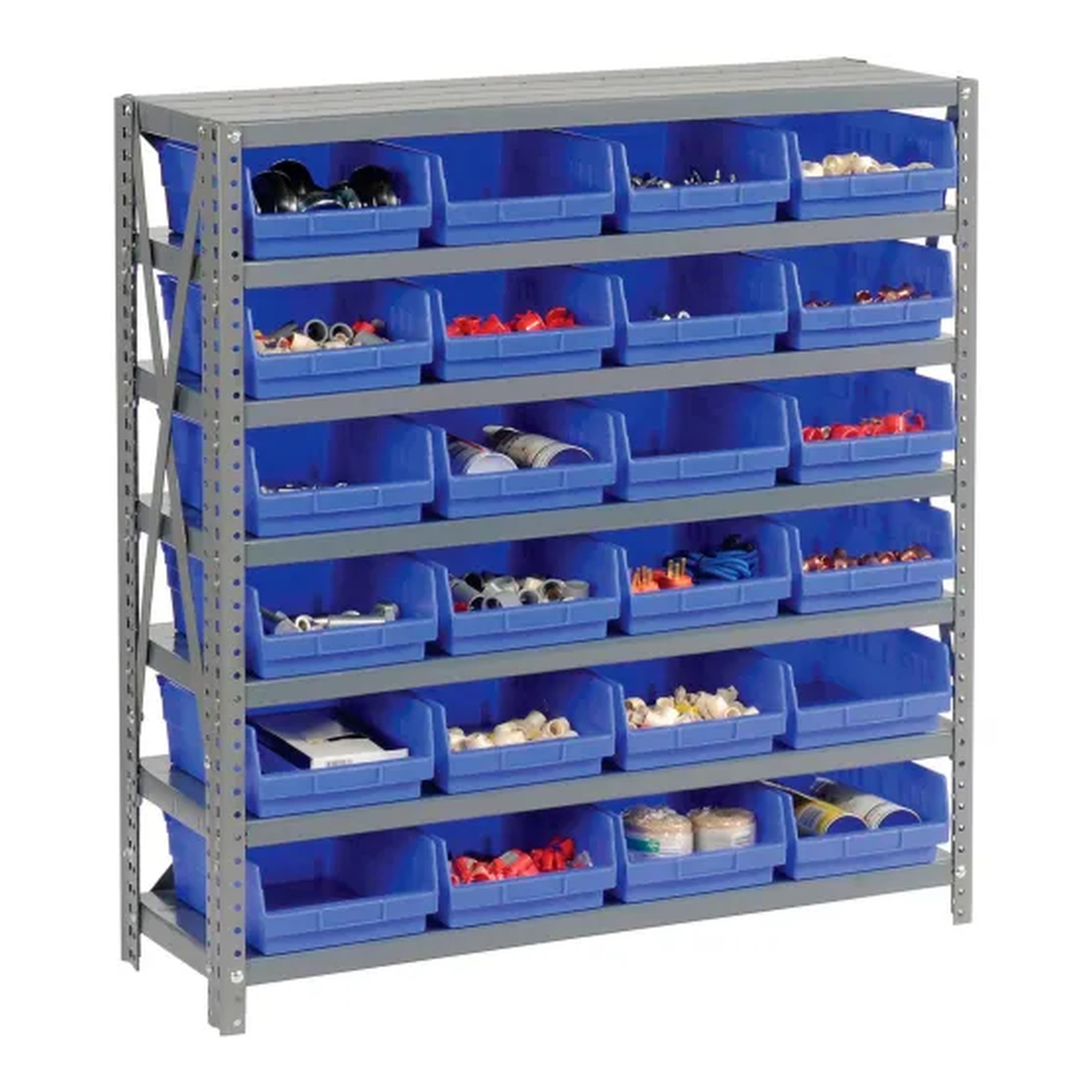
Open Steel Bin Shelving, 5 Shelves, Red Bins - 36 in. W x 18 in. D x 39 in. H
Our Price:$299.94This open steel shelving unit helps production and assembly teams organize parts for fast access and identification. Its five-shelf layout with red stacking bins supports orderly storage in work...
-
Global Industrial
Open Steel Bin Shelving, Gray with Yellow Bins - 36 in. W x 12 in. D x 73 in. H
Our Price:$514.99This open steel bin shelving unit helps production and assembly teams organize parts for faster identification and access. Its shelf-and-bin layout provides dedicated storage for small components and...
-
Global Industrial
Open Steel Shelving with 10 Yellow Plastic Bins - 36 in. W x 18 in. D x 73 in. H
Our Price:$518.99This open steel shelving unit with yellow plastic bins helps production, assembly, and inventory teams organize parts for easy access and identification. Its open design keeps stored items visible...
-
Global Industrial
Open Steel Shelving with 15 Red Plastic Stacking Bins - 36 in. W x 18 in. D x 73 in. H
Our Price:$574.99This open steel shelving unit helps production and assembly teams organize parts for faster identification and access. It combines eight shelves with red plastic stacking bins to keep frequently...
-
Global Industrial
Open Steel Shelving with 8 Yellow Stacking Bins - 36 in. W x 18 in. D x 39 in. H
Our Price:$299.94This open steel shelving unit helps production and assembly teams organize parts for easy access. Its shelf-and-bin layout supports clear sorting and handling of small inventory in active work areas...
-
Global Industrial
Open Steel Shelving with Blue Plastic Bins - 36 in. W x 12 in. D x 39 in. H
Our Price:$259.94This open steel shelving system helps production and assembly teams organize small parts for accessible storage and identification. It combines five shelves with blue plastic stacking bins to keep...
-
Global Industrial
Open Steel Shelving with Blue Plastic Bins - 36 in. W x 12 in. D x 73 in. H
Our Price:$504.99This open steel shelving unit with blue plastic bins helps production and assembly teams organize small parts for easier identification and access. Its shelf-and-bin layout supports orderly inventory...
-
Global Industrial
Open Steel Shelving with Blue Plastic Stacking Bins - 36 in. W x 12 in. D x 39 in. H
Our Price:$279.94This open steel shelving unit helps production and assembly teams organize small parts for accessible storage and identification. Its blue plastic stacking bins provide separated locations for...
-
Global Industrial
Open Steel Shelving with Blue Plastic Stacking Bins, 8 Shelves - 36 in. W x 18 in. D x 73 in. H
Our Price:$678.99This open steel shelving system helps production and assembly teams organize parts for accessible storage and identification. It combines eight shelves with blue plastic stacking bins to keep...
-
Global Industrial
Open Steel Shelving with Red Plastic Stacking Bins - 36 in. W x 12 in. D x 39 in. H
Our Price:$289.94This open steel shelving unit helps production and assembly teams organize small parts for accessible storage and identification. Its red plastic stacking bins provide dedicated locations for sorting...
-
Global Industrial
Open Steel Shelving with Red Storage Bins - 36 in. W x 12 in. D x 73 in. H
Our Price:$465.94This open steel shelving unit helps production, assembly, and stockroom teams organize small parts for quick access. Its shelf-and-bin layout supports orderly storage and faster inventory...
-
Global Industrial
Open Steel Shelving with Red Storage Bins - 36 in. W x 18 in. D x 73 in. H
Our Price:$568.99This open steel shelving unit helps stockroom, maintenance, and parts-handling teams organize small components for accessible storage and picking. Its red bins provide dedicated spaces for sorting...
-
Global Industrial
Open Steel Shelving with Yellow Plastic Bins - 36 in. W x 18 in. D x 39 in. H
Our Price:$315.94This open steel shelving unit helps production and assembly teams organize parts for easier access and identification. Its shelf-mounted yellow plastic bins support orderly storage of small...
-
Global Industrial
Steel Bin Shelving - 36 in. W x 12 in. D x 39 in. H
Our Price:$259.94This steel bin shelving unit helps stockrooms, maintenance areas, and parts departments sort and access small components. Its shelf-and-bin layout keeps frequently handled items organized in visible,...
-
Global Industrial
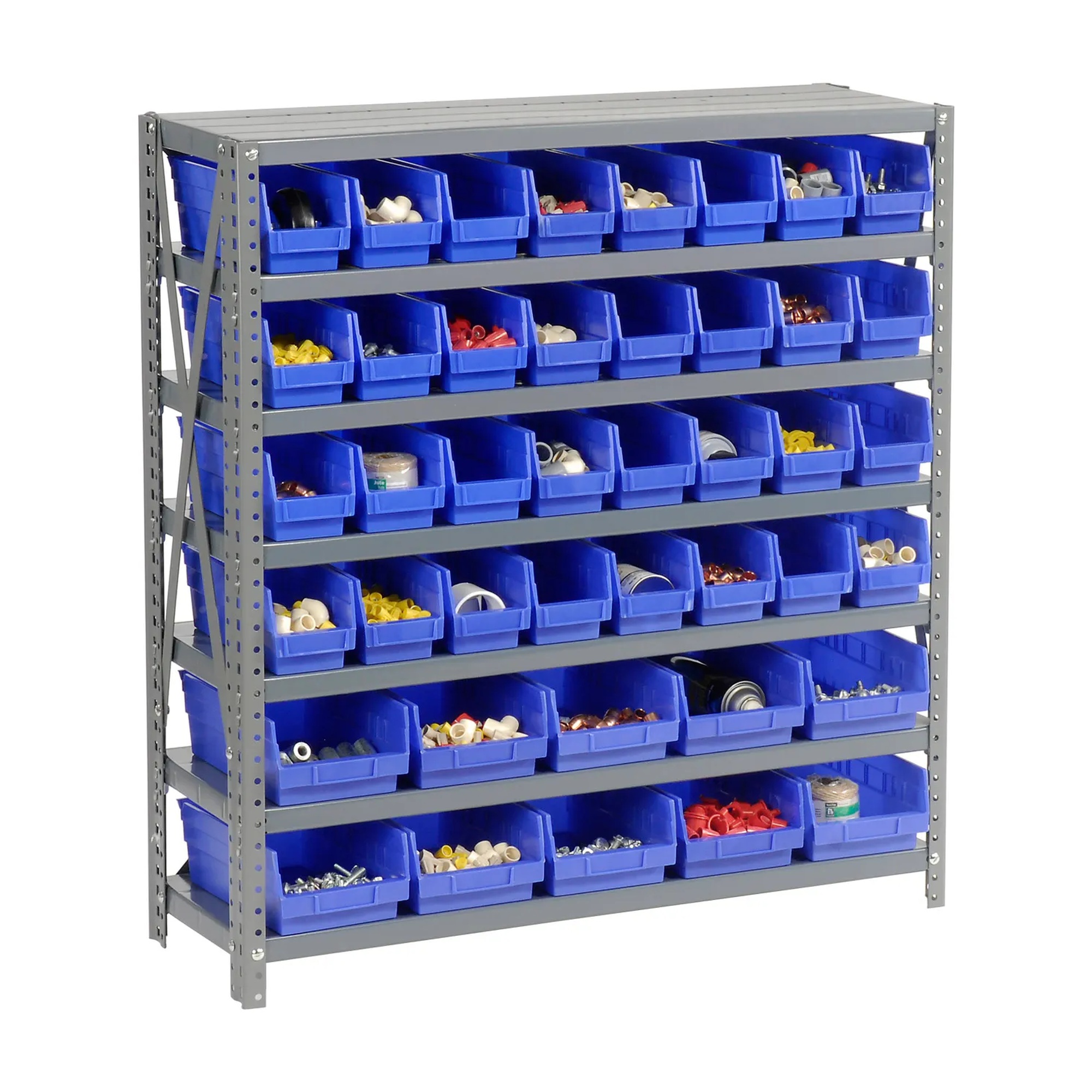
Steel Bin Shelving Unit with 42 Blue Shelf Bins - 36 in. W x 18 in. D x 39 in. H
Our Price:$355.94This steel bin shelving unit helps maintenance, warehouse, and parts-storage teams sort small components in an organized, accessible layout. Its seven-shelf design with blue shelf bins provides...
-
Global Industrial
Steel Bin Shelving Unit with 72 Ivory Shelf Bins - 36 in. W x 12 in. D x 72 in. H
Our Price:$475.94This steel bin shelving unit helps teams store, sort, and access small parts and components in organized locations. It combines a 13-shelf steel rack with ivory polypropylene shelf bins for...
-
Global Industrial
Steel Bin Shelving with 18 Blue Shelf Bins - 36 in. W x 18 in. D x 39 in. H
Our Price:$405.94This steel bin shelving unit organizes small parts, supplies, and inventory for warehouses, stockrooms, maintenance areas, and other commercial storage spaces. Its open shelving and blue shelf bins...
-
Global Industrial
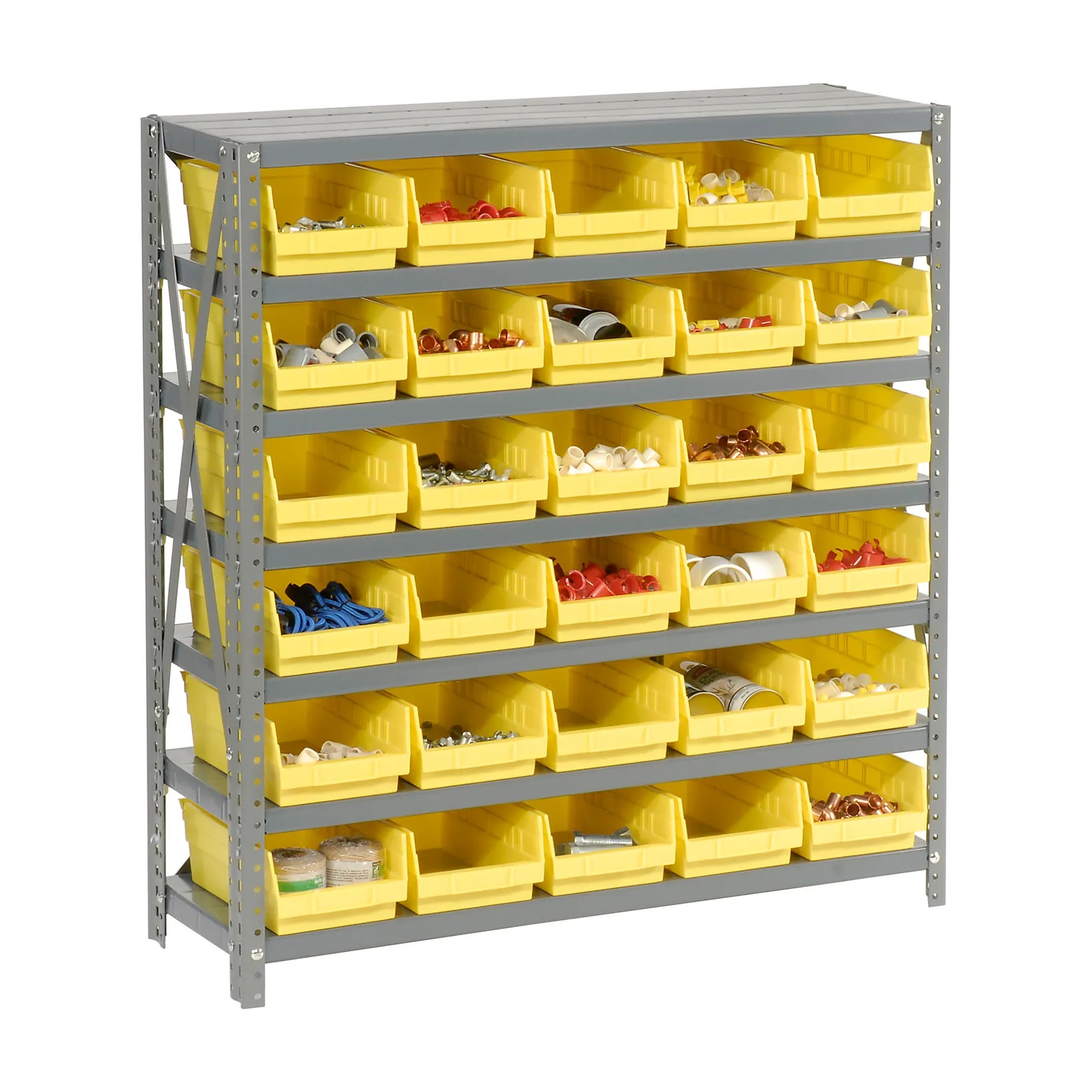
Steel Bin Shelving with 30 Yellow Shelf Bins - 36 in. W x 12 in. D x 39 in. H
Our Price:$259.94This steel bin shelving unit helps parts rooms, maintenance areas, and workspaces sort and organize small components. Its integrated yellow shelf bins provide accessible storage for keeping...
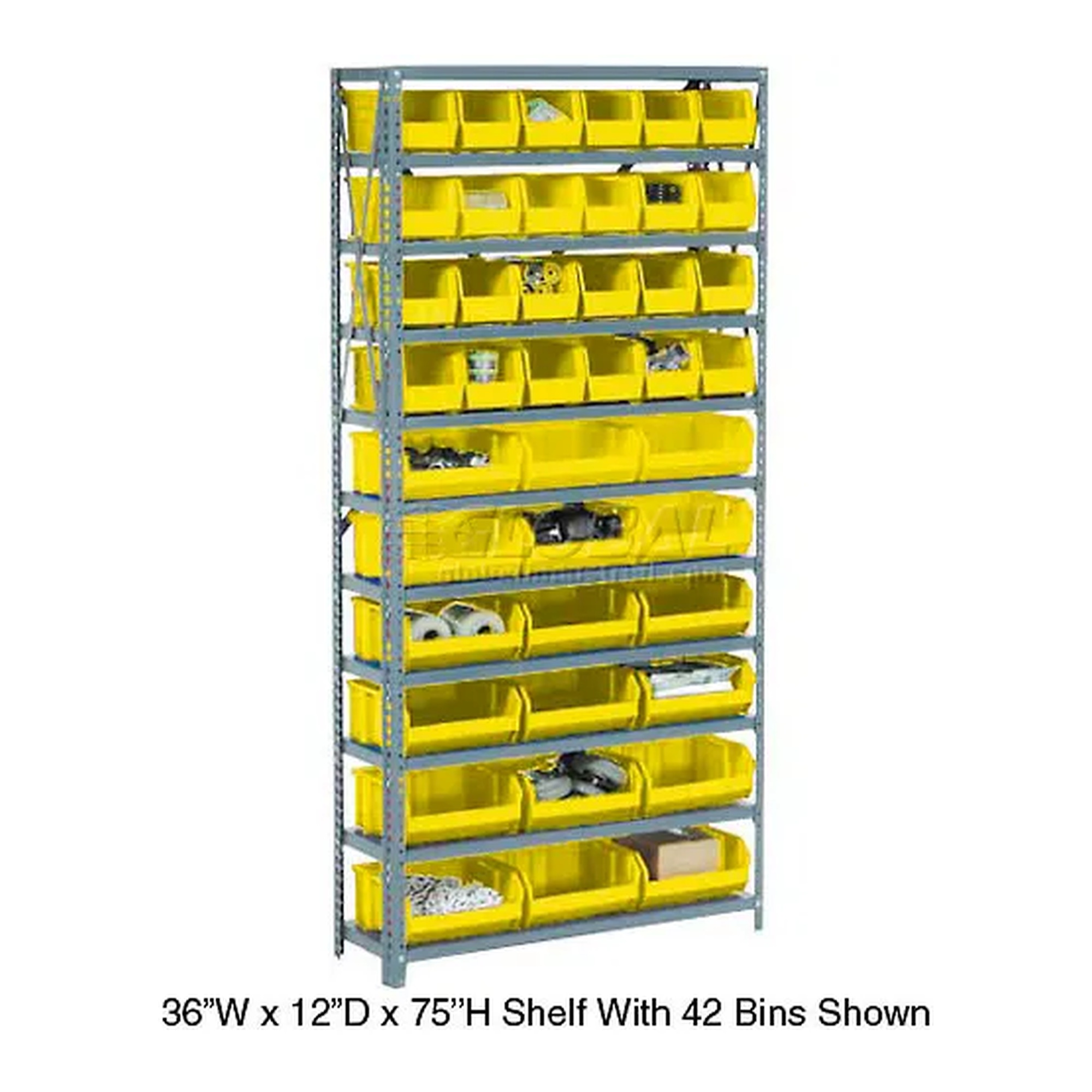
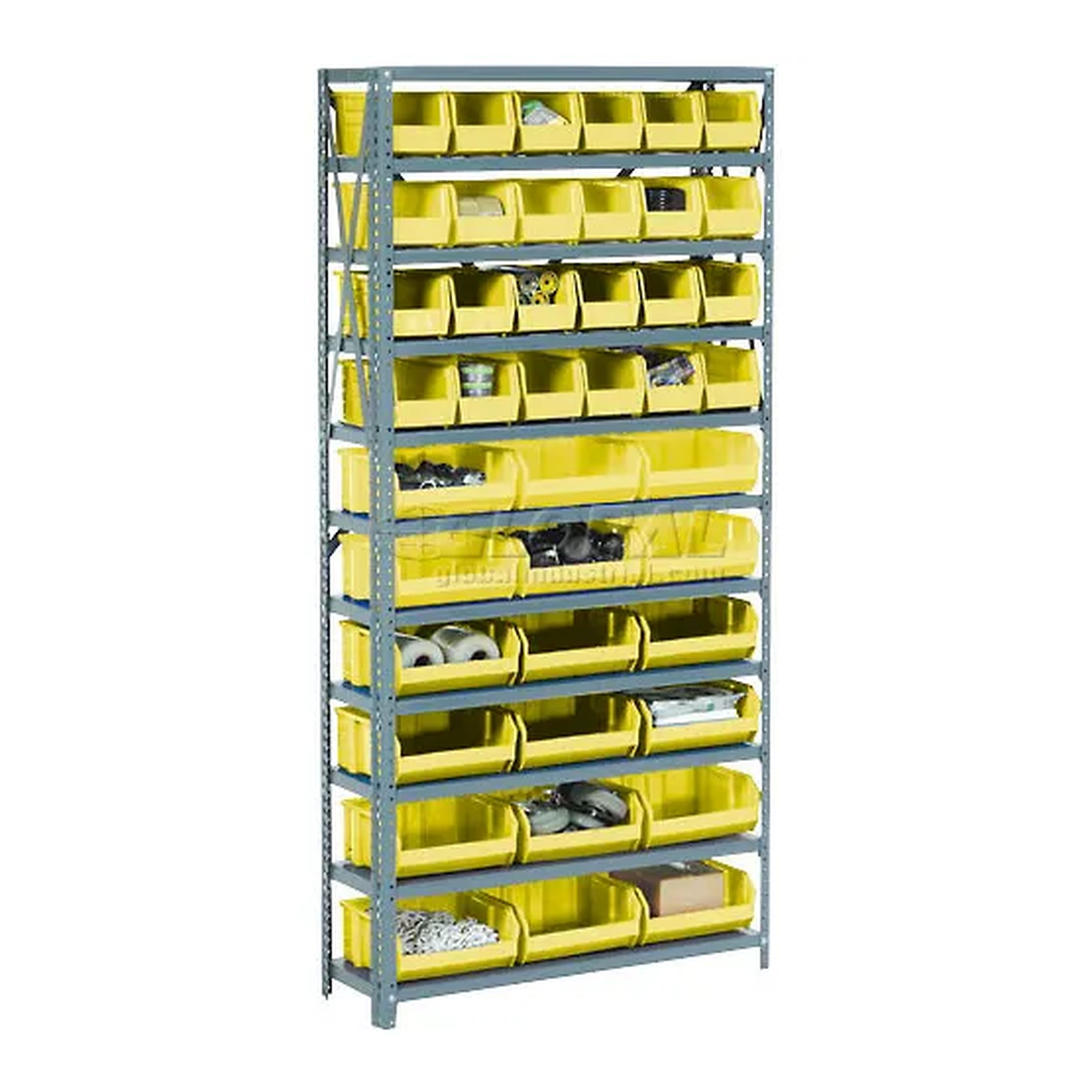
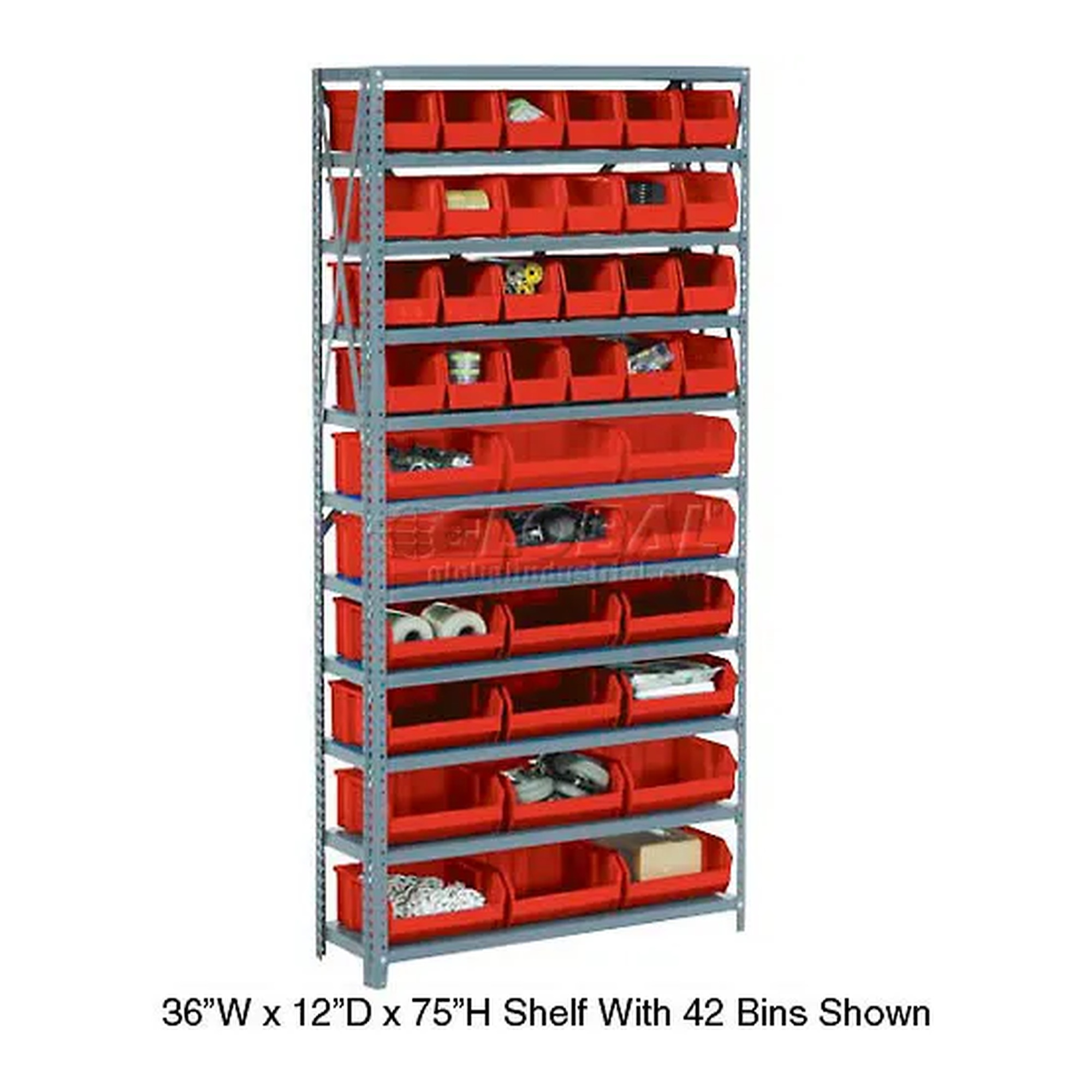
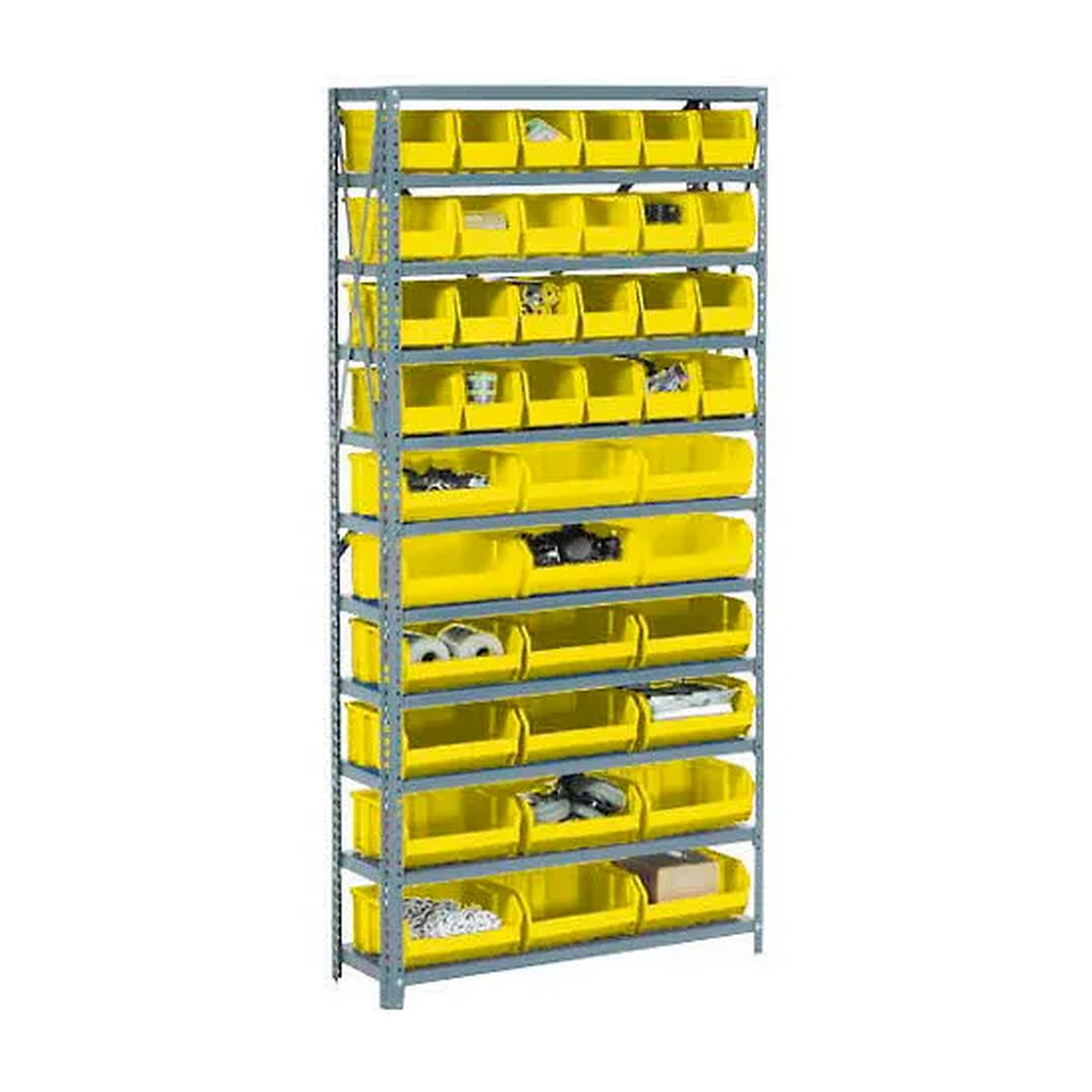
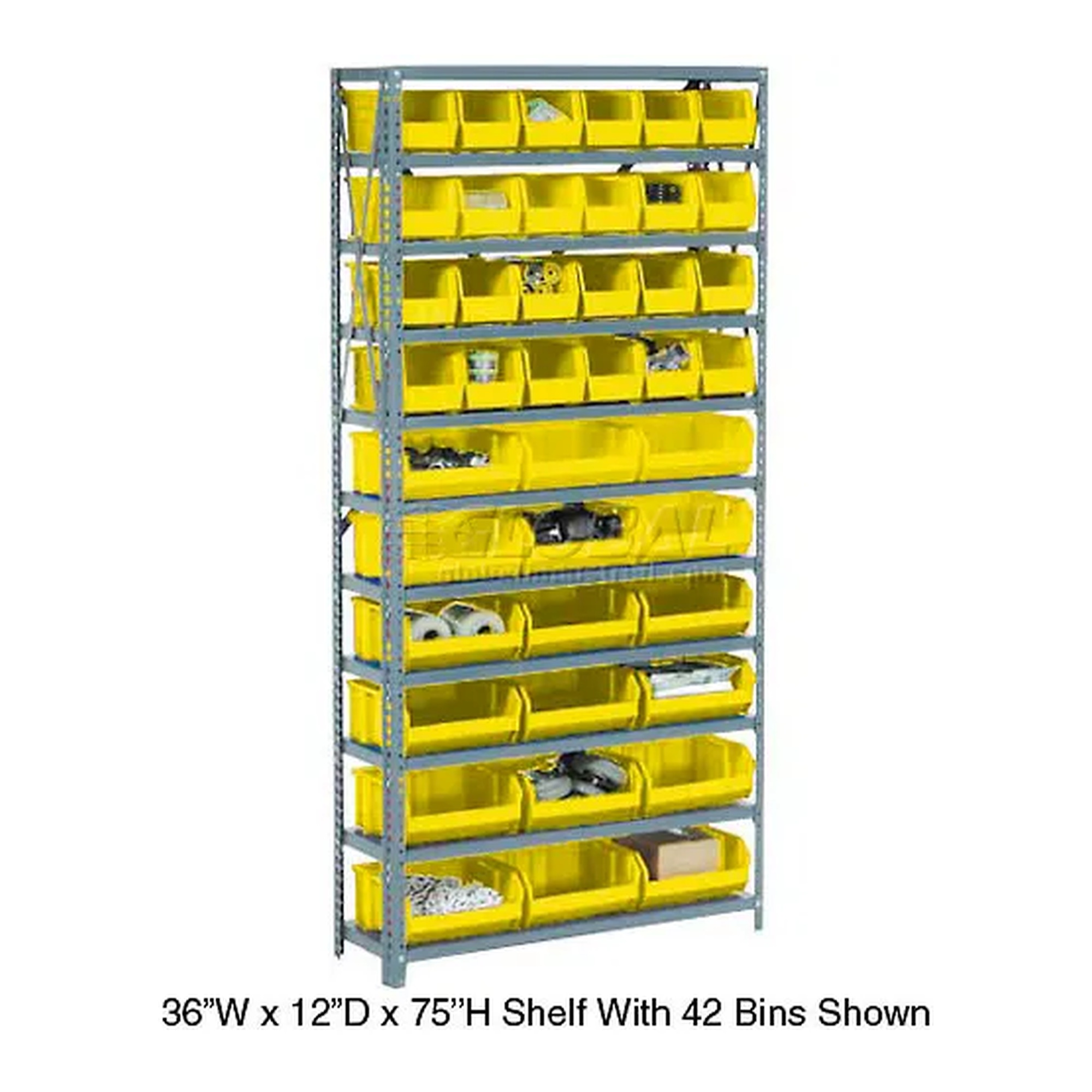
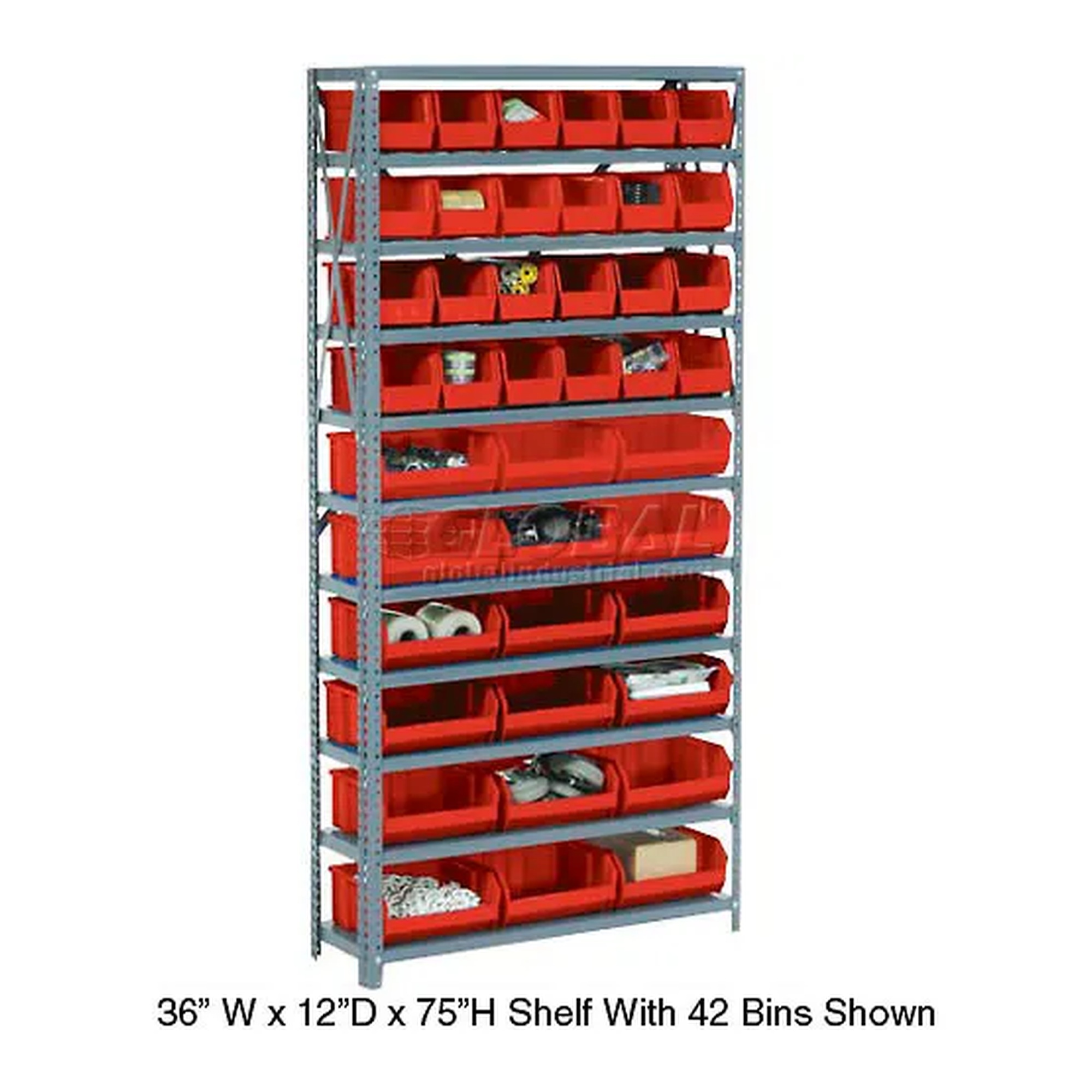
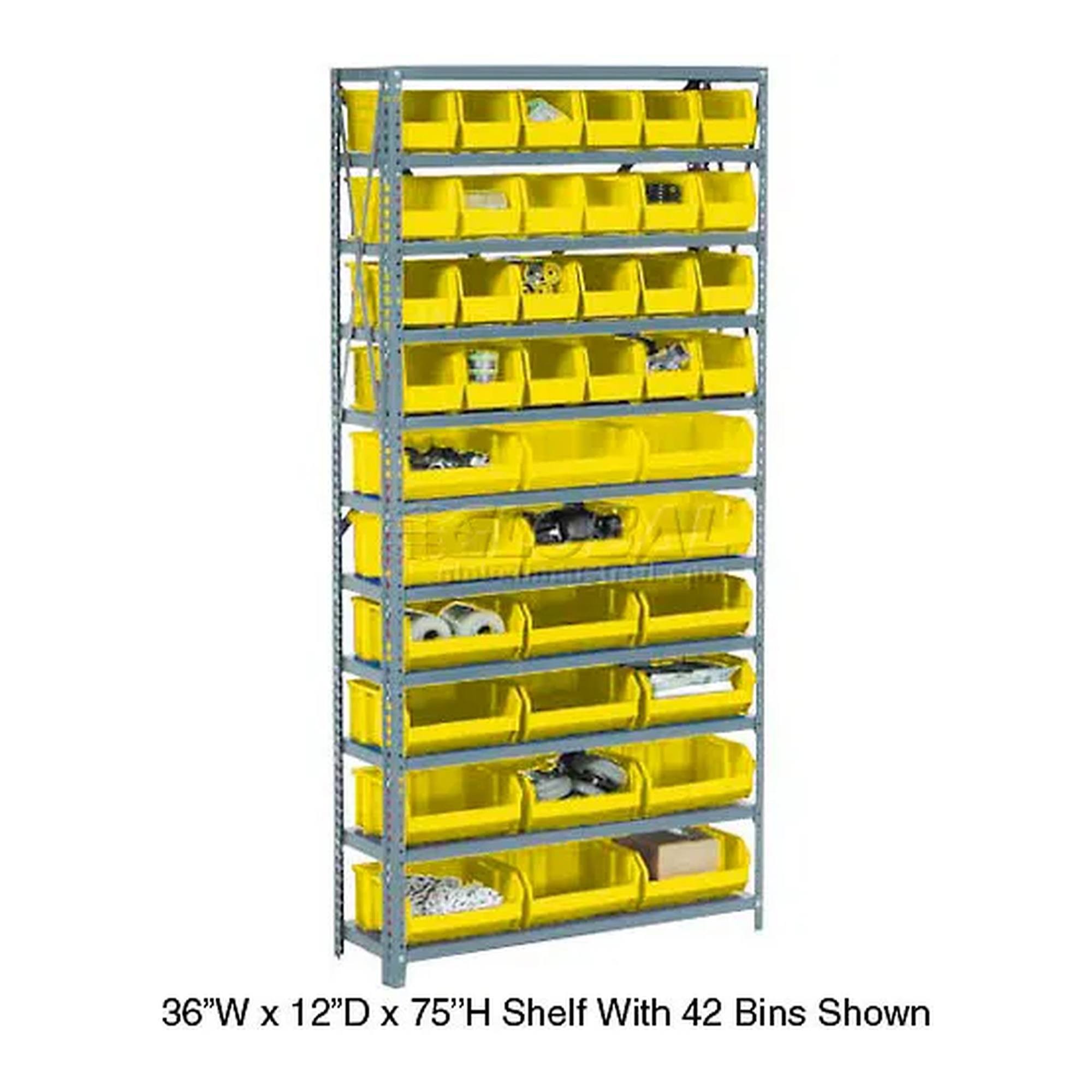
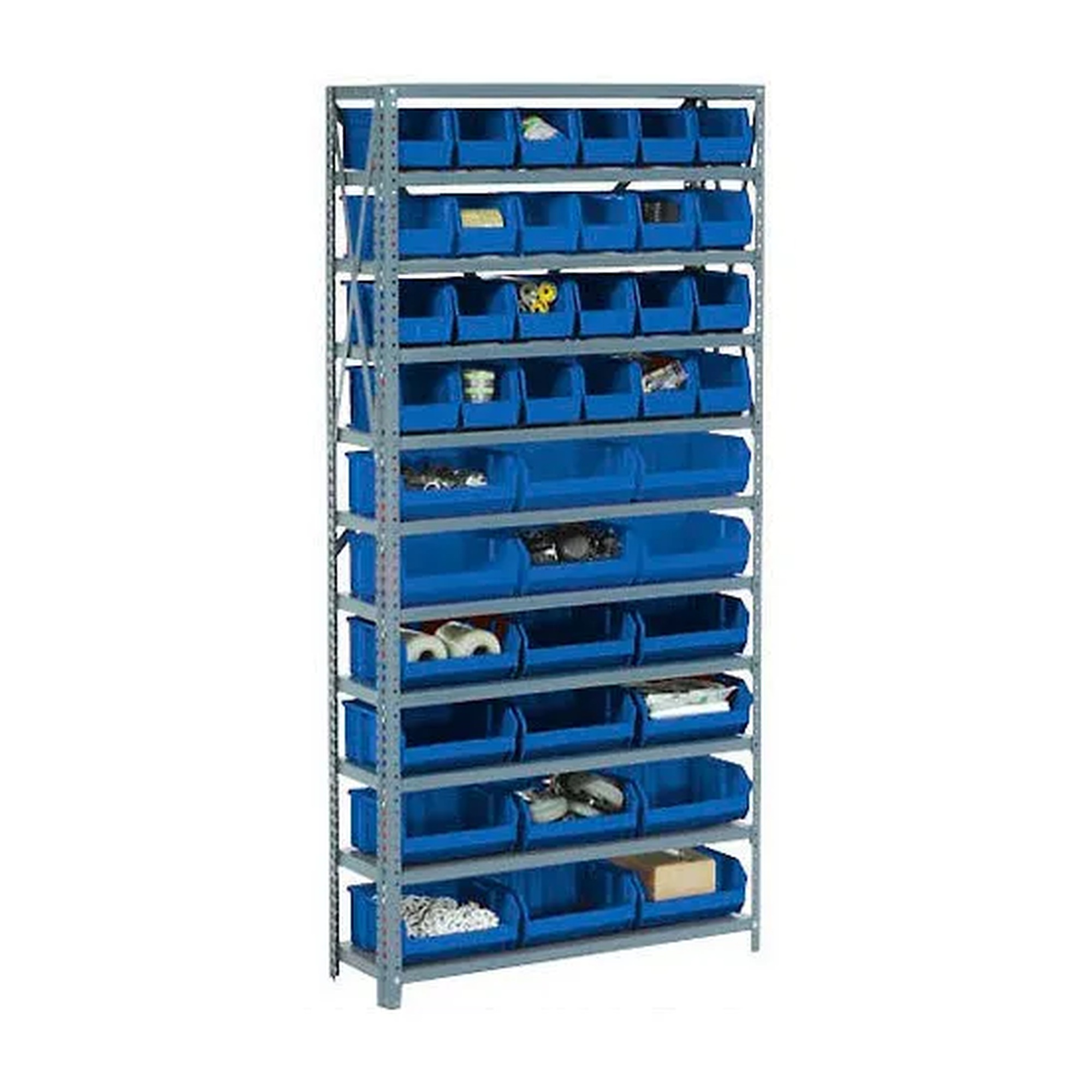
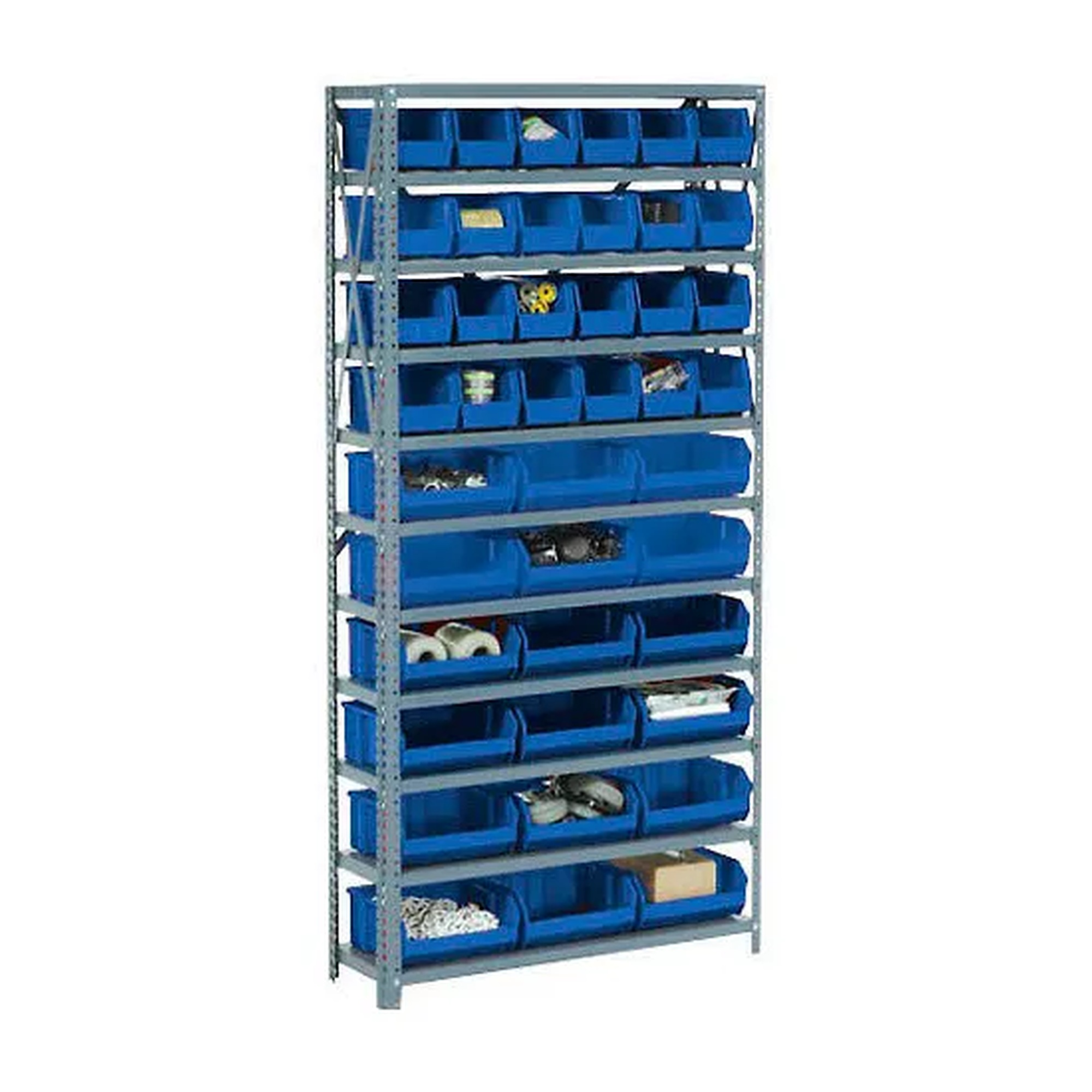
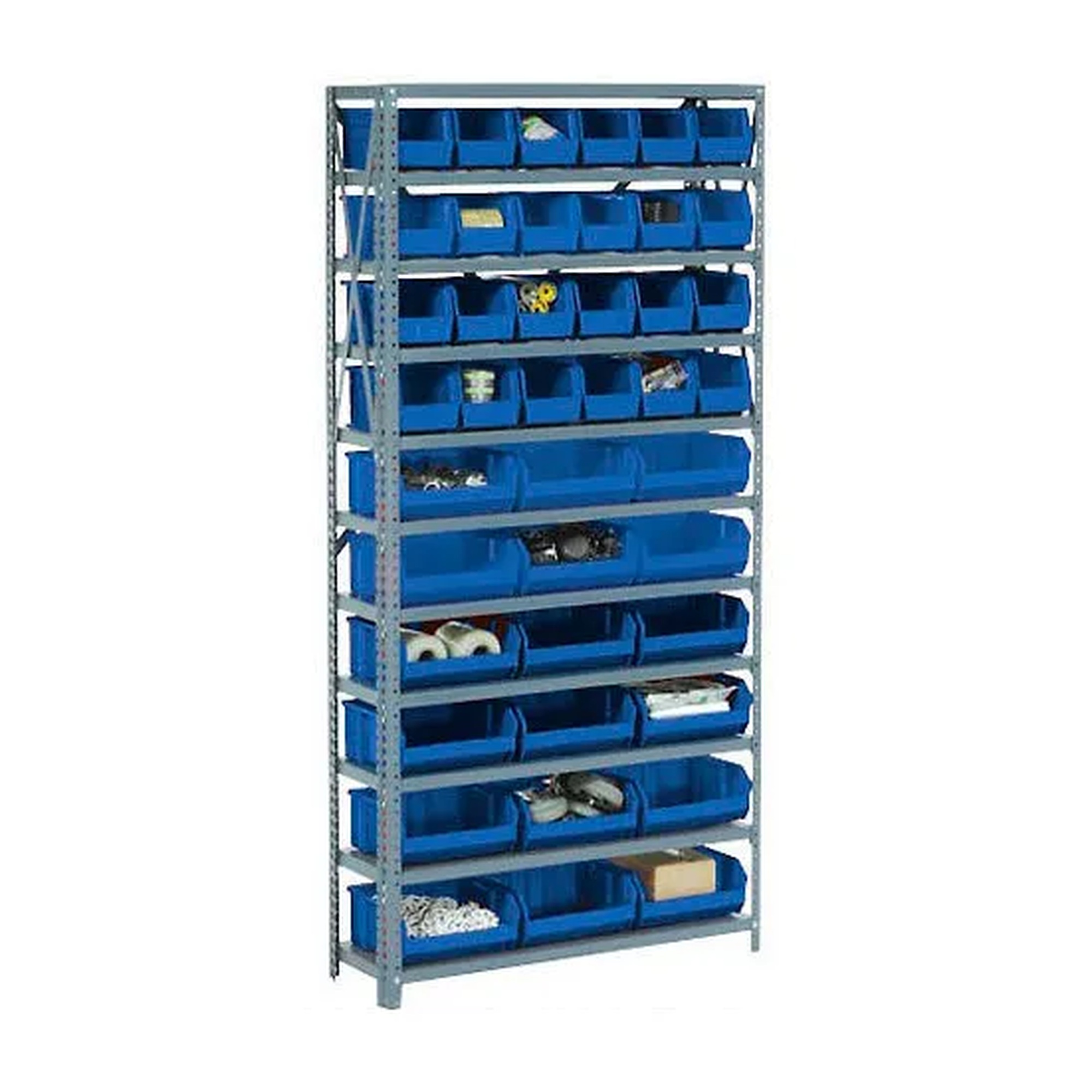
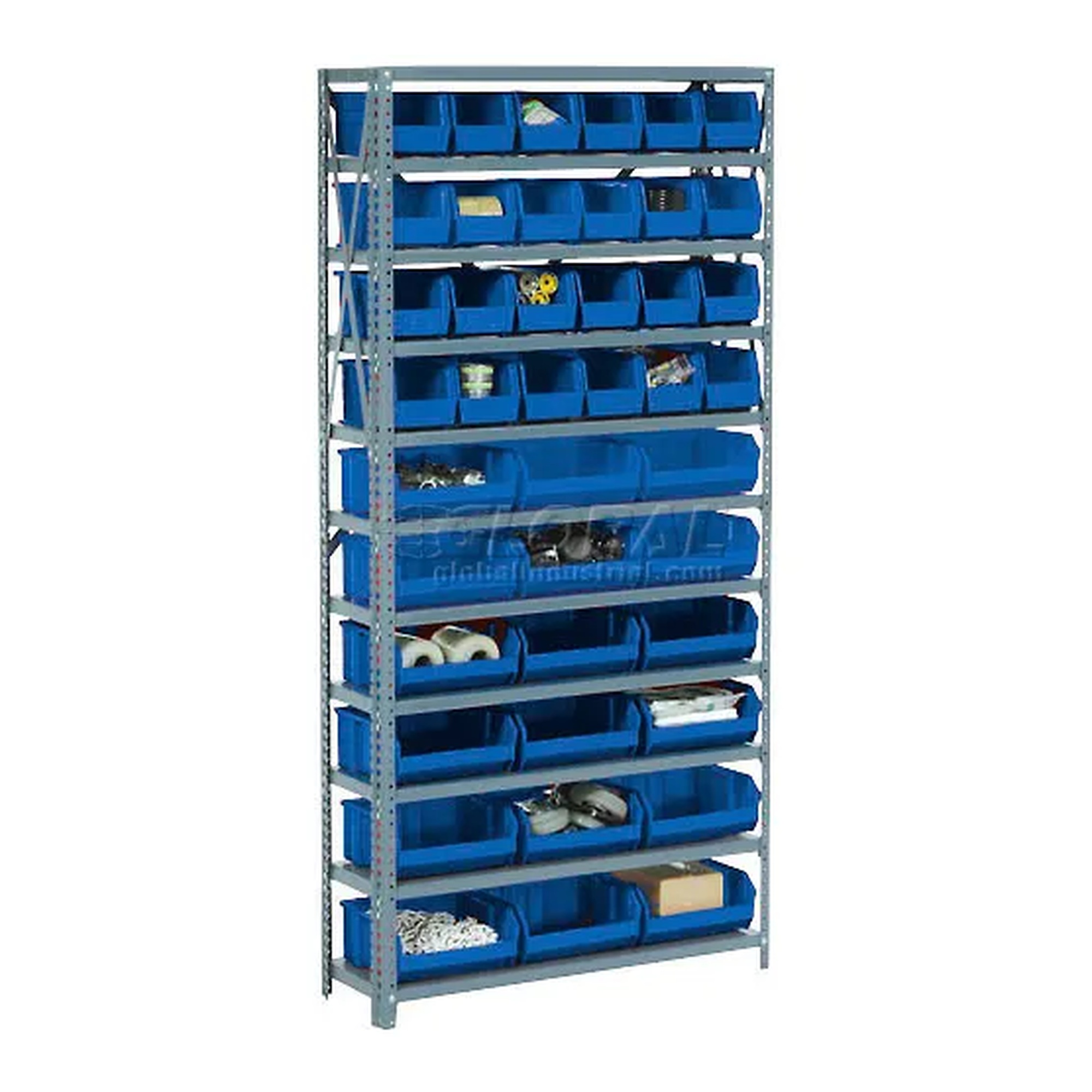
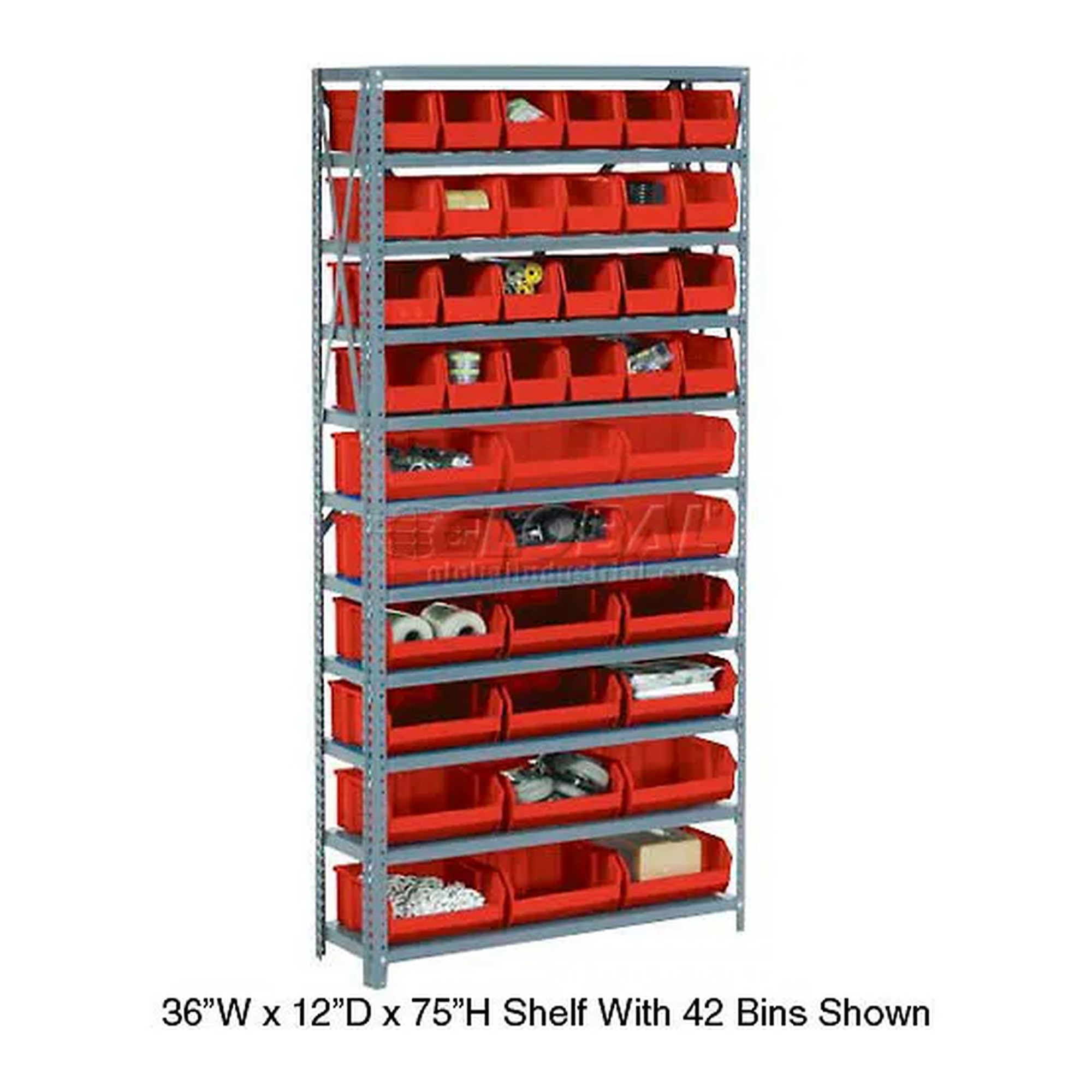
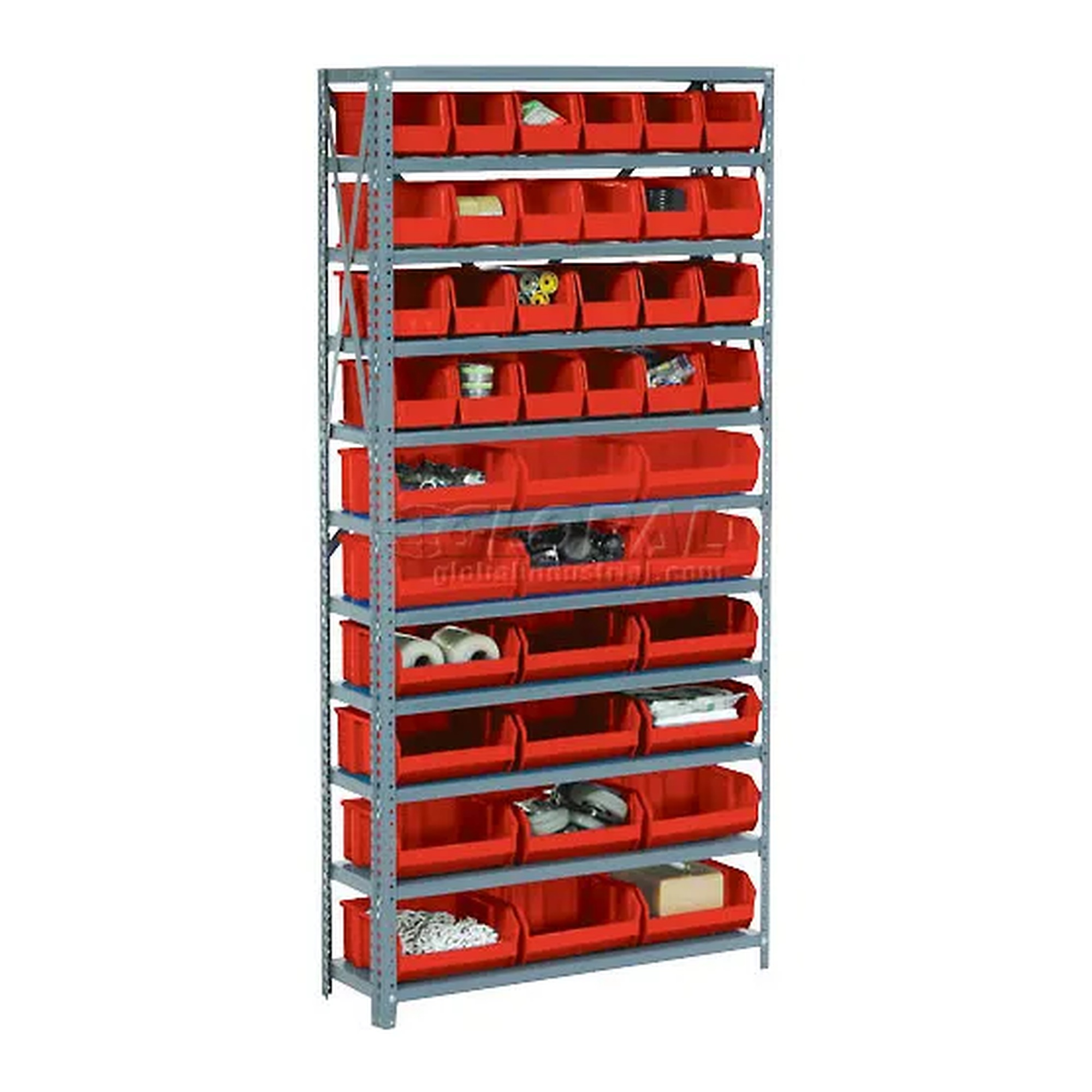
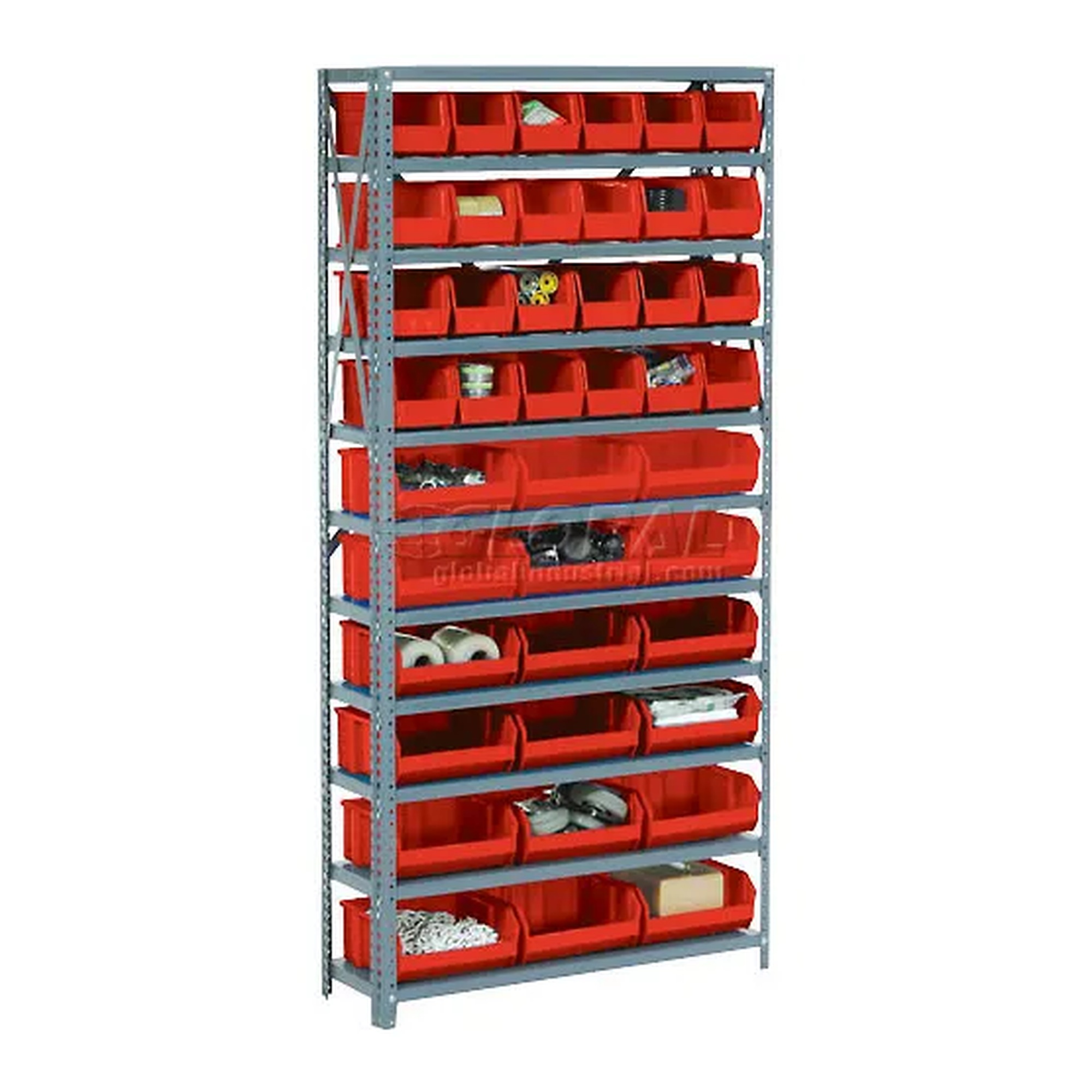
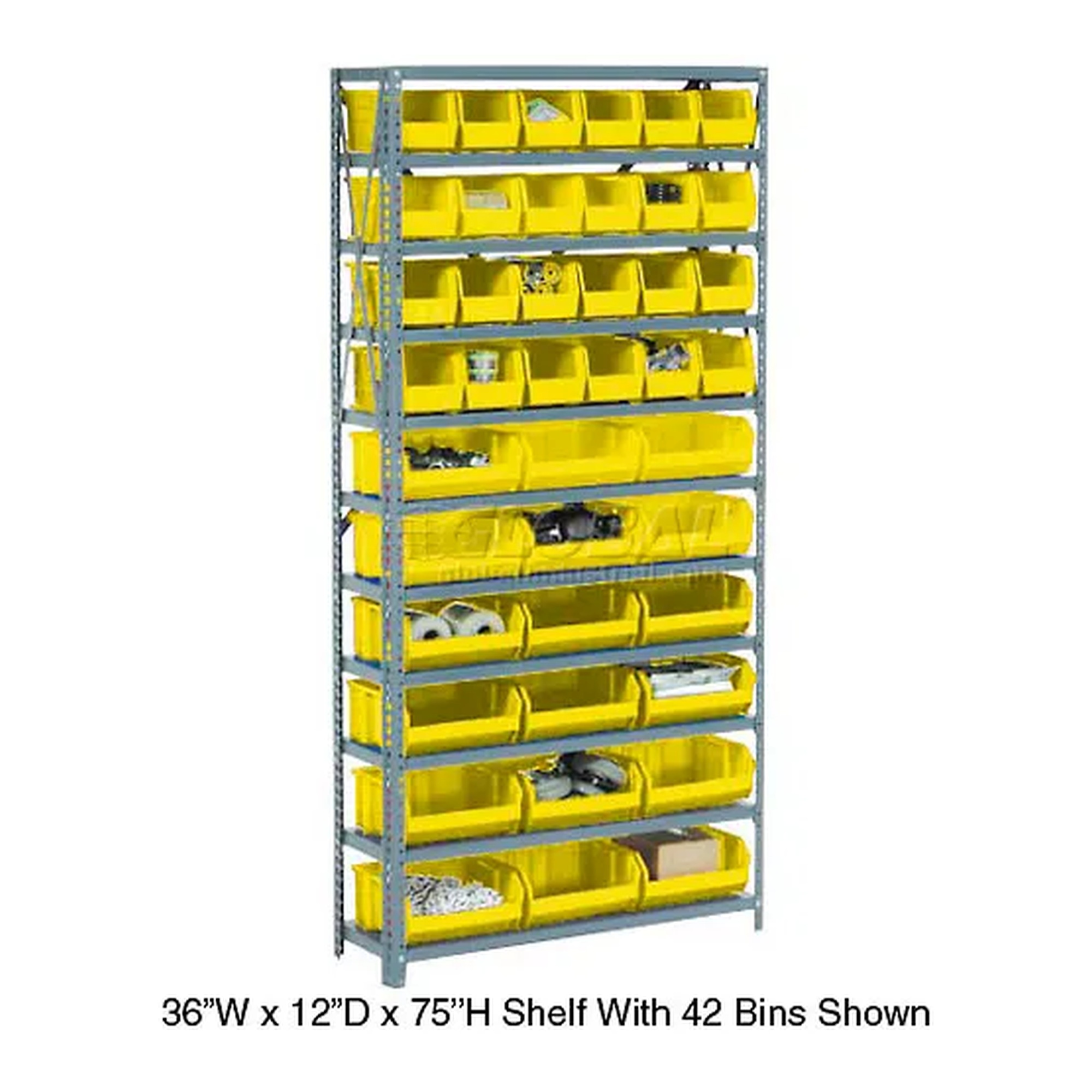
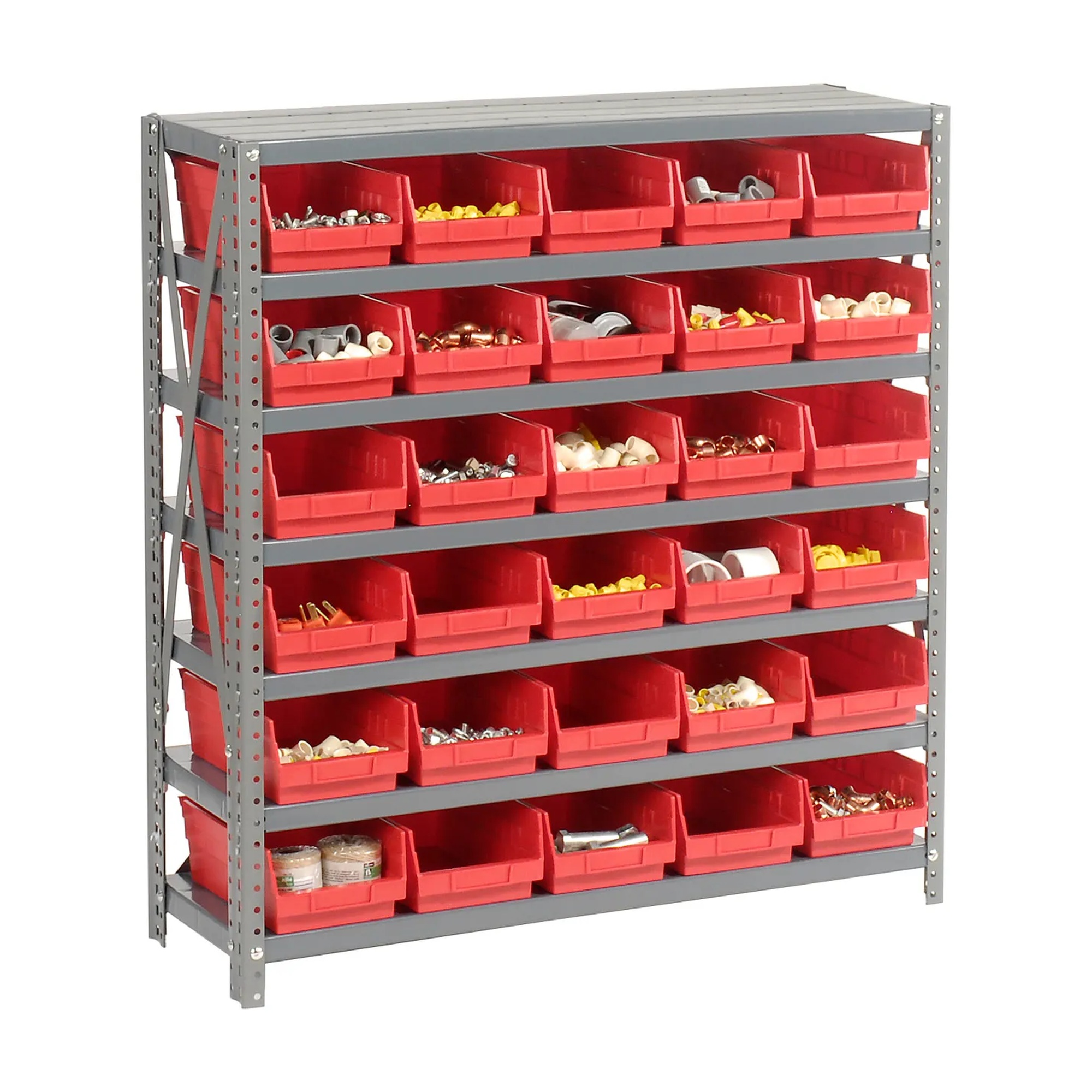
Choose steel bin shelving for organized small-parts storage
Steel bin shelving combines shelving levels with bins to help keep components separated, visible, and easier to access. It is well suited to work areas where orderly inventory storage can support production and assembly tasks.
Popular examples in this category
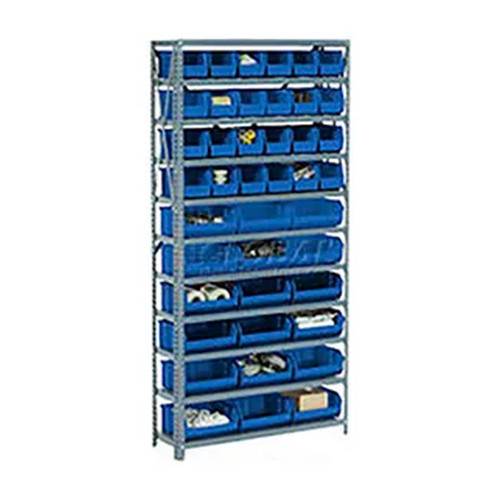 Steel Open Shelving with 17 Blue Plastic Bins - 36 in. W x 12 in. D x 39 in. HFS-GLO-603244BL
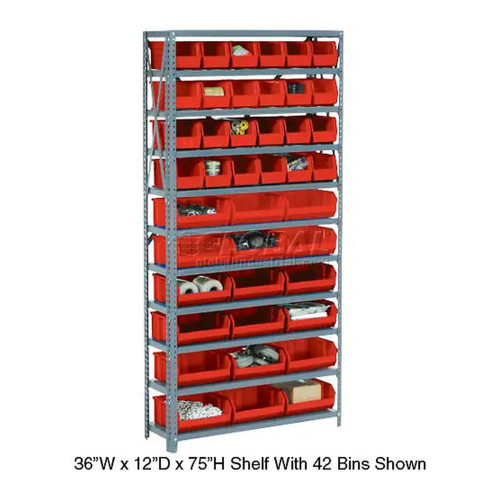 Open Steel Bin Shelving, 5 Shelves, Red Bins - 36 in. W x 18 in. D x 39 in. HFS-GLO-603248RD
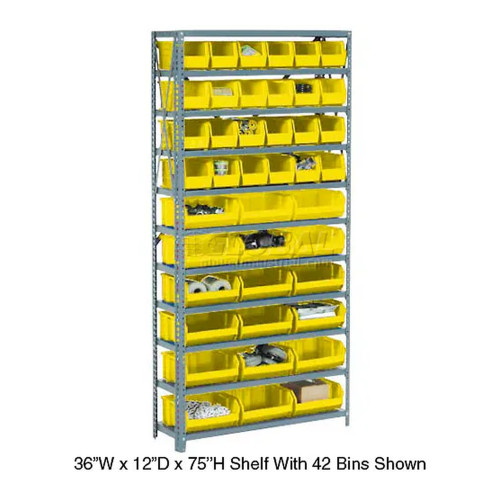 Open Steel Shelving with Yellow Plastic Bins - 36 in. W x 18 in. D x 39 in. HFS-GLO-603249YL
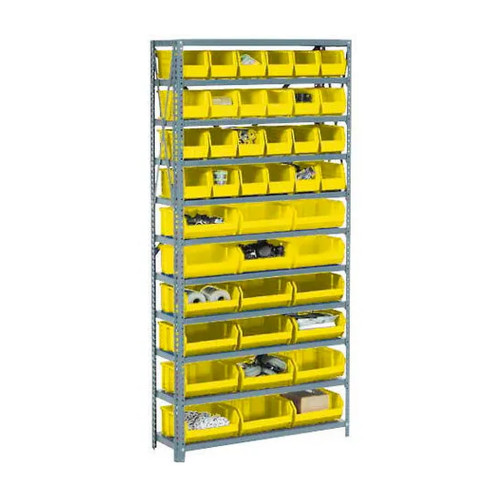 Open Steel Bin Shelving, Gray with Yellow Bins - 36 in. W x 12 in. D x 73 in. HFS-GLO-603253YL
Keep small components sorted
Use shelf-and-bin layouts to separate parts and supplies, helping teams identify needed items more quickly.
Match the layout to your storage needs
Review the number of shelving levels, the need for enclosed side and back panels, bin details, label slots, and stated shelf capacity.
Support production and assembly areas
These storage units can help organize components near work areas where fast access and clear identification are important.
Look for practical bin handling details
Finger grips, anti-slide stops, and reinforced ribs can support easier bin handling and help bins maintain their shape when loaded.
Side and back panels help limit dust exposure.
The featured configuration provides multiple storage levels.
The featured configuration states capacity per shelf.
Bins help separate small components.
Key features to review
Compare practical storage details based on the needs of your work area and inventory.
| Feature | What it supports | Why it matters |
|---|---|---|
| Closed steel design | Side and back panels | Helps limit dust exposure and adds structural support. |
| Shelf-and-bin layout | Separated component storage | Supports orderly inventory organization. |
| Label slots | At-a-glance identification | Helps teams find stored inventory. |
| Bin handling details | Handling and loaded-bin support | Finger grips, anti-slide stops, and reinforced ribs aid everyday use. |
Plan the right fit before choosing
Make inventory easier to identify
Bins help divide small components into separate storage locations, while label slots provide a simple way to identify inventory at a glance.
- Separate components by type or task.
- Use label slots to support quick visual identification.
- Keep frequently used supplies organized near the work area.
Consider enclosed storage support
A closed steel design with side and back panels can help limit dust exposure while adding support to the shelving structure.
- Choose enclosed panels when dust exposure is a consideration.
- Consider how the shelf-and-bin layout fits the items being stored.
- Review the stated capacity for each shelf.
Focus on everyday handling
Bin features can affect how easily components are accessed and returned after use. Handling details are especially useful when bins are regularly moved or replenished.
- Finger grips can support easier handling.
- Anti-slide stops can help keep bins in place.
- Reinforced ribs help bins maintain their shape when loaded.
Common questions before buying
What is steel bin shelving used for?
It is used to organize small parts and supplies for easier identification and access, particularly in production and assembly areas.
How can enclosed steel shelving help protect stored items?
Side and back panels can help limit dust exposure while adding support to the shelving structure.
What bin features can help with handling?
Finger grips, anti-slide stops, and reinforced ribs can support handling and help bins maintain their shape when loaded.
How do label slots help with inventory storage?
Label slots make it easier to identify stored inventory at a glance.