
-
GoGreen Power
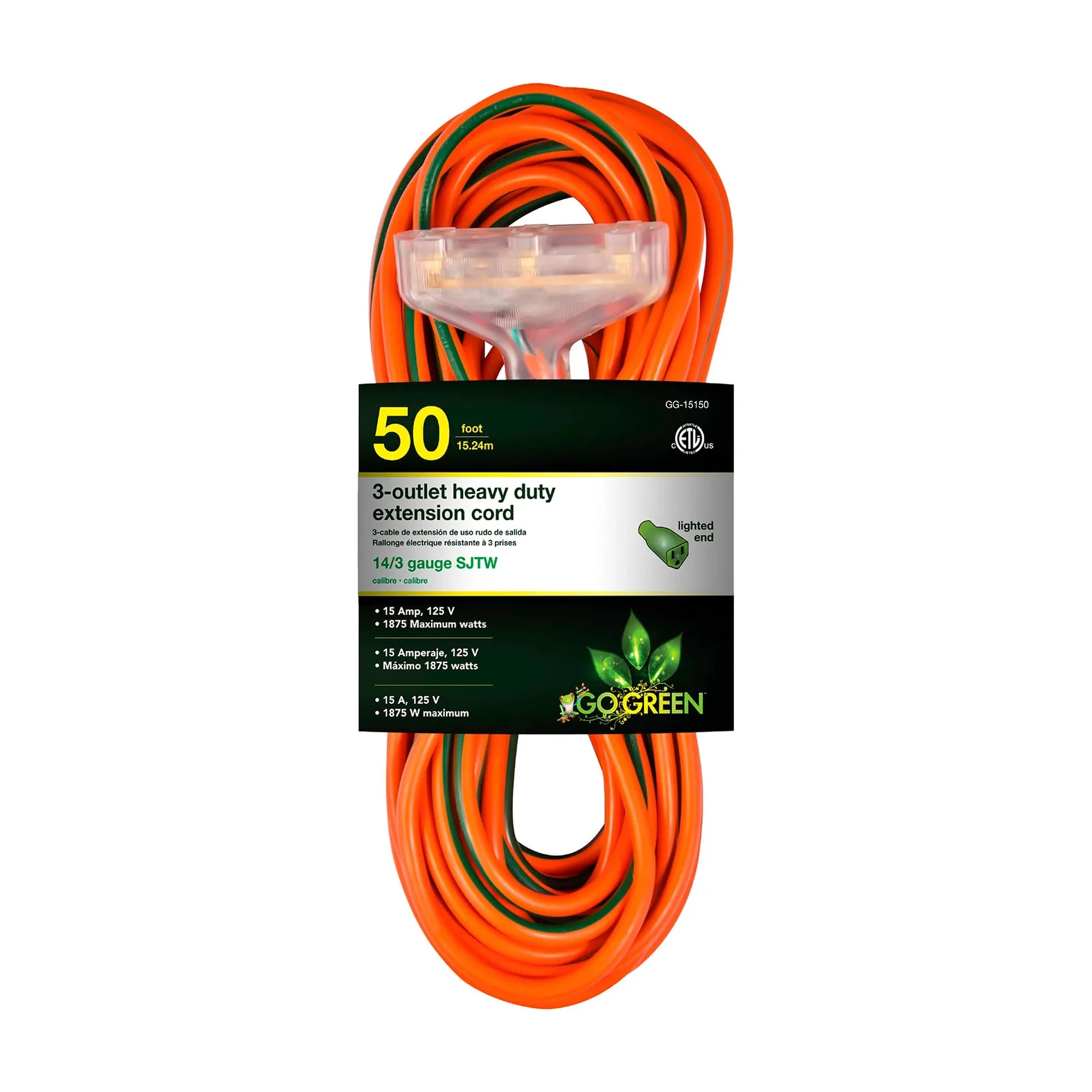
50-Foot 14/3 Heavy-Duty 3-Outlet Extension Cord with Lighted End
Our Price:$67.94This 50-foot heavy-duty extension cord is designed for users who need to extend power from one outlet to multiple electrical devices. Its three-outlet end helps support garage setups and other...
-
50-Ft Outdoor Extension Cord with Three Lighted Outlets
Our Price:$72.94This 50-foot outdoor extension cord helps maintenance teams, contractors, and facility staff bring power to equipment and tools at a distance. Its three-outlet end allows users to connect up to three...
-
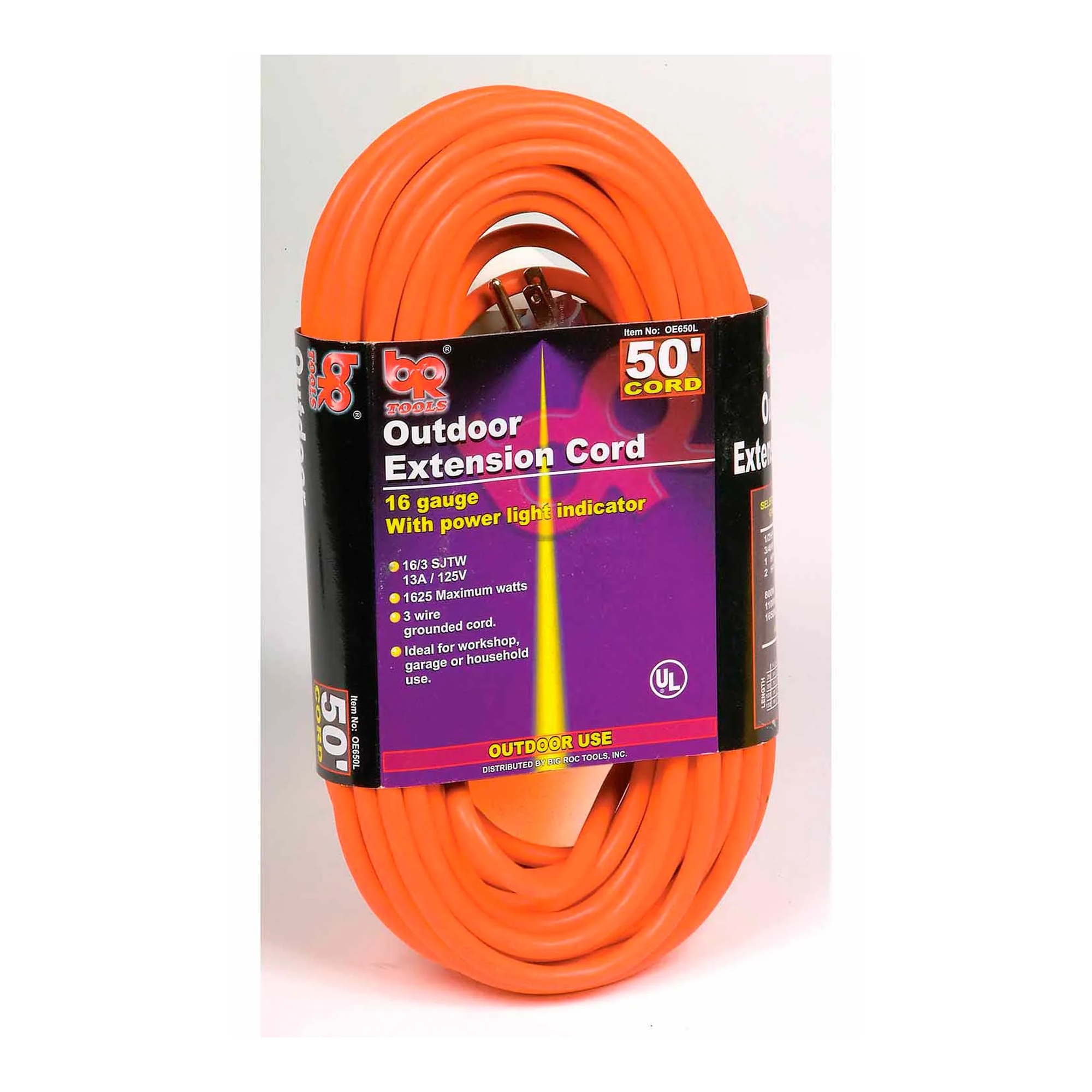
50-Ft. Orange 16/3 SJTW-A Extension Cord
Our Price:$40.94This 50-foot three-conductor extension cord helps users extend power from an outlet to compatible equipment for indoor or outdoor work. Its orange color makes the cord easy to distinguish in the work...
-
GoGreen Power
6 ft 14/3 SPT-3 Appliance Cord, Beige
Our Price:$9.29This 6 ft appliance cord is for facilities and commercial buyers connecting large appliances such as washers, dryers, refrigerators, and air conditioners. It provides a practical power connection...
-
GoGreen Power
6 ft 4-Wire 30 Amp Dryer Cord, Black
Our Price:$31.94This black dryer cord is for users who need a 4-wire connection for a dryer. Its 6-foot length provides a practical power connection while the right-angle plug helps keep the cord from bending at the...
-
6 ft 4-Wire Range Cord, Black, 50 Amp
Our Price:$38.94This 6 ft, 4-wire range cord is for people installing most freestanding electric ranges. It provides the electrical connection needed to power a compatible range.The black cord has a 50 amp rating...
-
6 Ft. 3-Wire 30 Amp Dryer Cord, Gray
Our Price:$17.99This gray dryer cord is a 6-foot, 3-wire power cord for buyers who need to connect a dryer. Its right-angle plug helps keep the cord from bending at the connection point.The cord measures 6 feet long...
-
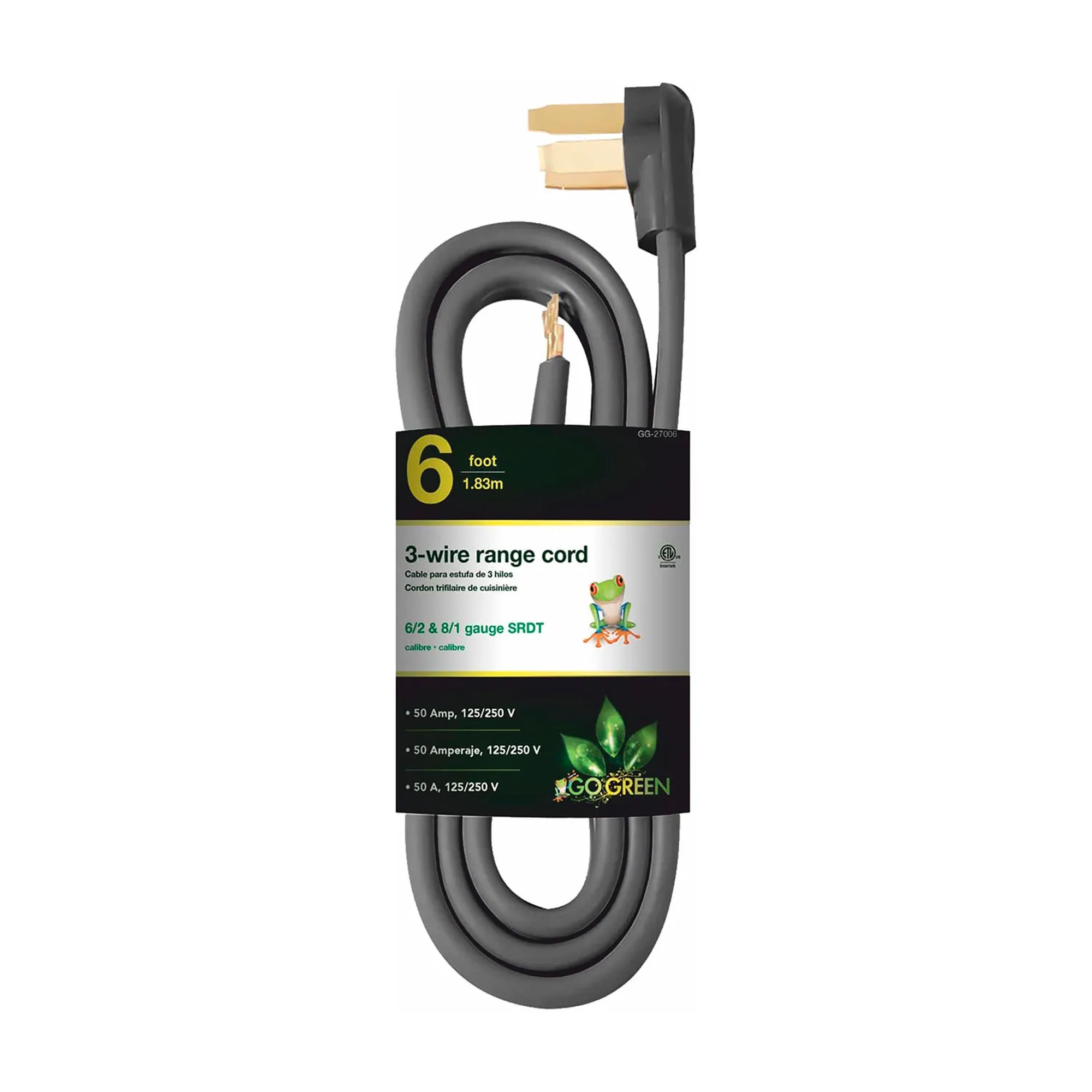
6 ft. 50 Amp 3-Wire Range Cord, Gray
Our Price:$31.94This gray range cord is for users connecting most freestanding electric ranges. Its 6-foot length provides the power connection needed for range installation.The cord has a 6-foot length, 3-wire...
-
GoGreen Power
6 ft. Household Extension Cord, Brown
Our Price:$29.94This 6-foot household extension cord helps home users and office staff extend power access for indoor electrical connections. Its brown finish offers a straightforward option for everyday indoor...
-
GoGreen Power
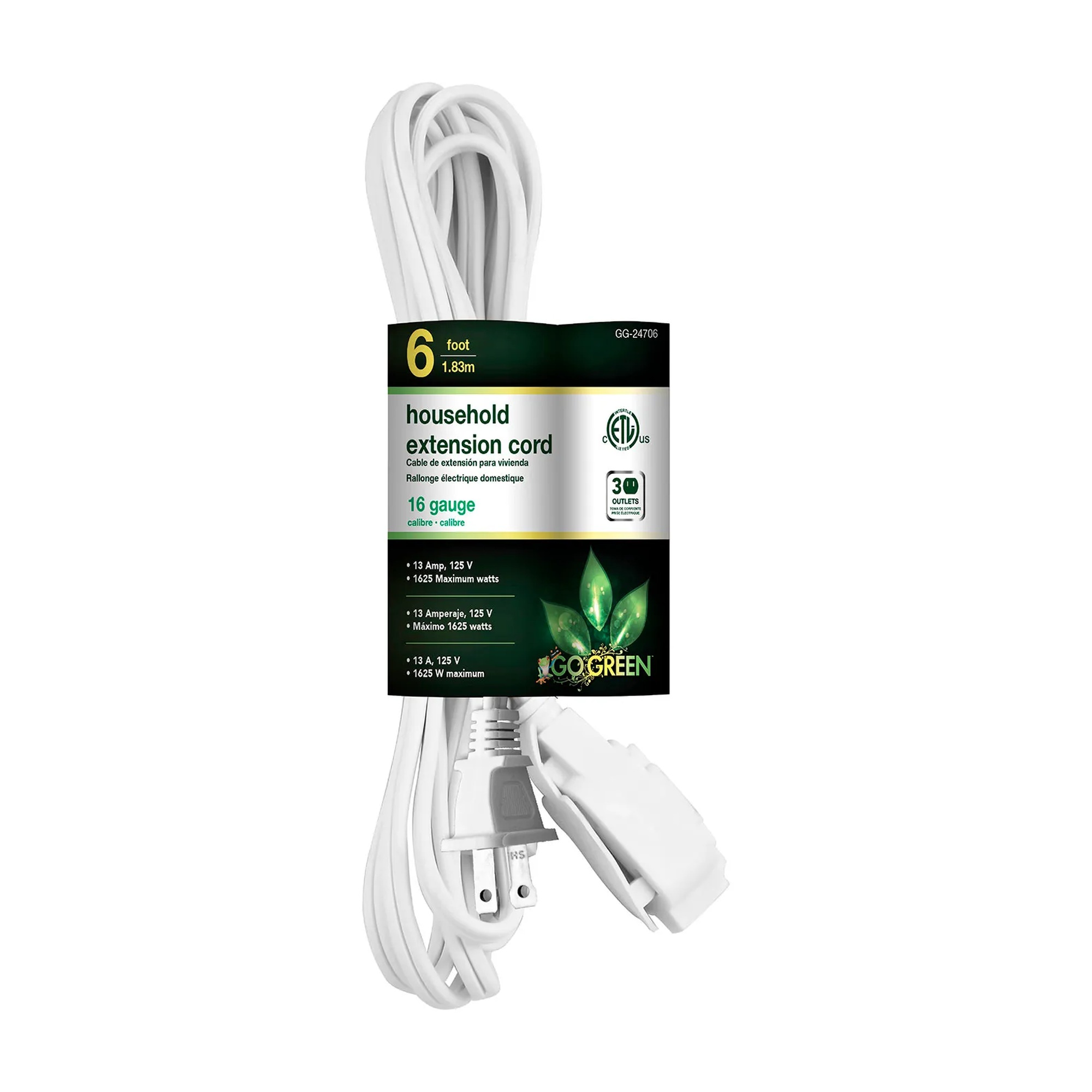
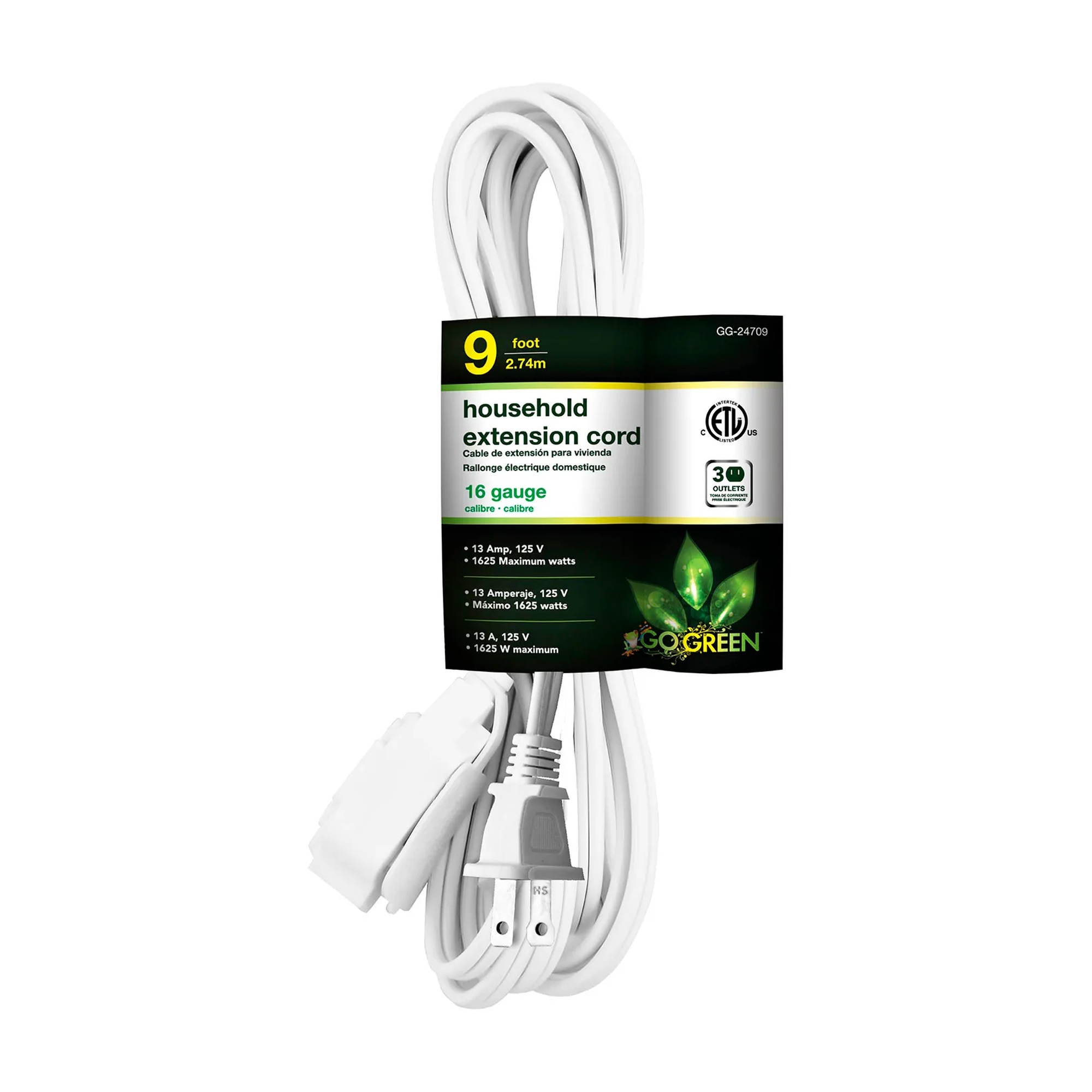
6-Ft White Household Extension Cord
Our Price:$32.94This 6-foot household extension cord helps home and office users extend power access for indoor setups. Its white finish offers a neutral look for everyday power connections.The cord measures 6 feet...
-
GoGreen Power
8 Ft. 16/3 SJTW Heavy-Duty Extension Cord, Black
Our Price:$11.24This 8 ft. extension cord helps commercial users extend power access for equipment and tools. Its short length provides a practical connection where an outlet is nearby, while the heavy-duty design...
-
GoGreen Power
8-Foot 3-Outlet Extension Cord with Right-Angle Plug
Our Price:$12.49This 8-foot extension cord is designed for users who need to power multiple small household appliances or general electronics from one wall outlet. Its three outlets expand a single outlet connection...
-
GoGreen Power
8-Ft. 16/3 SJTW Extension Cord with Lighted End
Our Price:$10.74This 8-foot extension cord helps commercial users extend power to connected equipment and tools. Its lighted end provides a quick visual indication that power is flowing.The orange 16/3 SJTW cord is...
-
GoGreen Power
80-Ft. 16/3 SJTW Heavy-Duty Extension Cord, Green
Our Price:$55.94This 80-foot extension cord is for users who need to extend power across a longer distance. Its heavy-duty design helps provide a practical power connection for demanding jobs.The green 16/3 SJTW...
-
GoGreen Power
9 ft. 9-Outlet Green Tree Extension Cord with On/Off Switch
Our Price:$9.69This green extension cord is designed for users setting up tree lights and other holiday lighting. Its nine outlets help connect multiple light strings from one cord, while the built-in switch...
-
GoGreen Power
9-Ft 14/3 SPT-3 Appliance Cord, Tan
Our Price:$12.49This 9-foot appliance cord is designed for users who need to connect large appliances to power. It provides added reach for washers, dryers, refrigerators, air conditioners, and other appliances.The...
-
9-Ft. Brown Household Extension Cord, 10-Pack
Our Price:$34.94This 10-pack of brown household extension cords helps office and home users extend power access for indoor electrical needs. Each 9-foot cord provides added reach between an outlet and compatible...
-
GoGreen Power
9-Ft. White Household Extension Cord, 10-Pack
Our Price:$38.94This 10-pack of 9-foot white household extension cords helps home and office users extend power access for indoor equipment. It is designed for everyday indoor power connections where a nearby outlet...
-
GoGreen Power
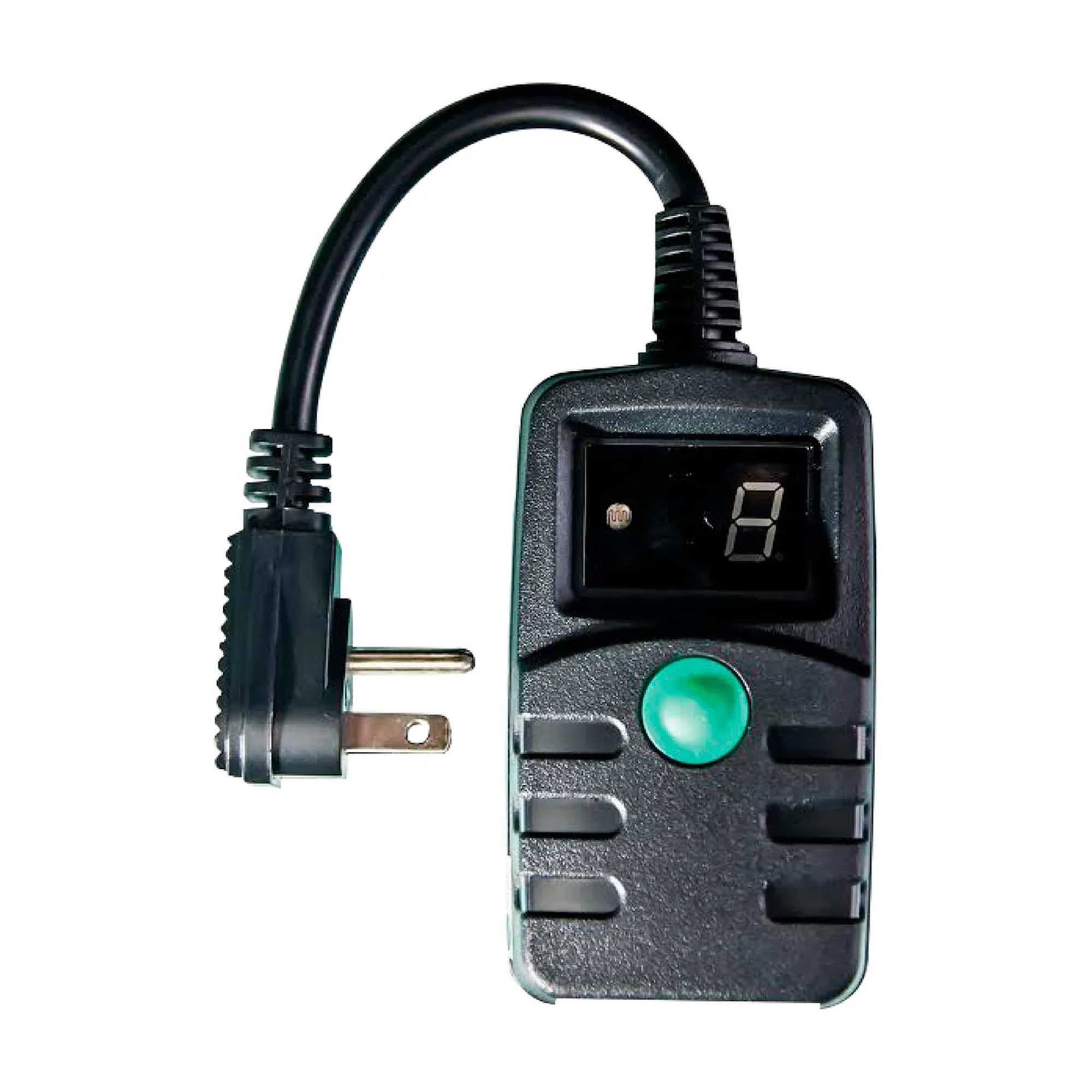
Digital Outdoor Light Timer with Light Sensor, Black
Our Price:$17.99This digital outdoor timer is for users managing landscape, outdoor, or holiday lighting. It provides a straightforward way to control when connected lights turn on and off, helping simplify routine...
-
GoGreen Power
Green 3-Outlet Cube Adapter
Our Price:$4.25This 3-outlet cube adapter helps facility teams, office staff, and other commercial users add plug-in access at a grounded wall receptacle. Its plug-and-play design provides additional outlets while...





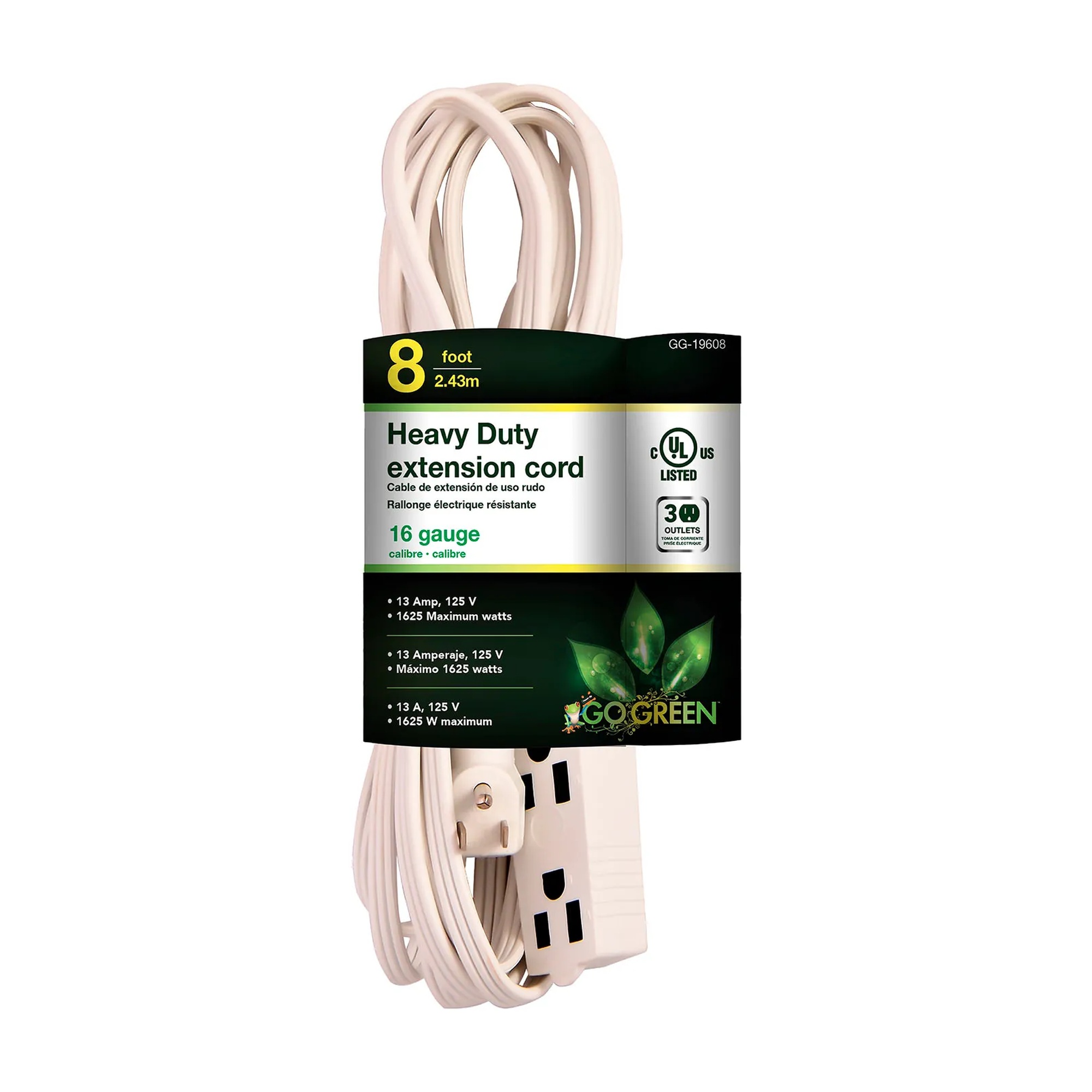
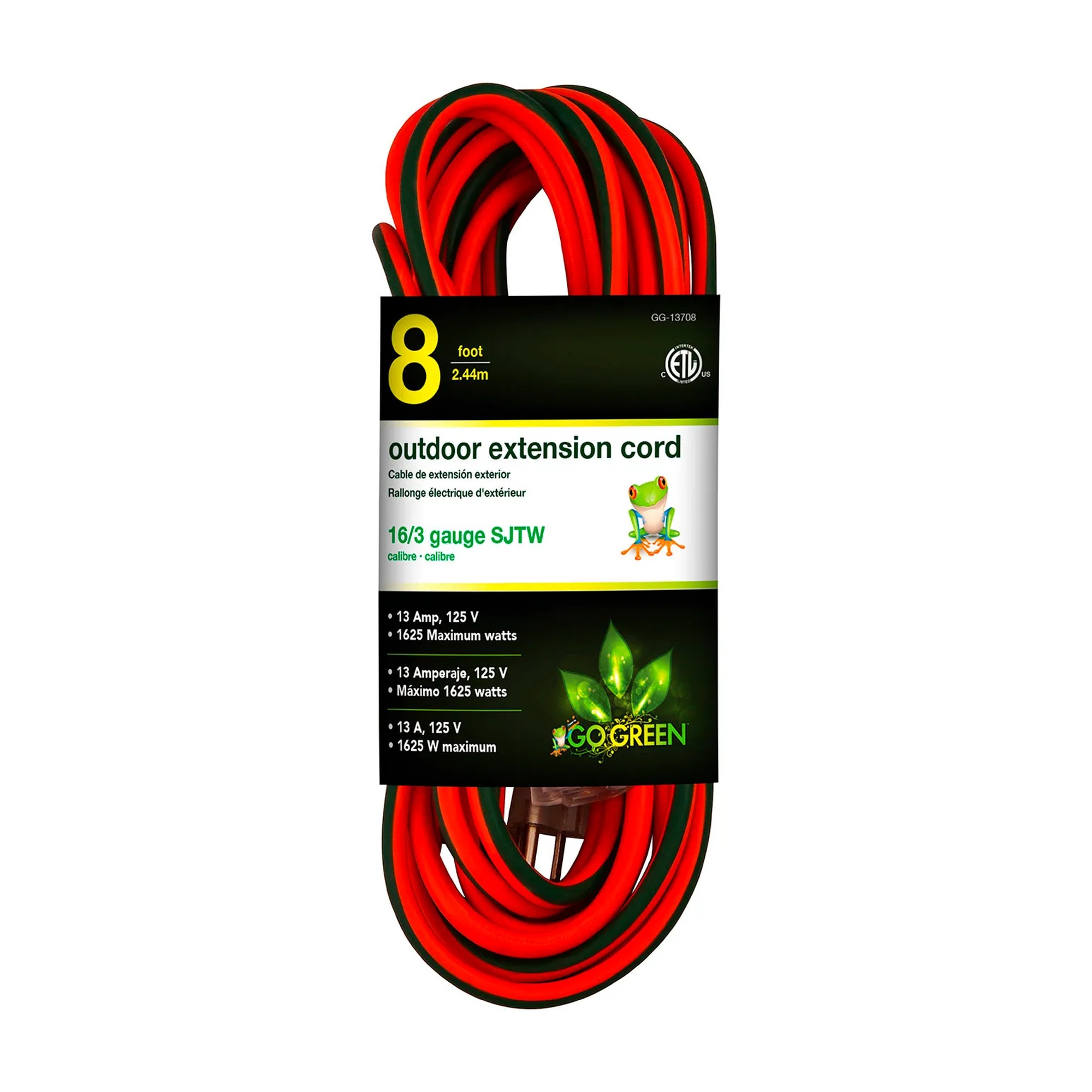

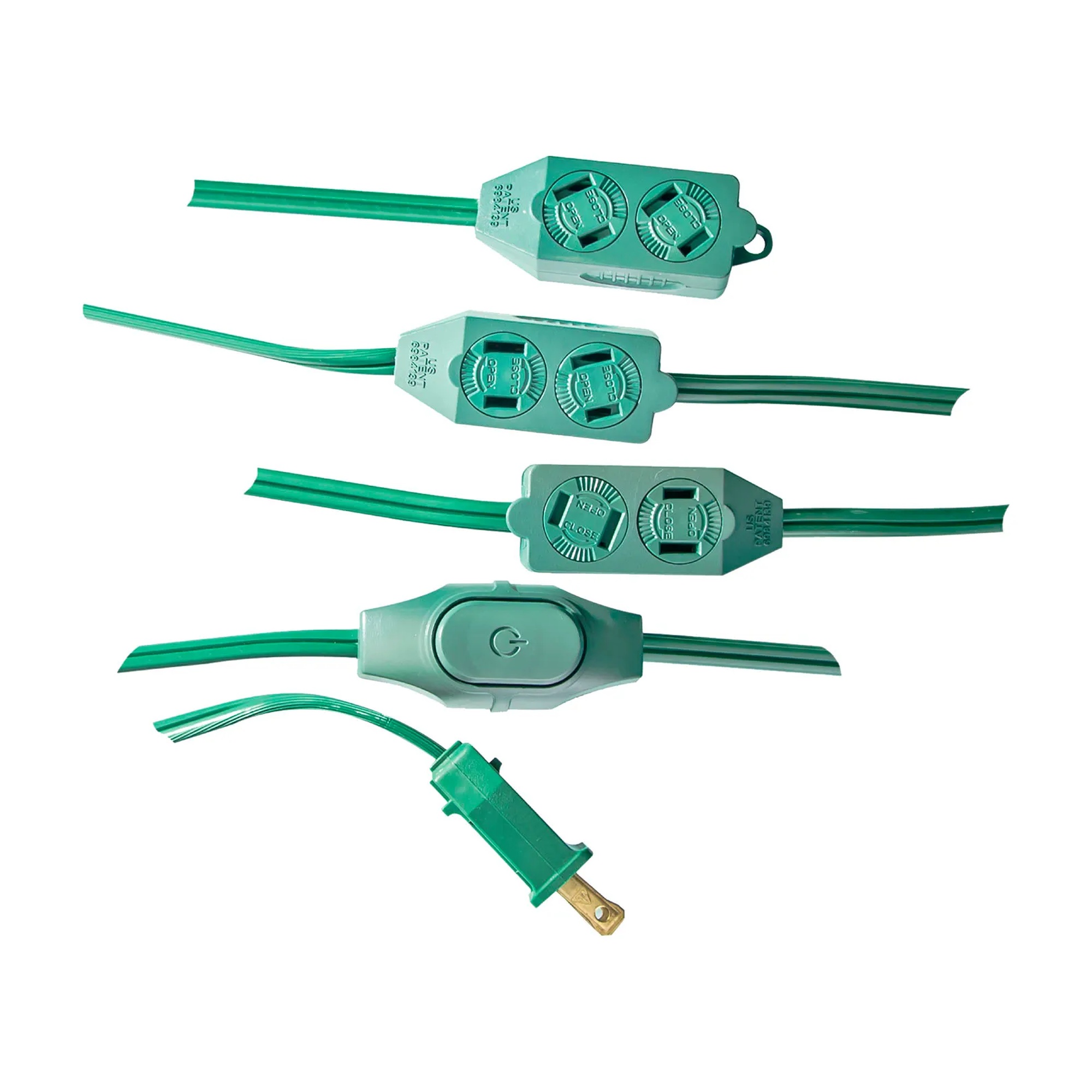

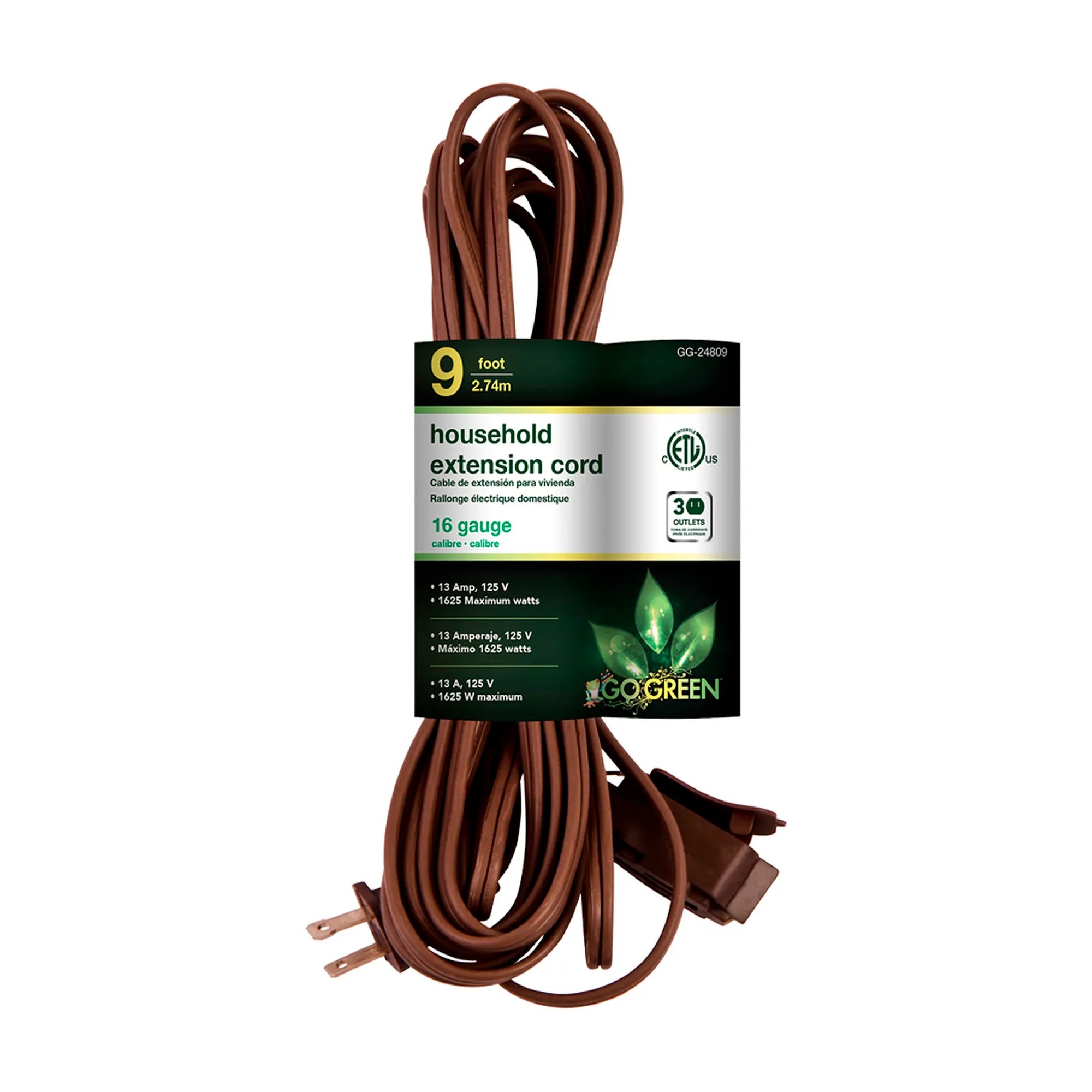

Choose an Extension Cord for the Reach and Work Area You Need
An extension cord can help bring power to equipment positioned away from a wall outlet. Representative options include orange, single-receptacle outdoor cords with SJTW construction, available with different cord lengths, conductor configurations, electrical ratings, and lighted-plug options. Match the cord to the connected equipment and the conditions of the work area.
Popular examples in this category
 30 ft. 50 Amp RV Extension Cord with NEMA 14-50 Plug and ReceptacleFS-GLO-15306
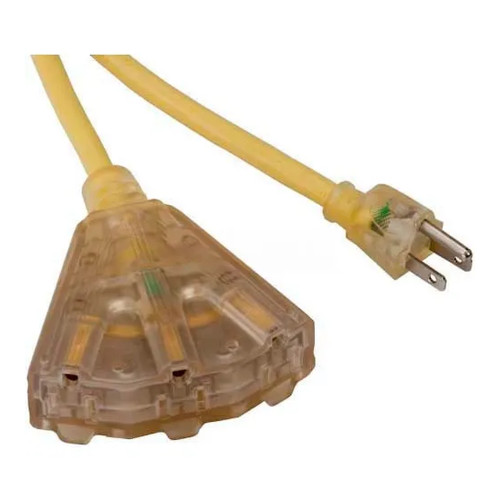 50 ft Triple-Tap 14/3 Extension Cord with Lighted EndFS-GLO-SL-741L
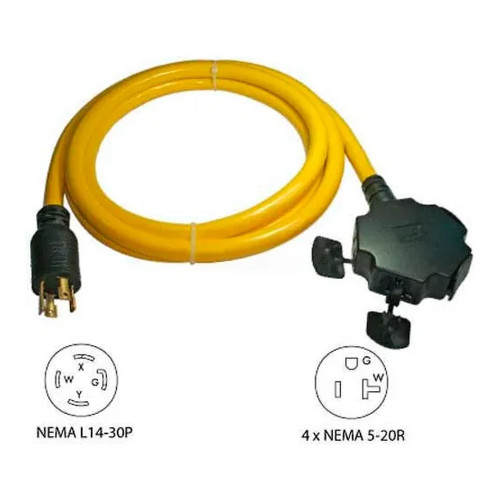 10 ft. 30A Generator Power Cord with Four Household OutletsFS-GLO-20610-010
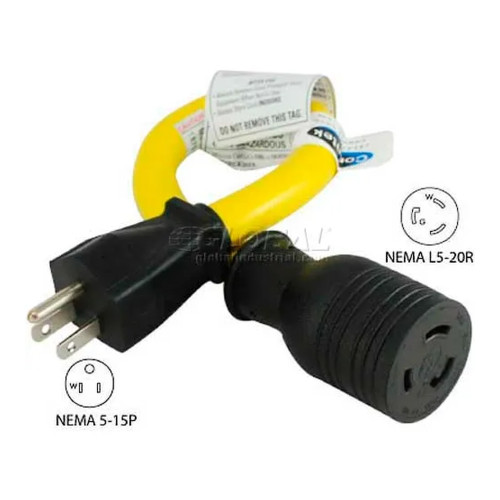 15A to 20A Locking Generator Adapter, YellowFS-GLO-P515L520
Extend power beyond the outlet
Use extension cords to provide added reach for compatible equipment and devices positioned farther from an available power source.
Match reach, ratings, and features
Review the required cord length, conductor configuration, stated amperage and voltage rating, receptacle type, and whether a lighted plug would be useful.
Support active commercial work areas
Representative cords are suited to maintenance and facility work, as well as garages, offices, kitchens, and vehicle service spaces.
Consider visibility and cord construction
Orange finishes can make cords easier to see in work areas. SJTW jackets on representative products are designed to resist moisture, abrasion, and sunlight exposure.
Shown on options designed to add reach in work areas.
Shown on options for equipment located farther from an outlet.
Representative products provide one connection point.
Helps users identify when the cord is energized.
Compare Extension Cord Selection Factors
Use these representative differences to focus on the features that matter for the intended equipment and work area.
| Selection factor | Representative option | What to consider |
|---|---|---|
| Reach | 50-foot or 100-foot cords | Select the reach needed between the outlet and connected equipment. |
| Cord construction | 14/3 or 16/3 SJTW | Review the conductor configuration and SJTW jacket details for the application. |
| Plug feature | Lighted plug or standard plug | A lighted plug can help indicate when the cord is energized. |
| Electrical rating | 10 A, 13 A, or 15 A stated ratings | Match the cord’s stated rating with compatible equipment requirements. |
Plan the right fit before choosing
Select a practical length for the power source and equipment location
Start by identifying where the outlet is located and where the connected equipment will be used. Representative products include 50-foot and 100-foot options, providing added reach for different work-area layouts.
- Measure the distance from the available outlet to the equipment location.
- Choose a length that supports the intended setup.
- Consider orange cords where visibility in active areas is important.
Use the stated rating and configuration as key selection points
Review the equipment’s compatible power needs against the cord’s stated electrical rating. Representative products include 16/3 and 14/3 cords, with listed ratings including 10 A, 13 A at 125 V, and 15 A. The shown products have one receptacle for one compatible connection.
- Compare the cord’s stated amperage and voltage rating with compatible equipment needs.
- Choose the conductor configuration specified for the application.
- Confirm that a single receptacle meets the planned connection requirement.
Consider outdoor jacket details and plug visibility
For applicable outdoor work, representative SJTW cords feature jackets designed to resist moisture, abrasion, and sunlight exposure. Some options include a lighted plug to help identify when the cord is energized. One representative cord is UL/cUL listed for purchasing requirements where that listing is requested.
- Consider SJTW construction for applicable outdoor cord applications.
- Choose a lighted plug when energized-cord indication is useful.
- Review listing requirements when they apply to the purchase.
Common questions before buying
What should I consider when choosing an extension cord?
Consider the required reach, compatible electrical requirements, conductor configuration, receptacle setup, cord construction, visibility, and plug features.
Are lighted plugs available?
Yes. Representative options include lighted plugs that help users identify when the cord is energized.
What work areas can extension cords support?
Representative products are described for maintenance and facility work, garages, offices, kitchens, and vehicle service spaces.
Why choose an orange extension cord?
The orange finish can make the cord easier to see in active work areas.