
-
Global Industrial
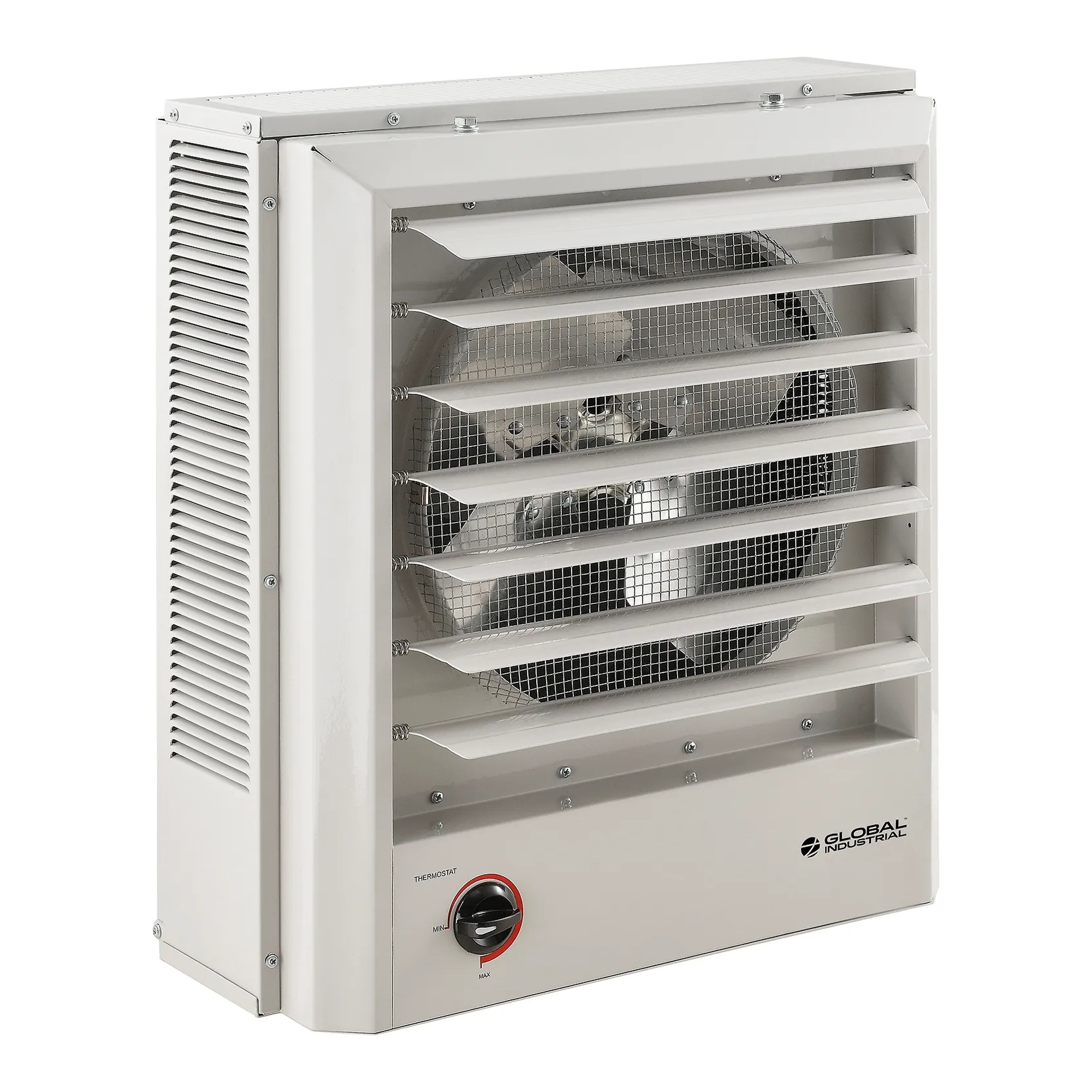
7.5 kW 480V Three-Phase Ceiling-Mount Unit Heater
Our Price:$728.99This electric unit heater provides forced-air heat for commercial and industrial enclosed spaces such as workshops, maintenance rooms, stock rooms, garages, and mechanical areas. Ceiling mounting...
-
TPI
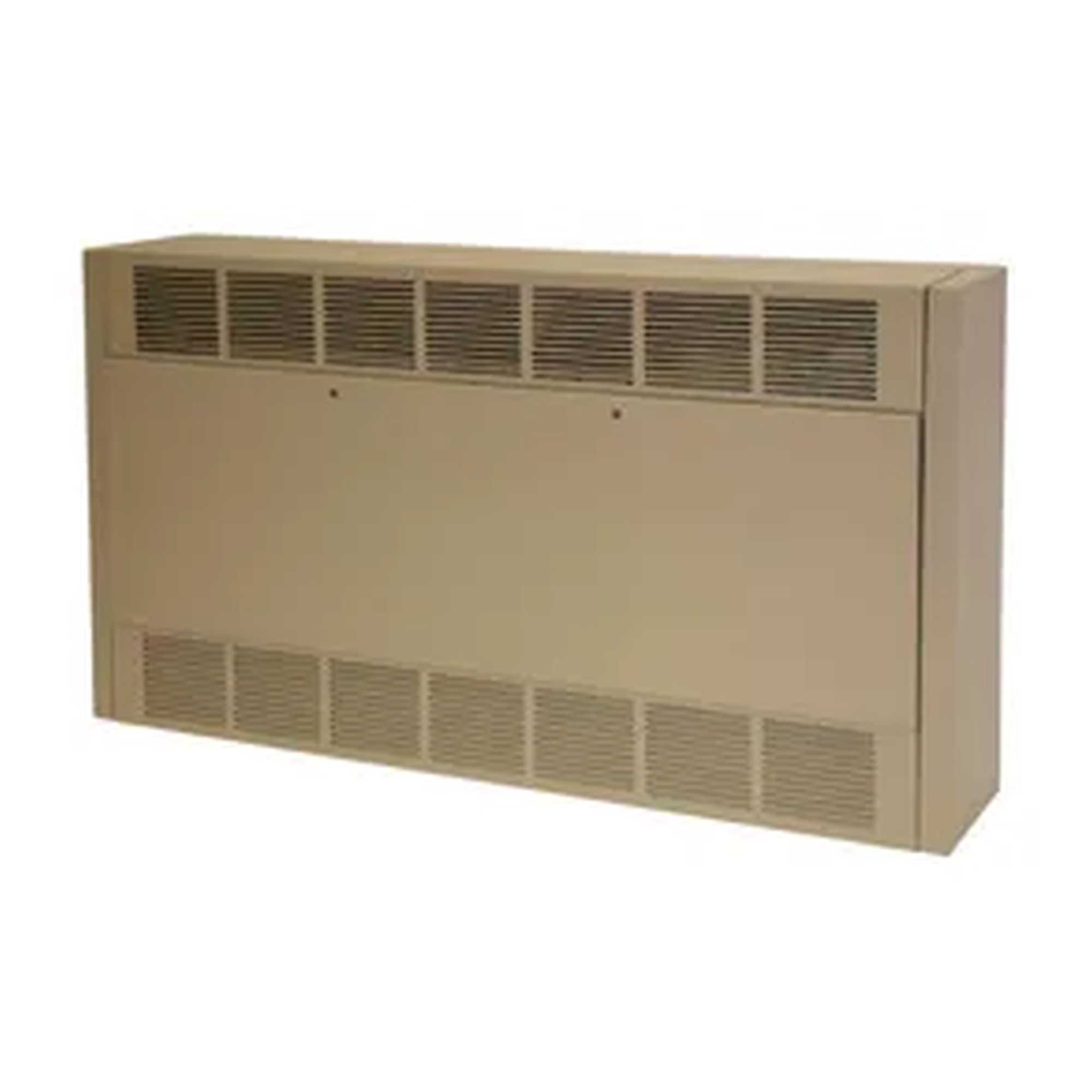
Forced-Air Cabinet Unit Heater, 10,000/6,000W, 240V
Our Price:$5,088.99This electric forced-air cabinet unit heater is designed for commercial and institutional facilities that need configurable indoor heating. It can be installed to direct heated air upward or downward...
-
TPI
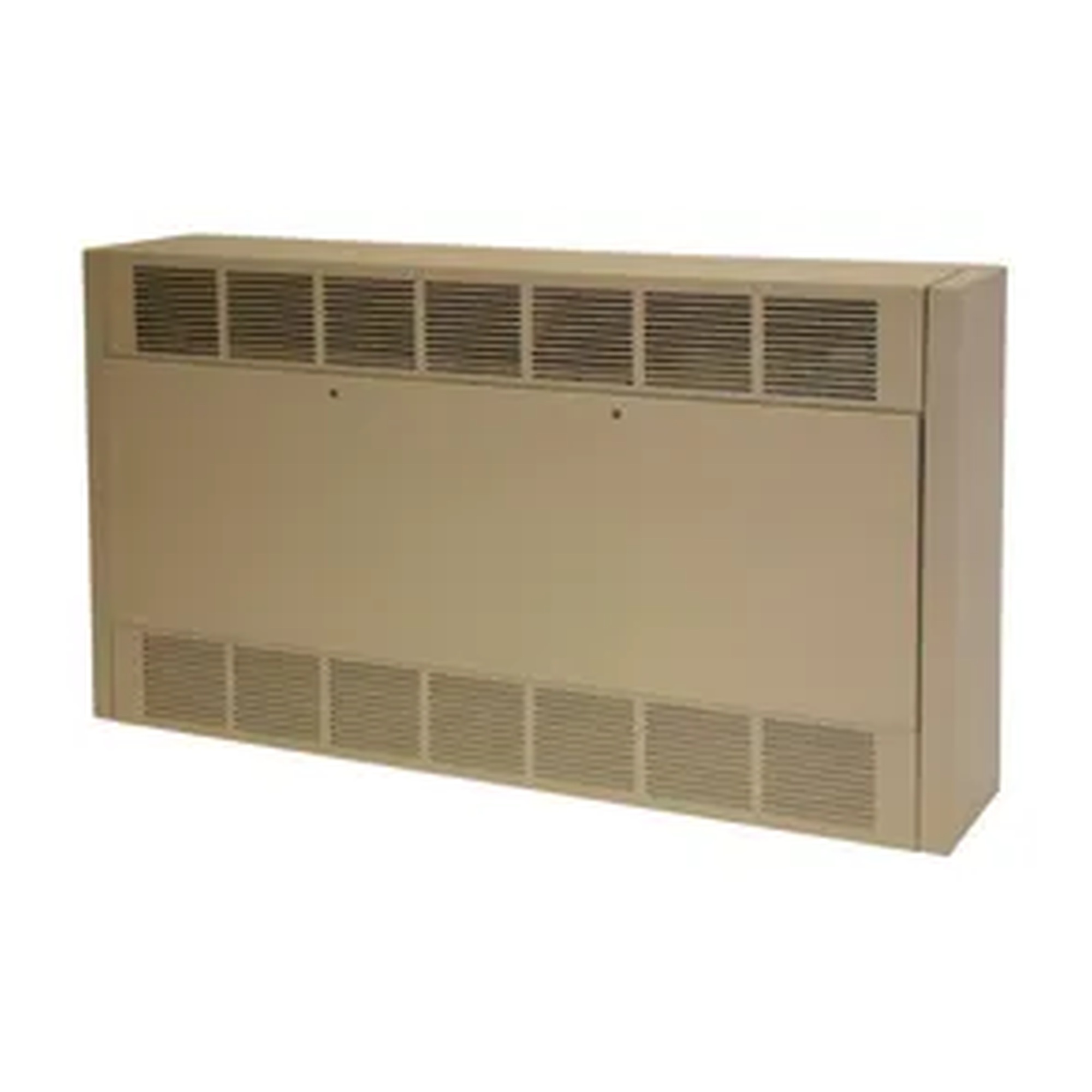
Forced-Air Cabinet Unit Heater, 10,000/6,000W, 480V, Three-Phase
Our Price:$4,568.99This forced-air cabinet unit heater is an electric heating option for commercial and institutional facilities such as stores, schools, offices, and churches. It provides configurable airflow and...
-
TPI
Forced-Air Cabinet Unit Heater, 5,000/3,000W, 208V
Our Price:$4,514.99This forced-air cabinet unit heater provides electric heat for commercial and institutional spaces. It is designed for facility teams heating areas such as stores, schools, offices, and churches,...
-
TPI
Forced-Air Cabinet Unit Heater, 5000/3000W, 480V, 3-Phase
Our Price:$4,458.99This forced-air cabinet unit heater is designed for commercial and institutional facilities, including stores, schools, offices, and churches. It provides electric heat with configurable airflow to...
-
Global Industrial
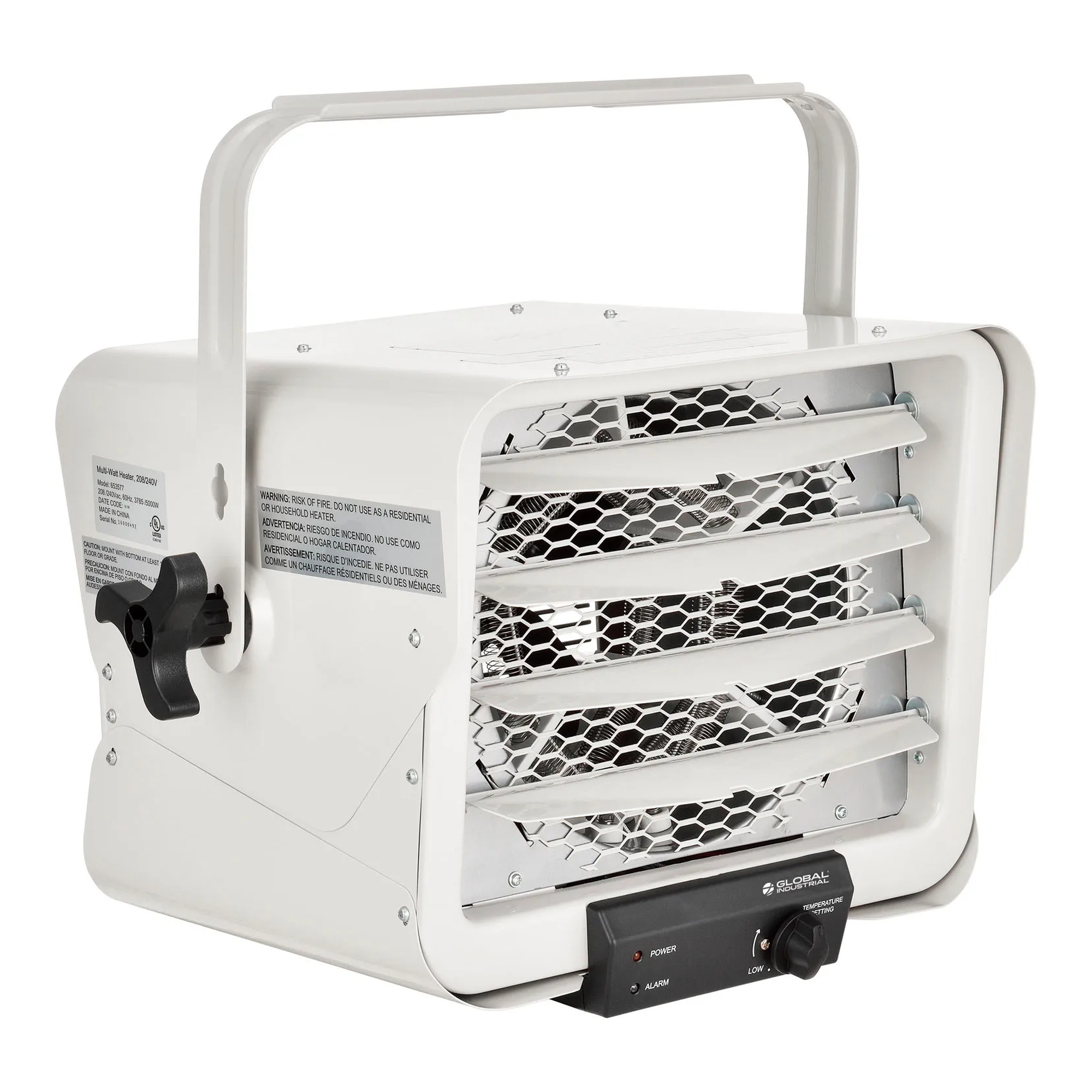
Horizontal Downflow Multi-Watt Electric Unit Heater, 208/240V
Our Price:$455.94This horizontal downflow electric unit heater provides adjustable heat for commercial and industrial spaces such as factories, warehouses, workshops, and public restroom areas. Facilities teams can...
-
Global Industrial
Horizontal/Vertical Downflow Electric Unit Heater, 5,600/7,500W, 208/240V
Our Price:$868.99This electric unit heater provides supplemental or primary heat for enclosed commercial and industrial spaces such as garages, maintenance rooms, stock rooms, and workshops. Ceiling-mounted operation...
-
Global Industrial
Horizontal/Vertical Downflow Electric Unit Heater, 7.5/10 kW, 208/240V
Our Price:$908.99This electric unit heater provides supplemental or primary heat for enclosed work and facility spaces. It is suited to maintenance teams and commercial users who need forced-air heating without using...
-
King Electric
Multi-Watt Kickspace Electric Unit Heater, 1.5 kW, 120V
Our Price:$469.94This kickspace electric unit heater is designed for kitchen and bathroom areas where cabinetry limits available floor and wall space. It delivers warm air at floor level beneath cabinets to help warm...


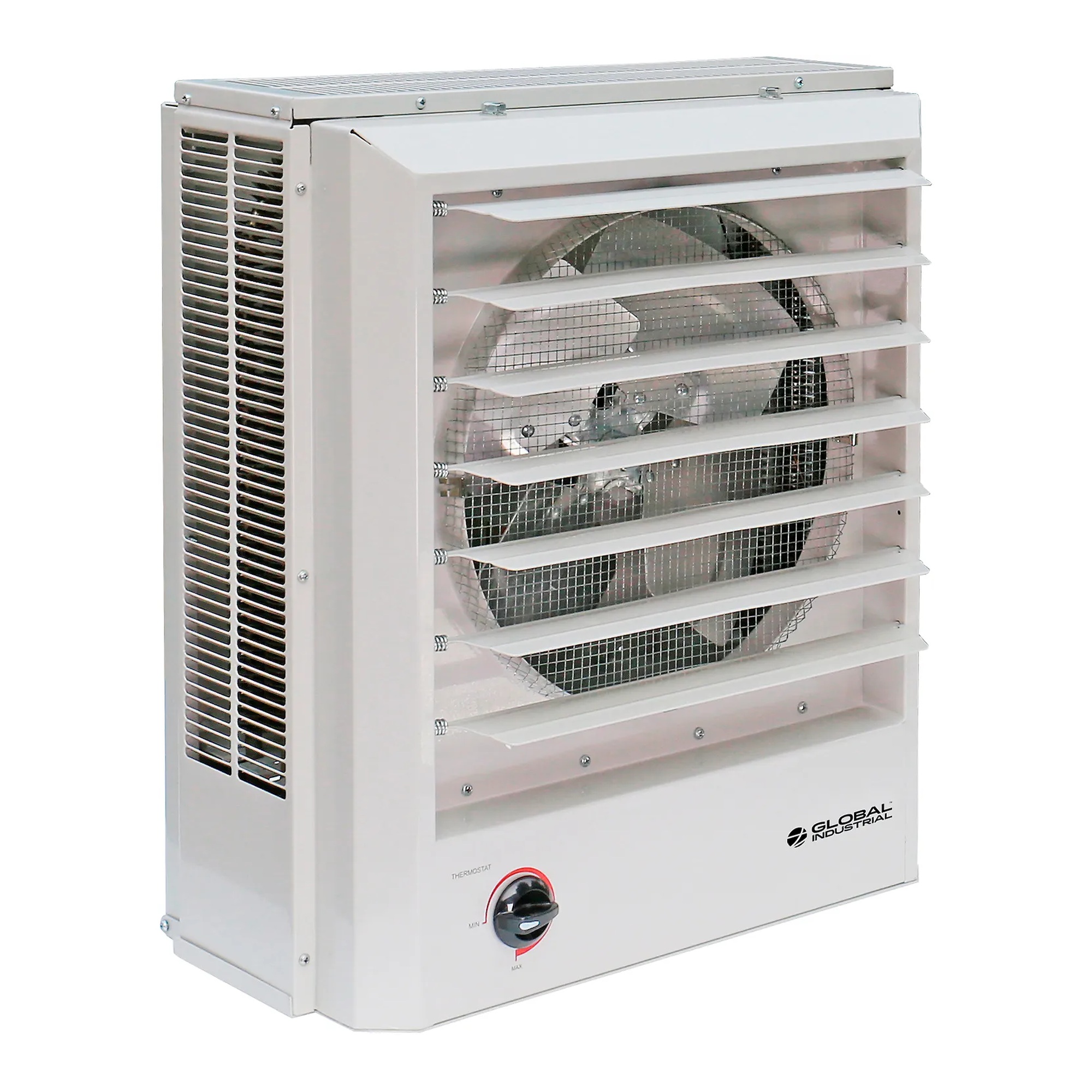


How to Choose an Electric Unit Heater
Electric unit heaters help facilities warm enclosed work and service areas while keeping floor space open. Compare the electrical configuration, heat-output needs, mounting approach, discharge orientation, and control features that fit the planned installation.
Popular examples in this category
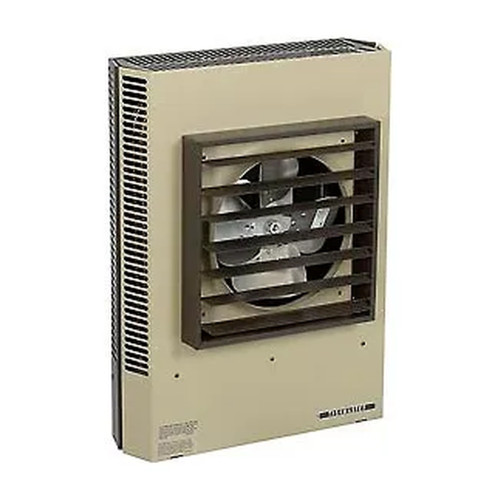 30,000W Suspended Electric Unit Heater, 208V, 3-PhaseFS-GLO-F3F5130CA1L
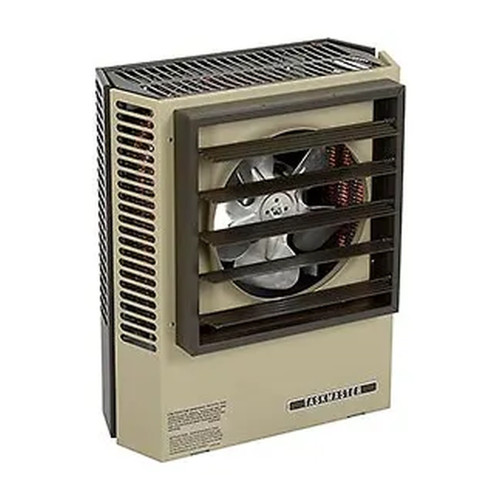 Suspended Electric Unit Heater, 5,000/3,700W, 240/208VFS-GLO-HF1B5105N
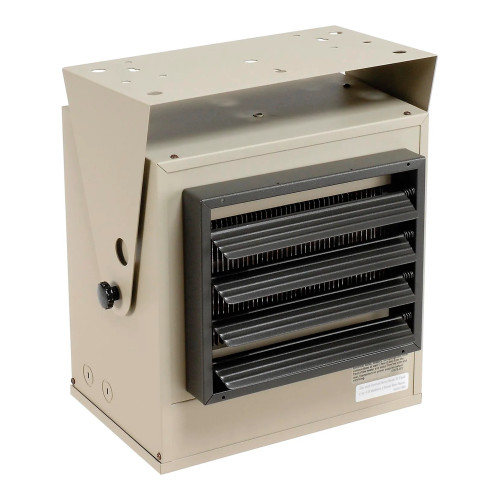 Multi-Watt Fan-Forced Electric Unit Heater, 3,750/5,000W, 208/240V, 3-PhaseFS-GLO-H3H5605T
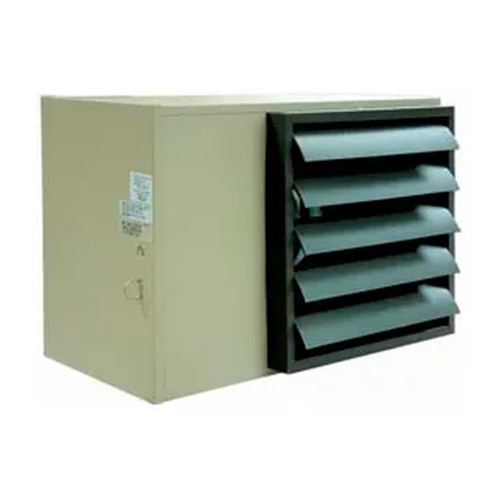 7,500W Horizontal-Discharge Electric Unit Heater, 480V, 3-PhaseFS-GLO-P3PUH07CA1
Heat enclosed work areas
Use electric unit heaters for supplemental or primary heat in enclosed spaces including garages, workshops, warehouses, factories, maintenance rooms, stock rooms, and distribution areas.
Match the installation requirements
Start with the available voltage and phase, then consider the needed output, wall or ceiling mounting location, discharge direction, and thermostat or remote-control preference.
Preserve usable floor space
Ceiling- and wall-mounted configurations can warm work and service areas without placing equipment on the floor. Adjustable louvers help aim heated airflow toward the intended area.
Consider control and protective features
Available features in representative products include manual thermostats, external thermostat capability, remote control, thermal cut-off protection, visual excessive-heat alarms, and steel housings.
Representative units include wall-mounted, ceiling-mounted, and wall-or-ceiling installation options.
Louvers on representative models help direct heated airflow toward the intended area.
Examples are available for these electrical installations, including single- and three-phase configurations.
Representative products include manual thermostats, external thermostat capability, and remote control options.
Compare Electric Unit Heater Configurations
Use this high-level comparison to focus on the configuration that best fits the installation and operating needs of the enclosed space.
| Configuration | What to Consider | Representative Features |
|---|---|---|
| Ceiling-mounted horizontal or vertical units | Useful when floor space must remain clear and airflow direction needs to suit the overhead layout. | Horizontal or vertical discharge, adjustable louvers, manual thermostat options. |
| Wall- or ceiling-mounted horizontal units | Useful where the installation location may vary between a wall and ceiling. | Fan-forced heat, adjustable louvers, wall or ceiling mounting on select models. |
| Downflow or multi-watt units | Useful when directing heat downward or adjusting output is a priority. | Downflow operation, adjustable louvers, multi-watt output on select models. |
Plan the right fit before choosing
Confirm voltage and phase before narrowing your choices
Representative electric unit heaters are designed for 208/240V or 480V installations, with options that use single-phase or three-phase power. One 240V model is factory wired for single-phase operation and can be converted to three-phase, while other examples are three-phase units.
- Verify the electrical supply at the installation location.
- Match the heater's voltage and phase requirements to the planned setup.
- Consider whether a conversion-capable 240V model suits the application.
Fit heat delivery to the layout of the space
Mounting and discharge options affect how warmth is delivered through an enclosed area. Representative units include ceiling-mounted designs, wall-or-ceiling mounting, horizontal discharge, downflow, and horizontal or vertical discharge. Adjustable louvers allow airflow to be aimed where heat is needed.
- Use ceiling mounting when keeping floor areas clear is a priority.
- Consider wall mounting where it better fits the available space.
- Choose a horizontal, vertical, or downflow orientation based on the target area.
Choose the level of temperature control you need
Manual thermostats on representative models allow users to select a temperature setting and support automatic cycling. Other examples offer external thermostat capability or remote control. Thermal cut-off protection is included on several representative products, and one model also includes an excessive-heat visual alarm.
- Choose a manual thermostat for straightforward local adjustment.
- Consider external thermostat capability where additional temperature control is needed.
- Review thermal protection features as part of the selection process.
Common questions before buying
Where are electric unit heaters commonly used?
They are used in enclosed commercial and industrial areas such as warehouses, workshops, garages, factories, maintenance rooms, stock rooms, and distribution areas.
Can an electric unit heater be mounted without using floor space?
Yes. Representative products include ceiling-mounted units and wall-or-ceiling mounting options that help keep floor areas clear.
How can heated airflow be directed?
Many representative units have adjustable louvers, and some offer horizontal, vertical, or downflow discharge arrangements.
What temperature-control options are available?
Representative products include manual thermostats, external thermostat capability, and remote control on select models.