
-
Aluminum Hose and Cable Crossover, 2,000 lb. Capacity, Silver
Our Price:$469.94This aluminum hose and cable crossover is for facilities teams and other commercial users who need to route hoses, cords, and wires across areas traveled by carts and other traffic. It helps shield...
-
Aluminum Hose and Cable Crossover, 2,000 lb. Capacity, Silver - 24 in W x 3-3/8 in H x 40 D
Our Price:$469.94This aluminum hose and cable crossover is designed for facilities that need to protect hoses, cables, wires, and cords where carts and other traffic pass over them. It provides a covered crossing...
-
Articulating Cable Protector Extension for Floor Cables
Our Price:$13.99This cable protector extension is for workplace teams routing cables across floors. It helps cover exposed cables while providing a flat path intended to help protect pedestrians from trip hazards...
-
Articulating Cable Protector Extension, Black and Yellow - 13-5/8 in W x 2-1/8 in H x 14.5 D
Our Price:$59.94This articulating cable protector extension helps facilities, event teams, and maintenance crews route cords and cables across floors while providing a defined path for pedestrians. Its flexible...
-
Black Articulating Cable Protector Extension
Our Price:$17.99This black cable protector extension is for facilities and work areas where cables run across floors. It helps protect exposed cables while creating a flatter covered path to help reduce pedestrian...
-
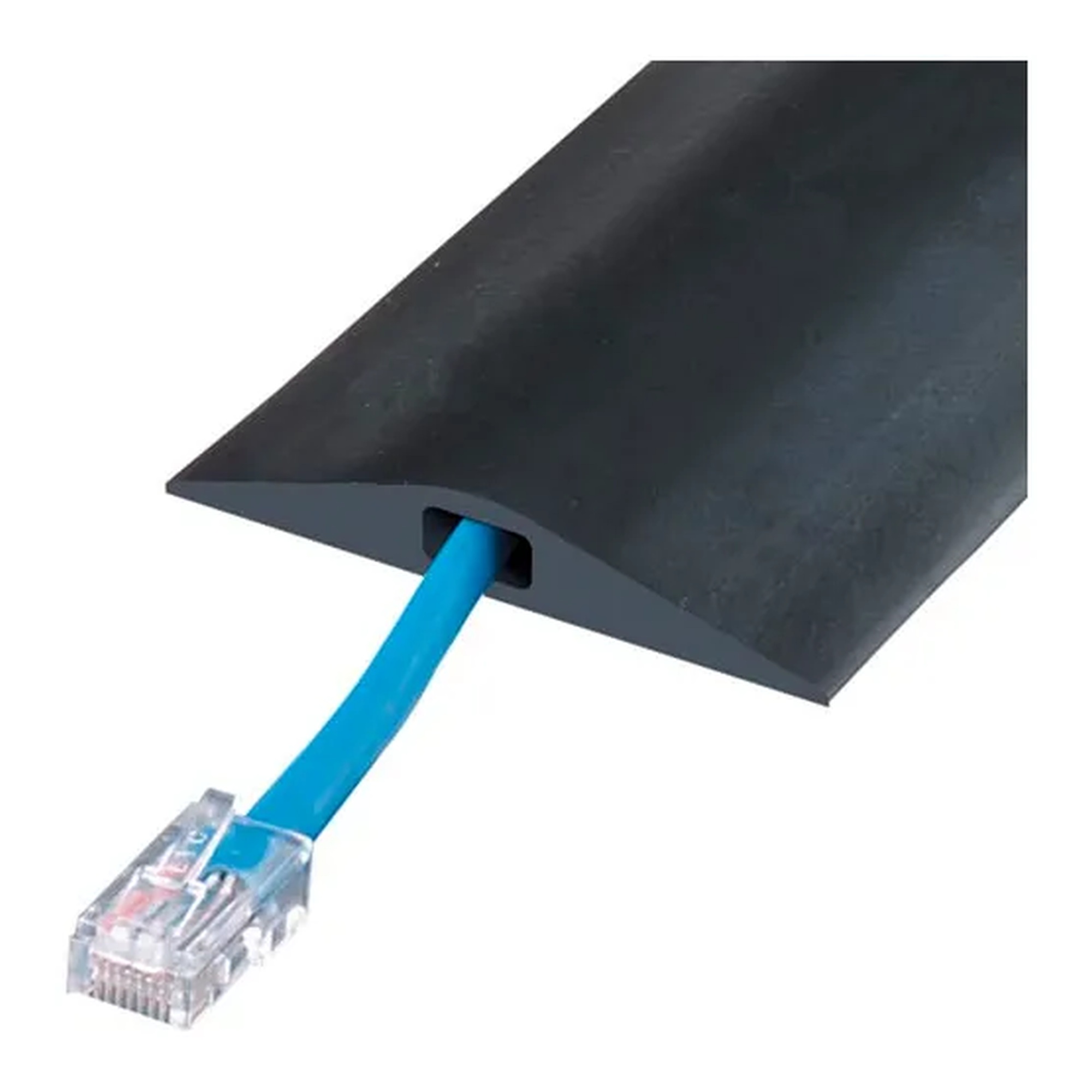
Black Extruded Rubber Single-Channel Cord Protector, 144 in. x 4 in.
Our Price:$139.94This cord protector is for teams managing temporary wires and cords where they cross vehicle pathways. It helps cover a cord along the surface while maintaining a low-profile crossing area...
-
Black Rubber Cable Protector, 10 ft., 3 Channels
Our Price:$62.94This rubber cable protector helps facilities teams and other commercial users organize and cover portable cords and cables in walkways and work areas. Its three-channel design keeps cables contained...
-
Black Two-Channel Cable Protector Bridge
Our Price:$395.94This cable protector bridge is for facility, event, construction, and utility teams that need to connect parallel cable protector runs. It adds protected routing space for cables while creating a...
-
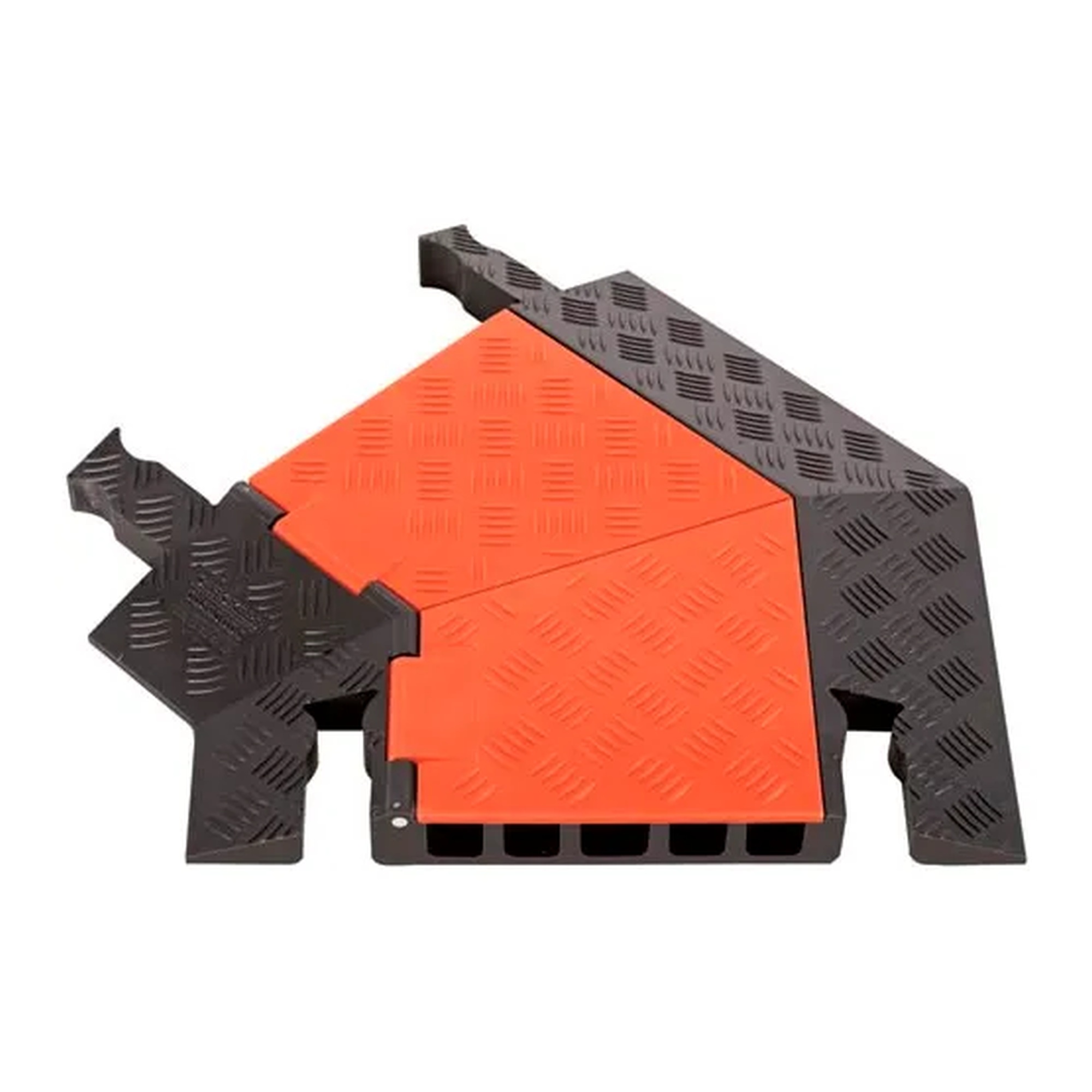
Five-Channel 45 Degree Left Turn Cable Protector, Orange Lid/Black Base
Our Price:$235.94This five-channel cable protector left-turn section is for facilities and work areas that need to route protected cables around a 45-degree left turn. It helps users create a continuous...
-
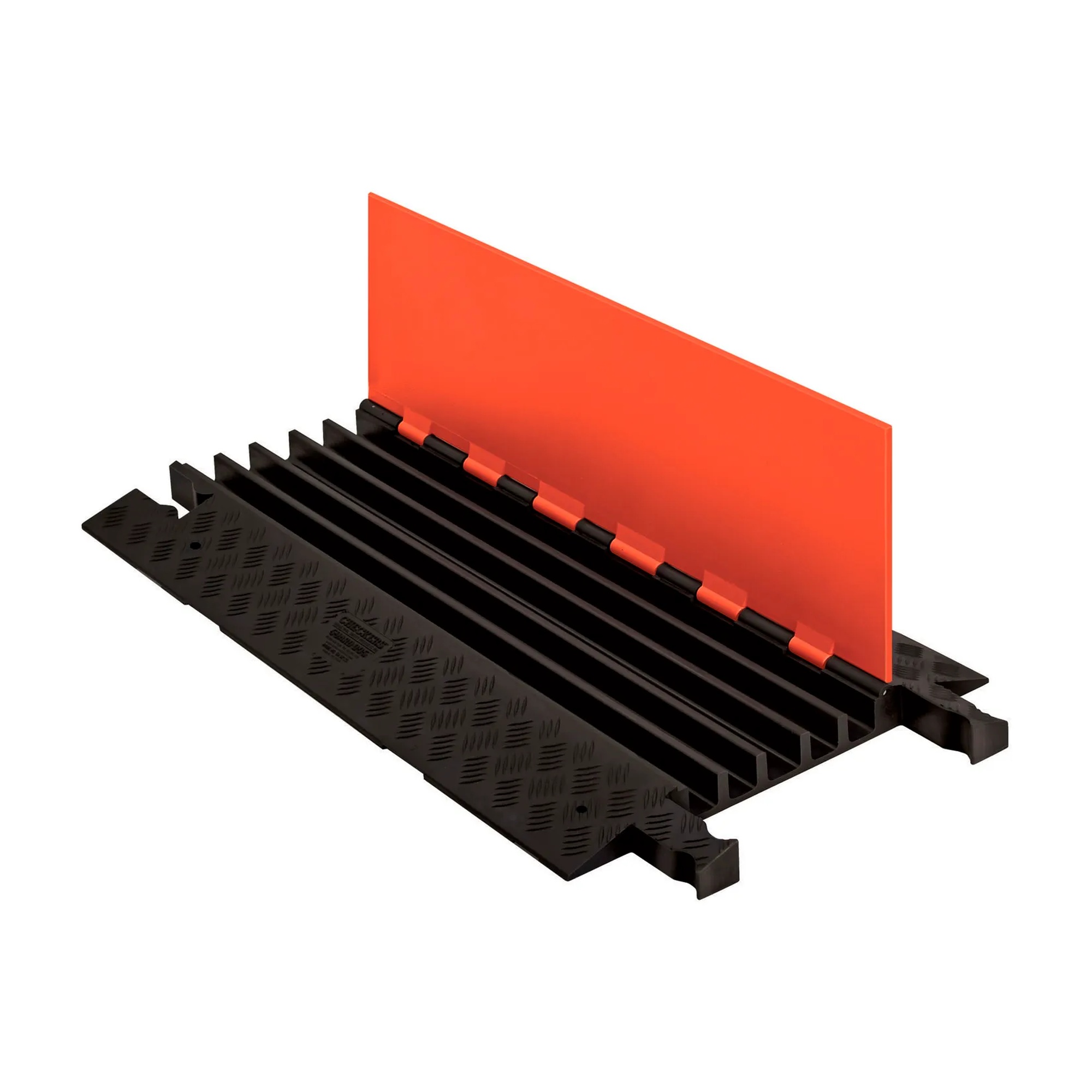
Five-Channel Cable and Hose Protector with Orange Lid
Our Price:$290.97This five-channel cable and hose protector helps facility, event, construction, and utility teams organize exposed lines where vehicle and pedestrian traffic crosses them. It separates cables or...
-
Five-Channel Left-Turn Cable Protector, Yellow/Black
Our Price:$209.94This five-channel left-turn cable protector is for facilities and work areas that need to route and cover cables or hoses around a turn. It helps organize runs while accommodating lines up to 1 inch...
-
Five-Channel Right-Turn Cable Protector
Our Price:$209.94This five-channel right-turn cable protector is designed for crews and facilities that need to route and cover cables or hoses around a turn. It helps keep runs organized while accommodating lines up...
-
Five-Channel Yellow and Black Cable Protector
Our Price:$330.76This five-channel cable protector is designed for teams that need to route and cover cables or hoses. It helps protect lines while keeping them organized in a defined pathway.The yellow and black...
-
Four-Channel Cable Protector with Hinged Lid
Our Price:$335.94This four-channel cable protector helps facility teams and worksite users route and cover cables or hoses where organized cable management is needed. Its hinged lid allows users to place lines into...
-
Gray Articulating Cable Protector System with End Caps
Our Price:$43.94This gray cable protector system helps facilities teams and event staff route cables across floors while helping protect cords and reduce pedestrian trip hazards. Its articulated layout adapts to...
-
Grip Guard 5-Channel Cable Protector, Yellow and Gray
Our Price:$192.26This five-channel cable protector is for crews and facilities that need to organize and cover cables or hoses in active work areas. It helps route lines through a protected pathway while providing a...
-
Heavy-Duty 5-Channel Cable Guard
Our Price:$432.28This heavy-duty cable guard is designed for crews and facilities that need to route and protect air lines, electrical cables, and hoses across ground-level pathways. Its five channels organize lines...
-
Heavy-Duty 5-Channel Cable Protector
Our Price:$435.94This heavy-duty cable protector helps construction and industrial crews route cables and wires across active traffic areas. Its five channels organize multiple runs while helping protect them where...
-
Heavy-Duty Single-Channel Rubber Cable Protector, 5 ft. - 5-3/4 in W x 1-3/8 in H x 61 D
Our Price:$125.94This heavy-duty rubber cable protector helps facilities teams, contractors, and workplace managers organize and cover portable cords, cables, and hose lines in walkways and work areas. Its single...
-
Heavy-Duty Single-Channel Rubber Cable Protector, 5 ft. - 6 in W x 1-7/8 in H x 60 D
Our Price:$159.94This heavy-duty rubber cable protector helps facility teams and maintenance crews organize and cover portable cords, cables, and hose lines in walkways or work areas. Its single channel keeps lines...






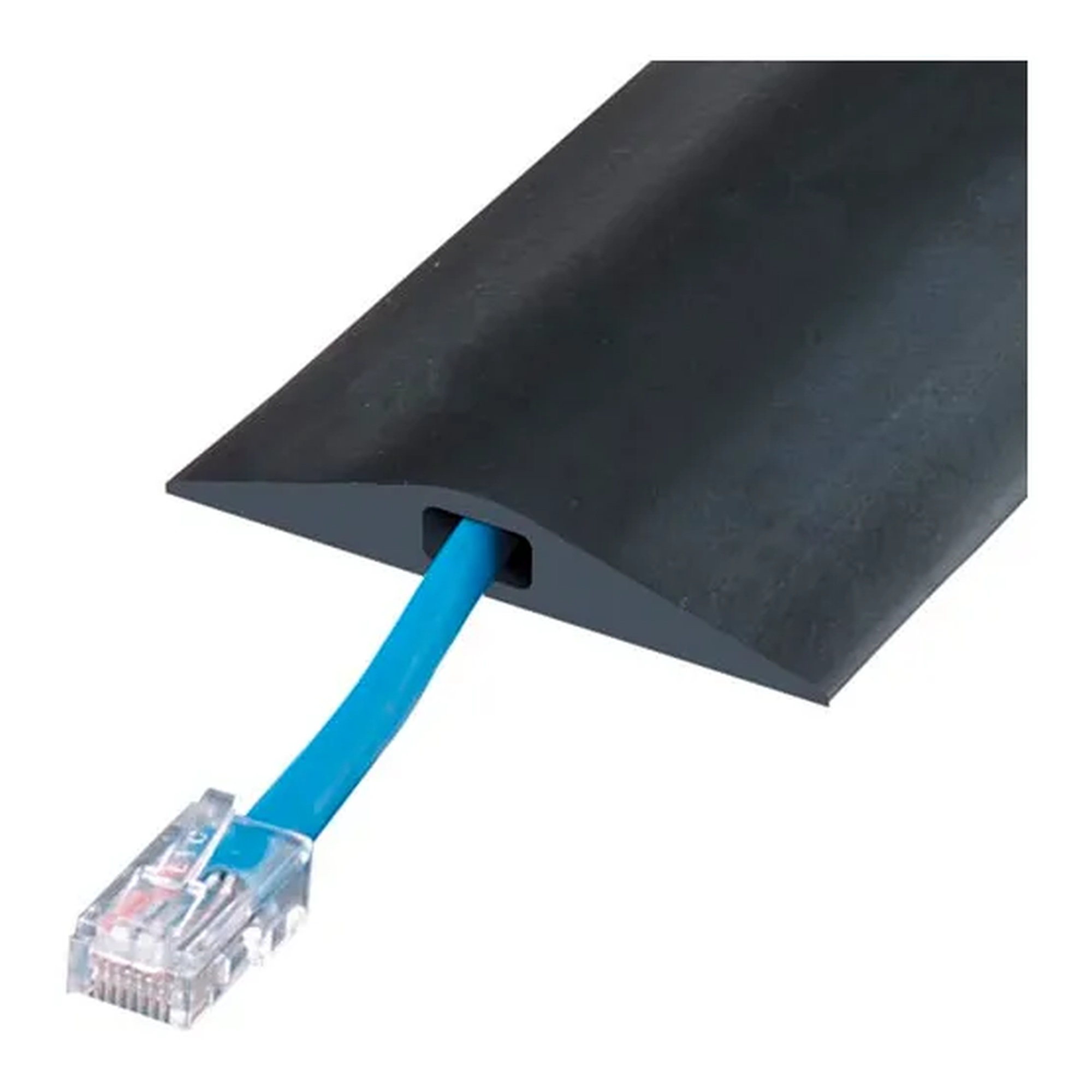
Choose a cable protector for the lines, route, and crossing needs of your work area
The category includes multi-channel guards, drop-over protectors, low-profile protectors, access ramps, crossover units, hose bridge components, and flexible cable-cover extensions. Start by identifying what must be covered, how many lines need separate paths, the size of those lines, and the kind of pedestrian or vehicle crossing the setup will support.
Popular examples in this category
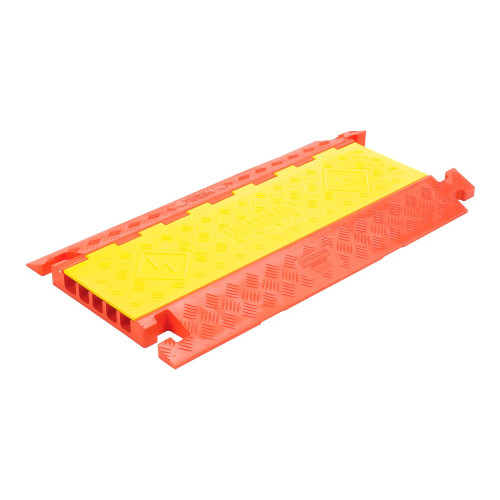 Heavy-Duty 5-Channel Cable GuardWB940408
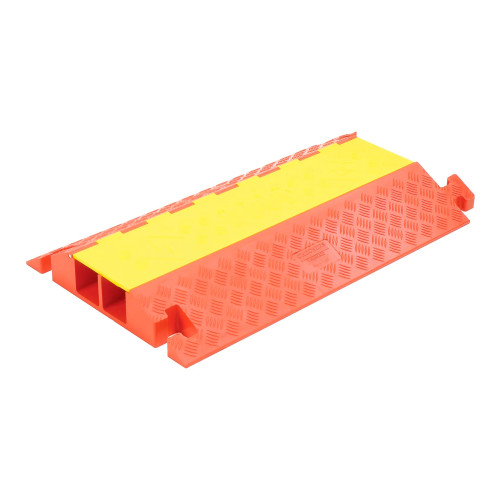 Heavy-Duty 2-Channel Cable Guard, 36 in. L x 22 in. W x 4-1/8 in. H, Yellow/OrangeWB940413
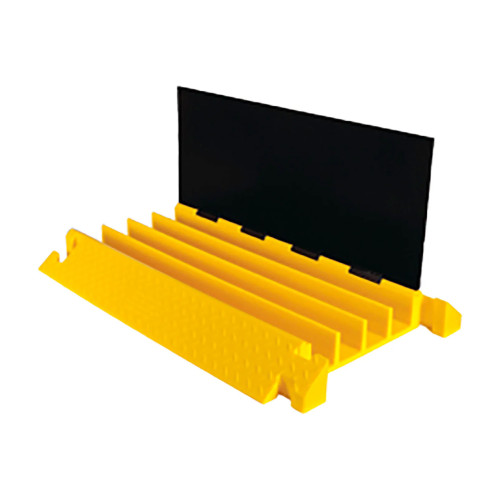 4-Channel Drop-Over Cable Protector, Black/YellowWBB3149221
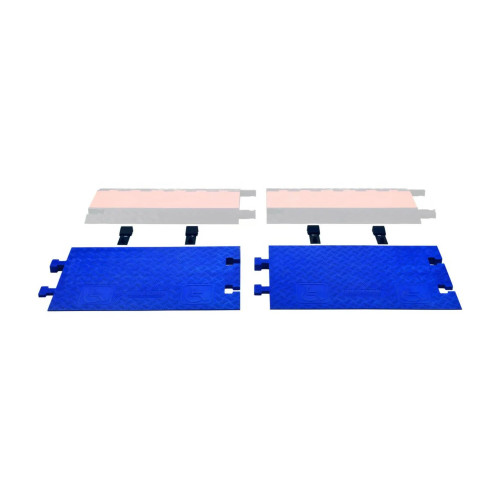 Low-Profile Two-Channel Cable Protector, Orange Lid/Black BaseWBB359971
Cover floor-level cable and hose runs
Use cable guards and drop-over protectors to route exposed electrical cables, air lines, hoses, conduit, pipes, and multimedia lines across work areas. Crossover units help shield lines where carts and other traffic pass.
Match channels and capacity to your lines
Compare the number of channels, channel dimensions or stated line capacity, loading style, and whether sections connect for the route length you need. Options shown range from two to five channels, plus a multi-tunnel connector for lines up to 6.5 inches.
Plan for the traffic at the crossing
Low-angle ramps and tread surfaces support pedestrian and vehicle crossings. Access ramp options are designed for compatible protectors where wheelchairs, carts, forklifts, trucks, or other small-wheeled equipment need a smoother crossing point.
Consider setup, portability, and layout
Stay-open or hinged lids allow top loading, while drop-over styles are placed over installed or floor-mounted runs. Look for handholds, carrying handles, lightweight construction, tool-free assembly, articulating sections, and modular connectors when setups change often.
Cable protector configurations shown include two, three, four, and five channels.
The multi-tunnel hose bridge connector accommodates lines up to 6.5 inches.
The aluminum hose and cable crossover is rated at 2,000 pounds.
The three-channel ADA-compliant ramp has a 36-inch-wide design.
Compare the main cable-protection formats
Use the format that best fits how lines are installed, how the route is shaped, and how traffic will cross the protected area.
| Product type | Best suited for | Features to compare |
|---|---|---|
| Multi-channel cable guards and low-profile protectors | Organizing multiple cables, hoses, or air lines across crossings | Channel count and size, top-loading or stay-open lid, ramp profile, tread surface, modular connectors |
| Drop-over protectors and articulating extensions | Covering installed, floor-mounted, curved, or changing cable paths | Drop-over placement, channel layout, connector style, articulating path, tool-free assembly |
| Access ramps, crossover units, and hose bridge components | Creating crossings over compatible protectors or building specialized systems | Compatibility, ramp width and configuration, slip-resistant or tread surface, stated capacity, line capacity |
Plan the right fit before choosing
Select the right cover style and channel arrangement
For several separate lines, choose a multi-channel cable guard or protector that keeps each run in its own path. Two-channel, three-channel, four-channel, and five-channel configurations are represented. Some models state line compatibility, including 1.35-inch channel capacity, 2-1/4-inch cable and hose compatibility, or wide 3.2-inch by 1.56-inch side channels.
- Choose drop-over coverage for cable, hose, conduit, pipe, or floor-mounted runs that need to be covered from above.
- Choose a stay-open or hinged-lid design when lines will be placed into channels from above.
- For a larger hose bridge system, use a multi-tunnel connector rated for lines up to 6.5 inches.
Match the protector to pedestrian and wheeled traffic
Crossing conditions vary by location. Several protectors have diamond-plate or five-bar tread surfaces for added traction, and low-profile models use low-angle ramps to create an easier crossing path. An aluminum crossover with tread plate has a 2,000-pound capacity for carts and other traffic. For compatible systems requiring an accessible crossing, ramp choices include ADA-compliant three-channel and five-channel ramps and a five-channel access ramp kit.
- Use low-profile ramped protectors where pedestrians and vehicles cross cables or hoses.
- Consider an access ramp for compatible cable protectors used by wheelchairs, carts, forklifts, trucks, and other small-wheeled equipment.
- Choose high-visibility yellow/orange or blue components where a visible crossing element is preferred.
Use modular pieces for longer or changing layouts
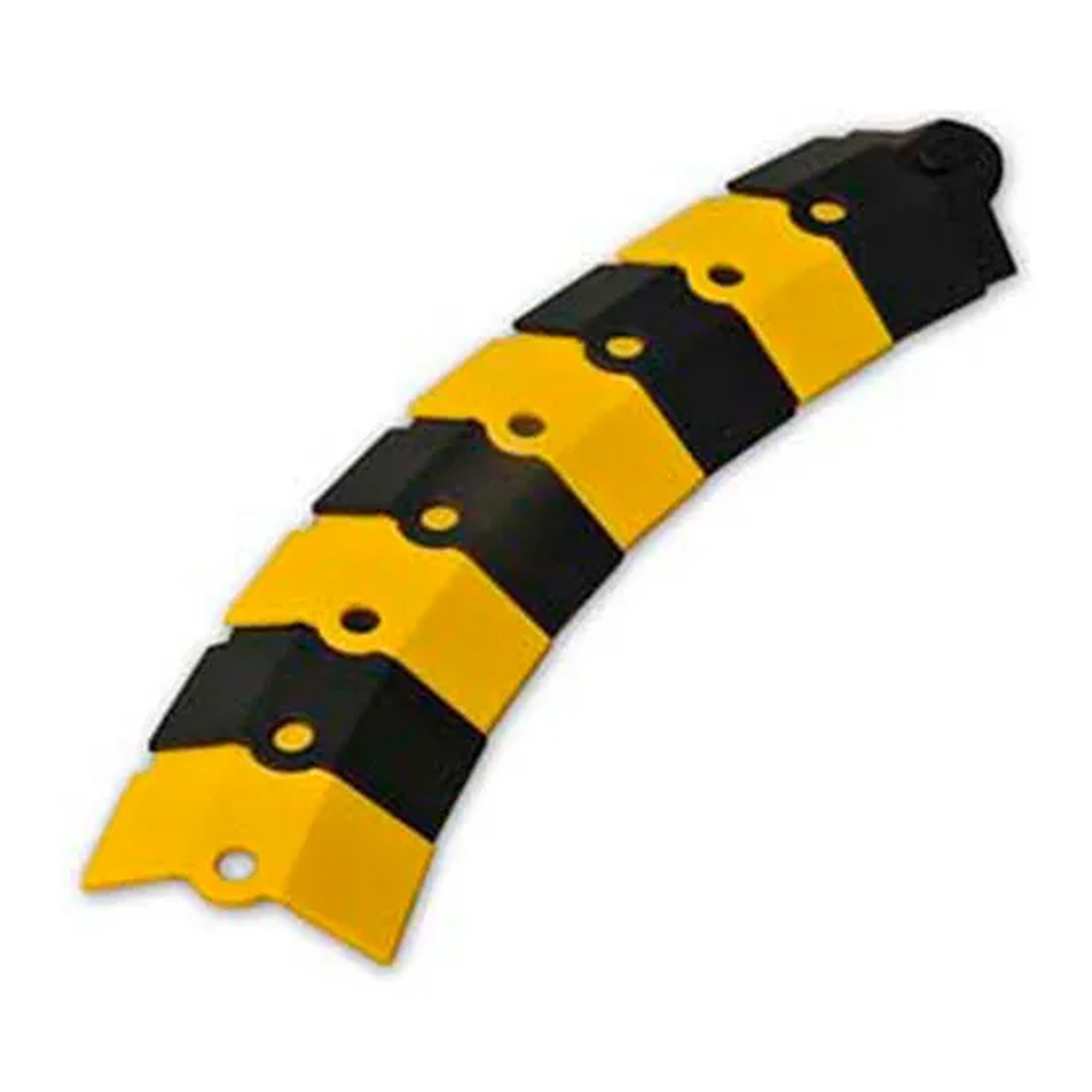
Interlocking sections, T-connectors, modular connectors, and modular ramp attachments allow compatible components to be joined into longer runs or wider crossings. For routes that turn or curve, an articulating cable protector extension follows corners, curves, and S-curves. Its snap-in segments can be reconfigured, repaired, or replaced without disconnecting cables.
- Connect compatible protector sections to extend coverage along a pathway.
- Use modular ramp sections or a ramp kit to expand a crossing configuration.
- Choose an articulating extension when a flat cable path must follow the room layout.
Common questions before buying
How many channels do cable protectors have?
The products represented include two-channel, three-channel, four-channel, and five-channel designs.
Can cable protectors be connected for longer runs?
Several options use interlocking sections, T-connectors, or modular connectors to join compatible sections for longer coverage.
What is the difference between a drop-over protector and a hinged-lid protector?
A drop-over protector is placed over a cable or hose run, while hinged or stay-open lids allow lines to be placed into channels from above.
Are ramps available for compatible cable protectors?
Yes. The category includes ADA-compliant ramps for compatible three-channel and five-channel protectors, plus a five-channel access ramp kit.']}]},