
-
American Bicycle Security
Two-Bike Solar E-Bike Charging Locker, Tan - 352SS-Tan-Padlock
Our Price:$9,398.99This tan solar bike locker provides separate enclosed storage and charging access for two e-bikes. It is designed for facilities and property managers who need to provide individual bike parking...
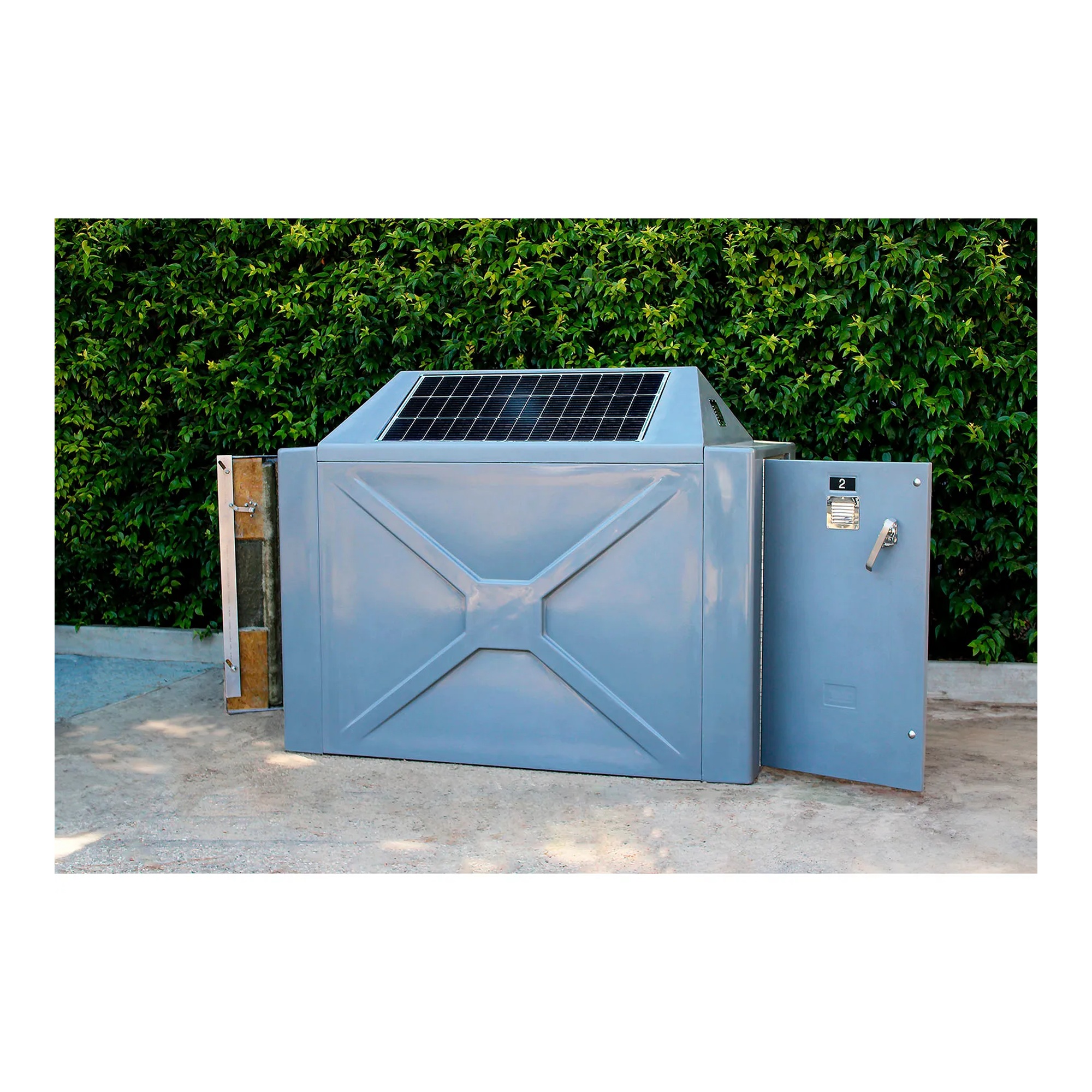
Bike Lockers: Secure, Weather-Protected Storage for Individual Bicycles
Bike lockers provide fully enclosed, lockable storage for a single bicycle, keeping it protected from weather, theft, and vandalism. Whether you're outfitting a transit hub, corporate campus, apartment complex, or school, this guide walks you through what to look for and how to choose the right locker for your space and usage pattern.
Popular examples in this category
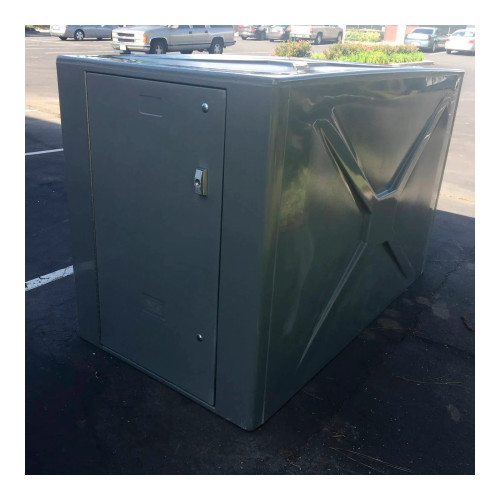 Two-Bike Fiberglass Composite Locker with T-Handle, GrayWBB936383
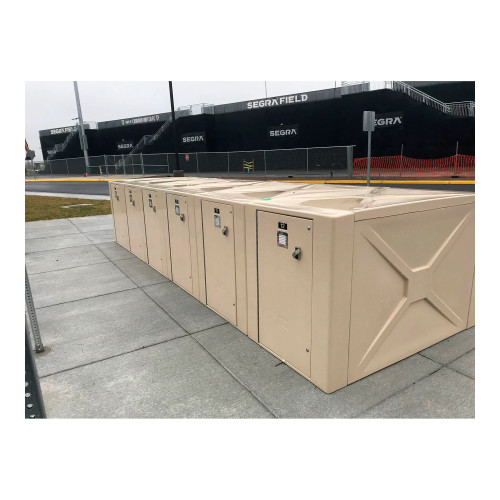 Model 352 Two-Bike Modular Locker with T-Handle, TanWBB3182875
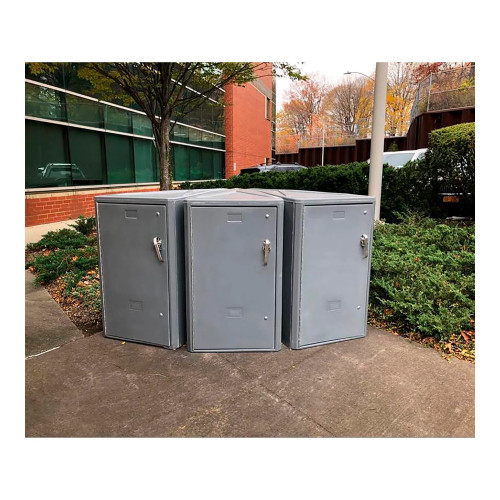 301P One-Bike Padlock Handle Bike Locker, Medium GrayWBB3182877
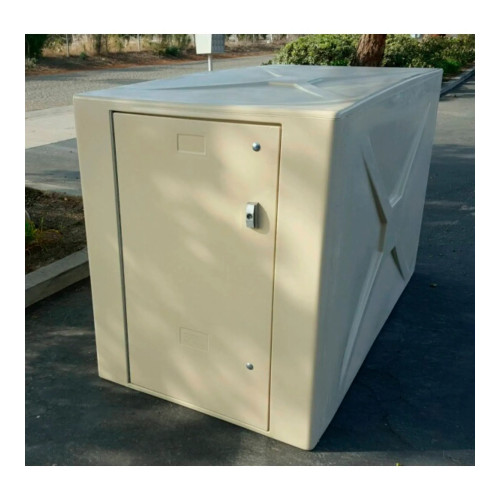 Model 302 Tan T-Handle 2-Bike Storage LockerWBB936381
Who Uses Bike Lockers and Why
Bike lockers are designed for commuters, employees, students, and residents who need secure, individual bicycle storage. They protect bikes from theft, rain, and UV damage in settings where open racks aren't sufficient—such as transit stations, parking garages, office buildings, and multi-unit housing.
Key Factors When Selecting a Bike Locker
Consider the number of users, available footprint, access method (key, coin-op, or electronic), and material durability. Shared-use environments benefit from coin-operated or electronic lockers, while dedicated-user installations work well with standard keyed units. Always verify interior dimensions against your largest expected bike size.
Where Bike Lockers Are Commonly Installed
Common installations include transit station platforms, corporate and government campuses, university parking lots, apartment and condo complexes, public parks, and retail centers. Any location where cyclists need reliable, unattended overnight or all-day storage is a strong candidate for bike lockers.
Installation, Anchoring, and Maintenance Notes
Most bike lockers are designed for surface mounting with anchor bolts into concrete or asphalt. Powder-coated steel and galvanized finishes minimize long-term maintenance. Check local codes for ADA clearance around locker doors and confirm whether your site requires permit-based installation before ordering.
Each locker is designed to store one bicycle, keeping it fully enclosed and inaccessible to unauthorized users.
Most standard bike lockers require approximately 6 feet of depth and 3 feet of width, plus additional clearance for door swing.
Bike lockers are commonly available with keyed, coin-operated, or electronic access to match different program and user needs.
Most units bolt directly into concrete or asphalt, making installation straightforward without requiring embedded foundations.
Choosing the Right Bike Locker for Your Application
Match your setting and user type to the locker configuration that fits best.
| Need | Best Fit | Why It Matters |
|---|---|---|
| Assigned long-term user storage | Keyed locker | Simple, low-cost, no ongoing administration required |
| Public or transit pay-per-use storage | Coin-operated locker | Self-funding model; user retrieves key on exit, freeing the unit |
| Managed program with access tracking | Electronic or smart-card locker | Provides audit logs, remote access control, and usage reporting |
| High-theft or high-vandalism environment | Heavy-gauge steel locker with reinforced hinges | Thicker steel and tamper-resistant hardware resist forced entry |
| Coastal or high-humidity climate | Galvanized or marine-grade finish | Prevents rust and corrosion that shortens locker lifespan outdoors |
Plan the right fit before choosing
Step 1: Assess Your Site and User Volume
Start by counting expected daily cyclists and determining whether storage is dedicated (one user per locker) or shared (multiple users rotating through). Map your available footprint, noting whether lockers will be installed in a row along a wall, in a freestanding cluster, or within a covered structure. This determines unit count, orientation, and whether you need single-sided or double-sided configurations.
- Count peak daily cyclists, not just average—size for your busiest day
- Measure the footprint carefully: a standard locker needs roughly 6 ft deep × 3 ft wide of clear floor space plus door-swing clearance
- Decide between dedicated-user and shared-use access before selecting a lock mechanism
Step 2: Choose the Right Access and Security Level
Access method is one of the most important decisions. Keyed lockers suit assigned-user programs where each person has a dedicated unit. Coin-operated lockers work well in transit and retail settings where users pay per use and retrieve their key on exit. Electronic or smart-card access is ideal for managed programs that need audit trails or remote administration.
- Keyed: lowest cost, best for assigned long-term users
- Coin-operated: self-funding, no administration needed, good for public transit
- Electronic/smart card: highest control and reporting capability, requires power or battery management
Step 3: Confirm Material, Finish, and Anchoring Requirements
Bike lockers installed outdoors must withstand UV exposure, rain, and temperature swings. Powder-coated steel is the most common choice; galvanized or stainless hardware prevents rust at fastener points. Confirm your substrate—concrete pads are preferred for anchoring. If installing on asphalt, use appropriately rated anchor hardware and consult the manufacturer's installation guide for torque specs.
- Powder-coated steel: durable and cost-effective for most climates
- Galvanized or stainless fasteners: essential in coastal or high-humidity environments
- Concrete anchor bolts: standard installation method; asphalt requires heavier-gauge anchors
Common questions before buying
What size bike fits inside a standard bike locker?
Most standard bike lockers accommodate bicycles up to about 72 inches long with handlebars up to 27 inches wide. If you have cargo bikes, e-bikes, or bikes with wide handlebars, check the interior dimensions of the specific unit before purchasing, as oversized frames may require a larger locker model.
Can bike lockers be installed on asphalt instead of concrete?
Yes, but asphalt installations require heavier-gauge anchor hardware and may need a concrete pad poured at the anchor points for adequate holding strength. Concrete is the preferred substrate because it provides a more stable, long-term anchor base.
How many bike lockers do I need for my facility?
A common planning rule is to provide one locker for every 5–10 employees or residents who regularly commute by bike, then add 10–15% buffer capacity for growth. For public transit or retail sites, base your count on observed peak-hour cyclist volume rather than total population.
Are bike lockers weatherproof?
Quality bike lockers are designed for outdoor use with weather-resistant construction—typically powder-coated steel bodies with sealed seams and sloped roofs to shed rain. They protect bikes from rain, wind, and UV exposure, though they are not fully waterproof in the sense of being submersion-rated. Proper site drainage around the locker pad helps prevent water pooling at the base.