
-
J.W. Winco
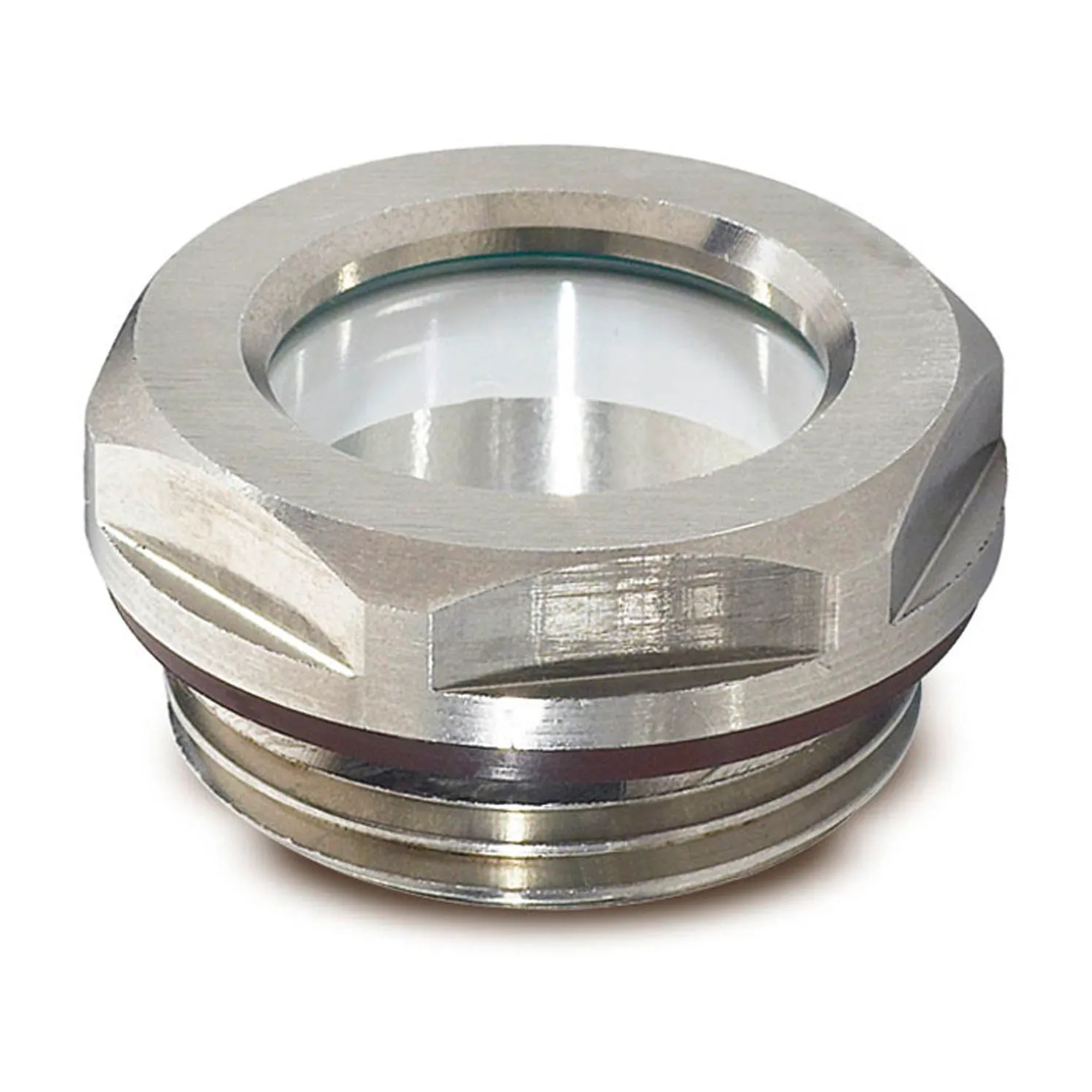
Stainless Fluid Level Sight Glass with ESG Glass, G 3/4 Pipe Thread
Our Price:$34.94This fluid level sight glass helps maintenance professionals visually check oil levels in pressurized oil tanks and applications with subpressure. Its G 3/4 pipe thread supports installation where a...
-
J.W. Winco
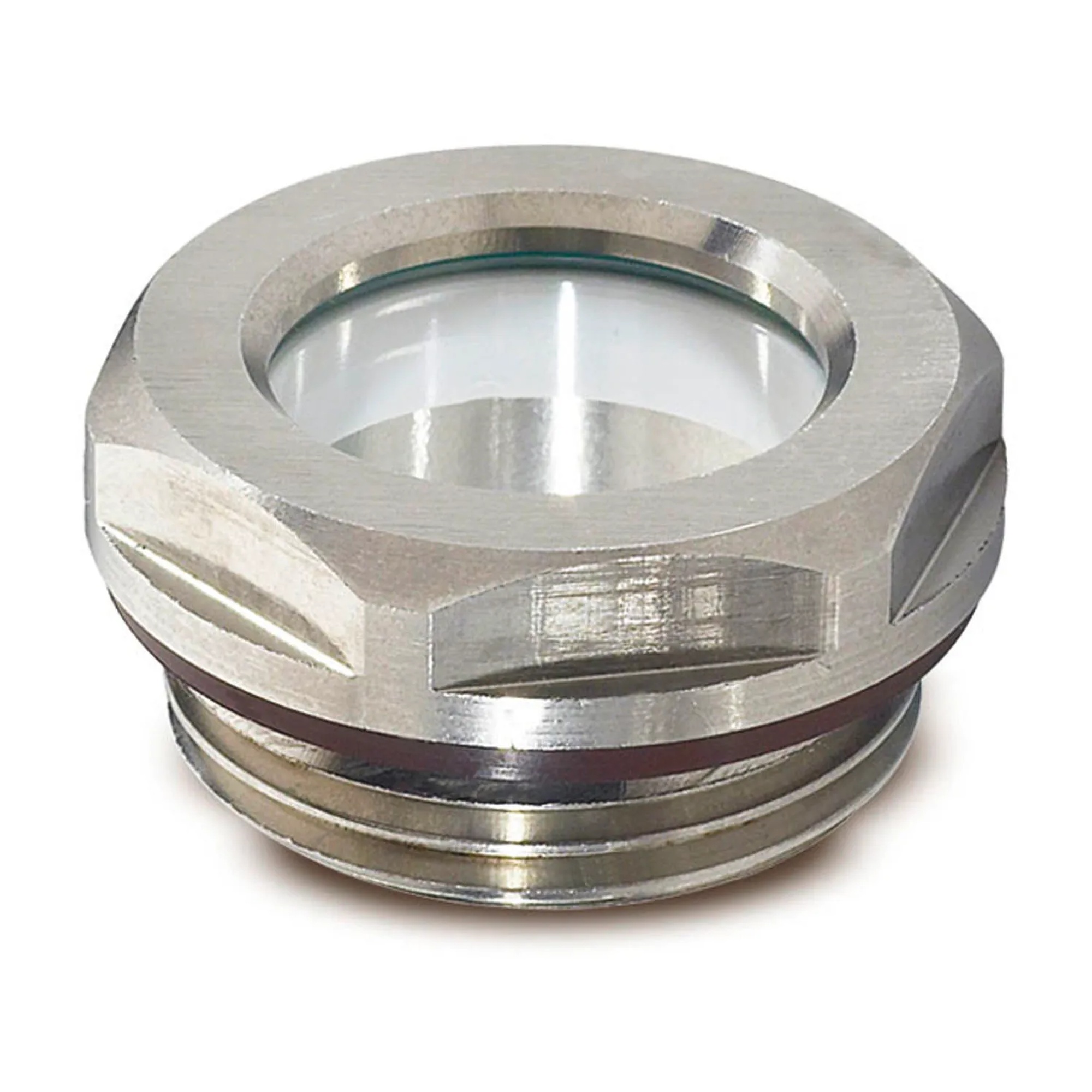
Stainless Fluid Level Sight Glass with ESG Glass, M16 x 1.5 Thread
Our Price:$20.99This fluid level sight glass helps maintenance and equipment users visually monitor oil levels in pressurized tanks and systems operating under subpressure. Its threaded design provides a viewing...
Choose a Sight Glass for Your Equipment Opening and Operating Conditions
Start with the mounting connection your equipment requires, then compare the housing material, viewing design, intended tank conditions, and stated temperature limit. The options represented include threaded aluminum, plastic, and brass designs, plus a thread-free press-fit aluminum style for a specified bore.
Popular examples in this category
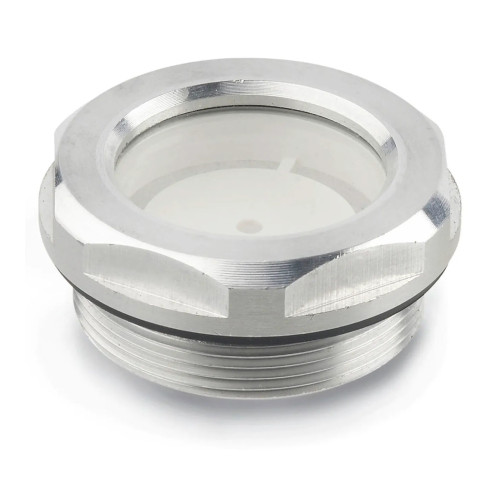 Aluminum Fluid Level Sight Glass with Reflector, M42 x 1.5 ThreadWBB2225437
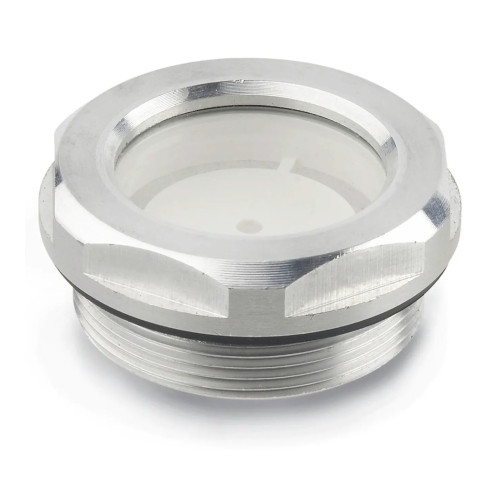 Aluminum Fluid Level Sight Glass with Reflector, M20 x 1.5 Thread - Model 743-14-M20X1.5-AWBB2225440
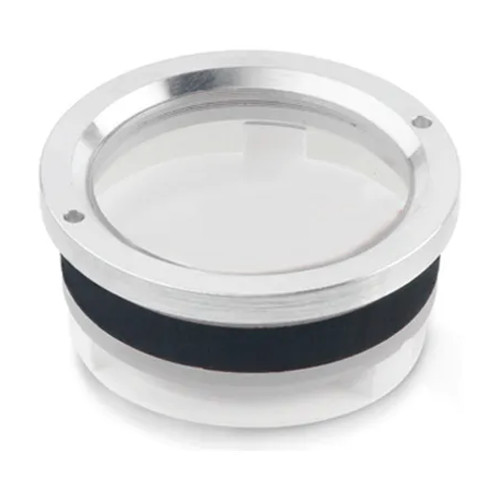 Aluminum Press-Fit Fluid Level Sight Glass for 38 mm BoreWBB2225587
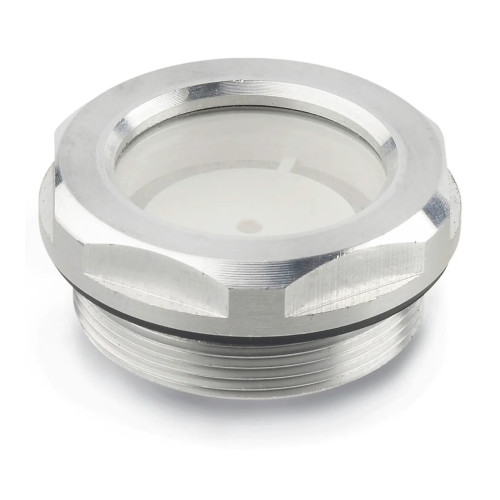 Aluminum Fluid Level Sight Glass with Reflector, M16 x 1.5 ThreadWBB2225447
Routine fluid-level checks
Use a sight glass to visually monitor fluid levels during maintenance and equipment inspection. Represented uses include oil tanks, tanks, and machinery.
Match the connection first
Confirm whether the installation needs a metric thread, a G pipe thread, a 3/4 in. NPT thread, or a 38 mm bore for a press-fit design.
Consider tank conditions
Some aluminum threaded models are described for pressurized oil tanks, while the 38 mm press-fit model is intended for non-pressurized or slightly pressurized tanks. Plastic versions are identified for light-duty service.
Compare viewing and seal details
Reflectors and prismatic reflectors can help make the fluid level easier to see. Available sealing details include peripheral O-rings in grooves, while the NPT design uses a conical thread connection.
The thread-free aluminum style is designed for a 38 mm (1.50 in.) bore.
Represented metric threaded options span M16 x 1.5 through M42 x 1.5.
Selected aluminum and brass options are described with heat resistance up to 356°F.
Represented G pipe thread sizes include G 1/4, G 3/4, and G 1-1/4.
Sight Glass Types at a Glance
Use this comparison to narrow the represented product types by mounting method, construction, and stated application details.
| Product type | Mounting and construction | Represented selection considerations |
|---|---|---|
| Reflector-equipped aluminum threaded | Metric or G pipe threads, aluminum housing, glass viewing window | Used for fluid-level viewing in oil tanks; several are described for pressurized tanks and feature grooved peripheral O-ring seals. |
| Press-fit aluminum | Thread-free installation for a 38 mm bore, ring-nut retention | Intended for non-pressurized or slightly pressurized tanks; has no integrated indicator and is stated to resist heat up to 80°C (175°F). |
| Plastic or brass threaded | Nylon plastic with G pipe threads, or brass with 3/4 in. NPT thread | Nylon options are for light-duty service and stated up to 194°F; the brass NPT option has direct ESG glass viewing and is stated up to 356°F. |
Plan the right fit before choosing
Select the correct installation style
A correct connection match is the first comparison point. Threaded options are represented in M16 x 1.5, M20 x 1.5, M27 x 1.5, M40 x 1.5, and M42 x 1.5 sizes, as well as G 1/4, G 3/4, G 1-1/4, and 3/4 in. NPT connections. A thread-free aluminum option fits a 38 mm (1.50 in.) bore and is retained by ring-nut seal compression.
- Match the thread designation or bore size to the equipment opening.
- Choose the 38 mm press-fit style only for a compatible bore opening.
- For 3/4 in. NPT installations, note the conical thread design forms a metallic seal as tightened.
Compare the viewing approach and housing material
Aluminum sight glasses provide a metal housing, with several models using a reflector to make the fluid level easier to see. One aluminum model uses a prismatic reflector designed to support visibility across varying fluid colors and viscosities, including poor lighting and overfilled or underfilled conditions. Other choices include nylon plastic for light-duty viewing and brass with direct ESG viewing glass.
- Reflector-equipped models support easier level observation during visual checks.
- The prismatic reflector is designed for varied viewing conditions.
- Some glass windows are described as scratch-resistant or scratch-proof.
- The press-fit aluminum design has no integrated indicator.
Review stated limits and seal features
Compare the product's stated heat resistance against the application. Listed limits range from 80°C (175°F) for the press-fit model and 194°F for the nylon plastic options to 100°C, 212°F, and 356°F for other represented designs. A reflector-equipped aluminum M20 x 1.5 version with a Viton seal is stated for up to 180°C (356°F).
- NBR-sealed aluminum options are represented with limits of 100°C or 212°F, depending on the model.
- Several aluminum designs use a peripheral O-ring held in a groove to retain the seal during installation.
- Some descriptions state that the peripheral seal arrangement keeps the seal away from the glass face edge and is not affected by axial pressure on the glass.
- Confirm that the stated temperature limit suits the intended operating condition.
Common questions before buying
What should I match before choosing a sight glass?
Match the equipment opening to the required thread designation or the 38 mm bore size for the press-fit option.
Are all represented sight glasses intended for pressurized tanks?
No. Several threaded aluminum models are described for pressurized oil tanks, while the 38 mm press-fit model is intended for non-pressurized or slightly pressurized tanks.
What is the difference between a reflector and a prismatic reflector?
A reflector helps make the fluid level easier to see. The prismatic reflector is described as supporting clearer visibility across varying fluid colors and viscosities, including poor lighting and overfilled or underfilled conditions.
What temperature limits are represented?
Stated limits include 80°C (175°F), 194°F, 100°C, 212°F, and up to 356°F, depending on the specific sight glass and seal or material details.