
-
Vibrasystems
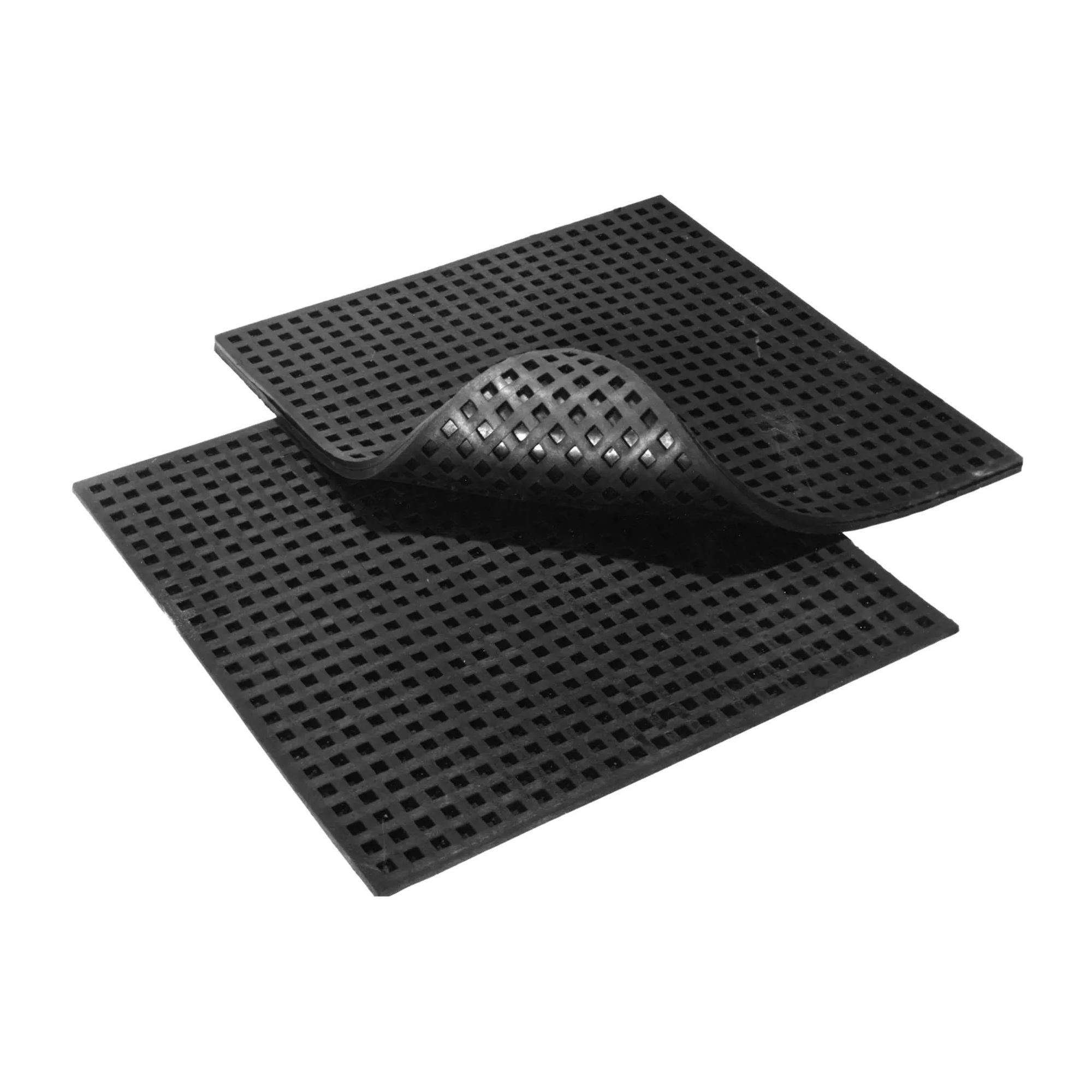
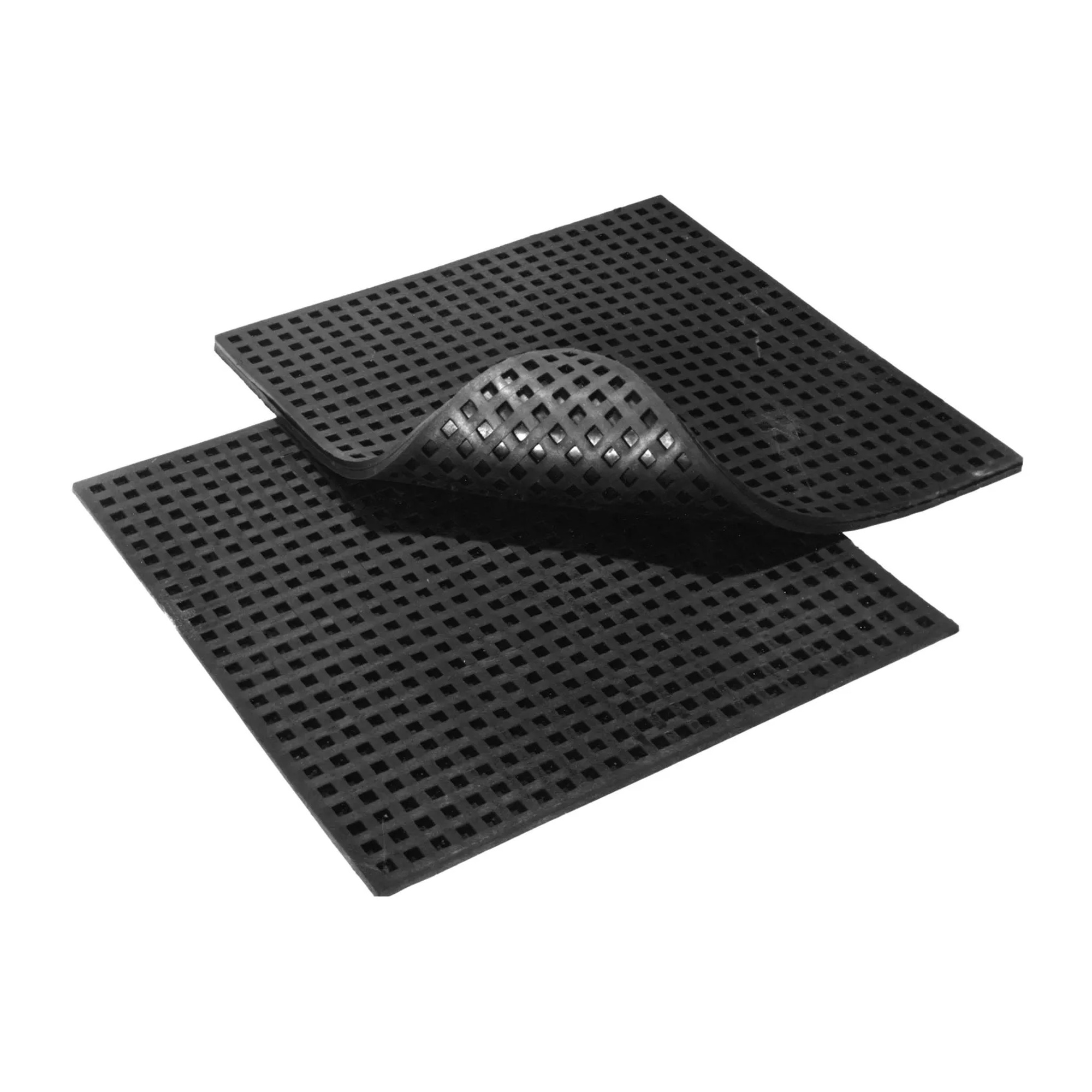
Waffle-Design Neoprene Vibration Isolation Pad, 10–50 psi
Our Price:$76.94This neoprene vibration isolation pad is designed for maintenance teams and facility professionals placing machinery or equipment at mounting points. Its two-sided waffle design helps isolate...
-
Vibrasystems
Waffle-Design Neoprene Vibration Isolation Pad, 18 in. x 18 in. x 5/16 in.
Our Price:$75.94This neoprene vibration isolation pad is designed for machinery and equipment installations where vibration, shock, and operating noise need to be reduced at mounting points. Maintenance teams and...
-
Vibrasystems
Waffle-Design Neoprene Vibration Isolation Pad, 18 x 18 x 1/2 in.
Our Price:$109.94This neoprene vibration isolation pad is designed for facilities teams and equipment installers placing machinery or tools on mounting points. Its two-sided waffle pattern helps isolate vibration,...

Choose a Vibration Pad for Your Equipment Layout
Compare pad construction, footprint, thickness, installation approach, and stated load needs before selecting a vibration-control solution. The available options range from broad, cuttable anti-vibration pads for minor, non-critical vibration to compact ribbed pads and natural rubber load-bearing pads with stated maximum capacities.
Popular examples in this category
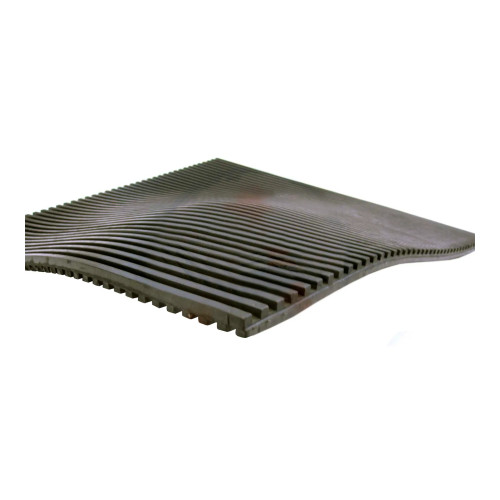 18 in. x 18 in. Anti-Vibration Pad, 3/8 in. ThickWBB2085584
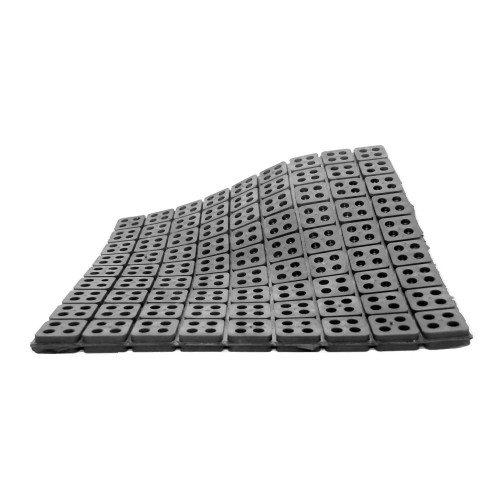 18 x 18 x 3/4 Inch Black Vibration Isolation PadWBB2085443
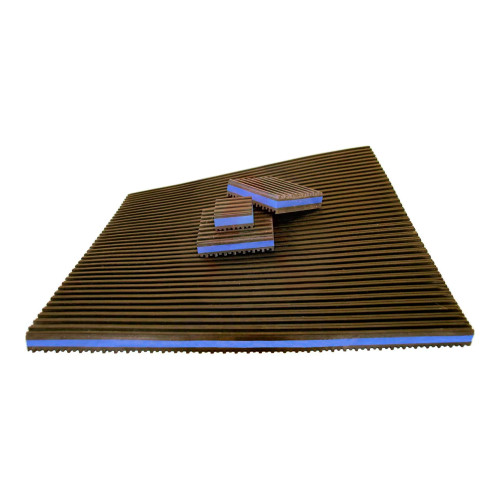 Black Rubber EVA Vibration Pad, 4 in. x 4 in. x 7/8 in.WBB2085572
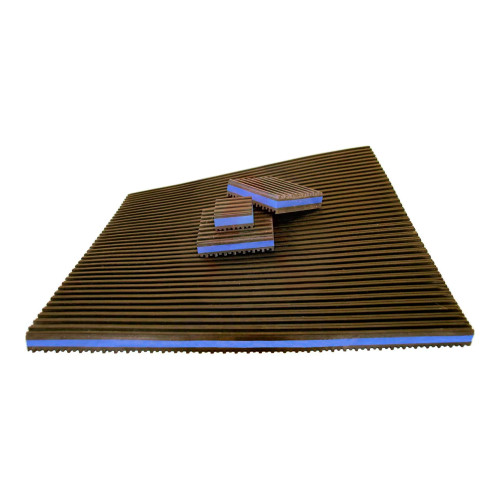 Rubber EVA Vibration Pad, 18 in. x 18 in. x 7/8 in.WBB2085530
Support common equipment installations
Broad anti-vibration pads are suited to compatible pumps, motors, air-conditioning units, generators, and fans. Compact pads can be used beneath equipment or components where a smaller contact area is needed.
Match the pad to the footprint and load need
Start with the required support area, then compare pad dimensions and thickness. For higher-load applications, choose from the natural rubber load-bearing styles using the stated maximum load capacity and controlled 1/8-inch deflection at maximum load.
Plan around placement conditions
Select waffle or suction-cup styles when avoiding bolting is a priority. Choose ribbed EVA or rubber cork pads when grip and an isolation layer at equipment contact points are important; certain EVA options are identified for outdoor applications.
Review cutting and order requirements
Certain 18-inch square anti-vibration pads are field-cuttable for installation-area trimming. Minimum order quantities vary: some compact 4-inch EVA and rubber cork pads have a minimum of four, while several other listed pads have a minimum of one.
Available pad footprints span compact mounting spaces through broader equipment bases.
Represented profiles provide several height options for installation planning.
The 10 x 10 x 1 inch natural rubber load-bearing pad has the highest stated capacity in the summaries.
The natural rubber load-bearing pads are designed to deflect this amount at maximum load.
Compare the represented vibration pad types
Use this overview to narrow the selection based on installation method, pad construction, and the application details stated for each type.
| Pad type | Key characteristics | Best fit from the summaries |
|---|---|---|
| Anti-vibration pads | 18-inch square waffle-pattern options; integrated suction cups; selected styles are cuttable; 3/8-inch or 3/4-inch profiles are represented. | Compatible pumps, motors, air-conditioning units, generators, and fans where bolting is to be avoided and vibration is minor and non-critical. |
| EVA or rubber cork pads | Ribbed dual surfaces with alternating high-low ribs; available in 4-inch and 18-inch square formats; 7/8-inch profiles are represented. | Equipment contact points where grip, an isolation layer, and help with structure-borne noise are needed. EVA styles listed include outdoor suitability. |
| Load-bearing or layered pads | Natural rubber load-bearing pads have stated capacities and 1/8-inch maximum-load deflection; rubber-and-steel and neoprene-and-steel pads have layered construction. | Commercial and industrial installations requiring higher stated load capacity or load distribution beneath supported equipment. |
Plan the right fit before choosing
Size the pad for the equipment base or support point
A pad should fit the planned equipment-support layout. The represented range includes compact 2-1/4-inch, 4-inch, 6-inch, and 10-inch square options as well as broad 18-inch square pads. Thicknesses include 3/8 inch, 3/4 inch, 7/8 inch, 1 inch, and 1-1/8 inches.
- Use 18-inch square pads for compatible broader equipment bases.
- Consider 4-inch square pads for compact vibration-control contact points.
- Use the defined 6-inch or 10-inch load-bearing footprints when planning support layouts.
- Consider field-cuttable anti-vibration pads when trimming is needed during installation.
Choose the surface and structure that suit the application
Waffle-pattern anti-vibration pads use integrated suction cups to support placement without bolting. EVA and rubber cork pads have ribbed dual surfaces with alternating high-low ribs for grip, isolation, and sound attenuation. Rubber-and-steel or neoprene-and-steel designs use rubber layers separated by steel to help distribute supported loads evenly.
- Choose suction-cup, waffle-pattern styles for no-bolt placement.
- Choose ribbed EVA or rubber cork pads for positive grip at contact points.
- Consider rubber-and-steel or neoprene-and-steel layered pads where uniform load distribution is needed.
- Use outdoor-suitable EVA pads for applicable outdoor installations.
Use stated capacity information for load-bearing selections
Natural rubber load-bearing pads are available in compact square sizes with stated maximum load capacities. The 4 x 4 x 1 inch pad supports up to 2,400 lb., the 6 x 6 x 1 inch pad supports up to 7,900 lb., and the 10 x 10 x 1 inch pad supports up to 25,000 lb. Each is designed to deflect 1/8 inch at maximum load.
- Confirm the equipment load before choosing a load-bearing pad.
- Compare the stated maximum capacity with the planned application.
- Use the listed 1/8-inch maximum-load deflection as part of the selection review.
- Do not treat pads intended for minor, non-critical vibration as substitutes for a stated higher-load option.
Common questions before buying
What equipment can vibration pads support?
The summaries identify use beneath pumps, motors, air-conditioning units, generators, fans, equipment, and supported components, depending on the pad style and installation.
Which vibration pads can be installed without bolting?
The waffle-pattern anti-vibration pads with built-in or integrated suction cups, plus the listed rubber-and-steel and neoprene-and-steel pads, are described for no-bolt placement.
Are any vibration pads suitable for outdoor use?
The represented 4 x 4 inch and 18 x 18 inch rubber EVA vibration pads are identified as suitable for outdoor applications.
Which pads have stated load capacities?
The natural rubber load-bearing pads list capacities of up to 2,400 lb. for 4 x 4 inches, 7,900 lb. for 6 x 6 inches, and 25,000 lb. for 10 x 10 inches. They are designed to deflect 1/8 inch at maximum load.