
-
REED Instruments
4-Channel Thermocouple and 2-Channel RTD Data Logging Thermometer
Our Price:$299.94This data logging thermometer helps commercial, industrial, research, educational, food service, medical, pharmaceutical, and environmental monitoring users measure and document temperatures across...
-
Supco
7-Day Temperature Recorder Chart Paper, -20° to +50°F
Our Price:$33.94This chart paper is a replacement recording chart for users who monitor temperature with compatible chart recorders. It provides a seven-day charting interval for documenting temperatures from -20°...
-
Extech
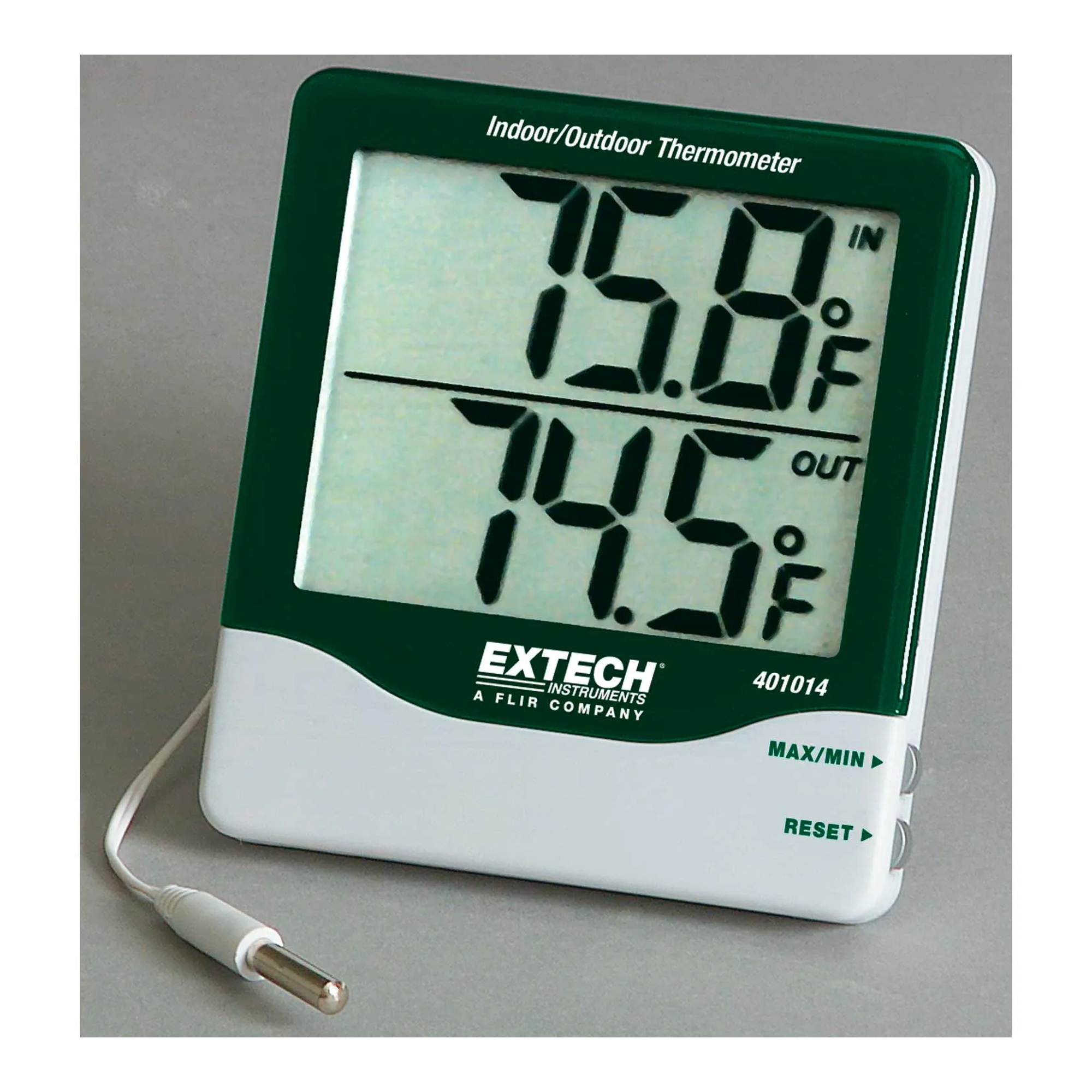
Big Digit Indoor/Outdoor Thermometer, Green/Silver
Our Price:$49.94This indoor/outdoor thermometer helps facility staff, maintenance teams, and other commercial users monitor temperatures in two locations at once. Its large-digit display supports quick temperature...
-
Extech
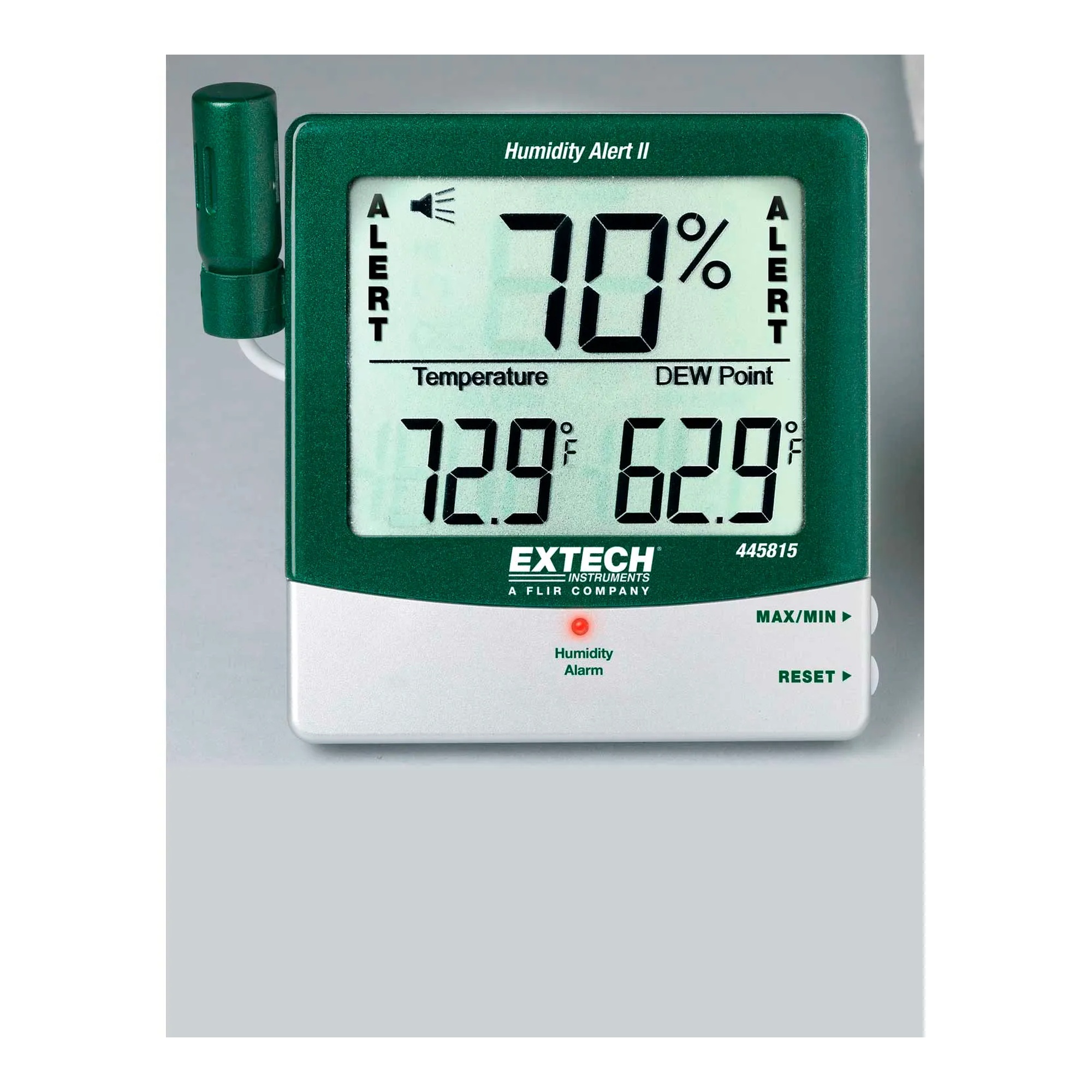
Big-Digit Humidity Alert Meter with Remote Probe
Our Price:$91.94This humidity alert meter helps laboratory, storage, manufacturing, and assembly personnel monitor environmental conditions. It displays humidity, temperature, and dew point to support oversight of...
-
Extech
Big-Digit Humidity Alert Meter with Remote Probe and NIST Certificate
Our Price:$199.94This humidity alert meter helps laboratory, storage, and manufacturing personnel monitor temperature, humidity, and dew point in controlled areas. Its user-settable alarm provides audible and visual...
-
Supco
Black Replacement Pen for Temperature Recorders
Our Price:$16.74This black replacement pen is designed for users who maintain temperature recorders and need a compatible writing component to keep recording equipment in service.The pen is intended for use with...
-
REED Instruments
Blue Infrared Thermometer with Laser Pointer
Our Price:$169.94This blue infrared thermometer helps maintenance technicians, inspectors, and quality control teams check surface temperatures without contact. It supports temperature verification on equipment,...
-
REED Instruments
Blue Moisture Detector with 3 CR2032 Batteries
Our Price:$73.94This compact moisture detector helps construction, restoration, and woodworking professionals check moisture levels in wood and common building materials. It uses contact pins to support practical...
-
REED Instruments
Bluetooth 5.0 Light Meter, Blue
Our Price:$139.94This handheld light meter helps facility, environmental monitoring, and lighting professionals measure illuminance in work areas and other indoor environments. It can be used on its own or paired...
-
REED Instruments
Bluetooth 5.0 Sound Level Meter
Our Price:$145.94This compact sound level meter helps maintenance teams, inspectors, and safety professionals measure and document acoustic levels. It operates as a standalone instrument or connects to a compatible...
-
REED Instruments
Bluetooth 5.0 Thermo-Hygrometer with 4 AAA Batteries, Blue
Our Price:$149.94This compact thermo-hygrometer helps facility, HVAC/R, laboratory, and environmental monitoring professionals check ambient temperature and relative humidity. It supports handheld measurements and...
-
REED Instruments
Bluetooth 5.0 Vane Anemometer, Blue
Our Price:$139.94This handheld vane anemometer helps HVAC/R technicians and ventilation professionals check air velocity, air temperature, and relative humidity. Use it to support airflow monitoring, filter blockage...
-
Extech
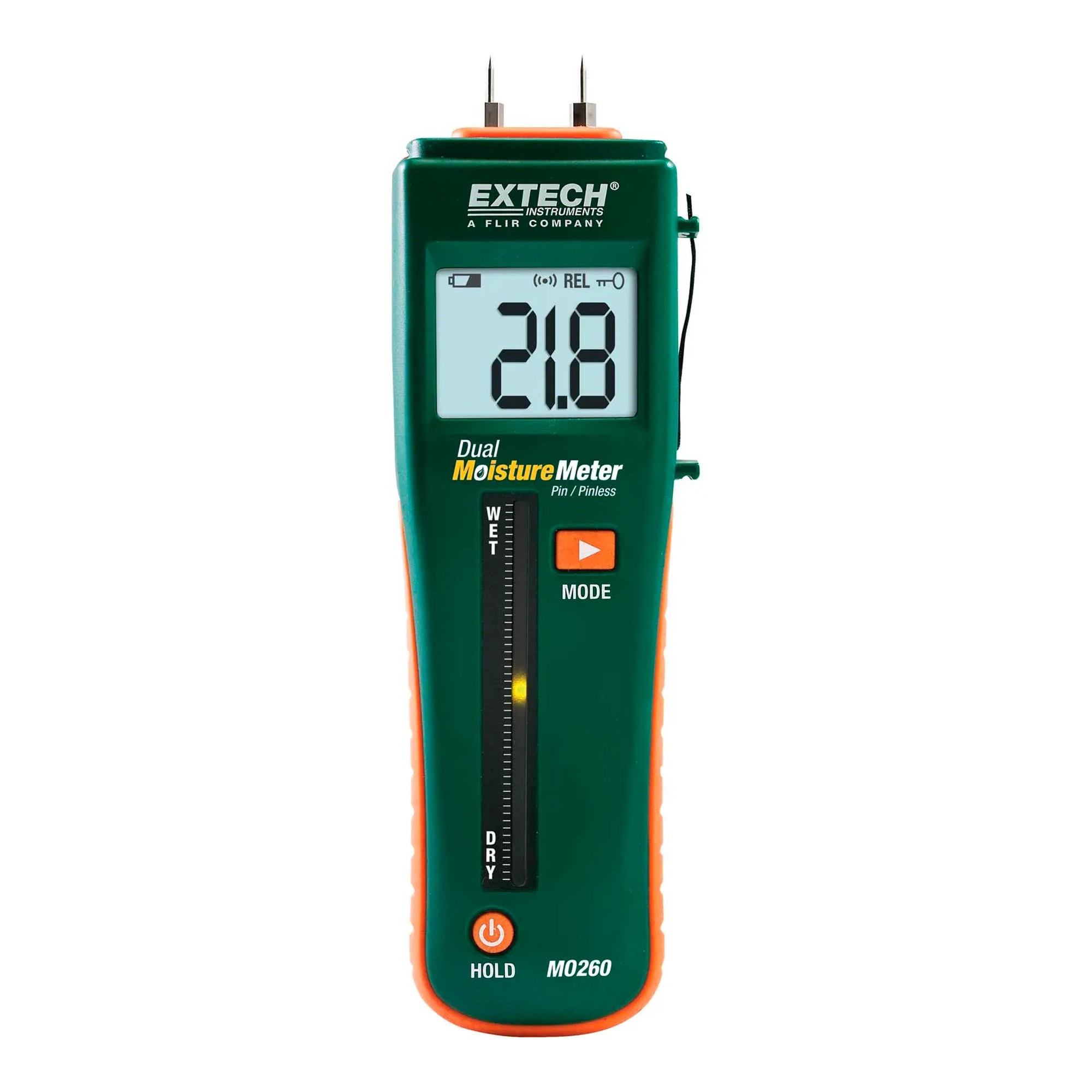
Combination Pin and Pinless Moisture Meter with Backlit LCD
Our Price:$485.94This combination moisture meter helps building inspectors, contractors, and maintenance teams check relative moisture in wood and other building materials. It offers pinless scanning for non-invasive...
-
Extech
Compact Airflow and Temperature Meter
Our Price:$269.94This compact thermo-anemometer helps maintenance and inspection professionals check air flow, air velocity, and ambient temperature. It supports practical airflow measurements while keeping...
-
REED Instruments
Compact Infrared Thermometer, -26 to 752°F
Our Price:$70.94This compact infrared thermometer helps maintenance, inspection, and facility professionals check surface temperatures without contact. It is designed for quickly measuring hot, hazardous, or...
-
Tripplet
Compact Sound Level Meter, 40 to 130 dB
Our Price:$84.94This compact sound level meter helps technicians and audio professionals measure sound levels in settings that require broad frequency response, including home theaters, music performances, and car...
-
REED Instruments
Data Logging Heat Stress Meter with WBGT
Our Price:$475.94This heat stress meter helps safety professionals and facility teams evaluate environmental conditions by measuring temperature, humidity, and sunlight effects. It calculates wet bulb globe...
-
REED Instruments
Data Logging Light Meter, 100,000 Lux
Our Price:$225.94This data logging light meter helps facility, maintenance, and inspection professionals measure ambient light levels for monitoring and documentation. It reads light in lux or foot-candles and...
-
REED Instruments
Data Logging Sound Level Meter with Bargraph Display
Our Price:$299.94This data logging sound level meter helps environmental testing and inspection professionals measure and document sound levels. It records readings to internal memory with time and date stamps,...
-
REED Instruments
Data Logging Thermo-Hygrometer
Our Price:$305.94This data logging thermo-hygrometer helps maintenance, inspection, and facility professionals monitor relative humidity and ambient temperature conditions. It also calculates dew point and wet-bulb...







How to Choose Environmental Test Instruments
Start with the condition you need to measure, then compare the sensing method, reading and recording functions, temperature capability, and features that suit the work area. This category includes instruments for liquid and material testing, ambient-condition checks, airflow monitoring, surface-temperature measurement, and sound-level observation.
Popular examples in this category
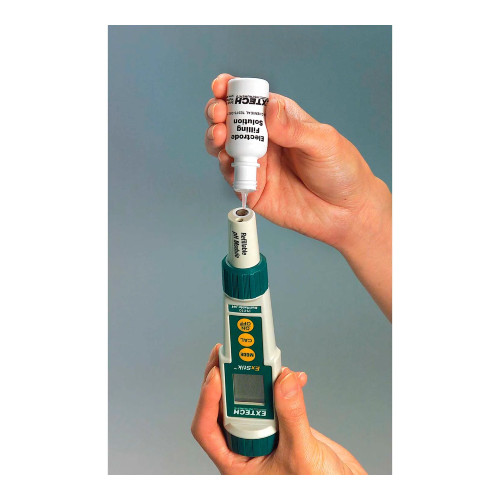 Refillable pH Meter with Flat Surface ElectrodeWBB1642110
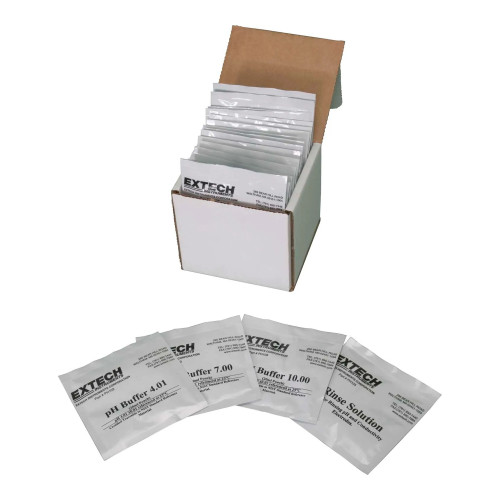 pH Calibration Buffer Pouches with Rinsing SolutionsWBB1642250
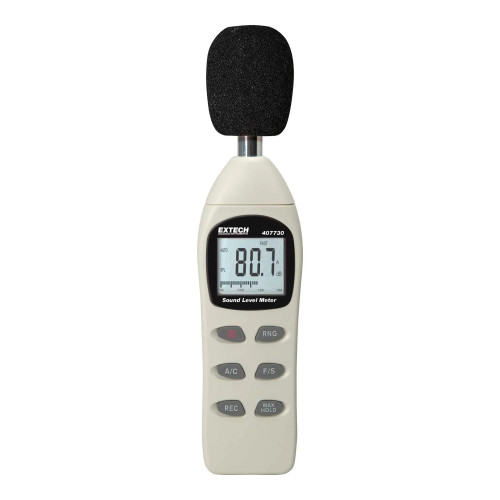 Digital Sound Level Meter with Analog BargraphWBB1642151
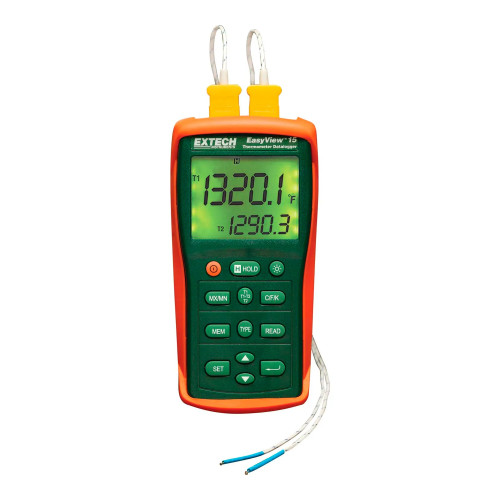 Dual-Input Temperature Datalogger with NIST CertificateWBB1642374
Match the tool to the condition being checked
Use pH meters for acidity or alkalinity in liquids, semi-solids, and solids. Choose moisture meters for wood and building materials, thermo-hygrometers for indoor temperature and relative humidity, sound level meters for changing sound readings, and thermometers or infrared thermometers for temperature checks.
Compare measurement method and working range
Consider whether the job calls for contact pins, a thermocouple input, infrared surface measurement, a pH electrode, or an airflow probe. Review stated ranges where provided, such as the infrared thermometer’s -26 to 2282°F range, the Type K/J thermometer’s Type K range up to 2501°F, and the moisture meter ranges for wood and building materials.
Support inspection, monitoring, and documentation
These instruments are suited to maintenance and quality-control checks, construction and restoration assessments, woodworking material inspection, indoor environmental monitoring, and airflow evaluation. Data logging models can record readings manually or at selected intervals for later review.
Look for features that fit the workflow
Useful features include automatic temperature compensation for certain pH and airflow measurements, simultaneous temperature and humidity or pH/mV displays, data hold and min/max review, backlit displays, calibration alerts, measurement memory, alarms, and included accessories such as batteries, probes, windscreen, or replacement pins.
The refillable pH meter stores and recalls 15 tagged measurements.
The infrared thermometer helps users measure smaller target areas from farther away.
The dual-input datalogger collects temperature data from two input channels.
The dual-input temperature datalogger supports seven thermocouple types.
Compare Common Instrument Types
Use this overview to narrow the product type based on what you need to measure and the features represented in this category.
| Instrument type | Best suited for | Selection factors |
|---|---|---|
| pH meters and calibration solutions | Checking pH in liquids, semi-solids, solids, or testing environments | Compare electrode style, refillable or waterproof design, temperature compensation, calibration alerts, memory, display format, and needed calibration or rinsing solutions. |
| Temperature and ambient-condition instruments | Surface, contact, ambient, or thermocouple-based temperature checks, plus indoor humidity monitoring | Compare measurement method, stated temperature range, thermocouple compatibility, simultaneous readout, display visibility, alarms, hold, min/max, and data tracking functions. |
| Airflow, sound, and moisture instruments | Air-velocity checks, sound-level observation, and material moisture assessment | Compare probe or sensor type, applicable material or air-measurement needs, data logging, selectable units, bargraph or visual/audible indicators, and included accessories. |
Plan the right fit before choosing
Choose the environmental variable first
A focused instrument selection begins with the measurement needed in the task.
- For pH checks, select a meter and consider calibration buffer and rinsing solutions for routine meter and electrode maintenance.
- For air movement, choose a vane thermo-anemometer for air velocity and air temperature, or a hot wire model when precise low-air-velocity measurement is needed.
- For temperature, decide between direct thermocouple measurement, noncontact infrared surface measurement, or ambient temperature monitoring with relative humidity.
- For material checks, choose a pin-based moisture meter or detector compatible with wood and selected building materials.
Select a display and data workflow that supports the job
Instruments in this category offer different ways to view, retain, and document readings.
- Data hold and min/max functions help capture a current reading and review observed extremes.
- Integrated SD or SD card logging supports manual recording or recording at selected intervals on the available thermo-anemometers.
- The sound level meter combines a digital display with an analog bargraph to make changing displayed levels easier to observe.
- Memory functions on selected pH and infrared models support tracking measurements or repeatable setup.
Look for practical features at the measurement point
Select features that help the instrument fit its intended work setting and measurement process.
- Choose automatic temperature compensation where temperature changes can affect pH or air-velocity measurements.
- For noncontact surface checks, the infrared thermometer has a 50:1 distance-to-spot ratio, adjustable alarms, a trigger lock, and a tripod mount.
- For portable monitoring, the thermo-hygrometer provides a dual LCD readout, selectable °F or °C units, a low-battery indicator, and auto shut-off.
- For pH testing, the waterproof palm meter can be handheld or wall mounted and has a 39-inch electrode cable.
Common questions before buying
What can environmental test instruments measure?
The represented instruments measure pH, sound level, temperature, relative humidity, air velocity, and moisture in wood and selected building materials.
When should I choose a pH calibration buffer pouch?
Calibration buffer pouches are used to check pH meter calibration. The available pouches support pH 4.00, 7.00, and 10.00 checks, and rinsing solutions help clean the electrode between measurements.
What is the difference between vane and hot wire thermo-anemometers?
Both measure air velocity and air temperature and can log data. The hot wire model is described for precise low-air-velocity measurement, while the vane model also supports contact temperature checks with optional Type J or K thermocouples.
Which tools can help document readings over time?
The dual-input temperature datalogger and the vane and hot wire thermo-anemometers support temperature or airflow data collection and recording. Selected pH and infrared models also provide measurement memory functions.
Choosing the right file folders
FilingSupplies.com carries end-tab folders for open-shelf systems, top-tab folders for drawer filing, and heavy-duty classification folders with dividers and fasteners for multi-section records. Pick letter or legal size, then choose material (11-pt, 14-pt, or 18-pt manila), optional reinforced tabs, color-coding, and expansion capacity to match your volume.
Folder FAQs
End-tab vs. top-tab — what’s the difference?
When should I choose classification folders?
Letter or legal size — how do I pick?
What tab and material options are available?
Can I add fasteners, pockets, or expansion?
Do you offer volume pricing or custom printing?
Outfitting classrooms that work all day
Build a durable, age-appropriate classroom with furniture, early-learning materials, storage bins, learning centers, and presentation tools. Choose adjustable pieces that grow with grades, label friendly bins for quick clean-up, and tech carts that secure, charge, and move easily.
Education FAQs
What safety labels should I look for on school and early-childhood items?
How do I pick classroom furniture across grade levels?
What’s the best way to organize supplies and centers?
How do I choose learning games and manipulatives by age?
What should I consider in a charging/tech cart?
Do you support school POs, bulk pricing, or custom printing?
Choosing the right labels
From color file labels to printable sheets, select the right size, adhesive, and print method to match your filing system and equipment. Decide on sheet vs. roll format, then pick permanent or removable adhesive and your color set.
Labels FAQs
Sheet vs. roll labels — what’s the difference?
Permanent or removable adhesive?
Will these labels work in my printer?
How do I match the label size to folder tabs or binder spines?
Can I get preprinted sequences or color bars?
Do you have templates?
Choosing the right tab dividers
Organize binders with preprinted or blank tabs. Select the number of tabs per set (5, 8, 10, or 12), choose paper with reinforced tabs or durable poly, and match letter or legal size for a clean fit.
Tab Dividers FAQs
What do 5-, 8-, 10-, or 12-tab sets mean?
Paper vs. poly — which should I choose?
Are the tabs printable?
Will they fit my binder?
Can I mix preprinted and blank tabs?
Do you make custom tab sets?
Choosing the right office supplies
From everyday paper and pens to binders, mailers, and desk organizers, pick durable, compatible options that match your equipment and team size. Start with the right paper and labeling, then add organizers that keep work moving.
Office Supplies FAQs
Which paper weight and brightness should I choose?
Round-ring vs. D-ring binders — what’s the difference?
What does “sheet capacity” mean on staplers and hole punches?
Will labels, envelopes, and mailers work with my printer?
How do I choose mailers and shipping boxes?
Do you offer eco-conscious options or bulk pricing?
Choosing the right sports & PE equipment
Equip classes, teams, and rec programs with durable balls, goals, cones, pinnies, storage, and safety gear. Match sizes and materials to age group and whether you play indoors or outdoors.
Sports & Athletics FAQs
What ball sizes should I choose for different ages?
- Basketball: Size 5 (27.5") youth, Size 6 (28.5") intermediate, Size 7 (29.5") official.
- Soccer: Size 3 up to ~8 years, Size 4 ~8–12, Size 5 ~12+.
- Volleyball: Regulation balls for teens/adults; lighter training balls for younger players.
Indoor vs. outdoor — which materials hold up best?
How many pinnies, cones, or markers do I need?
Tips for storage and care?
Are items latex‑free and school‑safe?
Do you support bulk orders or custom printing (team names)?
Choosing the right FireKing fireproof cabinet
FireKing fireproof file cabinets, safes, and storage cabinets are designed to protect important documents, records, and valuables from fire damage while keeping files organized and accessible. When choosing a FireKing cabinet, compare drawer configuration, storage type, fire rating, and overall capacity based on the records or materials you need to protect.
FireKing FAQs
What is the difference between FireKing vertical and lateral file cabinets?
What can I store in a FireKing fireproof file cabinet?
Are FireKing cabinets only for paper records?
How do I choose between a FireKing safe, file cabinet, or storage cabinet?
What sizes are available in FireKing cabinets?
Are FireKing cabinets used in offices, medical facilities, and government records storage?
Can I buy FireKing cabinets in bulk or get help choosing the right model?
Shipping & Policies
Do you offer free shipping?
What are your shipping rates?
- $6.95 for labels-only orders under $40
- $14.95 flat rate for everything else