


-
RIB
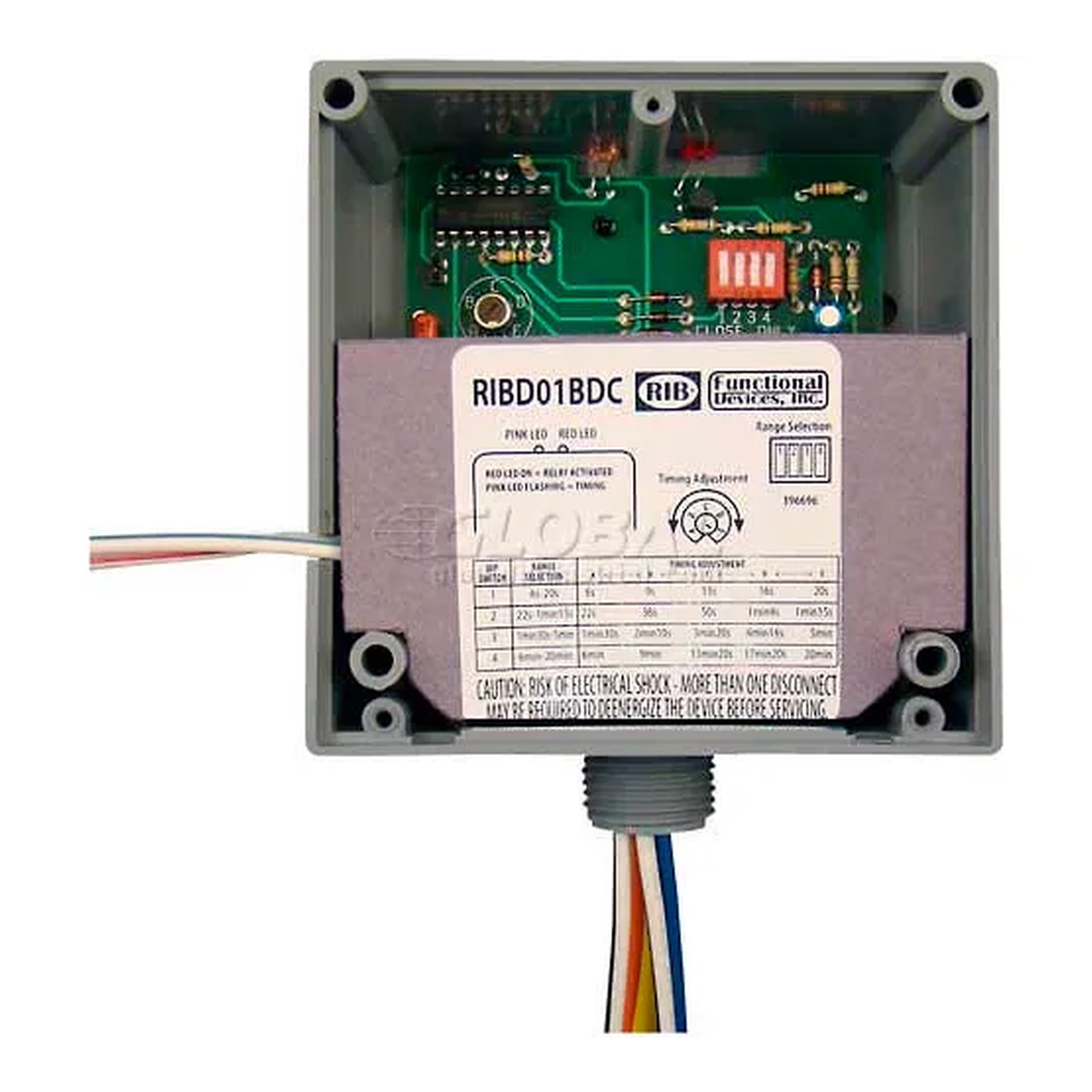
Enclosed Dry Contact Input Relay, 120 VAC, 20A SPDT
Our Price:$59.94This enclosed dry contact input relay is designed for electrical control applications where thermostats, switches, other relays, or solid-state switches need to trigger a relay. It provides the...
-
RIB
Enclosed Dry Contact Input Relay, 120-277 VAC, 10A SPDT - Model RIB21CDC
Our Price:$44.94This enclosed dry contact input relay is designed for electrical and controls professionals who need to use a dry-contact signal to operate a separate load. It provides a self-powered Class 2 input...
-
RIB
Enclosed Dry Contact Input Relay, 120-277 VAC, 10A, SPDT - Model RIB21CDC-RD
Our Price:$41.94This enclosed dry contact input relay is designed for electrical installers and control-system users who need to switch a load in response to a dry-contact signal. It activates when the dry-contact...
-
RIB
Enclosed Dry Contact Input Relay, 208–277 VAC, 20A SPDT
Our Price:$50.94This enclosed dry contact input relay is for electrical professionals who need to use a dry-contact control signal to switch a connected load. It provides a practical interface for control devices...
-
RIB
Enclosed Dry Contact Input Relay, 208-277 VAC, 20A, SPST
Our Price:$78.94This enclosed dry contact input relay is for electrical professionals and facility teams that need to use a dry-contact control signal to operate a connected circuit. It provides the low-voltage...
-
RIB
Enclosed Dry-Contact Input Time-Delay Relay, 120 VAC, 20A, SPDT
Our Price:$129.94This enclosed dry-contact input relay is for electrical professionals who need to use a simple contact closure to control a separate power or low-voltage load. It can be activated by compatible...
-
RIB
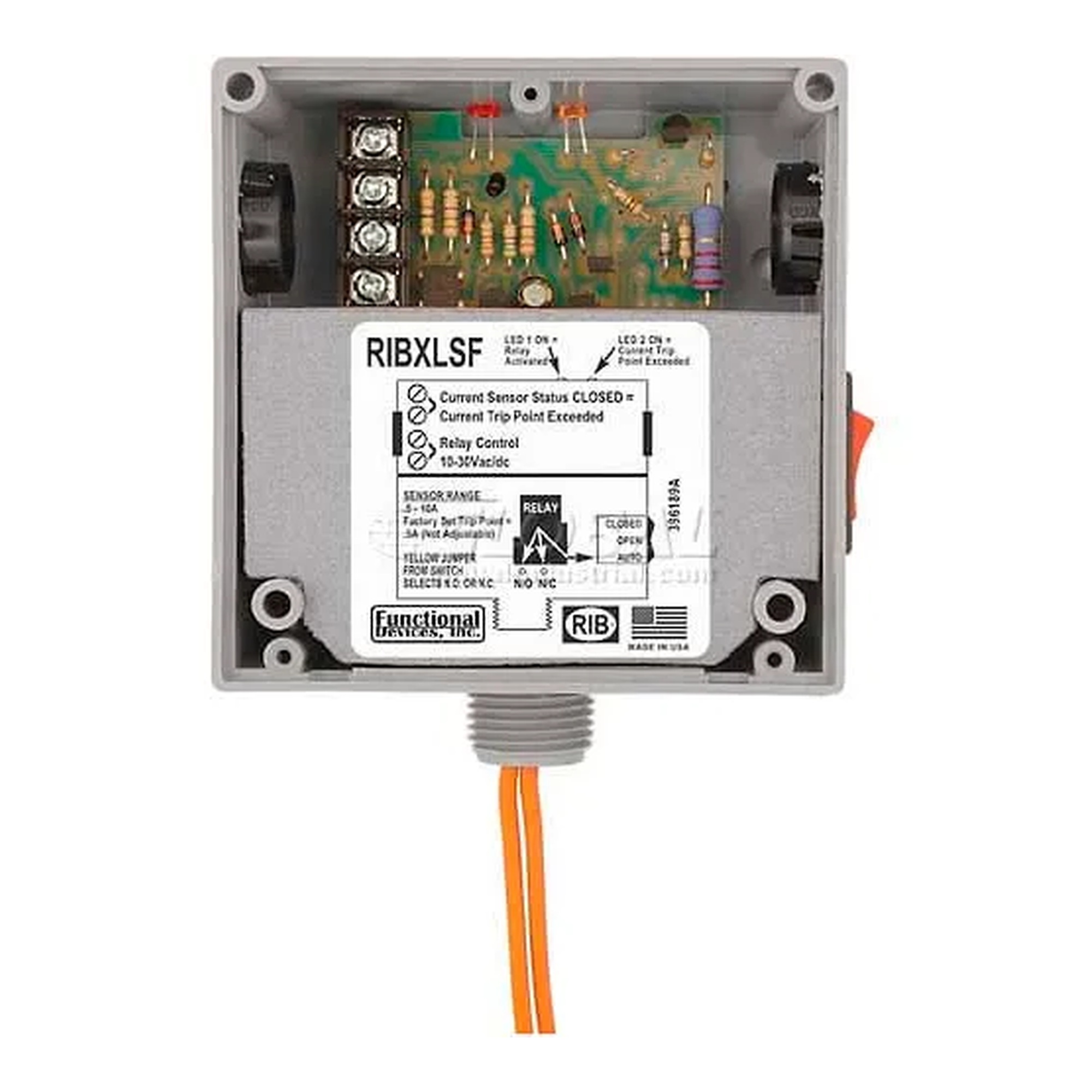
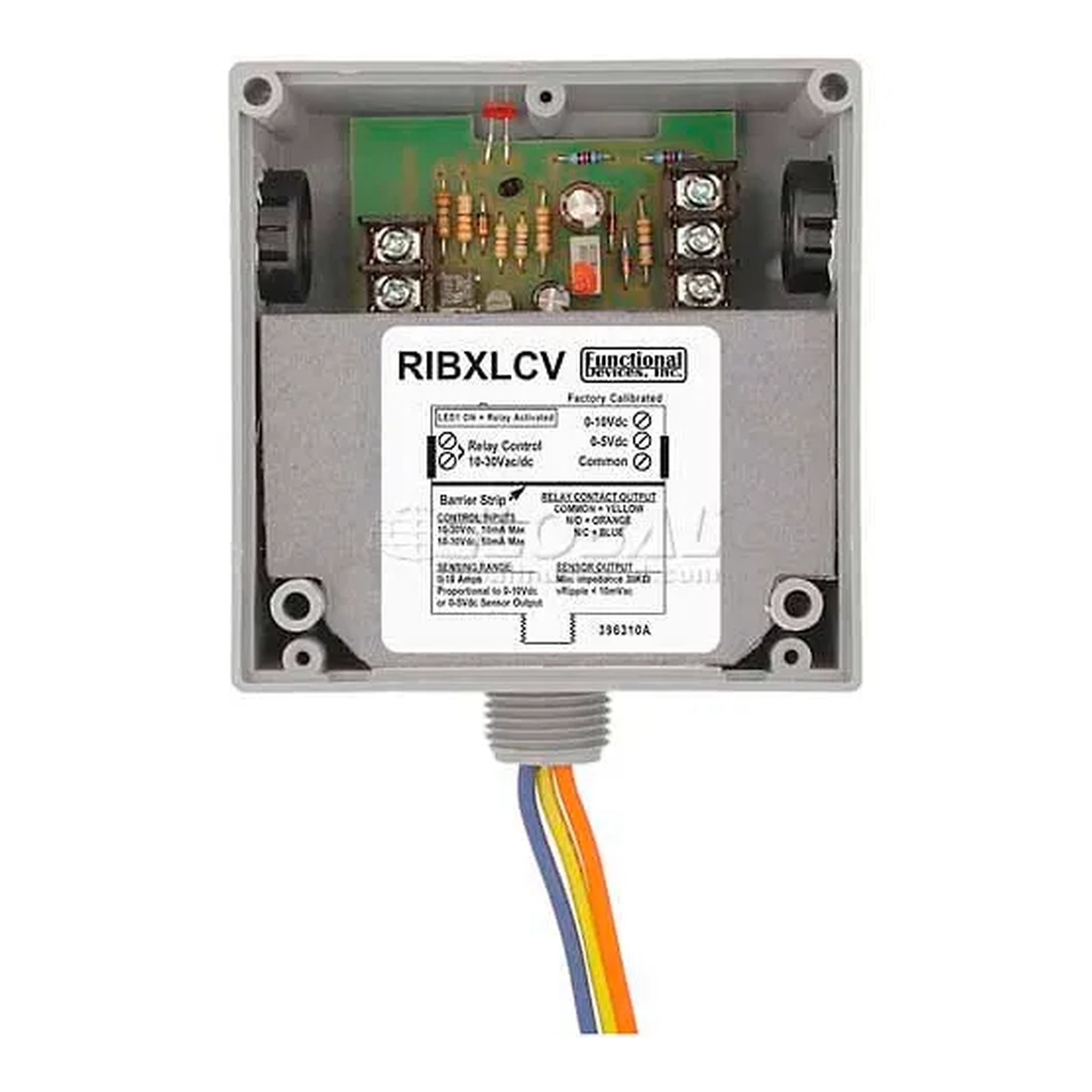
Enclosed Fixed Current Sensor Relay, 20A, 3PST-NC, 24 VAC/DC
Our Price:$259.94This enclosed current sensor and relay combination is for electrical installers and maintenance teams that need to sense current and control connected loads. Its internal AC sensor removes the need...
-
RIB
Enclosed Hi/Low Separate Relay, 10A, 2 SPDT
Our Price:$71.94This enclosed hi/low separate relay is designed for installers who need to control electrical circuits. It combines relay components in one enclosed assembly to support efficient installation work...
-
RIB
Enclosed Hi/Low SPST Relay with Override
Our Price:$70.94This enclosed hi/low SPST relay is designed for installers and electrical professionals who need to control compatible electrical circuits. It provides a packaged relay solution with an override...
-
RIB
Enclosed Internal AC Current Sensor Relay, 20A, 3PST, 24VAC/DC
Our Price:$259.94This enclosed AC current sensor relay is for electrical professionals who need to sense current and control connected loads in one unit. It supports loads up to 20 amps without requiring an external...
-
RIB
Enclosed Internal AC Current Sensor Relay, Fixed 10A SPST
Our Price:$119.94This enclosed AC current sensor and relay combination is for electrical professionals who need to sense current and control connected loads. Its integrated design helps simplify installations by...
-
RIB
Enclosed Internal AC Sensor Relay, 10A SPDT
Our Price:$84.94This enclosed internal AC sensor relay is for electrical professionals who need to sense current and control a connected load in one unit. It combines sensing and relay control without requiring an...
-
RIB
Enclosed Network-Compatible Relay with Current Sensor
Our Price:$229.94This enclosed relay is designed for installers and building-control professionals who need additional control points in distributed electrical control systems. It provides a practical way to add...
-
RIB
Enclosed Optoisolated SPST Relay with Override, 20A
Our Price:$97.94This enclosed optoisolated relay is for electrical control professionals who need to operate a relay when a controller does not provide enough coil-drive power. It provides a separate power...
-
RIB
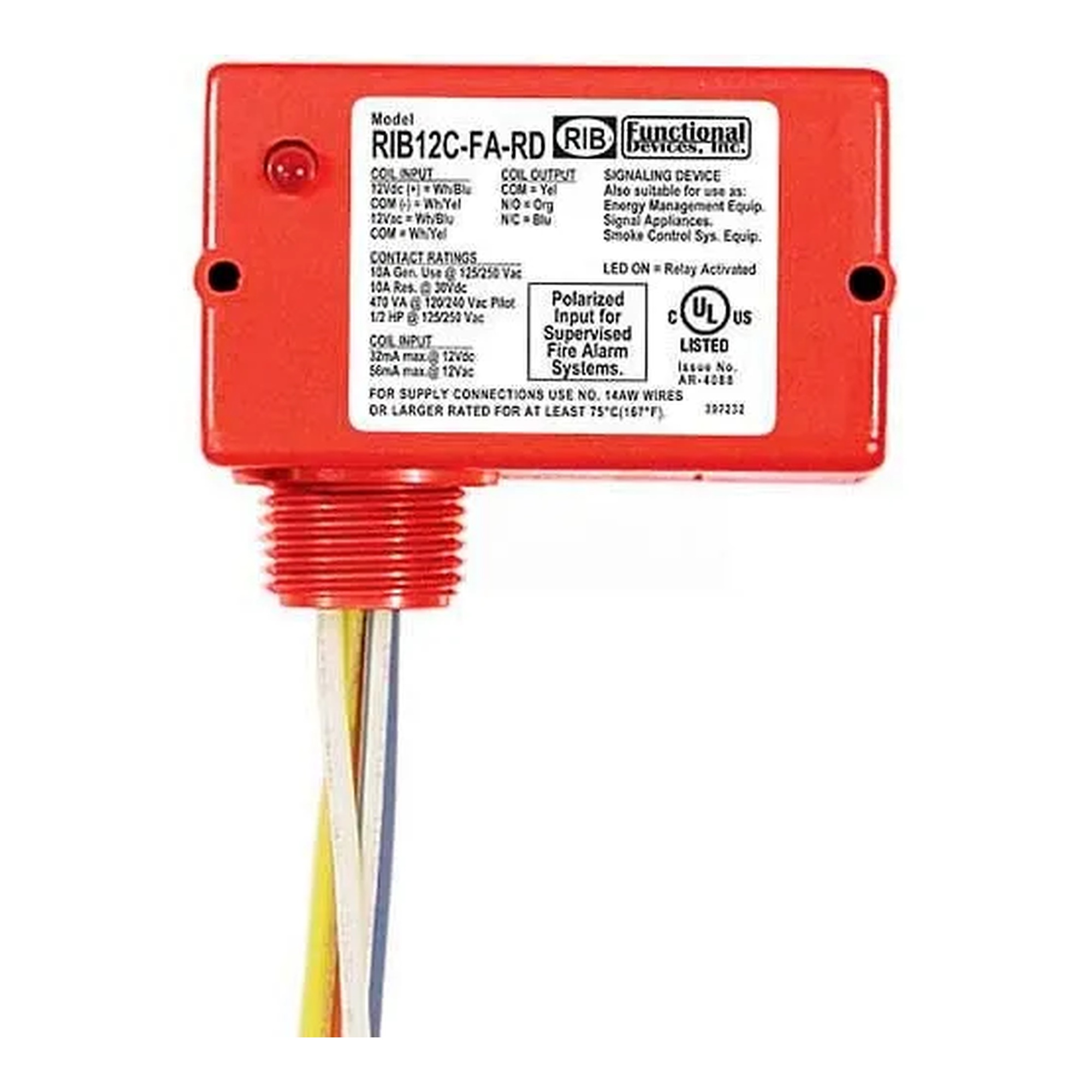
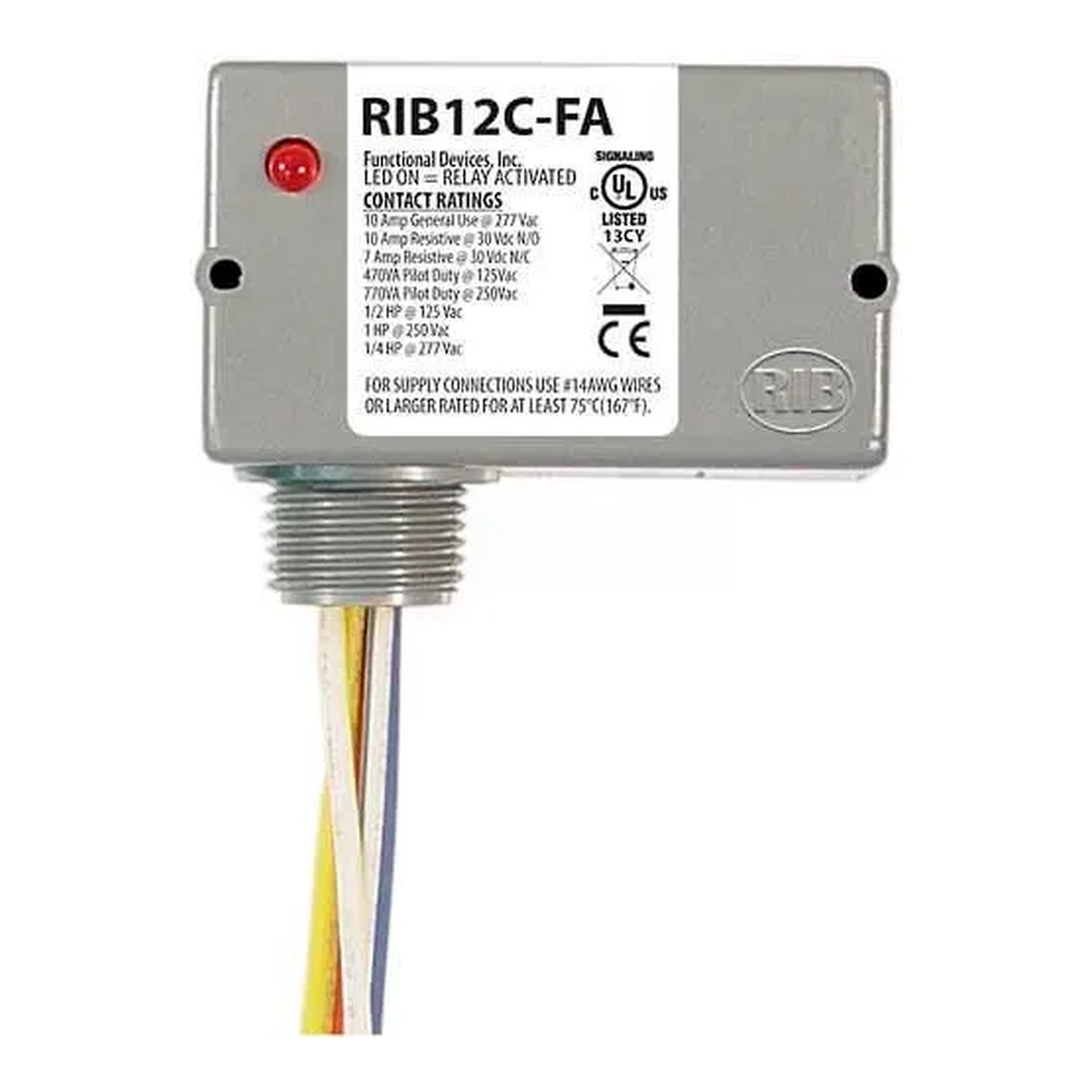
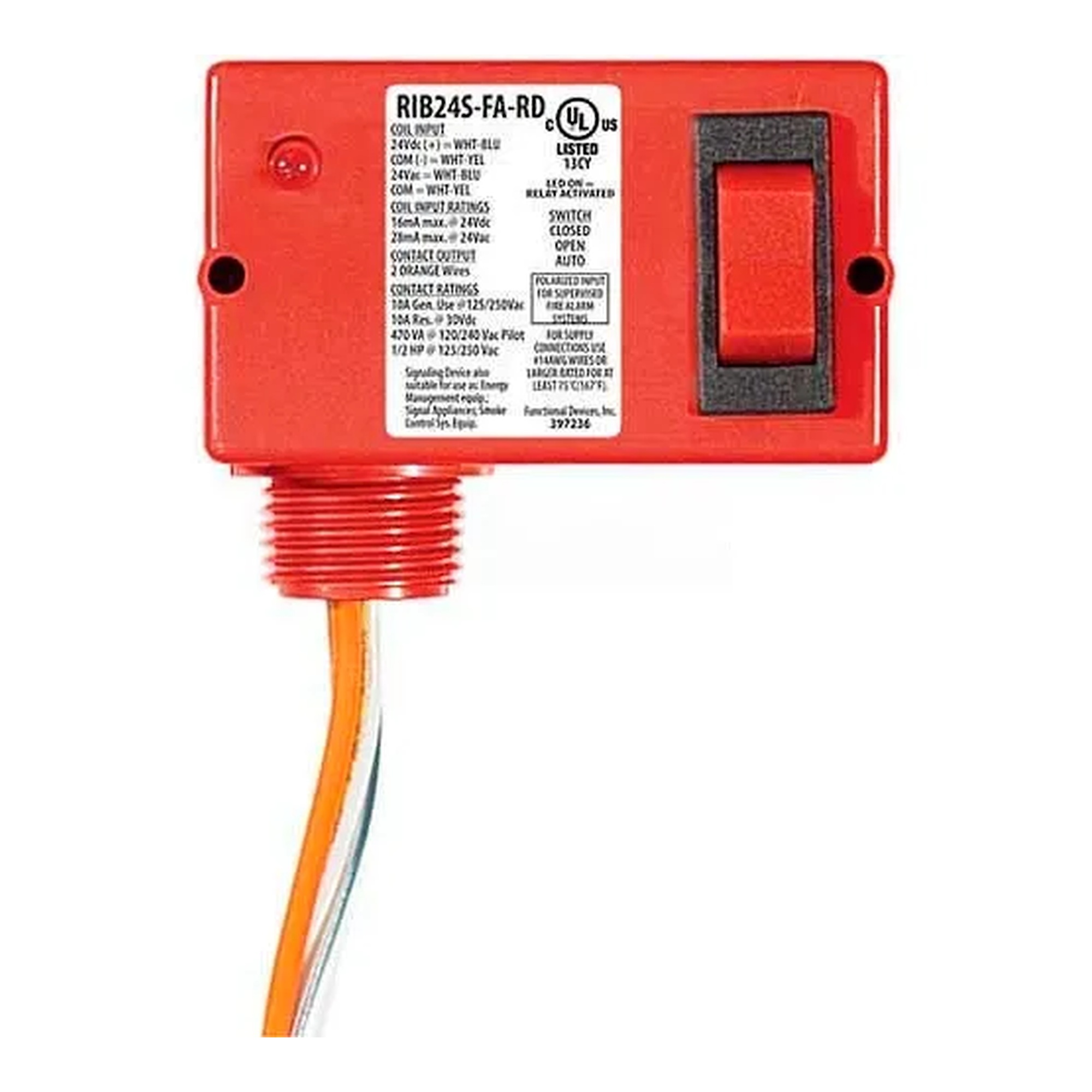
Enclosed Polarized Fire Alarm Relay, 10A SPDT, 12VAC/VDC
Our Price:$68.94This enclosed polarized relay is for fire alarm system installers and electrical professionals who need a switching device for supervised controller circuits using end-of-line resistors. It provides...
-
RIB
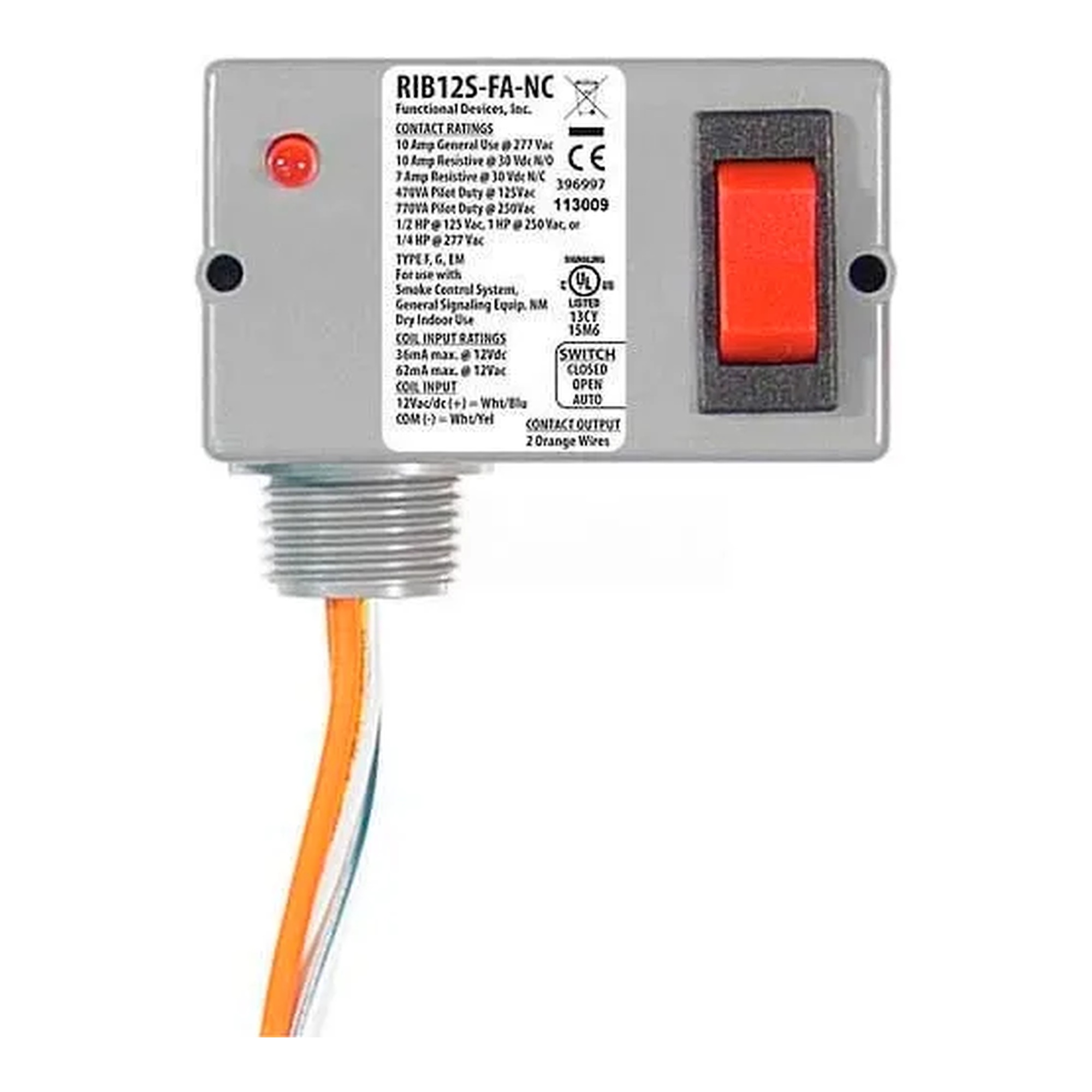
Enclosed Polarized SPDT Relay, 10A, 12VAC/VDC
Our Price:$50.94This enclosed polarized relay is for electrical professionals working with supervised fire alarm systems. It provides switching control in systems monitored by controllers and using end-of-line...
-
RIB
Enclosed Polarized SPST Relay with Override Switch
Our Price:$47.94This enclosed polarized relay is for electrical professionals working with supervised controller systems that use end-of-line resistors. It provides SPST switching and an override switch for system...
-
RIB
Enclosed Polarized SPST Relay with Override Switch, 12 VAC/VDC, Normally Closed
Our Price:$44.94This enclosed polarized relay is for electrical professionals working with supervised control systems. It provides a normally closed switching point for systems using controller supervision and...
-
Enclosed Polarized Track-Mount Relay, 15A SPDT, 24 VAC/VDC
Our Price:$41.94This enclosed polarized track-mount relay is for electrical professionals working with supervised control systems. It provides SPDT switching for installations that use controller supervision and...
-
RIB
Enclosed Power Relay, 20A SPDT
Our Price:$65.94This enclosed power relay is for electrical installers who need a ready-to-install relay assembly for control circuits. Its SPDT configuration provides a practical option for switching connections...








Electrical, Lighting & Power Supplies for Every Application
Whether you're wiring a new facility, upgrading lighting, managing power distribution, or simply replacing batteries, this category covers the full range of electrical and power products for commercial, industrial, and facility maintenance needs. Use the subcategory paths below to find exactly what your project requires.
Choose your starting point
Popular examples in this category
 3V CR2016 Lithium Coin Batteries, 5-PackWBB3170572
 Batteries & Charging
 3V Batteries
What Electrical, Lighting & Power Products Are Used For
These products support building infrastructure, equipment operation, and facility maintenance. Common uses include installing or replacing wiring and conduit, setting up lighting systems, managing power backup, controlling circuits, and keeping devices charged and operational across commercial and industrial environments.
How to Choose the Right Electrical or Power Product
Start by identifying your application: new installation, replacement, or upgrade. Then consider voltage and amperage requirements, environment (indoor vs. outdoor, wet vs. dry), code compliance needs, and whether you need portable power, permanent wiring, or lighting control. Match product specs to your load and location.
Common Applications Across Electrical & Power Categories
Typical applications include office and warehouse lighting upgrades, panel and breaker installations, backup power for critical equipment, low-voltage wiring for data and controls, switch and receptacle replacement, and battery maintenance for vehicles, tools, and emergency devices.
What to Know Before You Buy
Always verify local electrical codes before purchasing wiring, boxes, or panels. Check compatibility between components such as switches, receptacles, and load ratings. For lighting, confirm fixture type, bulb base, and lumens output. For backup power, match runtime requirements to battery capacity and inverter wattage.
Which Subcategory Fits Your Project?
Use this table to match your immediate need to the right starting point.
| Need | Best Fit Subcategory | Why It Matters |
|---|---|---|
| Replace or stock batteries for tools, devices, or vehicles | Batteries & Charging | Correct battery chemistry and voltage ensures compatibility and safe operation |
| Install or upgrade facility or workspace lighting | Commercial & Industrial Lighting | Fixture type, lumen output, and mounting style must match the space and application |
| Run new wiring or replace existing cable and conduit | Electrical Boxes, Wiring & Cable | Wire gauge, insulation rating, and conduit type must meet load and code requirements |
| Source connectors, tape, terminals, or general electrical hardware | Electrical Supplies | Having the right small components on hand prevents project delays and callbacks |
| Protect equipment from outages or manage power across a facility | Power Distribution & Backup Power | Proper sizing of UPS, PDUs, and panels prevents overloads and downtime |
| Replace or add outlets, switches, or circuit controls | Switches, Receptacles & Controls | Load rating, GFCI/AFCI compliance, and compatibility with existing wiring are critical |
Plan the right fit before choosing
Step 1: Define Your Scope and Environment
Before selecting products, clarify whether the work involves new construction, renovation, or maintenance. Identify the environment: commercial office, industrial facility, outdoor, or hazardous location. This determines the enclosure ratings, wire gauges, and fixture types you'll need.
- New construction typically requires conduit, wire, boxes, panels, and fixtures specified to local code
- Renovation or replacement work may require matching existing voltage, amperage, and box configurations
- Outdoor and wet locations require weatherproof or watertight-rated components
- Hazardous or industrial environments may require explosion-proof or heavy-duty rated equipment
Step 2: Calculate Load and Power Requirements
Matching your electrical components to actual load requirements prevents overloads, equipment damage, and code violations. Add up the wattage or amperage of all devices on a circuit before selecting wire gauge, breakers, or power distribution equipment.
- Wire gauge must match the amperage rating of the circuit and breaker
- Power strips and distribution units should be rated above your expected peak load
- Battery backup systems should be sized for runtime, not just wattage
- Lighting loads should account for fixture wattage plus any dimmer or control compatibility
Step 3: Select Compatible Controls and Accessories
Switches, receptacles, and controls must be compatible with the wiring, load type, and any smart or automated systems in use. Confirm that boxes, covers, and mounting hardware match your wall or panel configuration before ordering.
- GFCI and AFCI receptacles are required in specific locations by most electrical codes
- Dimmer switches must be rated for the bulb type (LED, CFL, incandescent) being controlled
- Electrical boxes must be sized for the number of wires and devices they will contain
- Labeling and organizing wiring during installation reduces troubleshooting time later
This category is divided into seven focused subcategories so you can navigate directly to batteries, lighting, wiring, boxes, supplies, power distribution, or controls.
Products span both indoor commercial use and outdoor or industrial environments, with options rated for wet, damp, and hazardous locations.
The category covers everything from low-voltage battery and control wiring to high-amperage commercial power distribution and panel components.
Options include primary power infrastructure, portable power, and battery backup systems to keep critical equipment running during outages.
Common questions before buying
How do I know which wire gauge to use for my project?
Wire gauge is determined by the amperage the circuit will carry. Common residential and light commercial circuits use 14 AWG for 15-amp circuits and 12 AWG for 20-amp circuits. Always match wire gauge to the breaker rating and consult local electrical codes for your specific application.
What is the difference between a UPS and a power strip with surge protection?
A surge protector diverts voltage spikes but provides no power during an outage. A UPS (uninterruptible power supply) includes a battery that keeps connected equipment running temporarily when power is lost, giving you time to save work or safely shut down systems.
Do I need GFCI outlets in all locations?
Most electrical codes require GFCI protection in areas near water, including bathrooms, kitchens, garages, outdoor locations, and unfinished basements. Requirements vary by jurisdiction, so always verify with local code before installation.
What should I consider when choosing commercial lighting fixtures?
Key factors include the required lumen output for the space, fixture mounting type (surface, pendant, recessed), bulb or lamp compatibility, color temperature for the work environment, and whether dimming or occupancy controls are needed. Energy efficiency ratings also affect long-term operating costs.