
-
Ceiling-Mount Occupancy Sensor with Integrated Switching Relay
Our Price:$129.94This ceiling-mount occupancy sensor is designed for facilities professionals and electrical installers who need automatic control based on detected motion. It combines motion sensing and a switching...
-
Ceiling-Mount Passive Infrared Occupancy Sensor
Our Price:$93.94This ceiling-mount passive infrared occupancy sensor is designed for installers and commercial facilities that need occupancy-based lighting control. It provides broad overhead sensing to help manage...
-
Ceiling-Mount PIR Occupancy Sensor, White, 1,500 Sq. Ft. Coverage
Our Price:$159.94This ceiling-mount passive infrared (PIR) occupancy sensor is designed for facilities professionals and electrical installers who need to detect occupancy across a broad indoor area. It supports...
-
Ceiling-Mount PIR Occupancy Sensor, White, 450 sq. ft. Coverage
Our Price:$149.94This ceiling-mount PIR occupancy sensor helps commercial facility teams and electrical professionals detect occupancy within a defined area. It is designed for low-voltage lighting-control...
-
Ceiling-Mount Ultrasonic Occupancy Sensor
Our Price:$129.94This ceiling-mount ultrasonic occupancy sensor is designed for commercial users who need to detect occupancy within a covered area. Its low-profile white design supports a discreet installed...
-
Ceiling-Mount Ultrasonic Occupancy Sensor, White
Our Price:$159.94This ceiling-mount ultrasonic occupancy sensor is designed for commercial buyers who need occupancy detection in indoor spaces. It senses small motion to support occupancy-based control applications...
-
Decora PIR Wall Switch Occupancy Sensor, Gray
Our Price:$78.94This passive infrared wall switch occupancy sensor provides automatic lighting control for commercial users in small offices, storage areas, copier rooms, and closets. It helps manage lighting based...
-
Decora PIR Wall Switch Occupancy Sensor, White
Our Price:$82.94This passive infrared wall switch occupancy sensor gives commercial users automatic lighting control in small offices, storage areas, copier rooms, and closets. It detects occupancy to operate...
-
Dual-Relay Multi-Technology Wall Switch Occupancy Sensor
Our Price:$98.94This wall switch occupancy sensor gives commercial users automatic lighting control for convenience and energy savings. It is suited to spaces such as offices, conference rooms, storage areas,...
-
Dual-Technology Ceiling Occupancy Sensor with Relay and Photocell
Our Price:$169.94This low-voltage ceiling occupancy sensor is designed for commercial users who need automatic occupancy detection to support lighting control. It combines ultrasonic and passive infrared sensing and...
-
Dual-Technology Ceiling Occupancy Sensor, 1,000 Sq. Ft. Coverage, White
Our Price:$259.94This low-voltage ceiling occupancy sensor is designed for facility and commercial electrical buyers who need occupancy detection for covered indoor areas. It combines ultrasonic and passive infrared...
-
Dual-Technology Ceiling Occupancy Sensor, White, 500 sq. ft. Coverage
Our Price:$169.94This low-voltage ceiling occupancy sensor is designed for facility and commercial lighting-control users who need to detect occupancy in areas up to 500 square feet. It combines ultrasonic and...
-
Dual-Technology Dimming Wall Switch Occupancy Sensor, White
Our Price:$142.94This wall switch occupancy sensor is designed for facility and commercial lighting users who need occupancy-based control with dimming capability. It detects activity to support automatic lighting...
-
Dual-Technology Low-Voltage Ceiling Occupancy Sensor with Relay and Photocell
Our Price:$249.94This low-voltage ceiling occupancy sensor is designed for commercial users who need to monitor room occupancy for lighting control. It combines ultrasonic and passive infrared sensing to detect...
-
Dual-Technology Low-Voltage Ceiling Occupancy Sensor, White
Our Price:$219.94This low-voltage ceiling occupancy sensor is designed for facilities professionals and electrical installers who need to detect occupancy across larger indoor areas. It uses ultrasonic and passive...
-
Dual-Technology Wall Switch Occupancy Sensor, White
Our Price:$199.94This wall switch occupancy sensor is for users who need occupancy-based control from a wall-mounted device. It detects occupancy using ultrasonic and passive infrared sensing and provides...
-
Fixture-Mounted Sensor Offset Adapter
Our Price:$8.69This fixture-mounted offset adapter helps electrical contractors and facility maintenance teams position a compatible occupancy sensor below a deep-body industrial light fixture. It supports improved...
-
Low-Voltage PIR Ceiling Occupancy Sensor with Relay and Photocell
Our Price:$159.94This ceiling-mounted PIR occupancy sensor is for electrical professionals and facility teams that need occupancy detection with integrated relay and photocell control. It provides a practical way to...
-
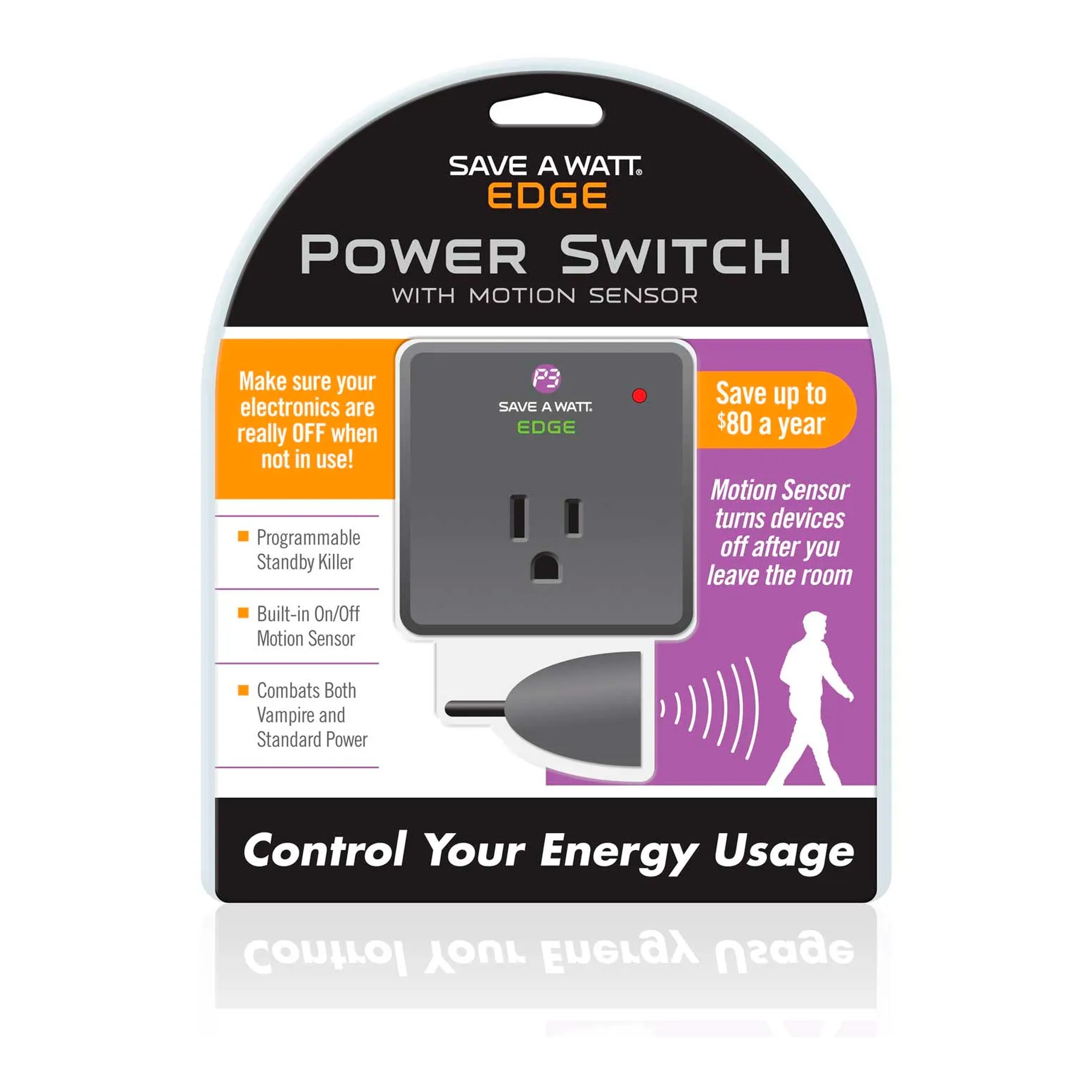
Motion Sensor Plug-In Timer, Gray, 10A
Our Price:$30.94This plug-in timer is for users managing powered devices in occupied rooms. Its tethered motion sensor detects room activity and helps turn off connected equipment after the selected time interval...
-
Occupancy Sensor Power Pack with HVAC Relay, 15A, 347V AC, Black
Our Price:$53.94This occupancy sensor power pack is for electrical professionals installing occupancy-based lighting controls with HVAC relay functionality. It provides regulated low-voltage power for an occupancy...



Choose an Occupancy Sensor for Your Space and Control Setup
Start with the mounting location and the type of load or control system involved. This category includes wall switch and ceiling sensors for lighting control, a plug-in timer for connected equipment, a fixture adapter for sensor positioning, and a power pack for low-voltage sensor installations with ballast and HVAC relay connections.
Popular examples in this category
 Motion Sensor Plug-In Timer, Gray, 10AWBB1754011
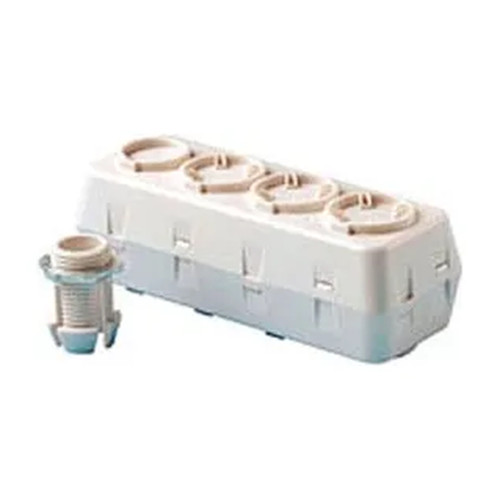 Fixture-Mounted Sensor Offset AdapterWBB455416
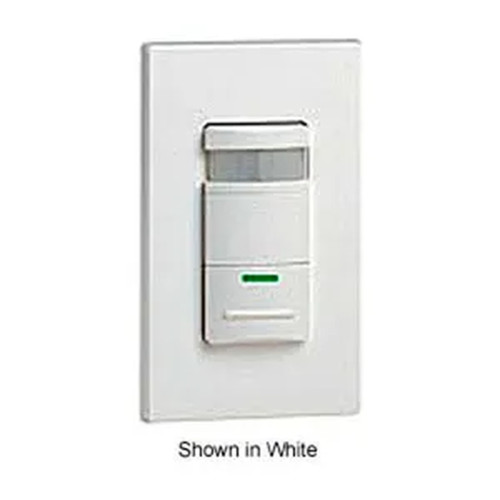 Decora PIR Wall Switch Occupancy Sensor, WhiteWBB455379
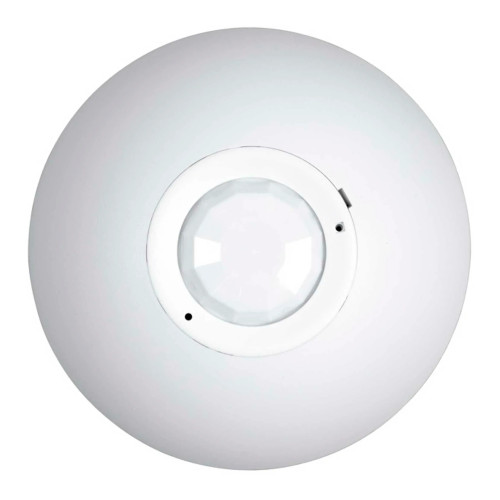 Ceiling-Mount PIR Occupancy Sensor, White, 1,500 Sq. Ft. CoverageWBB2453043
Match the sensor to the area being monitored
Wall switch sensors suit room-level lighting control from a wall-mounted location. Ceiling sensors provide overhead coverage for monitored areas, while the plug-in timer manages connected equipment in occupied rooms.
Compare mounting, sensing, and coverage
Choose between wallbox, single-gang switch-box, ceiling, fixture-mounted, or plug-in arrangements. Then compare PIR or dual-technology detection, stated coverage, wiring or power requirements, and available control functions.
Support lighting and equipment control
Products represented here support occupancy-based control in offices, storage areas, copier rooms, closets, conference rooms, restrooms, classrooms, lounges, and larger indoor monitored areas.
Consider daylight, timing, and connected controls
Available features include selectable or self-adjusting delayed-off timing, integrated photocells, manual push-button control, 0-10V dimming support, relay control, two-lamp switching, and HVAC relay contacts.
Ceiling PIR models represent coverage across this stated range.
Dual-technology ceiling and wall options cover the stated areas.
One wall switch PIR model offers these delayed-off intervals.
This power is provided by the occupancy sensor power pack and used by a listed ceiling sensor.
Compare Occupancy Sensor Product Types
Use this overview to narrow choices by mounting approach and the control functions represented in the category.
| Product type | Best fit | Key represented features |
|---|---|---|
| Wall switch sensors | Room-level lighting control from a wall-mounted location | PIR or dual technology; manual push-button control on select models; single-relay, two-lamp switching, or 0-10V dimming on select models |
| Ceiling sensors | Overhead occupancy detection across monitored indoor areas | PIR or dual technology; stated coverage from 450 to 1,500 sq. ft.; self-adjusting or self-adaptive operation on select models; photocells on select models |
| Support and equipment-control products | Plug-in equipment control or low-voltage lighting-control installations | Plug-in motion timer; fixture offset adapter; 24 VDC power pack with ballast load control and HVAC relay contacts |
Plan the right fit before choosing
Select a design that fits the installation location
Wall switch occupancy sensors install at the control point and may fit a standard wallbox or single-gang NEMA-style switch box. Ceiling-mounted models provide overhead sensing, with listed coverage from 450 to 1,500 square feet. A fixture-mounted offset adapter positions a compatible sensor below a deep-body fixture, and a plug-in timer connects to powered equipment.
- Wall switch PIR and dual-technology options for connected lighting
- Ceiling PIR and dual-technology options for broad overhead monitoring
- Fixture adapter with 1/2-inch knockout installation and included locknut
- Plug-in timer with tethered motion sensor and selectable shutoff timing
Compare PIR and dual-technology sensing options
PIR models detect occupancy for connected lighting control. Dual-technology models combine ultrasonic and PIR sensing. Some sensors are self-adaptive or self-adjusting to simplify setup, and certain models retain settings through non-volatile memory.
- PIR coverage options listed up to 1,500 square feet
- Dual-technology coverage options listed at 500 or 1,000 square feet
- Integrated photocells can help avoid activating lights when natural light is sufficient
- Manual control, single-relay control, two-lamp switching, and 0-10V dimming are available on select models
Confirm the connection and load-control requirements
Review the installation and electrical details before choosing. Listed models include low-voltage three-wire connections, 24VDC operation, and wall-switch compatibility with specified 120V or 277VAC incandescent, low-voltage, and fluorescent lighting systems. A power pack provides regulated 24 VDC power for an occupancy sensor and relay-based ballast load control, with dedicated HVAC relay contacts.
- Ceiling sensors may use low-voltage connections
- A power pack can control a single luminaire or multiple luminaires
- The power pack handles listed ballast loads up to 20A at 120, 230, or 277 VAC, or 15A at 347 VAC
- The fixture adapter supports compatible sensor placement below deep fixture bodies
Common questions before buying
What is the difference between PIR and dual-technology occupancy sensors?
PIR sensors use passive infrared occupancy sensing. Dual-technology models combine ultrasonic and PIR sensing.
What coverage areas are represented by these occupancy sensors?
Listed ceiling PIR options cover up to 450 or 1,500 square feet, while listed dual-technology options cover up to 500 or 1,000 square feet.
Can these sensors help avoid turning lights on in daylight?
Select models include an integrated photocell or ambient-light override to help prevent lighting activation when natural light is sufficient.
Are there occupancy controls for connected equipment as well as lighting?
Yes. The plug-in timer uses a tethered motion sensor to control connected equipment, including a connected power strip, after the selected time interval when the space is unoccupied.
Choose an Occupancy Sensor for Your Space and Control Setup
Start with the mounting location and the type of load or control system involved. This category includes wall switch and ceiling sensors for lighting control, a plug-in timer for connected equipment, a fixture adapter for sensor positioning, and a power pack for low-voltage sensor installations with ballast and HVAC relay connections.
Popular examples in this category
Match the sensor to the area being monitored
Wall switch sensors suit room-level lighting control from a wall-mounted location. Ceiling sensors provide overhead coverage for monitored areas, while the plug-in timer manages connected equipment in occupied rooms.
Compare mounting, sensing, and coverage
Choose between wallbox, single-gang switch-box, ceiling, fixture-mounted, or plug-in arrangements. Then compare PIR or dual-technology detection, stated coverage, wiring or power requirements, and available control functions.
Support lighting and equipment control
Products represented here support occupancy-based control in offices, storage areas, copier rooms, closets, conference rooms, restrooms, classrooms, lounges, and larger indoor monitored areas.
Consider daylight, timing, and connected controls
Available features include selectable or self-adjusting delayed-off timing, integrated photocells, manual push-button control, 0-10V dimming support, relay control, two-lamp switching, and HVAC relay contacts.
Ceiling PIR models represent coverage across this stated range.
Dual-technology ceiling and wall options cover the stated areas.
One wall switch PIR model offers these delayed-off intervals.
This power is provided by the occupancy sensor power pack and used by a listed ceiling sensor.
Compare Occupancy Sensor Product Types
Use this overview to narrow choices by mounting approach and the control functions represented in the category.
| Product type | Best fit | Key represented features |
|---|---|---|
| Wall switch sensors | Room-level lighting control from a wall-mounted location | PIR or dual technology; manual push-button control on select models; single-relay, two-lamp switching, or 0-10V dimming on select models |
| Ceiling sensors | Overhead occupancy detection across monitored indoor areas | PIR or dual technology; stated coverage from 450 to 1,500 sq. ft.; self-adjusting or self-adaptive operation on select models; photocells on select models |
| Support and equipment-control products | Plug-in equipment control or low-voltage lighting-control installations | Plug-in motion timer; fixture offset adapter; 24 VDC power pack with ballast load control and HVAC relay contacts |
Plan the right fit before choosing
Select a design that fits the installation location
Wall switch occupancy sensors install at the control point and may fit a standard wallbox or single-gang NEMA-style switch box. Ceiling-mounted models provide overhead sensing, with listed coverage from 450 to 1,500 square feet. A fixture-mounted offset adapter positions a compatible sensor below a deep-body fixture, and a plug-in timer connects to powered equipment.
- Wall switch PIR and dual-technology options for connected lighting
- Ceiling PIR and dual-technology options for broad overhead monitoring
- Fixture adapter with 1/2-inch knockout installation and included locknut
- Plug-in timer with tethered motion sensor and selectable shutoff timing
Compare PIR and dual-technology sensing options
PIR models detect occupancy for connected lighting control. Dual-technology models combine ultrasonic and PIR sensing. Some sensors are self-adaptive or self-adjusting to simplify setup, and certain models retain settings through non-volatile memory.
- PIR coverage options listed up to 1,500 square feet
- Dual-technology coverage options listed at 500 or 1,000 square feet
- Integrated photocells can help avoid activating lights when natural light is sufficient
- Manual control, single-relay control, two-lamp switching, and 0-10V dimming are available on select models
Confirm the connection and load-control requirements
Review the installation and electrical details before choosing. Listed models include low-voltage three-wire connections, 24VDC operation, and wall-switch compatibility with specified 120V or 277VAC incandescent, low-voltage, and fluorescent lighting systems. A power pack provides regulated 24 VDC power for an occupancy sensor and relay-based ballast load control, with dedicated HVAC relay contacts.
- Ceiling sensors may use low-voltage connections
- A power pack can control a single luminaire or multiple luminaires
- The power pack handles listed ballast loads up to 20A at 120, 230, or 277 VAC, or 15A at 347 VAC
- The fixture adapter supports compatible sensor placement below deep fixture bodies
Common questions before buying
What is the difference between PIR and dual-technology occupancy sensors?
PIR sensors use passive infrared occupancy sensing. Dual-technology models combine ultrasonic and PIR sensing.
What coverage areas are represented by these occupancy sensors?
Listed ceiling PIR options cover up to 450 or 1,500 square feet, while listed dual-technology options cover up to 500 or 1,000 square feet.
Can these sensors help avoid turning lights on in daylight?
Select models include an integrated photocell or ambient-light override to help prevent lighting activation when natural light is sufficient.
Are there occupancy controls for connected equipment as well as lighting?
Yes. The plug-in timer uses a tethered motion sensor to control connected equipment, including a connected power strip, after the selected time interval when the space is unoccupied.
Choosing the right file folders
FilingSupplies.com carries end-tab folders for open-shelf systems, top-tab folders for drawer filing, and heavy-duty classification folders with dividers and fasteners for multi-section records. Pick letter or legal size, then choose material (11-pt, 14-pt, or 18-pt manila), optional reinforced tabs, color-coding, and expansion capacity to match your volume.
Folder FAQs
End-tab vs. top-tab — what’s the difference?
When should I choose classification folders?
Letter or legal size — how do I pick?
What tab and material options are available?
Can I add fasteners, pockets, or expansion?
Do you offer volume pricing or custom printing?
Outfitting classrooms that work all day
Build a durable, age-appropriate classroom with furniture, early-learning materials, storage bins, learning centers, and presentation tools. Choose adjustable pieces that grow with grades, label friendly bins for quick clean-up, and tech carts that secure, charge, and move easily.
Education FAQs
What safety labels should I look for on school and early-childhood items?
How do I pick classroom furniture across grade levels?
What’s the best way to organize supplies and centers?
How do I choose learning games and manipulatives by age?
What should I consider in a charging/tech cart?
Do you support school POs, bulk pricing, or custom printing?
Choosing the right labels
From color file labels to printable sheets, select the right size, adhesive, and print method to match your filing system and equipment. Decide on sheet vs. roll format, then pick permanent or removable adhesive and your color set.
Labels FAQs
Sheet vs. roll labels — what’s the difference?
Permanent or removable adhesive?
Will these labels work in my printer?
How do I match the label size to folder tabs or binder spines?
Can I get preprinted sequences or color bars?
Do you have templates?
Choosing the right tab dividers
Organize binders with preprinted or blank tabs. Select the number of tabs per set (5, 8, 10, or 12), choose paper with reinforced tabs or durable poly, and match letter or legal size for a clean fit.
Tab Dividers FAQs
What do 5-, 8-, 10-, or 12-tab sets mean?
Paper vs. poly — which should I choose?
Are the tabs printable?
Will they fit my binder?
Can I mix preprinted and blank tabs?
Do you make custom tab sets?
Choosing the right office supplies
From everyday paper and pens to binders, mailers, and desk organizers, pick durable, compatible options that match your equipment and team size. Start with the right paper and labeling, then add organizers that keep work moving.
Office Supplies FAQs
Which paper weight and brightness should I choose?
Round-ring vs. D-ring binders — what’s the difference?
What does “sheet capacity” mean on staplers and hole punches?
Will labels, envelopes, and mailers work with my printer?
How do I choose mailers and shipping boxes?
Do you offer eco-conscious options or bulk pricing?
Choosing the right sports & PE equipment
Equip classes, teams, and rec programs with durable balls, goals, cones, pinnies, storage, and safety gear. Match sizes and materials to age group and whether you play indoors or outdoors.
Sports & Athletics FAQs
What ball sizes should I choose for different ages?
- Basketball: Size 5 (27.5") youth, Size 6 (28.5") intermediate, Size 7 (29.5") official.
- Soccer: Size 3 up to ~8 years, Size 4 ~8–12, Size 5 ~12+.
- Volleyball: Regulation balls for teens/adults; lighter training balls for younger players.
Indoor vs. outdoor — which materials hold up best?
How many pinnies, cones, or markers do I need?
Tips for storage and care?
Are items latex‑free and school‑safe?
Do you support bulk orders or custom printing (team names)?
Choosing the right FireKing fireproof cabinet
FireKing fireproof file cabinets, safes, and storage cabinets are designed to protect important documents, records, and valuables from fire damage while keeping files organized and accessible. When choosing a FireKing cabinet, compare drawer configuration, storage type, fire rating, and overall capacity based on the records or materials you need to protect.
FireKing FAQs
What is the difference between FireKing vertical and lateral file cabinets?
What can I store in a FireKing fireproof file cabinet?
Are FireKing cabinets only for paper records?
How do I choose between a FireKing safe, file cabinet, or storage cabinet?
What sizes are available in FireKing cabinets?
Are FireKing cabinets used in offices, medical facilities, and government records storage?
Can I buy FireKing cabinets in bulk or get help choosing the right model?
Shipping & Policies
Do you offer free shipping?
What are your shipping rates?
- $6.95 for labels-only orders under $40
- $14.95 flat rate for everything else