

-
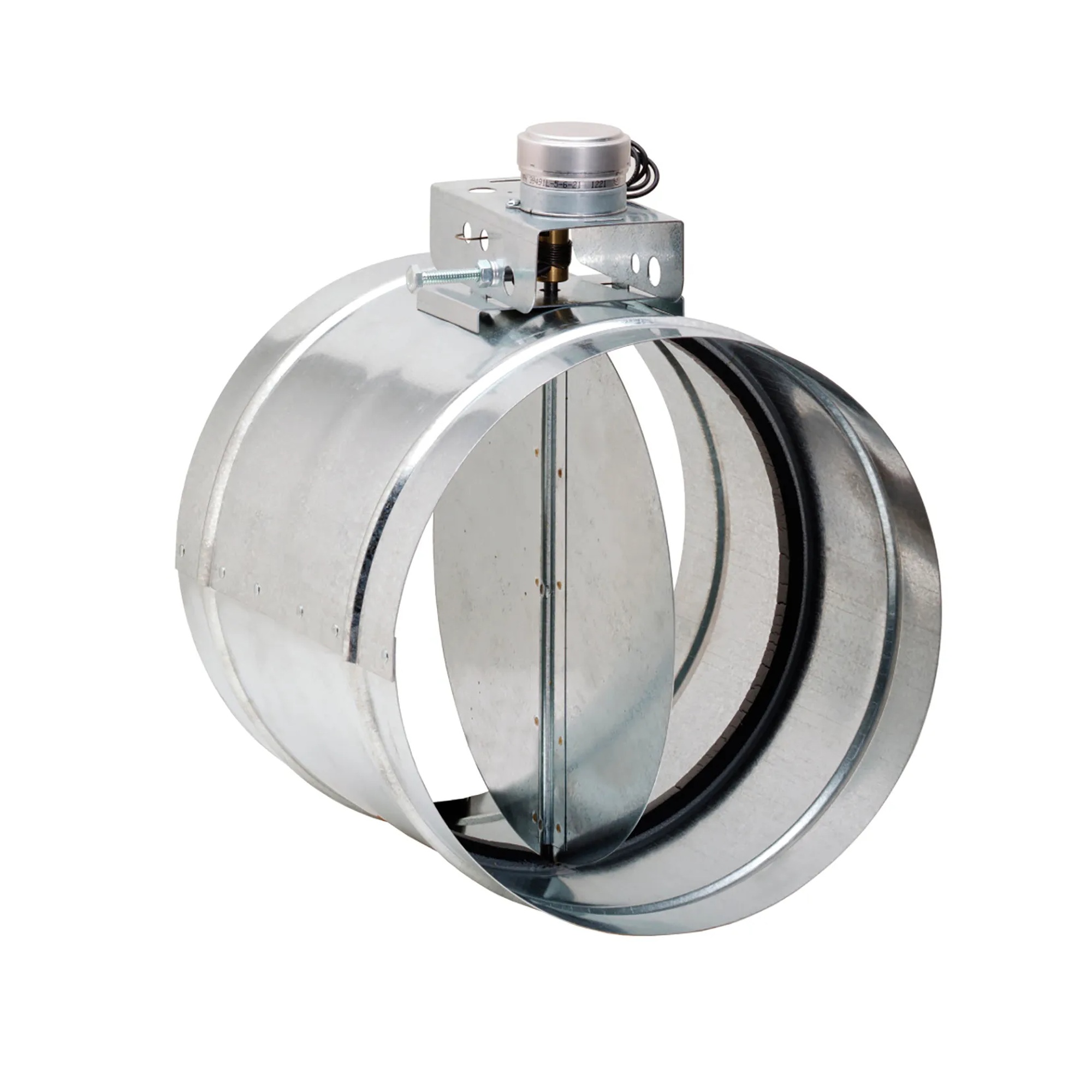
10-Inch 24V Motorized Shut-Off Damper
Our Price:$209.94This 10-inch motorized shut-off damper is designed for ventilation professionals and facility maintenance teams who need to control airflow in compatible duct systems. It opens when powered and...
-
10-Inch Circular Duct Backdraft Damper
Our Price:$57.94This backdraft damper is designed for HVAC professionals and facility maintenance teams working with 10-inch circular ductwork. It helps manage reverse airflow in a duct run with spring-loaded blades...
-
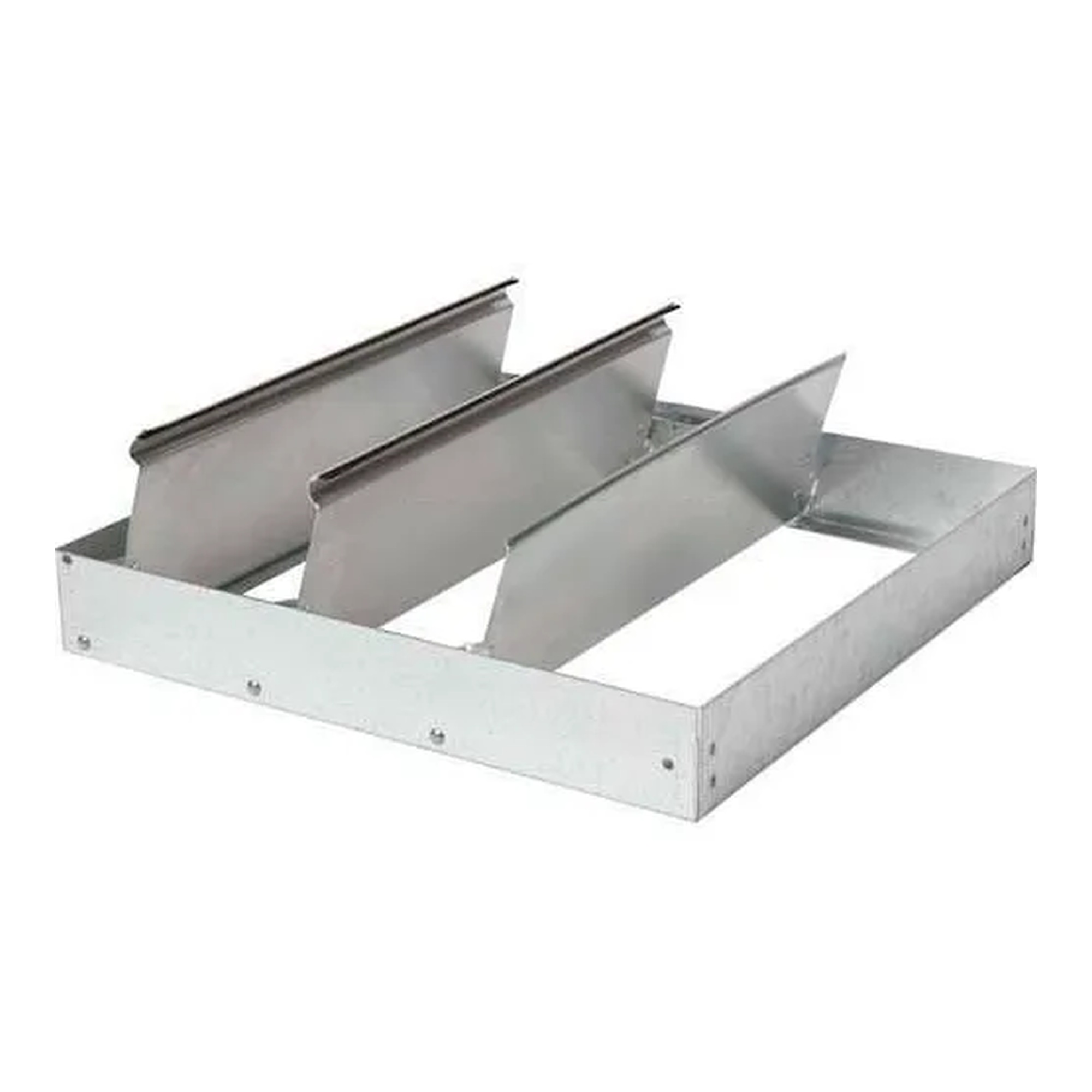
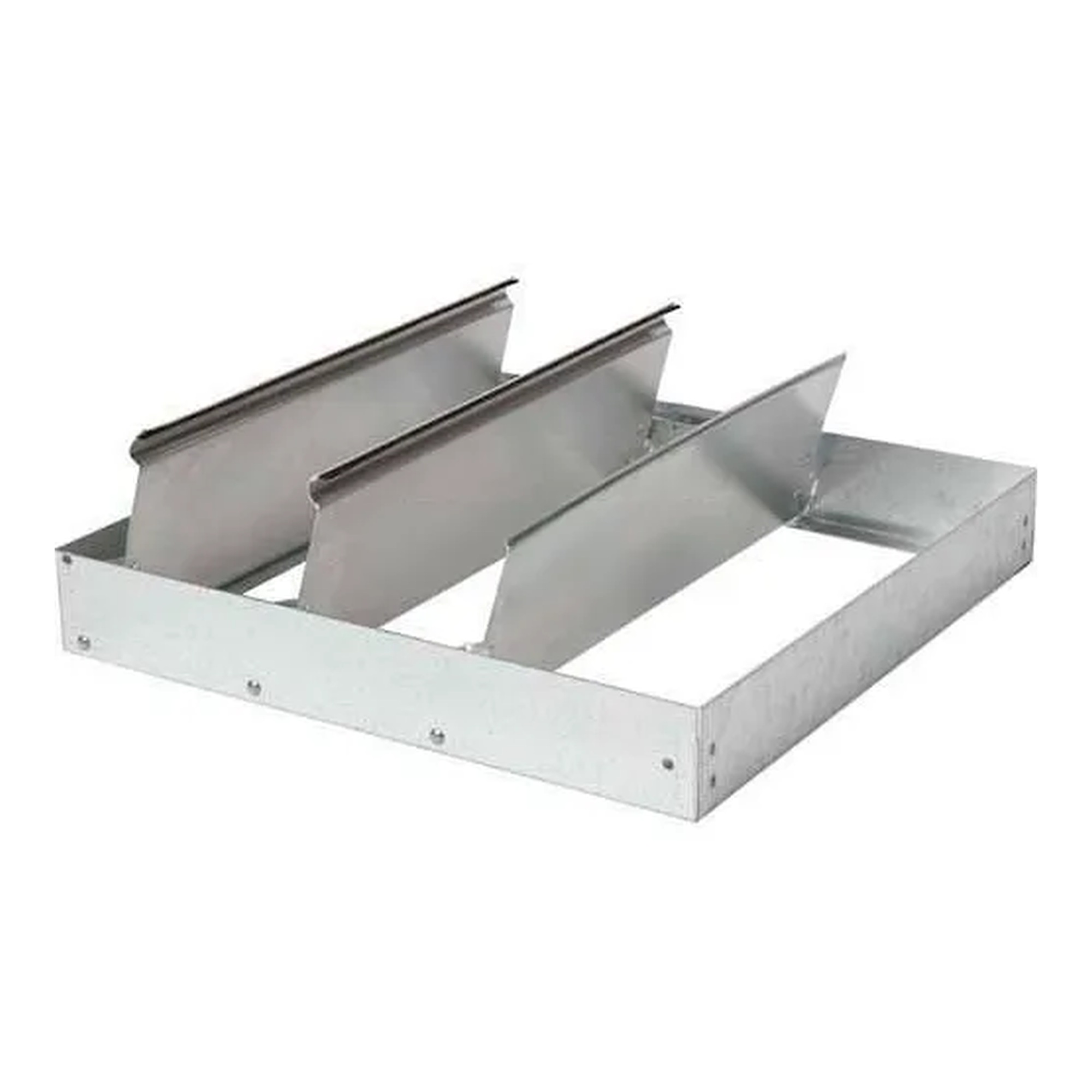
10-Inch Horizontal-Mount Exhaust Backdraft Damper
Our Price:$49.94This 10-inch backdraft damper is designed for contractors and facility maintenance teams using exhaust fans or powered roof ventilators. It helps manage reverse airflow in horizontal exhaust...
-
10-Inch Radial Galvanized Steel Balancing Damper, 2-Pack
Our Price:$56.94This 2-pack of radial balancing dampers is for HVAC professionals and facility maintenance teams adjusting airflow at air vents. Each damper helps regulate the opening at compatible diffuser necks to...
-
12 in. x 12 in. Roof Mount Damper
Our Price:$56.94This roof mount damper is designed for HVAC and ventilation professionals installing roof-mounted ventilation components. It helps provide a fitted damper component for 12 in. x 12 in. applications...
-
12-Inch 24V Motorized Shut-Off Damper
Our Price:$199.94This motorized shut-off damper is for ventilation-system installers and maintenance teams that need to control airflow with a powered open and spring-return closed damper. It provides a two-position...
-
12-Inch Backdraft Damper for Circular Ducts
Our Price:$75.94This 12-inch backdraft damper is used by ventilation and HVAC professionals in circular duct systems to help manage reverse airflow. It provides a practical duct accessory for installations that...
-
12-Inch Flanged Motorized Volume Control Damper
Our Price:$309.94This motorized volume control damper is designed for HVAC professionals and facility teams managing airflow in supply or exhaust systems. It provides powered opening and spring-assisted closing to...
-
12-Inch Galvanized Steel Flanged Motorized Damper
Our Price:$325.94This motorized volume control damper is designed for HVAC professionals managing exhaust or supply airflow. It provides powered opening and spring-assisted closing to help control airflow at wall or...
-
12-Inch Horizontal-Mount Exhaust Backdraft Damper
Our Price:$48.94This 12-inch backdraft damper is designed for horizontal exhaust installations. Facility and HVAC professionals can use it with fans or powered roof ventilators to help manage reverse airflow at roof...
-
12-Inch Radial Galvanized Steel Balancing Damper, Pack of 10
Our Price:$219.94This radial balancing damper is designed for HVAC professionals and maintenance teams who need to regulate airflow at air vents. It fits 12-inch-neck diffusers and lets users adjust the vent opening...
-
14-Inch 24V Motorized Shut-Off Damper
Our Price:$219.94This 14-inch motorized shut-off damper is for ventilation system users who need to control airflow through a duct opening. It opens when powered and returns to a closed position when power is removed...
-
14-Inch Horizontal-Mount Exhaust Backdraft Damper
Our Price:$67.94This 14-inch backdraft damper is designed for HVAC and ventilation professionals using exhaust fans or powered roof ventilators. It helps manage reverse airflow in horizontal exhaust installations,...
-
15 in. x 15 in. Roof Mount Damper
Our Price:$64.94This roof mount damper is for HVAC professionals and facility maintenance teams that need to manage airflow at a roof-mounted opening. Its 15 in. x 15 in. size provides a practical fit for compatible...
-
16-Inch Flanged Motorized Volume Control Damper
Our Price:$429.94This motorized volume control damper is designed for ventilation professionals managing airflow in exhaust or supply systems. It provides powered opening and spring closing to help regulate airflow...
-
16-Inch Galvanized Steel Flanged Motorized Damper
Our Price:$365.94This motorized volume control damper is designed for HVAC professionals and facility teams managing supply or exhaust airflow. It provides powered damper operation to help control airflow through...
-
18 in. Horizontal-Mount Exhaust Backdraft Damper
Our Price:$63.94This 18 in. backdraft damper is for users installing horizontal exhaust ventilation systems. It works with a fan or powered roof ventilator to help manage backdraft through roof curbs, ductwork, or...
-
20-Inch Aluminum Flanged Motorized Damper
Our Price:$375.94This motorized volume control damper is designed for HVAC professionals managing exhaust or supply airflow. It provides powered opening and spring closing to help control airflow at wall or curb...
-
20-Inch Galvanized Steel Flanged Motorized Damper
Our Price:$349.94This motorized volume control damper is designed for ventilation professionals managing airflow in exhaust or supply systems. It regulates air passage at wall or curb installations and can be...
-
20-Inch Horizontal-Mount Exhaust Backdraft Damper
Our Price:$77.94This 20-inch backdraft damper is designed for commercial ventilation users who need to help prevent reverse airflow through horizontal exhaust openings. It works with a fan or power roof ventilator...
-
24-Inch Flanged Motorized Volume Control Damper
Our Price:$479.94This motorized volume control damper is designed for HVAC professionals and facility teams who need to regulate airflow in supply or exhaust systems. It helps control air movement at wall or curb...
-
24-Inch Galvanized Steel Flanged Motorized Damper
Our Price:$485.94This motorized volume-control damper is designed for HVAC professionals managing airflow in exhaust or supply systems. It helps regulate air movement at wall or curb installations and can be mounted...
-
24-Inch Horizontal-Mount Exhaust Backdraft Damper
Our Price:$83.94This 24-inch backdraft damper is designed for contractors and facility teams using exhaust fans or powered roof ventilators. It helps manage backdraft in horizontal exhaust installations, including...
-
27 in. x 27 in. Roof-Mount Damper
Our Price:$99.94This roof-mount damper is designed for commercial ventilation applications. Facility and HVAC professionals can use it to help manage airflow at a roof-mounted opening while supporting quiet...
-
28-Inch Horizontal-Mount Exhaust Backdraft Damper
Our Price:$119.94This 28-inch backdraft damper is designed for contractors and facility teams installing horizontal exhaust ventilation. It mounts in roof curbs, ductwork, or wall collars to support fan and powered...
-
30-Inch Horizontal-Mount Backdraft Damper
Our Price:$149.94This horizontal-mount exhaust backdraft damper is designed for users installing fans or powered roof ventilators in roof curbs, ductwork, or wall collars. It helps control backdraft in horizontal...
-
4-Inch 24V Motorized Shut-Off Damper
Our Price:$159.94This 4-inch motorized shut-off damper is for HVAC professionals and facility teams who need to open or close an airflow path with a 24V AC control connection. Its spring-return operation provides a...
-
4-Inch Circular Duct Backdraft Damper
Our Price:$32.94This backdraft damper is designed for professionals installing or maintaining circular duct ventilation systems. It fits 4-inch circular ductwork and helps manage reverse airflow within the duct...
-
4-Inch Manual Iris Damper
Our Price:$81.94This manual iris damper is for HVAC professionals working with 4-inch duct systems. It helps measure and adjust airflow while providing access for cleaning.Designed for 4-inch duct use, this iris...
-
5-Inch Back-Draft Damper for Circular Ducts
Our Price:$34.94This back-draft damper is for HVAC professionals and facilities using 5-inch circular ductwork. It helps manage reverse airflow in a circular duct installation.Constructed of galvanized sheet metal...










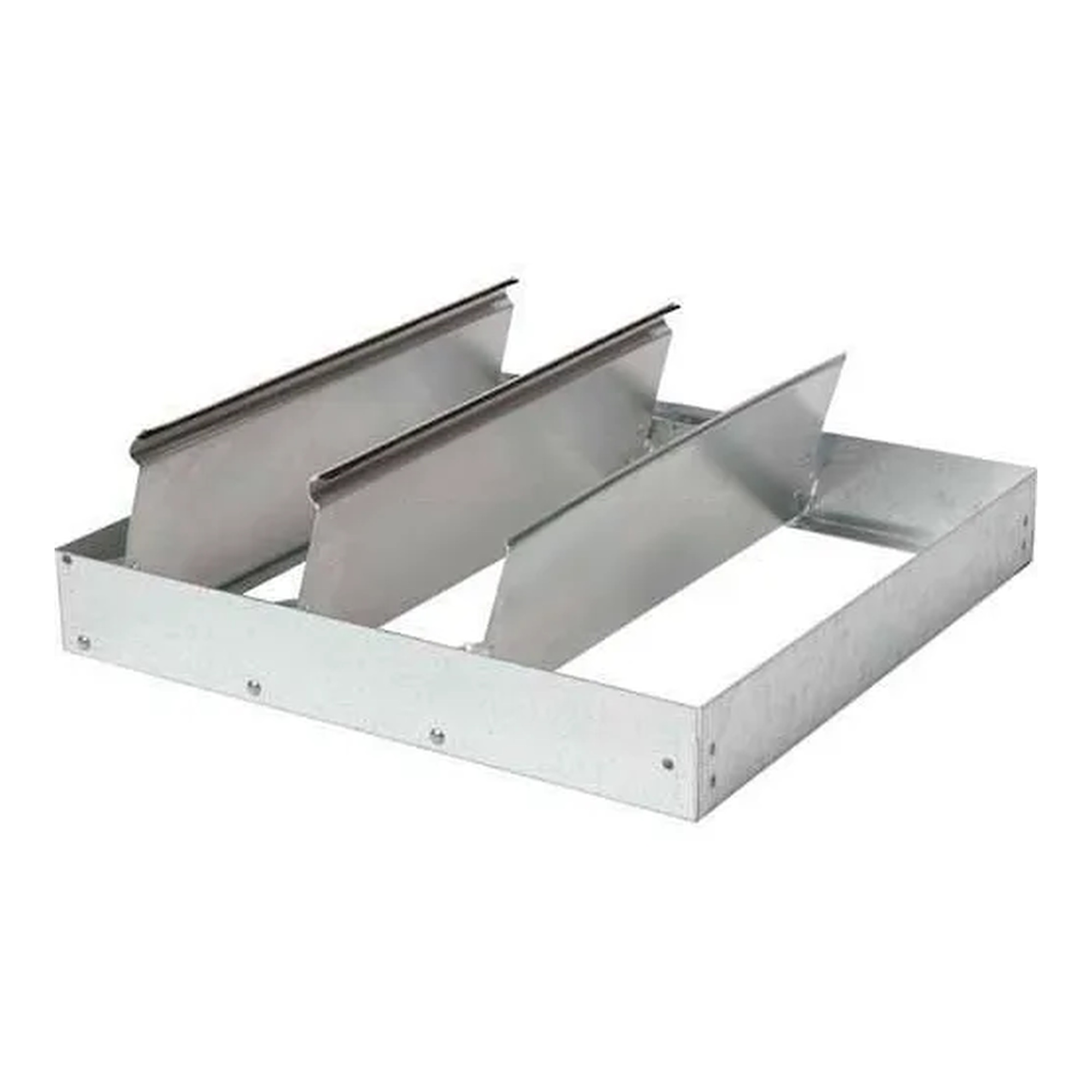


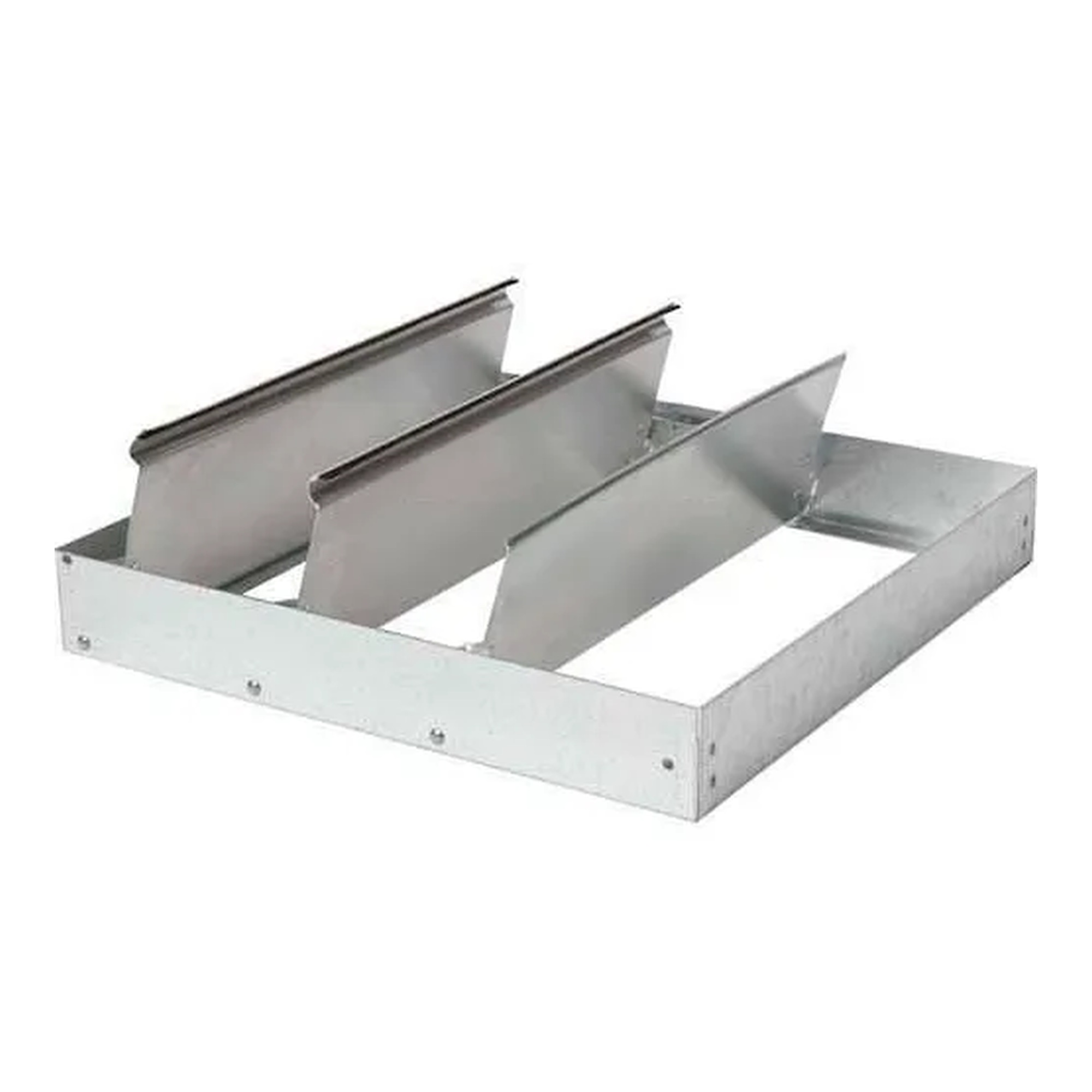


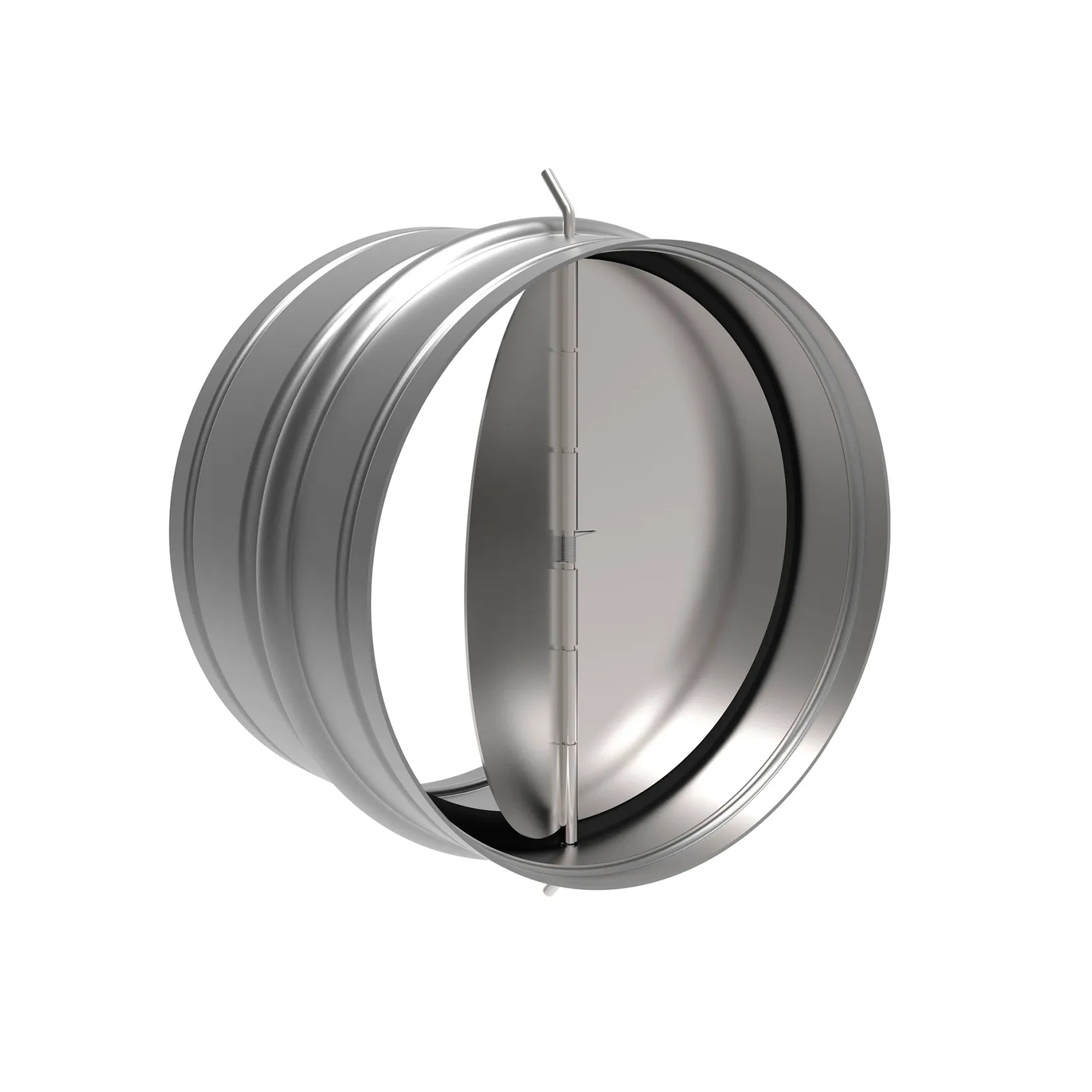
Dampers for HVAC, Ventilation, and Ductwork Systems
Dampers control, balance, and shut off airflow in supply, exhaust, and ductwork installations. Whether you need motorized volume control, simple two-position shut-off, manual balancing, or backdraft prevention, choosing the right damper type for your application and mounting location is the fastest path to a reliable installation.
Popular examples in this category
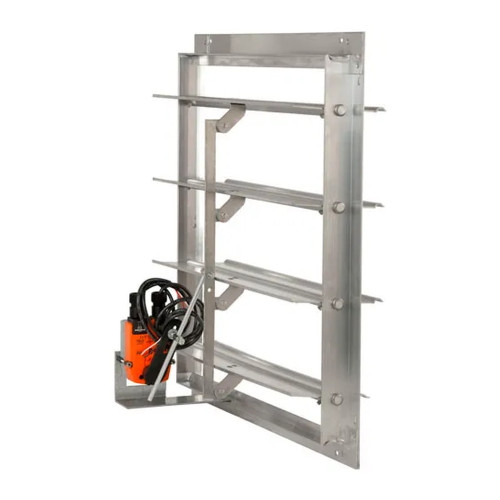
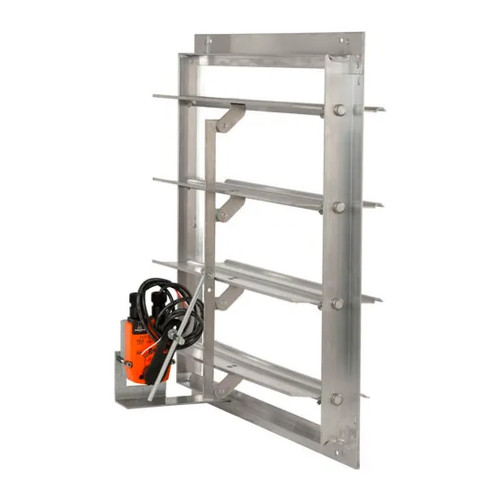 36-Inch Aluminum Flanged Motorized Volume Control DamperWBB771538
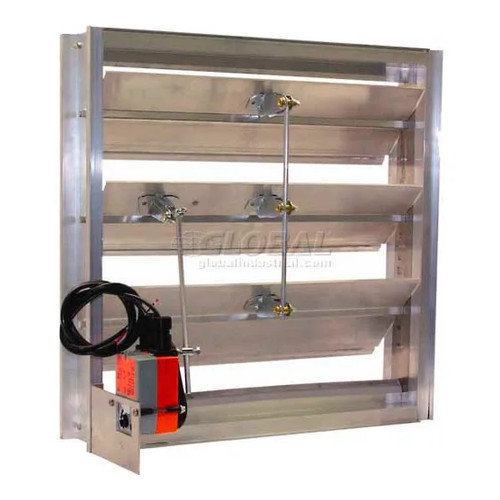
 42-Inch Aluminum Flanged Motorized DamperWBB771542
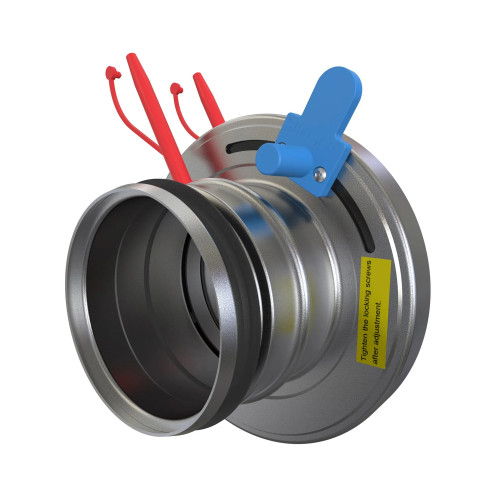
 16-Inch Aluminum Hat Channel Motorized DamperWBB771564
 8-Inch Manual Iris DamperWBB2110237
Managing Airflow in HVAC and Ventilation Systems
Dampers regulate, balance, and isolate airflow in supply and exhaust ductwork, rooftop ventilation, and wall or curb-mounted applications. They are used by HVAC technicians, ventilation installers, and facility maintenance teams to control volume, prevent backdraft, and enable airflow measurement.
Start With Airflow Role and Mounting Location
Identify whether the damper controls supply or exhaust airflow, requires motorized or manual operation, and where it mounts—ductwork, wall, curb, or horizontal exhaust outlet. These three factors narrow your selection before you consider blade type, voltage, or sizing.
Where Dampers Are Typically Installed
Common installations include rooftop unit curb mounts, inline duct balancing, horizontal exhaust fan outlets, and two-position zone control in commercial HVAC. Manual iris dampers suit test-and-balance work, while motorized models serve automated or scheduled airflow control.
Features That Affect Performance and Installation
Look for blade seals on motorized models to reduce leakage, integrated end switches for control feedback, and spring-return mechanisms for fail-safe positioning. Fixed test points on iris dampers simplify commissioning without additional fittings or drilling.
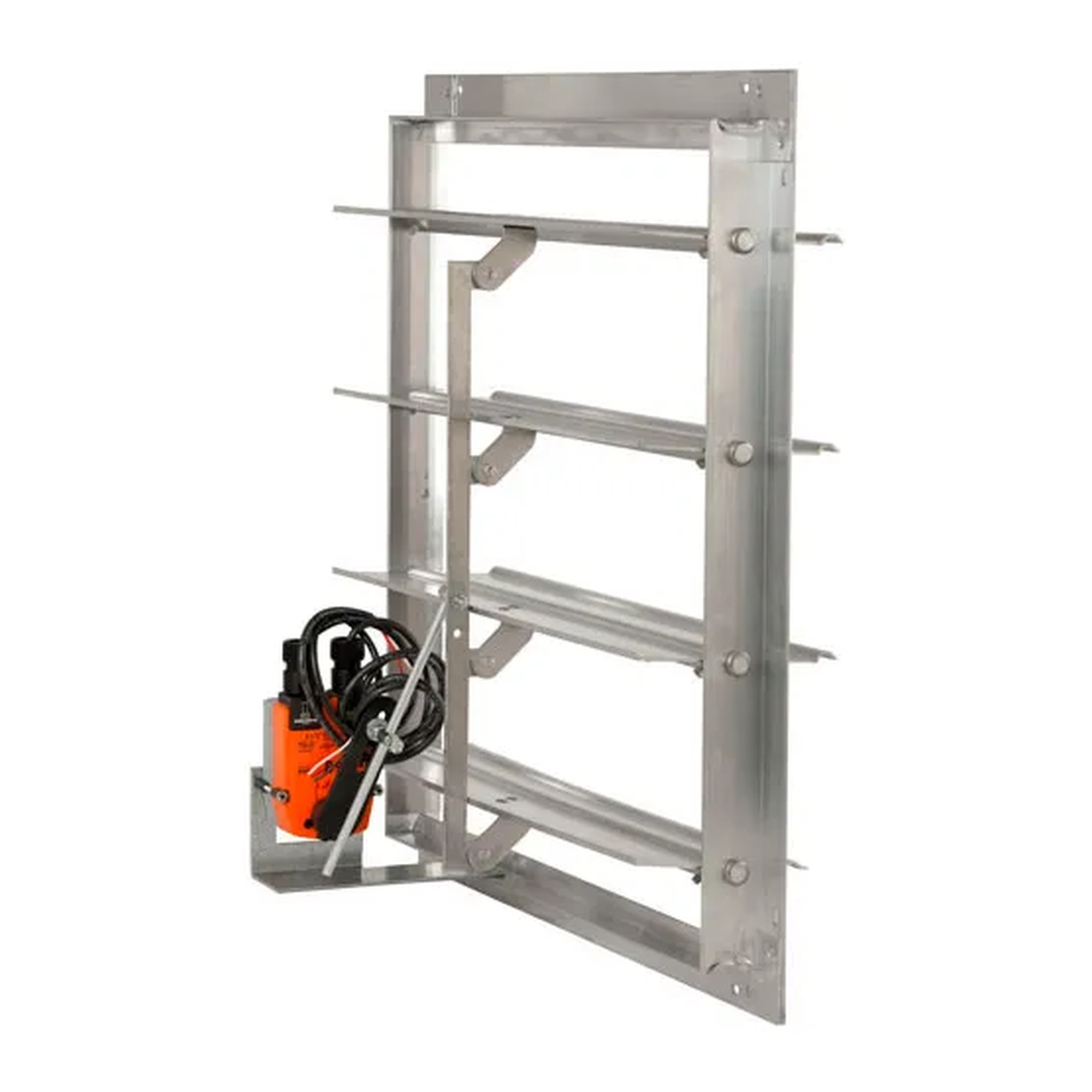
Motorized volume control dampers use parallel blades with a power-open, spring-close mechanism, providing a fail-safe return to closed if power is interrupted.
The motorized shut-off damper operates at 24V, opening when energized and returning to the normally closed position automatically when power is removed.
Manual iris dampers include fixed test points for airflow measurement during balancing, eliminating the need to drill or add separate fittings to the duct.
The iris damper opens to a fully clear aperture, allowing cleaning access through the duct without removing the damper from the system.
Damper Types Side by Side
Match your airflow control need to the right damper type before comparing sizes or features.
| Need | Best Fit | Why It Matters |
|---|---|---|
| Continuous motorized airflow control in supply or exhaust | Motorized volume control damper (flanged or hat channel) | Parallel blades modulate volume; hat channel version adds blade seals and end switch for duct installs |
| Simple two-position zone control with fail-safe closed | 24V motorized shut-off damper | Opens on power, returns to normally closed automatically—no manual reset needed |
| Duct airflow balancing and measurement during commissioning | Manual iris damper | Fixed test points and full aperture opening simplify test-and-balance work without extra fittings |
| Preventing reverse airflow on horizontal exhaust fan outlets | Horizontal-mount backdraft damper | Sized to match fan or powered roof ventilator outlet; gravity or pressure closes blades when fan is off |
| Capping a roof curb for non-vented equipment installation | Fixed non-vented roof curb damper | Provides a sealed base for roof-mounted ventilation components where airflow through the curb is not needed |
Plan the right fit before choosing
Step 1 — Define the Airflow Function
Determine whether the damper needs to modulate airflow continuously, switch between fully open and fully closed, prevent reverse airflow, or serve as a fixed non-vented cap for a roof curb. Each function maps to a specific damper type, so clarifying this first prevents misapplication.
- Continuous volume control: motorized volume control damper with parallel blades
- Two-position on/off control: 24V motorized shut-off damper (power-open, spring-close)
- Backdraft prevention on horizontal exhaust: horizontal-mount backdraft damper
- Airflow balancing and measurement: manual iris damper with fixed test points
- Non-vented roof curb cap: fixed roof curb damper for component installations
Step 2 — Confirm Mounting Location and Configuration
Mounting location determines which product version you need. Flanged motorized dampers are designed for wall or curb mounting. Hat channel versions of the same motorized models can also be installed directly in ductwork and include blade seals and an end switch. Backdraft dampers are sized to match the fan or powered roof ventilator outlet diameter.
- Wall or curb mount: choose flanged motorized volume control damper
- Inline ductwork install: choose hat channel motorized damper with blade seals and end switch
- Horizontal exhaust fan outlet: match backdraft damper size to fan outlet
- Roof-mounted equipment base: use fixed non-vented roof curb damper
Step 3 — Verify Electrical and Control Requirements
Motorized dampers require a power source and, in some cases, control wiring for the end switch or actuator signal. Confirm available voltage, whether spring-return fail-safe operation is required, and whether the control system needs position feedback before ordering.
- 24V motorized shut-off: opens when powered, returns to normally closed on power loss
- Motorized volume control: power-open, spring-close operation with parallel blade design
- End switch models: provide open/closed position feedback to the control system
- Manual iris dampers: no electrical requirements, adjusted and locked manually
Common questions before buying
What is the difference between a motorized volume control damper and a motorized shut-off damper?
A motorized volume control damper modulates airflow continuously using parallel blades and is suited for supply or exhaust systems where you need variable flow. A motorized shut-off damper is a two-position device—it opens when 24V power is applied and returns to fully closed when power is removed. Use the shut-off model when you only need on/off zone control with a fail-safe closed position.
When should I choose a flanged motorized damper versus a hat channel version?
Flanged motorized dampers are designed for wall or curb mounting. Hat channel versions are built for the same volume control function but can also be installed directly in ductwork. Hat channel models also include blade seals to reduce leakage and an integrated end switch for position feedback to the control system.
How do I size a backdraft damper for a horizontal exhaust application?
Match the backdraft damper diameter or dimensions to the outlet size of the exhaust fan or powered roof ventilator it will serve. The damper should correspond to the fan's discharge collar size, not the duct diameter upstream, to ensure proper blade operation and an airtight seal when the fan is off.
Can a manual iris damper be used for both balancing and airflow measurement?
Yes. Manual iris dampers include fixed test points that allow airflow measurement with a manometer or pitot tube without drilling the duct. The iris mechanism also opens to a full, unobstructed aperture for cleaning access. Once balanced, the iris position is locked in place to maintain the set airflow rate.
Choosing the right file folders
FilingSupplies.com carries end-tab folders for open-shelf systems, top-tab folders for drawer filing, and heavy-duty classification folders with dividers and fasteners for multi-section records. Pick letter or legal size, then choose material (11-pt, 14-pt, or 18-pt manila), optional reinforced tabs, color-coding, and expansion capacity to match your volume.
Folder FAQs
End-tab vs. top-tab — what’s the difference?
When should I choose classification folders?
Letter or legal size — how do I pick?
What tab and material options are available?
Can I add fasteners, pockets, or expansion?
Do you offer volume pricing or custom printing?
Outfitting classrooms that work all day
Build a durable, age-appropriate classroom with furniture, early-learning materials, storage bins, learning centers, and presentation tools. Choose adjustable pieces that grow with grades, label friendly bins for quick clean-up, and tech carts that secure, charge, and move easily.
Education FAQs
What safety labels should I look for on school and early-childhood items?
How do I pick classroom furniture across grade levels?
What’s the best way to organize supplies and centers?
How do I choose learning games and manipulatives by age?
What should I consider in a charging/tech cart?
Do you support school POs, bulk pricing, or custom printing?
Choosing the right labels
From color file labels to printable sheets, select the right size, adhesive, and print method to match your filing system and equipment. Decide on sheet vs. roll format, then pick permanent or removable adhesive and your color set.
Labels FAQs
Sheet vs. roll labels — what’s the difference?
Permanent or removable adhesive?
Will these labels work in my printer?
How do I match the label size to folder tabs or binder spines?
Can I get preprinted sequences or color bars?
Do you have templates?
Choosing the right tab dividers
Organize binders with preprinted or blank tabs. Select the number of tabs per set (5, 8, 10, or 12), choose paper with reinforced tabs or durable poly, and match letter or legal size for a clean fit.
Tab Dividers FAQs
What do 5-, 8-, 10-, or 12-tab sets mean?
Paper vs. poly — which should I choose?
Are the tabs printable?
Will they fit my binder?
Can I mix preprinted and blank tabs?
Do you make custom tab sets?
Choosing the right office supplies
From everyday paper and pens to binders, mailers, and desk organizers, pick durable, compatible options that match your equipment and team size. Start with the right paper and labeling, then add organizers that keep work moving.
Office Supplies FAQs
Which paper weight and brightness should I choose?
Round-ring vs. D-ring binders — what’s the difference?
What does “sheet capacity” mean on staplers and hole punches?
Will labels, envelopes, and mailers work with my printer?
How do I choose mailers and shipping boxes?
Do you offer eco-conscious options or bulk pricing?
Choosing the right sports & PE equipment
Equip classes, teams, and rec programs with durable balls, goals, cones, pinnies, storage, and safety gear. Match sizes and materials to age group and whether you play indoors or outdoors.
Sports & Athletics FAQs
What ball sizes should I choose for different ages?
- Basketball: Size 5 (27.5") youth, Size 6 (28.5") intermediate, Size 7 (29.5") official.
- Soccer: Size 3 up to ~8 years, Size 4 ~8–12, Size 5 ~12+.
- Volleyball: Regulation balls for teens/adults; lighter training balls for younger players.
Indoor vs. outdoor — which materials hold up best?
How many pinnies, cones, or markers do I need?
Tips for storage and care?
Are items latex‑free and school‑safe?
Do you support bulk orders or custom printing (team names)?
Choosing the right FireKing fireproof cabinet
FireKing fireproof file cabinets, safes, and storage cabinets are designed to protect important documents, records, and valuables from fire damage while keeping files organized and accessible. When choosing a FireKing cabinet, compare drawer configuration, storage type, fire rating, and overall capacity based on the records or materials you need to protect.
FireKing FAQs
What is the difference between FireKing vertical and lateral file cabinets?
What can I store in a FireKing fireproof file cabinet?
Are FireKing cabinets only for paper records?
How do I choose between a FireKing safe, file cabinet, or storage cabinet?
What sizes are available in FireKing cabinets?
Are FireKing cabinets used in offices, medical facilities, and government records storage?
Can I buy FireKing cabinets in bulk or get help choosing the right model?
Shipping & Policies
Do you offer free shipping?
What are your shipping rates?
- $6.95 for labels-only orders under $40
- $14.95 flat rate for everything else